

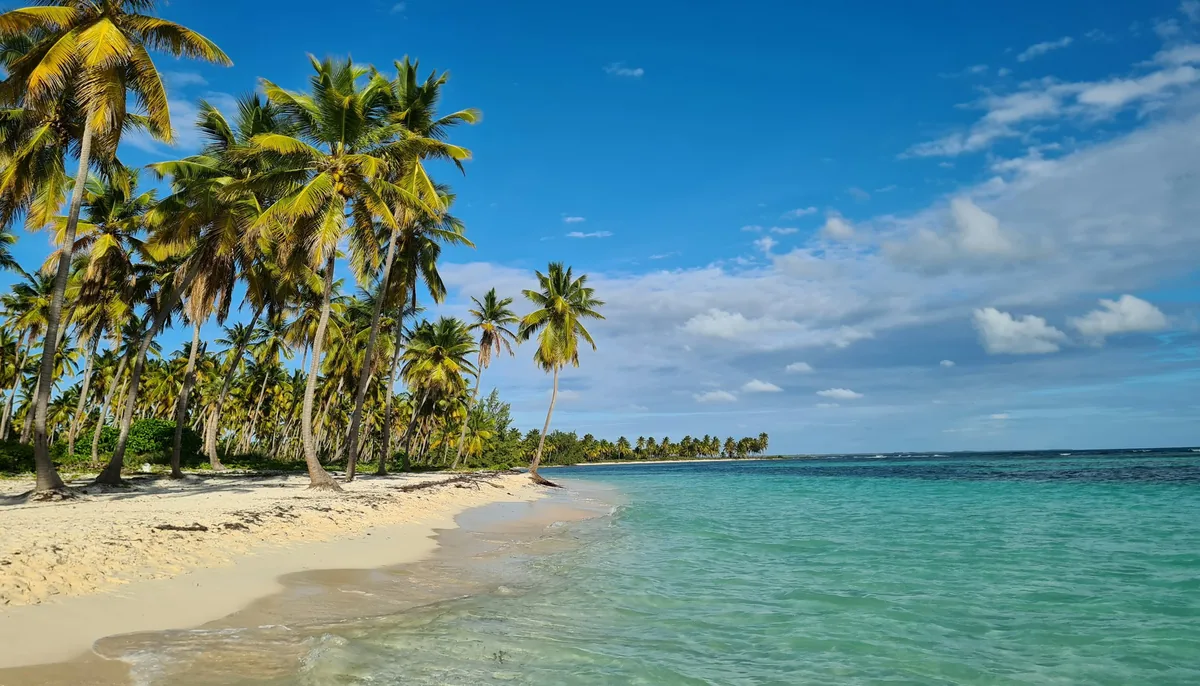
While the UK is digging out the 5mm and waiting for a window in the isobars, three Caribbean islands are quietly getting on with it: warm water, reliable trade winds and a season that barely stops. Cabarete in the Dominican Republic, Lac Bay in Bonaire and Fisherman's Huts in Aruba are three very different set-ups within a few hundred miles of each other, and between them they cover most of the calendar. Read them alongside our kitesurfing, windsurfing and wing foiling guides.
Why the Caribbean works for kitesurfing and windsurfing
These three spots share the essentials — warm water year-round, steady trade winds and none of the neoprene faff of a UK session — but they're not interchangeable. Cabarete is the all-rounder, with three beaches and a proper kite-town scene. Lac Bay is a flat-water windsurfing lagoon so shallow and protected it's hard to beat anywhere in the world. Fisherman's Huts is Aruba's family-friendly, steady-wind beach that also hosts an annual competition. Because their wind windows don't line up exactly, travelling between them — or just picking the right one for your dates — extends the usable season considerably.
Which island for which trip
| Destination | Flagship spot | Best for |
|---|---|---|
| Dominican Republic | Cabarete (Kite Beach, Bozo Beach, Cabarete Bay) | Kitesurfing, progression, variety of beaches |
| Bonaire | Lac Bay | Windsurfing, flat water, beginners to experts |
| Aruba | Fisherman's Huts (Hadicurari Beach) | Kite/windsurf/wing foil, families, competition scene |
The Dominican Republic is the one destination on this page we cover with two spots rather than one. Our country guide explains why all the wind sits on the north coast, and how to choose between them.
Dominican Republic — Cabarete
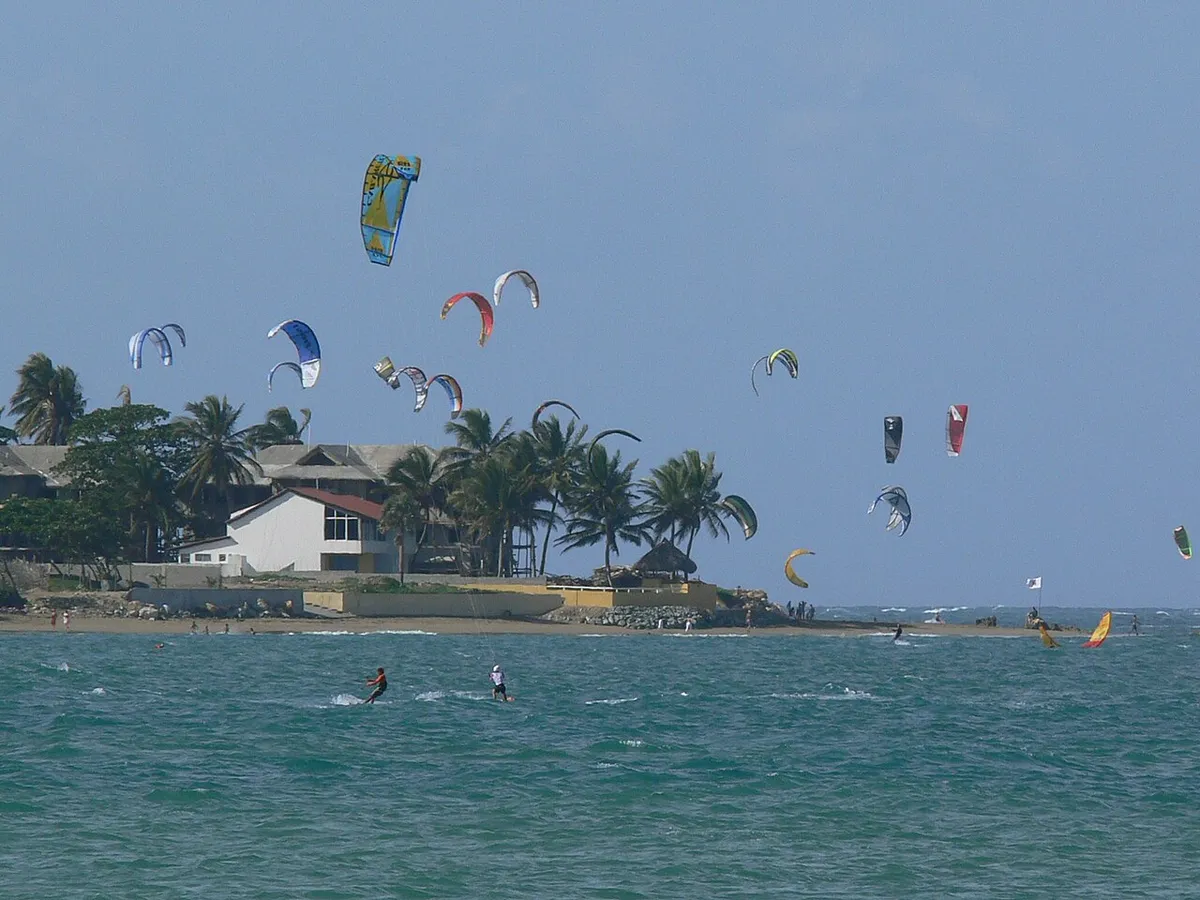
Cabarete is one of the world's top kitesurfing destinations, and the numbers back that up: over 300 windy days a year. The town is built around three beaches, each with a different character. Kite Beach is the hub — schools, cafés, a strong pro presence, consistent wind and plenty of room to launch. Bozo Beach is a wide bay protected by a reef around a kilometre offshore, with several kite schools and more space to manoeuvre, which makes it a good pick for anyone progressing beyond the basics. Cabarete Bay is the main bay in town, historically the windsurf beach, and it's where most of the bars and restaurants sit. If you're travelling with a surfer, Encuentro Beach nearby is the area's main surf break — a decent bonus for a mixed group, even if it's not the main draw here. Read the full Cabarete guide for schools, beaches and how to get there.

Dominican Republic — Buen Hombre
Three hours west of Cabarete the coast changes character entirely. Buen Hombre is a fishing village in the province of Monte Cristi, set in a semi-arid landscape of salt flats and dry forest in front of a shallow lagoon that a coral reef shelters from the swell. The water stays flat even once the trade wind settles in, which makes it a rare learning patch in this part of the Caribbean, and the cays offshore — Cayo Arena, then the seven islets of the Siete Hermanos — open the door to downwinders. The trade-off is comfort: intermittent electricity, a weak signal and few services. Our Buen Hombre guide covers the lagoon, the wind seasons and getting there from Santiago or Puerto Plata.
Bonaire — Lac Bay
Lac Bay is one of the best windsurfing spots anywhere: warm, shallow — never deeper than about 1.2 metres, averaging roughly 80cm — flat water and a steady onshore wind that suits everyone from complete beginners to experts chasing freestyle moves. There's an important catch, though: kitesurfing is banned in Lac Bay itself. The bay is a Ramsar-listed wetland and an Important Bird Area, home to mangroves and roosting frigatebirds, and the ban exists to protect that ecology. Kitesurfers on Bonaire instead head to Atlantis Beach or Pink Beach elsewhere on the island, leaving Lac Bay as a windsurfing-only lagoon. Water temperature sits around a steady 28°C year-round. Read our full Bonaire guide for schools, the marine park and getting there.

Aruba — Fisherman's Huts (Hadicurari Beach)
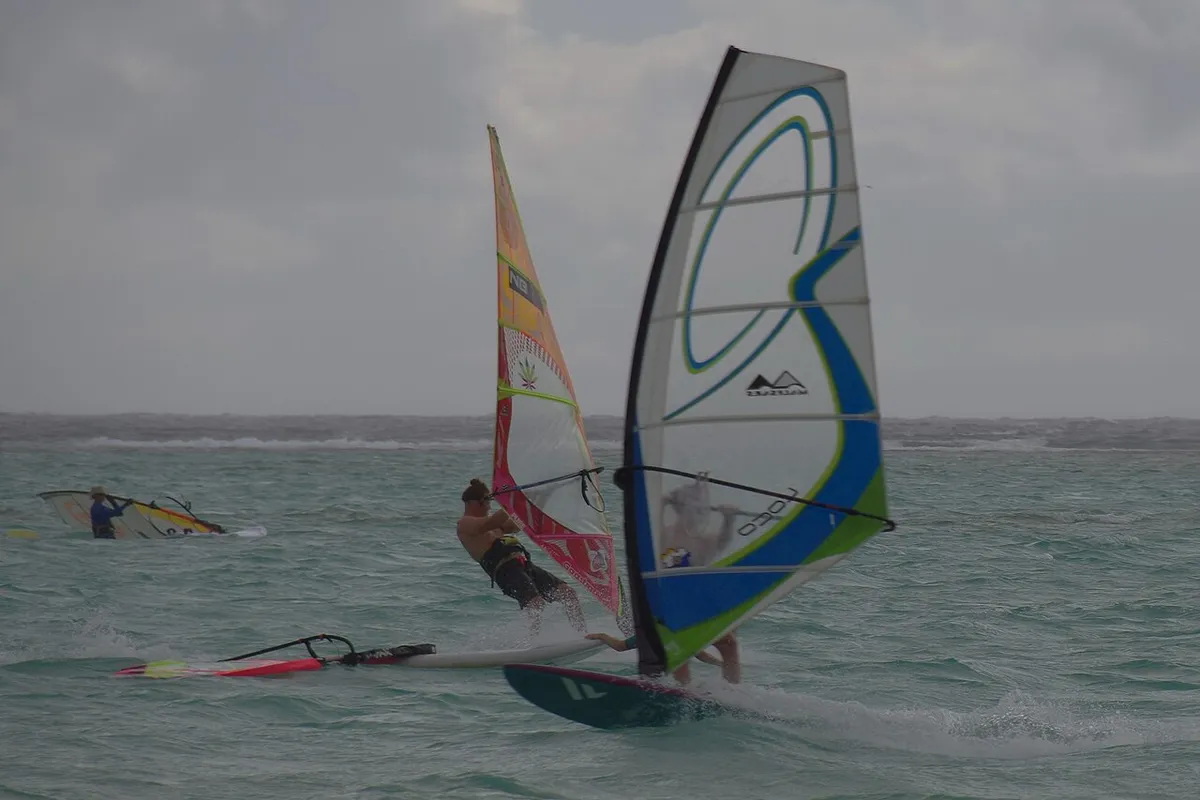
Fisherman's Huts is Aruba's main windsurf and kitesurf beach, with steady east trade winds averaging around 20 knots and shallow, calm water — often only waist-deep — that works well for families and beginners as well as advanced riders. It's also home turf for the annual Aruba Hi-Winds festival, a windsurf, kite and wing foil competition held in mid-May; the 2026 edition runs 13–18 May and marks the event's 38th year. Read our full Aruba guide for schools, other spots and getting there.
When to go kitesurfing in the Caribbean
The three destinations don't peak at the same time, which helps if you're planning a multi-island trip or trying to dodge the UK off-season. Cabarete has two windows: June to August is the most consistent, often 15–25 knots daily, and December to April is slightly lighter and great for beginners, running 14–24 knots from January to April. September to December is calmer, around 10–20 knots. Bonaire's Lac Bay is windy from December to August, with the strongest and most consistent conditions March to July as the north-east trade winds set in at 15–25 knots; September to November is calmer, 12–15 knots, and a good beginner window. Aruba's season runs December to August, with steadier 15–20 knot trades from December to April building to the windiest stretch, May to July, at 20–30 knots, and a calmer patch from August to November at 10–18 knots.
Line the three up and there's a rideable window for most of the year: strong Cabarete wind in summer, Bonaire's peak spanning spring into summer, and Aruba covering the winter and early summer months either side.
The hurricane season caveat
No point glossing over it: the Atlantic hurricane season runs roughly June to November, peaking August to October, and it should factor into any Caribbean trip planning. The Dominican Republic sits more directly in the hurricane belt than Aruba or Bonaire, so summer and autumn trips there carry more storm risk. Aruba and Bonaire, by contrast, lie further south and largely outside the main hurricane track — a genuine reason both islands stay popular with kite and windsurfers even during the North Atlantic's stormier months.
Safety and practical considerations
Emergency numbers differ by island, so it's worth noting them before you travel rather than looking them up in a hurry. In the Dominican Republic, the national emergency number is 911, which works nationwide except in some areas near the Haitian border; the tourist police (POLITUR) can also be reached on 809-222-2026. The habits that travel with you are on our kitesurfing safety page. The country's ambulance and emergency response infrastructure is less standardised than in Europe, so travel insurance with medical evacuation cover earns its keep here rather than just ticking a box. Bonaire, a special municipality of the Netherlands, uses 911 for police, 912 for ambulance, 919 for fire and 913 for the Coast Guard and marine emergencies (VHF channel 16 also works), with the Dutch Caribbean Coast Guard covering its waters. Aruba's emergency number is 911 for police, fire and ambulance, and 913 reaches the Coast Guard Maritime Operations Center for emergencies at sea, again monitored on VHF channel 16.
What to pack
Leave the wetsuit at home. Air and water stay warm year-round across all three destinations, so boardshorts and a rash vest cover almost every session; a thin lycra top is about as much coverage as you'll want even at Lac Bay's shallow best. Reef-safe sunscreen is worth prioritising over your usual bottle, since coral reefs sit close to several of these spots, including the one protecting Cabarete's Bozo Beach. Most schools across all three islands rent full kit — kites, boards, harnesses and sails — so there's rarely a need to fly with your own gear; travelling light and hiring locally is the norm here.
More Caribbean islands to explore
Beyond these three flagship spots, Matosurf now covers thirteen more Caribbean destinations, each with its own full guide: Curaçao (Sint Joris Bay, the third of the ABC Islands alongside Aruba and Bonaire), Puerto Rico (Rincón, the birthplace of Caribbean surfing), Martinique (Pointe Faula, no passport needed for French/EU travellers), Guadeloupe (Le Moule and Saint-François), Barbados (Silver Sands and the Soup Bowl at Bathsheba), Cuba (Varadero and Cayo Guillermo), Turks and Caicos (Long Bay Beach, Providenciales), Tobago (Pigeon Point, the most sheltered lagoon in the region), Jamaica (a surf island first, with Bull Bay near Kingston and Boston Bay in Portland), Antigua (side-onshore Jabberwock Beach and flat water off Green Island), St Lucia (Anse de Sables and Cas-en-Bas, two trade-wind bays on the Atlantic side), Isla Margarita, off Venezuela's coast (El Yaque, a shallow, wind-reliable bay — a genuine spot, but one that carries real, current travel-advisory risk the other islands here don't; read the page for the honest version before booking) and the Bahamas (Coco Plum Beach on Great Exuma and Nassau's trade-wind beaches; strictly an Atlantic archipelago rather than a Caribbean Sea one). Explore them all on our destinations page.
Caribbean kitesurfing FAQ
Which Caribbean island is best for kitesurfing?
Cabarete in the Dominican Republic is the region's best-known kite destination, with over 300 windy days a year across three beaches. Aruba's Fisherman's Huts and Bonaire's Atlantis and Pink Beach also deliver reliable trade winds, though kitesurfing itself is banned in Bonaire's flagship spot, Lac Bay, to protect its mangroves and birdlife.
Why is kitesurfing banned at Lac Bay in Bonaire?
Lac Bay is a Ramsar-listed wetland and an Important Bird Area, home to mangroves and roosting frigatebirds. Kitesurfing is banned there to protect this ecology, so kitesurfers head to Atlantis Beach or Pink Beach elsewhere on Bonaire, while Lac Bay itself is reserved for windsurfing.
When is the best time to go kite or windsurfing in the Caribbean?
The three destinations have complementary windows rather than identical ones. Cabarete peaks June to August and again December to April, Bonaire's Lac Bay is strongest March to July, and Aruba is windiest May to July, within a broader good-wind season running December to August. Combined, that gives a rideable window for most of the year.
Do I need to worry about hurricane season in the Caribbean?
Yes, it's worth building into your planning. The Atlantic hurricane season runs roughly June to November, peaking August to October. The Dominican Republic sits more directly in the hurricane belt, while Aruba and Bonaire lie further south, outside the main track, which is a genuine reason both stay popular even in summer.
Do I need a wetsuit in the Caribbean?
No. Air and water stay warm year-round across all three destinations, so boardshorts or a rash vest are usually enough. Most kite and windsurf schools rent full kit locally, so you don't need to travel with your own gear.