📍 Jamaica, Caribbean
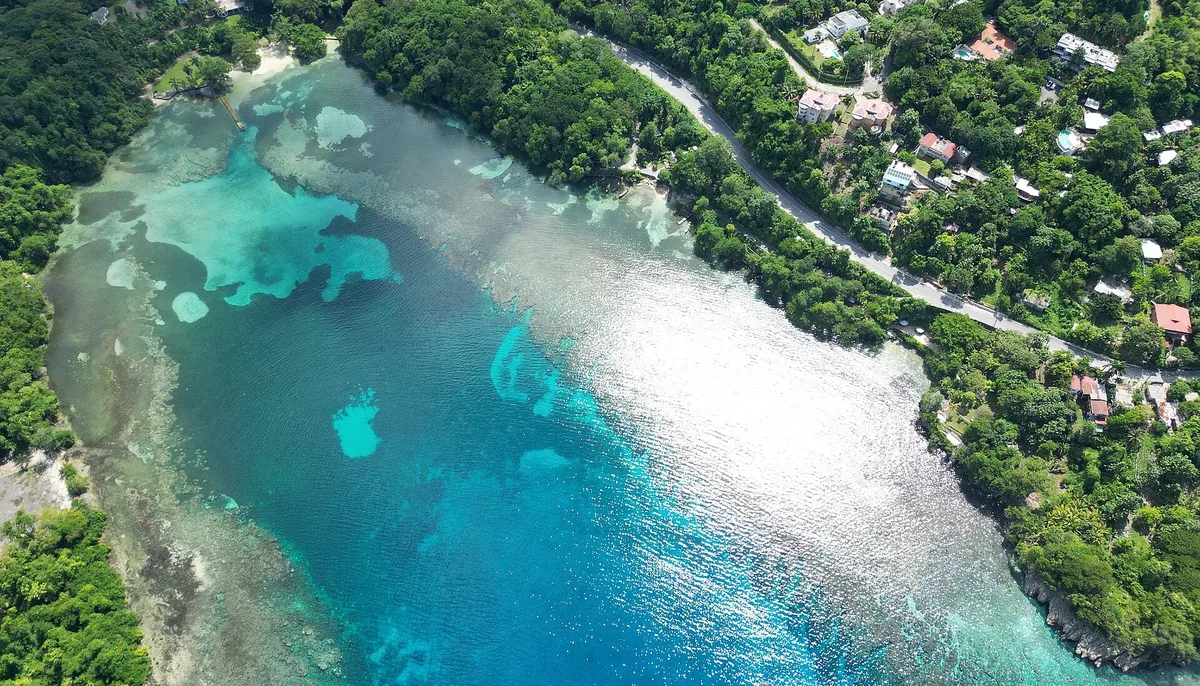
Photo: San San Bay, Port Antonio – Layneartz19 / Wikimedia Commons, CC BY-SA 4.0
Most of our Caribbean guide is about trade-wind kite and windsurf spots. Jamaica is different: what it's known for is surf, on two coasts that work at different times of year. There's a smaller kitesurfing scene on the north coast too, covered further down.
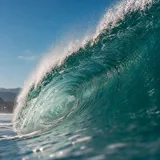
A cluster of reef and cobblestone breaks on the south coast, east of Kingston – Copa, Cable Hut, Bob Marley Beach and Lighthouse – with the heavier reef at Makka a little further east. It's where Jamaica's surf community grew up.
Surf guide arrow_forward
A small bay in Portland, near Port Antonio, usually described as a right-hander over reef and rock. It picks up trade-wind swell and, in winter, bigger north swells behind cold fronts.
Surf guide arrow_forward
Melissa hit Jamaica as a Category 5 hurricane on 28 October 2025. We couldn't confirm which surf camps and schools are trading again; treat every name on this page as something to check directly.
Watersports safety arrow_forwardWhat to know before you book, and what we could not confirm.
Several breaks close together east of Kingston, from learner-friendly to expert-only.
Bull Bay lies on the south coast of St Andrew, a short drive east of Kingston, and is the island's best-known surf area. The name refers to a string of breaks rather than a single wave – Copa (also called Copacabana), Cable Hut, Bob Marley Beach, Lighthouse and the area around Jamnesia, the surf camp at Eight Miles. Bottoms are reef and cobblestone, and which break is working on a given day depends on the size and direction of the swell.
View Bull Bay on Google Maps open_in_newCopa and Cable Hut are usually the breaks recommended for beginners when the swell is small. Lighthouse, described as a shallow reef with a harder take-off, suits experienced surfers. We couldn't find consistent sources on which way each of these breaks peels, so we've left that out rather than guess.
Makka lies east of Bull Bay, towards Yallahs in the parish of St Thomas. It's a powerful, hollow wave over sharp, shallow reef, and strictly for advanced and expert surfers. Sources disagree on whether it's mainly a right or a left, so check locally. Makka has hosted the Makka Pro contest, but we couldn't confirm when the most recent edition was held.
The best-known wave on the north-east coast, plus reef breaks further along.
Boston Bay is a small bay in Portland, east of Port Antonio. Surf guides usually describe it as a right-hand wave over reef, though it can throw up other peaks depending on the swell. Waves of around 3-6ft are reported as typical, and at the smaller end it's regarded as manageable for beginners as well as experienced surfers. Local surfers on the beach are reported to rent out boards and give informal lessons – this is not one branded school, so kit, prices and teaching quality will vary.

Surf guides warn of rocks and sea urchins; one describes a rip along the eastern rocks, a shorebreak and stronger outside peaks when the swell is bigger. After heavy rain, runoff can muddy the water for a while. None of this rules out a lesson on a small day, but it's a reason to go out with someone who knows the bay.
Further along the Portland coast, Long Bay has reef breaks for intermediate and advanced surfers. Outback is described as the more powerful of them, a strong wave over shallow reef. Coverage of this stretch is thinner than for Boston Bay, so ask locally before you drive out.
A small scene, built largely by one family, and hit hard by the 2025 hurricane.
Jamnesia, at Eight Miles in Bull Bay, is the best-documented surf camp on the island. It's run by the Wilmot family, and Billy 'Mystic' Wilmot is widely credited with building Jamaica's surf scene there. As of late 2025 its website advertised lessons with professional surfers, along with board rental and repairs. Bull Bay was evacuated before Hurricane Melissa made landfall, and we could not confirm whether Jamnesia is operating in 2026. Contact the camp directly before you plan a trip around it.
At Boston Bay, lessons and board hire come mainly from local surfers on the beach rather than a formal school. Great Huts, a place to stay near the bay, is reported to arrange surf sessions with local instructors; we couldn't confirm its current schedule or whether that runs every season.
The Jamaica Surfing Association is the island's national surfing body, and recent reporting credits its founding to Billy Wilmot and other Jamaican surfers. It develops the sport and organises competition, including the Makka Pro. It isn't a surf school, and we found no evidence that it offers public lessons. We couldn't confirm the year it was founded.
Pick your coast by the time of year, not the other way round.
Boston Bay and the Portland coast take trade-wind swell from the east and north-east, plus larger north swells pushed down by winter cold fronts. Surf guides generally point to November to March as the window for those bigger, more dependable swells, though rideable days can turn up at other times of year.
Bull Bay and Makka face south, and pick up trade-wind swell and swell from tropical storms and hurricanes passing through the Caribbean in summer and early autumn. Those storm swells come and go, so you can't plan a trip on them, but the south coast isn't strictly a summer-only coast either and is reported as surfable year-round when conditions line up.
The official Atlantic hurricane season runs from 1 June to 30 November. The same systems that send swell to the south coast can close roads, airports and beaches, so if you travel in those months, keep your plans flexible and your travel insurance current.
A smaller scene than the surf, on the north coast.
Burwood Beach, in Trelawny on the north coast near Falmouth, is the kitesurfing spot that turns up most often in the sources we found. Spot listings describe the wind as sideshore from the right at around 15-26 knots (17-30 mph), with the main season roughly December to April and lighter conditions in the mornings. The water shelves gradually and is reported to be shallow with no reef at the launch, which makes it a reasonable place to learn.
A 2026 travel feature names two operators: Brian's Windsurfing, Kitesurfing and SUP at Burwood Beach, and Water Network Jamaica, described as an IKO-certified guide offering rental and guiding on the north coast. We couldn't confirm either independently, and Trelawny was among the parishes damaged by Hurricane Melissa, so check with them directly before you travel. Read our kitesurfing guide and windsurfing guide if you're new to either.
Famous beaches, but not documented surf spots.
Negril's Seven Mile Beach is one of Jamaica's best-known beaches, but it's a sandy swimming and watersports beach, not an established surf break, and we found no reliable source describing a consistent wave there. The same goes for Treasure Beach on the south-west coast. We found no current evidence of a dedicated kitesurfing school in Negril, Treasure Beach or Runaway Bay either. The west and south-west also took the worst of Hurricane Melissa, which is one more reason to check before you plan anything there.
What's known, and what isn't, about the surf coasts.
On 28 October 2025 Hurricane Melissa made landfall near New Hope in Westmoreland as a Category 5 storm. The south-west – St Elizabeth and Westmoreland – suffered the worst damage, with Black River among the hardest-hit towns. Portland, home to Boston Bay, experienced flash flooding and landslides, while Bull Bay was evacuated before the storm arrived. Both international airports were disrupted for a time.
We could not find a reliable, spot-by-spot account of the damage at Bull Bay, Boston Bay or Burwood Beach, nor confirmation of which surf and kite businesses have reopened. Recovery was still going on into 2026. Before you book, check road access and accommodation, confirm power and the operator you plan to use, and don't assume a beach or business is open because it appears in an older guide.
Choose your airport by the coast you're surfing.
Norman Manley International Airport (KIN), in Kingston, is the closest airport to Bull Bay, roughly half an hour to an hour away by road depending on traffic. Boston Bay is reported to be around 35 minutes from Port Antonio and a much longer drive from Kingston. Sangster International Airport (MBJ), in Montego Bay, is the gateway for the north coast and Burwood Beach, while Ian Fleming International Airport (OCJ), near Ocho Rios, is a third option. Journey times here are estimates; roads may still be affected by storm damage.
British Airways and Virgin Atlantic have flown between London and Jamaica, and TUI has run flights to Montego Bay from UK regional airports, often seasonally. Which routes are running changes, and flights were disrupted after Hurricane Melissa, so check current schedules with the airline before you book.
No surf-specific national rule, Jamaica's own emergency numbers, and travel advice that you should check at the source.
Responsibility is split between several bodies. The Maritime Authority of Jamaica (MAJ) regulates vessels, including the registration of pleasure craft. Beaches come under the Beach Control Act, with the National Environment and Planning Agency (NEPA) involved in beach licensing. The Tourism Product Development Company (TPDCo) licenses tourism attractions, including watersports operators, and the Jamaica Defence Force Coast Guard carries out patrol and search and rescue. We found no national rule specific to surfing, kitesurfing or stand-up paddleboarding: no distance limit, no lifejacket requirement, no permit. That doesn't rule out local beach rules, so ask your school or the beach operator on the day. If you book lessons, it's reasonable to ask whether the operator holds a TPDCo licence.
In Jamaica, dial 119 for the police and 110 for fire and ambulance. We couldn't confirm a dependable direct public number for the Coast Guard, so in an emergency at sea, call 119 and let them pass it on. These are Jamaica's numbers, not the UK's: 999 won't reach anyone there, and there's no RNLI.
Jamaica carries foreign-government travel advice covering violent crime, with particular neighbourhoods singled out, as well as hurricanes and road safety. US advice has named parts of Kingston, Spanish Town and Montego Bay among higher-risk areas. Bull Bay is close to Kingston, so read the Kingston-area guidance with that in mind. This advice changes, and because wording may be out of date we're pointing you to the source – check the UK FCDO or the US State Department, whichever applies to you, before booking and again shortly before you travel.
What surfers ask most before booking.
The two main areas are Bull Bay, east of Kingston on the south coast, and Boston Bay, near Port Antonio on the north-east coast. Makka, east of Bull Bay in St Thomas, is the heavy reef for experts.
For the north-east coast and Boston Bay, November to March, when winter cold fronts send bigger north swells. The south coast around Bull Bay picks up swell from tropical systems in summer and early autumn, and can have waves at other times too.
Yes, on small days: Copa and Cable Hut at Bull Bay, and Boston Bay at the smaller end. Most breaks are over reef, rock or cobblestone, though, so learn with someone local. Lighthouse and Makka are not for beginners.
We couldn't confirm it. Jamnesia in Bull Bay is the best-documented camp, but we found no reliable evidence of its 2026 status, or of which other operators have reopened. Contact them directly before booking.
Yes, mainly at Burwood Beach in Trelawny on the north coast, with a reported season of roughly December to April. It's a much smaller scene than the surf, and we couldn't independently confirm which kite operators are trading.