

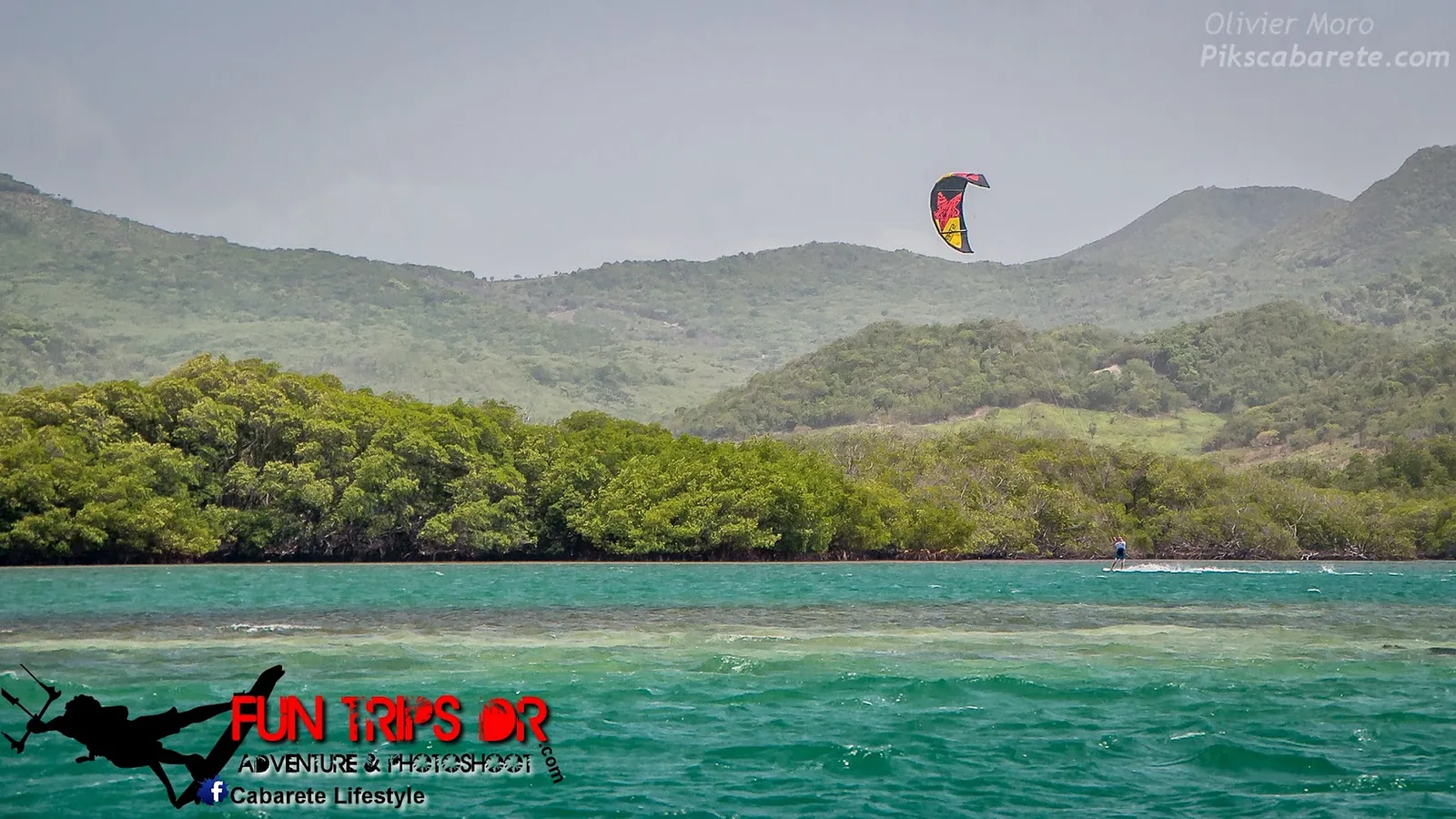
A lagoon closed off by coral, a long way from anywhere
Cabarete made the Dominican north coast famous for thermal wind and waves. Buen Hombre, three hours further west, does the opposite. A coral reef stops the swell well offshore, and behind it sits a huge sheet of flat water you can stand up in. The village of Buen Hombre (sometimes written Buenhombre) is small, dry and isolated, and that isolation is part of the deal – it explains both the quiet on the water and the rough edges on land.
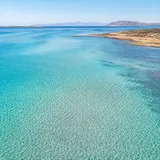
Flat water, even when it's blowing
The reef soaks up the swell before it enters the lagoon. The water stays smooth as the wind builds, which makes this a rare kitesurfing learning and freestyle patch by Caribbean standards.
Getting started in kitesurfing arrow_forward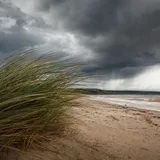
Trade wind from November to July
The wind comes in cross/side-onshore, 18 to 25 knots (21–29 mph) through the season, peaking December to April. It blows all year, but late summer is the least reliable window.
When to go for wind arrow_forward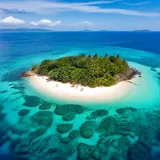
Cays within downwinder range
Cayo Arena is about 9 miles (15 km) downwind, with a boat back. Further out, the seven cays of the Siete Hermanos close off the horizon.
Caribbean guide arrow_forwardBuen Hombre kite spot at a glance
The numbers worth knowing before you book.
- Location: Playa Buen Hombre, province of Monte Cristi, the far north-west of the Dominican Republic, about 60 miles (100 km) west of Puerto Plata.
- Water: a shallow lagoon closed off by a coral reef, permanently flat, with standing depth over a good part of the riding area.
- Wind: cross/side-onshore trade wind, 18 to 25 knots (21–29 mph) in season, arriving from the right as you look out from the beach.
- Season: November to July, peaking December to April. August to October is patchier, and falls in the heart of hurricane season.
- Level: particularly good for beginner kiters and for building skills, and the flat water suits freestyle too.
- Water temperature: warm all year – a rash vest or a shortie is plenty, and a full wetsuit has no place here.
- Trips: Cayo Arena (Paradise Island) about 20 minutes away by boat, with a downwinder of roughly 9 miles (15 km); Cayos Siete Hermanos further offshore.
- Airports: Santiago (STI) around 2 hours by road, Puerto Plata (POP) around 3 hours.
- Comfort: a fishing village of a few hundred people. Intermittent electricity, weak mobile signal, limited running water.
- Insects: mosquitoes and other biting insects are plentiful; insect repellent is strongly recommended.
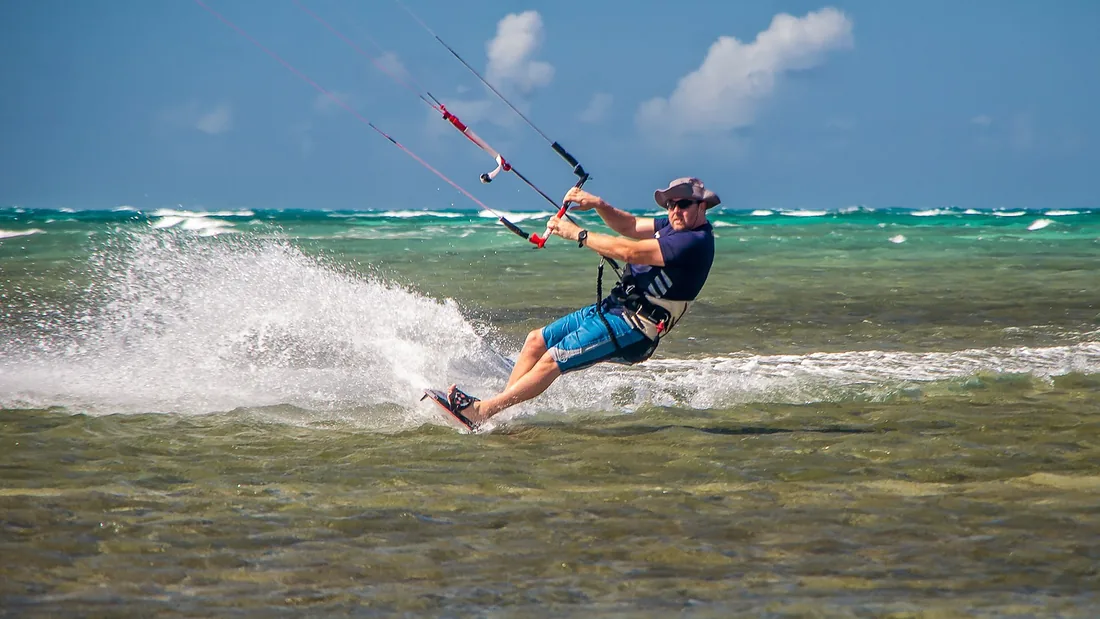
The lagoon and its coral reef
The geography does all the work here. A coral reef runs offshore of the beach and breaks the Atlantic swell before it reaches the coast. Between that reef and the sand lies a shallow lagoon where the sea never really gets up, even once the trade wind settles in properly. It's the set-up kitesurfers want when they're learning: no chop to take on the chin, no wave to get past on the way out, and enough standing depth across much of the area to sort your kite out on your feet.
The wind arrives cross/side-onshore, from the right as you look at the sea. That orientation matters more than it sounds for a beginner, because drifting downwind brings you back to the beach rather than out to sea, which changes what a mistake costs you. The trade-off is the reef itself. It marks out the playing field, and you want to know where it sits before you head off downwind. Our notes on kitesurfing safety earn their keep here, where help isn't five minutes away.
The cays offshore: Cayo Arena and the Seven Brothers
What you can see from the beach, and what you can do out there.
Cayo Arena, the signature trip
About 20 minutes away by boat, Cayo Arena – you'll also see it called Paradise Island – is a coral sandbank sitting in very clear water and ringed by reef. It's the classic day trip in this part of the country, and more to the point it's where the spot's best-known downwinder ends: roughly 9 miles (15 km) under the kite from the beach, with a boat pick-up once you arrive. The format appeals because it turns a session into a passage, but it's always done with a guide. Between the shallows, the coral and the distance from help, nobody goes out there alone.
Cayos Siete Hermanos, the reserve
Further offshore, seven flat and uninhabited cays line up to the north-west of Monte Cristi bay. The Cayos Siete Hermanos are protected within Monte Cristi national park and serve as a nesting site for seabirds and a refuge for the hawksbill turtle. You get there by boat rather than on an improvised downwinder, and the reserve status comes with rules. This is a wildlife site first and a session backdrop second.
A dry climate, and what that changes
The Dominican north-west looks nothing like the postcard Caribbean. The Monte Cristi region is semi-arid: dry forest, cactus, salt flats and mangrove, low thorny scrub rather than jungle. It rains little, the sun is fierce and the air stays dry, which makes the heat easier to handle than elsewhere on the island but speeds up dehydration without you noticing.
In practice that means carrying plenty of water, taking sun protection seriously and wearing a long-sleeved rash vest rather than spending the afternoon paying for a burnt back. Glare off the clear water of the lagoon adds to the exposure. Our guide to sunscreen for watersports covers what actually stays put in salt water.
Temperatures and wind season, month by month
Monthly averages from the Monte Cristi station, and the wind season as the local schools describe it.
| Month | Air high | Air low | Water | Wind |
|---|---|---|---|---|
| Jan | 28 °C | 22 °C | 27 °C | Peak |
| Feb | 28 °C | 22 °C | 26 °C | Peak |
| Mar | 28 °C | 22 °C | 26 °C | Peak |
| Apr | 29 °C | 23 °C | 27 °C | Peak |
| May | 29 °C | 24 °C | 27 °C | In season |
| Jun | 31 °C | 25 °C | 28 °C | In season |
| Jul | 32 °C | 26 °C | 28 °C | In season |
| Aug | 32 °C | 26 °C | 29 °C | Least reliable |
| Sep | 32 °C | 25 °C | 29 °C | Least reliable |
| Oct | 31 °C | 24 °C | 29 °C | Least reliable |
| Nov | 29 °C | 23 °C | 28 °C | In season |
| Dec | 28 °C | 22 °C | 27 °C | Peak |
Worth knowing: weather-station wind averages (around 20 km/h, roughly ten knots) measure something different from the rideable trade wind, quoted at 18 to 25 knots. The two figures are not comparable, which is why only the season is shown here.
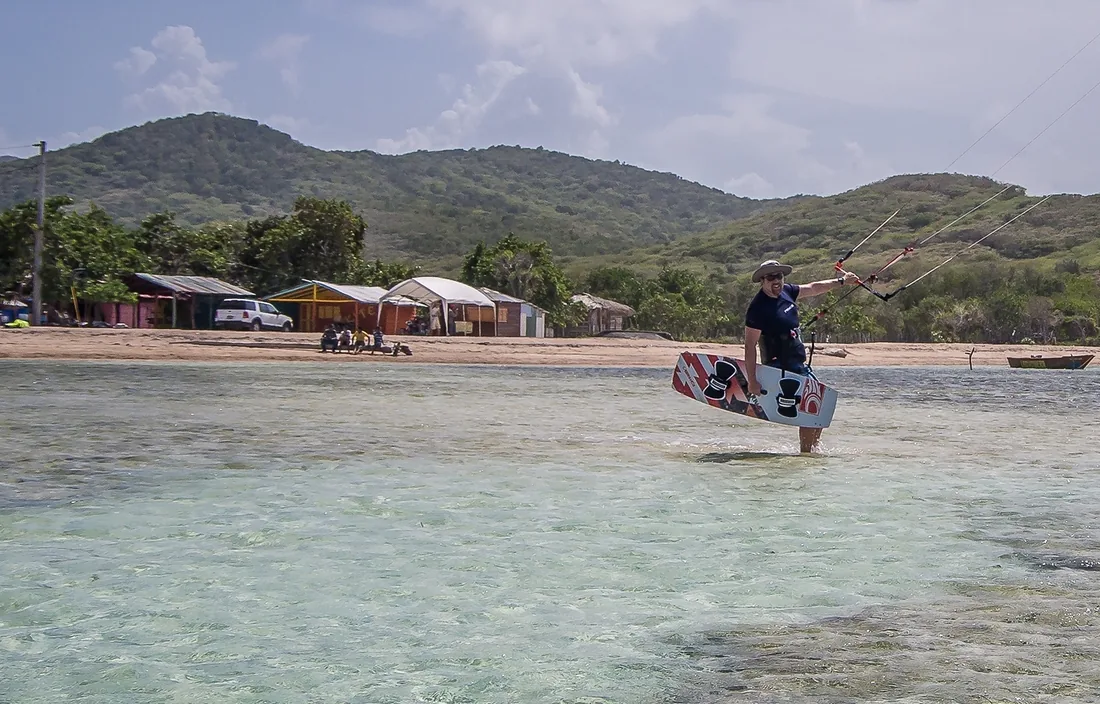
Getting to Buen Hombre
Via Santiago (STI) or Puerto Plata (POP)
Two airports serve the area. Santiago (Cibao International, STI) is the closer of the two in travel time, at around two hours by road. Puerto Plata (Gregorio Luperón, POP) takes about three hours to cover roughly 60 miles (100 km), and that average says everything about the state of the road on the final stretch. From Europe, Puerto Plata is often the easier one to reach, even if it adds to the transfer.
The last stretch
Buen Hombre sits at the end of a road that deteriorates as you approach the village. Almost every place to stay will arrange the airport transfer, and that's the sane option for a first visit: signposting is thin, and the drive often finishes in the dark if your flight lands late in the day.
When to go kiting at Buen Hombre
December to April, the heart of the season
This is the most reliable window. The trade wind settles in, rideable days stack up one after another and the lagoon stays flat. It's also when the contrast with a British winter is at its sharpest, which is why the local schools treat it as high season.
November and May to July, the shoulders
The wind is still there but a little softer, with more light days in the mix. These months suit anyone starting out, or arriving with foil kit and no need for 25 knots (29 mph) to have a good time.
August to October, hurricane season
The wind turns patchy, and more to the point these months fall in the heart of the Atlantic hurricane season, which runs June to November and peaks August to October. The Dominican Republic sits in the usual track of these systems, unlike Aruba or Bonaire further south. That doesn't rule out a trip, but it does need planning, insurance included.
Safety and useful numbers
- Emergencies: 911 covers the whole of the Dominican Republic (police, fire and medical).
- POLITUR: the tourist police have units around the country and are the people to talk to if something goes wrong with an operator.
- Mosquitoes and insects: the area has mangroves, and mosquitoes and other biting insects are plentiful. Insect repellent is strongly recommended. The US CDC lists dengue and Zika among the mosquito-borne diseases in the Dominican Republic, and advises a repellent with DEET (20% or more), picaridin, oil of lemon eucalyptus (OLE or PMD) or IR3535, covering clothing and an air-conditioned or screened room. A doctor or travel clinic can advise on precautions before you go (source: CDC).
- Isolation: medical infrastructure in the region is limited and response times are longer than in Cabarete or Puerto Plata. Insurance that covers repatriation earns its place here.
- On the water: stay within sight of the reef, always tell someone on land where you're going, and remember that mobile coverage on the beach is weak.
Kitesurfing at Buen Hombre: FAQ
The questions that come up most before booking.
Is Buen Hombre any good for beginner kitesurfers?
It's one of the spot's strongest cards. The reef breaks the swell before it reaches the lagoon, so the water stays flat even as the wind builds, and you can stand up across much of the riding area. The trade wind arrives cross/side-onshore from the right, which means drifting downwind takes you back towards the beach rather than out to sea. The village is remote, though, so book your first sessions with a school instead of going it alone.
When is the kite season in Buen Hombre?
The main season runs from November to July, peaking December to April. The trade wind usually settles between 18 and 25 knots (21–29 mph), and the windiest months regularly go beyond that. There's wind all year, but August to October is the least reliable stretch – and it's also the heart of the Atlantic hurricane season.
Can you do kite downwinders from Buen Hombre?
Yes, and it's the signature ride here. The best-known downwinder covers about 9 miles (15 km) to Cayo Arena, also known as Paradise Island, with a boat pick-up from the cay. Schools also run longer boat trips out to the Cayos Siete Hermanos. These runs are always guided, and for good reason – between the reef, the shallows and the lack of quick rescue, there's no room to improvise.
Which islands lie off Buen Hombre?
Two quite different groups. Cayo Arena is a small coral sandbank about 20 minutes away by boat, ringed by very clear water and reef, and it's the classic day trip in this corner of the country. Further offshore, the Cayos Siete Hermanos form a chain of seven flat, uninhabited cays protected within Monte Cristi national park, where seabirds nest and hawksbill turtles find refuge.
What is the village of Buen Hombre like?
It's a fishing village of a few hundred people, with no resort and nothing laid on for tourists. Be clear on what that means before you book: electricity isn't guaranteed 24 hours a day, the mobile signal is weak, running water isn't available everywhere, and the places that work online rely on satellite internet. That's exactly why the water never gets crowded, and it's also why the trip is a demanding one if you're planning to work remotely. Pack insect repellent too: mosquitoes and other biting insects are plentiful.