
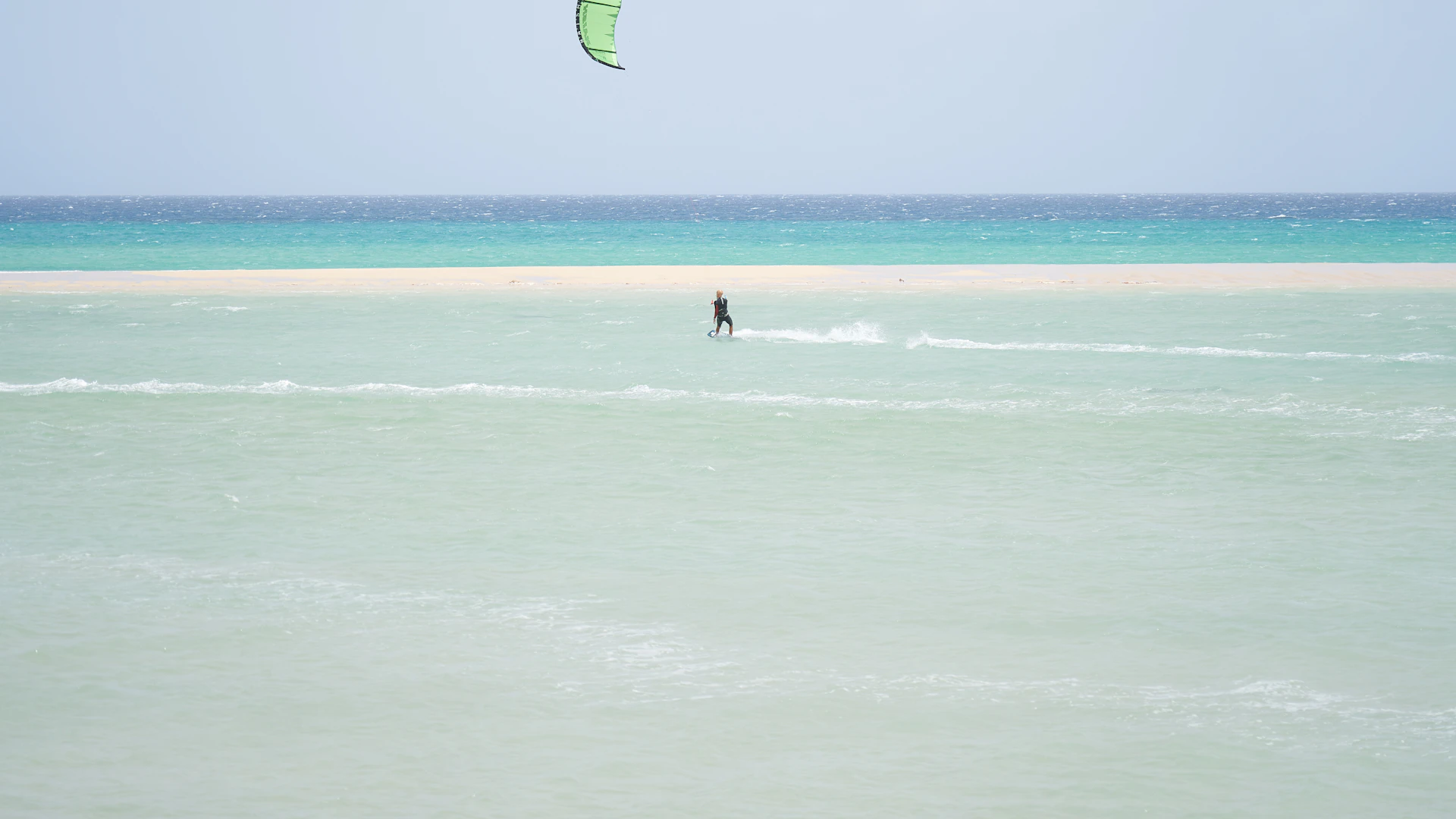
📍 Jandía, Fuerteventura
Nearly two miles of flat-water lagoon, and an open sea that blows for most of the year.
At high tide, a sandbar forms a shallow lagoon of flat water. It's the ideal terrain for learning windsurfing and kitesurfing and for practising freestyle without any waves.
See destinations arrow_forward
Sotavento hosts the Fuerteventura Windsurfing and Wingfoil World Cup (PWA World Cup) every summer, with slalom and freestyle events in July and August.
See destinations arrow_forward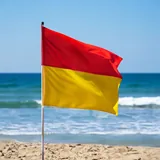
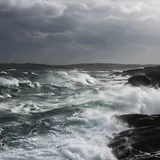
As the lagoon empties, currents can form heading out to sea. Watch the tides, respect the flag system and follow guidance from the centres and lifeguards.
Safety arrow_forwardThe trade wind, the water temperature and the gear you'll need at Sotavento.
The prevailing wind is the north-easterly trade wind, which accelerates around the terrain of Jandía and blows strong and steady for much of the year, in a cross-offshore direction. From May to September there's a 75% to 95% chance of average winds of 25 to 30 knots, with gusts reaching 40 knots in July and August. The rest of the year the average sits between 15 and 25 knots, so there's almost always something to sail.
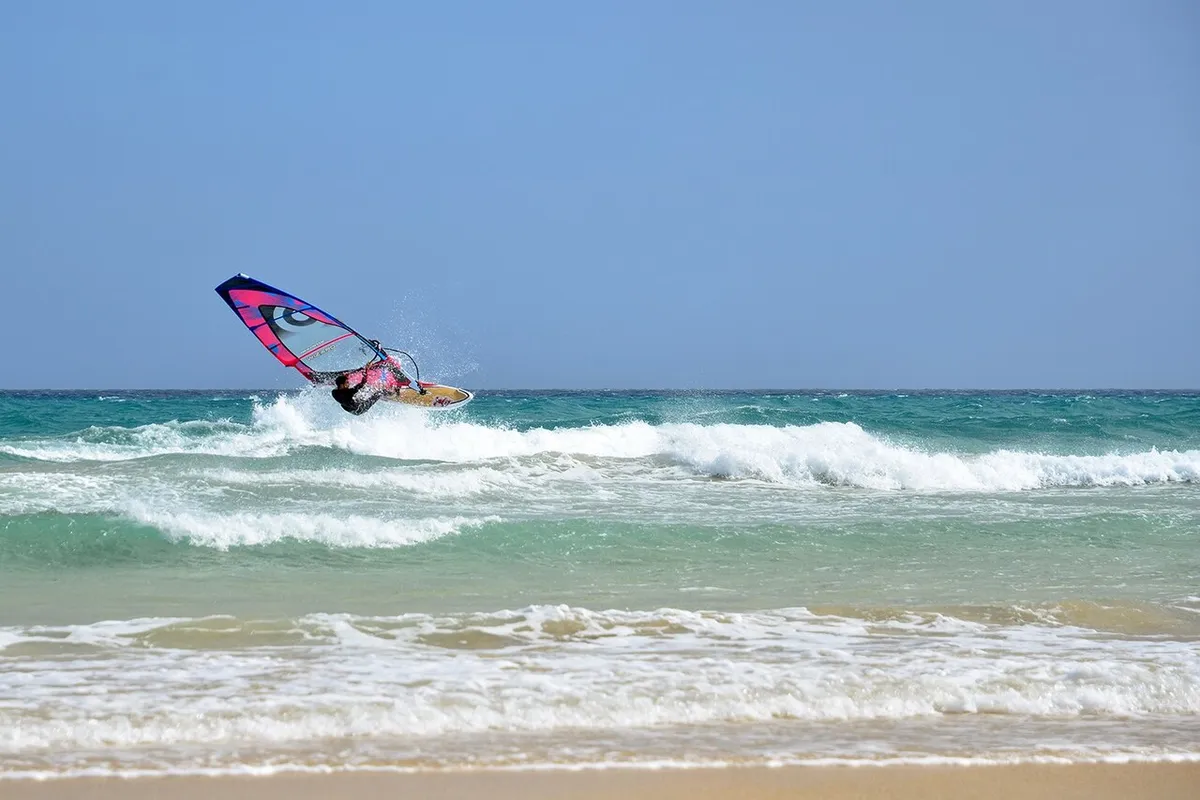
Water temperature stays between 18°C and 23°C all year round, with September the warmest month at an average of 23°C. A 3/2mm wetsuit or a shortie is enough for most conditions; in the warmer months many riders sail in a lycra or short suit.
Playa de Sotavento hosts the Fuerteventura Windsurfing and Wingfoil World Cup (PWA World Cup), held every year in July and August. The programme includes Slalom-X and Freestyle in windsurfing, and FreeFly-Slalom and Surf-Freestyle in wingfoiling. In 2026 the dates are expected to run from 17 July to 1 August.
A lagoon for learning and working on manoeuvres, and open sea for those after speed and waves.
It forms between the shore and the sandbar as the tide rises, offering flat, shallow water. It's the perfect spot for your first tacks, for freestyle and for polishing manoeuvres in a safe environment, suitable for both beginners and intermediate riders. As it depends on the tides, conditions change throughout the day, so it's worth checking the tide tables before rigging up.
View on Google Maps open_in_new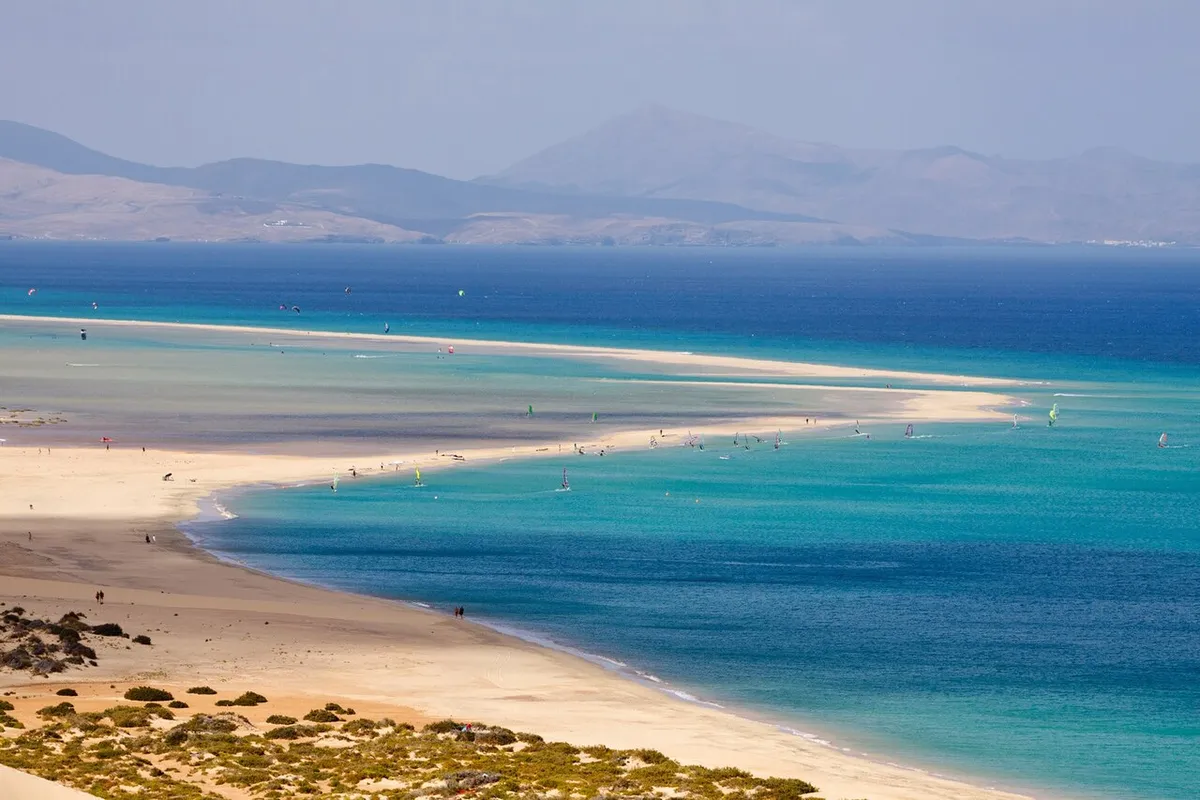
Beyond the sandbar, the open sea offers chop and small-to-medium waves, suited to more advanced riders looking for speed or wanting to practise wave riding. In the Risco del Paso area, upwind of the centre, waves run to 3 to 6ft (1 to 2 metres) over a sandy bottom with no rocks.
View on Google Maps open_in_newNorth of Costa Calma, this bay offers flat water and a depth that increases gradually, without the tide dependency of the lagoon. It's a well-regarded spot for hydrofoiling and freestyle, and has hosted speed and freestyle events.
View on Google Maps open_in_newLeading centres for windsurfing, kitesurfing and wingfoiling lessons and equipment hire.
Located at Risco del Paso, it offers windsurfing and kitesurfing lessons and equipment hire, with its wingfoiling courses run from the Costa Calma centre. It stands out for its year-round windy location and shallow waters. We've not been able to confirm whether it holds accreditation with the Federación Canaria de Vela or the Real Federación Española de Vela, so ask directly.
This is the main centre at Playa Barca, home to the PWA World Cup. It works with modern equipment and is a benchmark for these sports at Sotavento. Its accreditation with the Federación Canaria de Vela or the RFEV isn't published anywhere, so raise it when you book.
In Matas Blancas, near Costa Calma, this school offers windsurfing and kitesurfing lessons and equipment hire, specialising in flat-water conditions. As with the other two, no federation accreditation is stated – ask before you sign up.
Official bodies, flags and the currents to watch out for at Sotavento.
Dial 112, Spain's emergency number, or raise Salvamento Marítimo on VHF channel 16. Through the high season the Spanish Red Cross usually keeps lifeguards on the busiest beaches for assistance and first aid.
A green flag means bathing is permitted; yellow means caution, with moderate risk from currents or swell; red means bathing prohibited and serious danger; purple warns of hazardous marine life such as jellyfish. Read it before you go in.
As the lagoon empties with the tide, currents can form that pull out to sea, so it's important to pay close attention to the tide tables and follow guidance from the centres and lifeguards. The Real Federación Española de Vela (RFEV) and the Federación Canaria de Vela regulate these sports, and a school holding qualifications they recognise is a reasonable mark of quality.
Jandía, Costa Calma and Morro Jable – the base for a week of wind.
The Jandía peninsula packs Fuerteventura's leading windsurfing and kitesurfing centres into a few miles. Costa Calma, Morro Jable and the resorts nearby offer accommodation, restaurants and everything you need for a week with your board, with the beaches of the south-east right on the doorstep.
Calmer days are a good excuse to explore Jandía's mile-long beaches, head to the dunes in the north or discover the island's interior. The peninsula is a protected area with desert-like landscapes and golden sand well worth exploring between sessions.
Fly into Fuerteventura, then a good hour's drive to the lagoon.
The gateway is Fuerteventura Airport (FUE), in Puerto del Rosario, with connections from mainland Spain and much of Europe. From there it's a little over an hour's drive to the Sotavento area.
From the airport, take the FV-2 heading south, towards Morro Jable and Jandía. The drive to the Costa Calma and Jandía area takes around 1 hour 15 minutes. The ION CLUB Risco del Paso centre is at kilometre marker 72. Hiring a car is the most convenient way to get between spots and explore the island.
Public bus routes exist, though they're less direct to the specific sailing spots. Some centres offer a transfer service from Costa Calma, Morro Jable, Jandía, Esquinzo and La Pared, very handy if you're travelling with bulky gear.
There's wind all year round, but summer is the standout season at Sotavento.
From May to September the trade winds blow stronger and more consistently, averaging 25 to 30 knots with gusts reaching 40 knots in July and August. This is the best time for windsurfing and kitesurfing, and also when the PWA World Cup takes place. With these winds, you'll be reaching for small sails and small wings.
Outside summer, the wind stays reliable, averaging 15 to 25 knots, and the beaches are less crowded. It's a good time for intermediate riders after guaranteed wind without the most extreme conditions of peak season. The water hovers around 18°C to 20°C, so a 3/2mm wetsuit will do you comfortably.
The most common questions before a windsurfing or kitesurfing trip to Sotavento.
Yes. The lagoon that forms at high tide offers flat, shallow water, an ideal and safe environment for beginners to learn and practise windsurfing and kitesurfing. Bear in mind that the lagoon depends on the tides, so conditions change throughout the day.
From May to September the trade winds are stronger and more consistent, averaging 25 to 30 knots with gusts that can reach 40 knots in July and August. The rest of the year the wind remains reliable, averaging 15 to 25 knots.
The water sits between 18°C and 23°C all year round, so a 3/2mm wetsuit or a shortie is enough for most riders. In the warmer months many sail in a lycra or short suit.
Dial 112, Spain's emergency number, or raise Salvamento Marítimo on VHF channel 16. Through the high season the Spanish Red Cross usually keeps lifeguards on the busiest beaches. Discover more spots in our destination directory.
.jpg)
.jpg)