📍 Tobago, Trinidad and Tobago
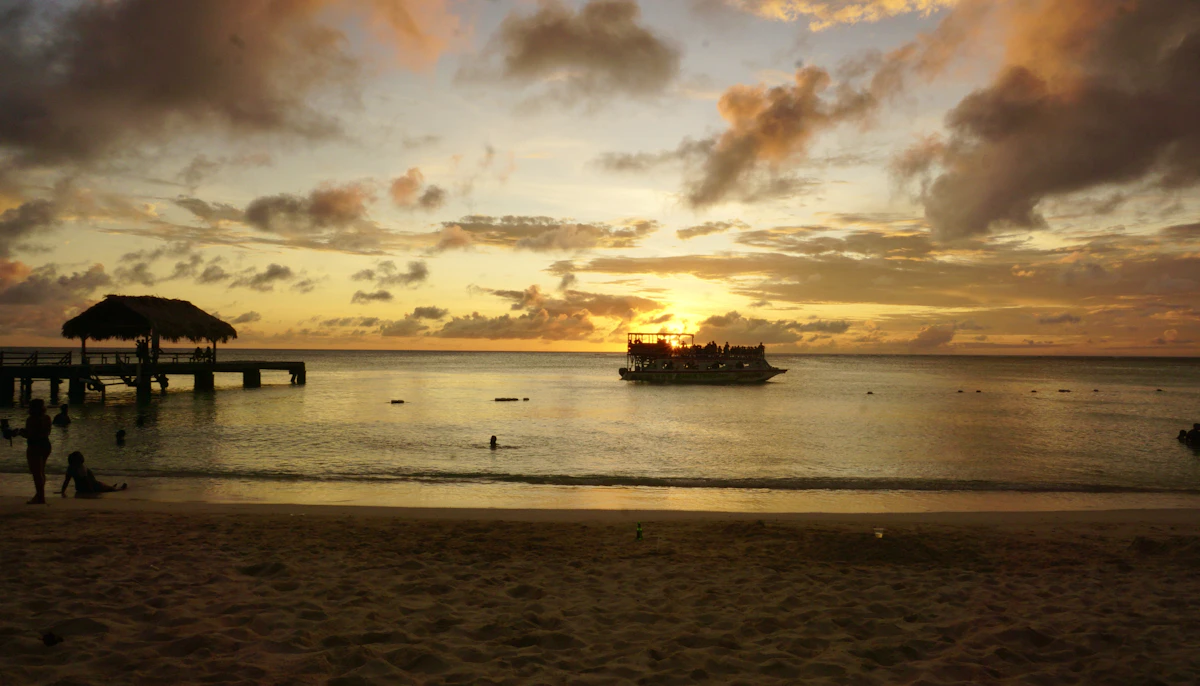
Tobago in detail, as part of our Caribbean guide: the lagoon, the reef break on the other coast, and the two schools that work the beach.
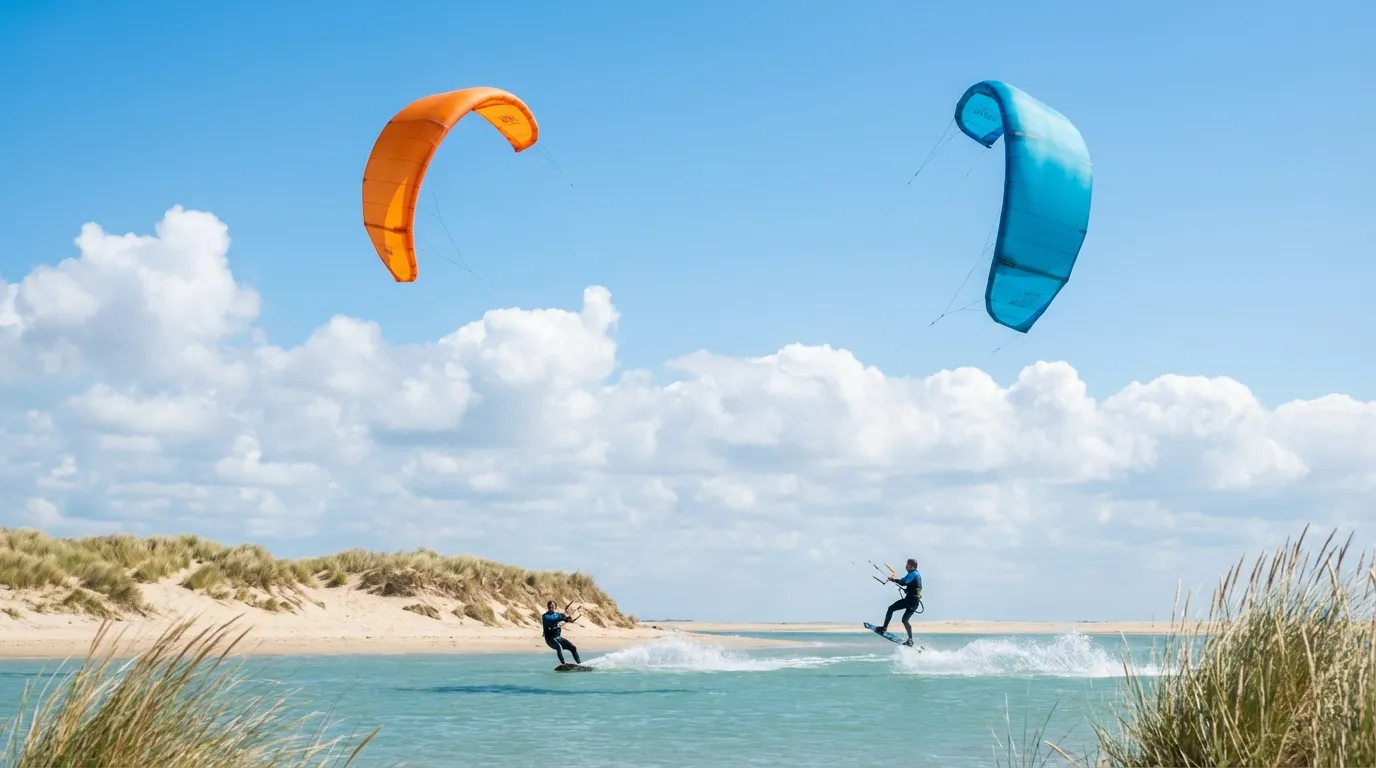
Protected by the Buccoo Reef, this lagoon offers flat, shallow water with almost no current, swept by a constant north-east trade wind. One of the best learning spots in the world.
Kitesurf guide arrow_forward
On the west coast, this reef break peels right with a north-east swell and a south-east offshore wind. A demanding spot, reserved for surfers comfortable with coral bottoms.
Surf guide arrow_forward
Radical Sports Tobago has held Pigeon Point for years, joined in season by the Tobago Kitesurf Centre. Plenty of scope to learn or hire kit on the spot, without hauling gear all the way to the Caribbean.
Watersports safety arrow_forwardWhat to know before you book.
A reef acting as a natural breakwater, flat and shallow water, and a north-east trade wind that blows all day.
Pigeon Point Heritage Park sits at Tobago's south-west tip, near Crown Point. Offshore, the Buccoo Reef sits around 1.5 miles (2.5 km) out and acts as a natural breakwater, enclosing the Bon Accord Lagoon and shielding it almost entirely from open-water swell and chop. What's left is a stretch of flat water, shallow across a wide area, with virtually no current – local schools describe the risk of an uncontrolled downwind drift as practically non-existent, a strong selling point for anyone starting out in kitesurfing or wing foiling.
View on Google Maps open_in_newInside the lagoon itself, a sandbank known as No Man's Land, reachable by boat and close to the famous Nylon Pool, makes a useful overflow training ground – flat, shallow water with plenty of room to run laps, and none of the traffic on the main beach.
The trade wind blows from the north-east, generally between force 4 and 5 Beaufort (roughly 11 to 21 knots). Gusts are more noticeable close to shore, where the island's terrain slightly disturbs the airflow, while the wind becomes steadier and stronger further out towards open water inside the lagoon. It's described as reliable for pretty much the whole day during the season.
The combination of flat, shallow and sheltered water makes this one of the best learning environments in the world for both kitesurfing and wing foiling, in much the same way Lac Bay serves Bonaire. Established riders find plenty here too: the constant wind allows for back-to-back sessions without the lulls typical of a more thermal wind regime, though it pays to stay alert near the reef, where depth drops away quickly.
On the west coast, a demanding reef break reserved for surfers comfortable with coral bottoms.
Mount Irvine Bay sits on Tobago's west coast, facing the Caribbean Sea, sheltered from the Atlantic swell that batters the island's north-east side. The wave breaks right over a reef and rock bottom, and works best with a north-east swell paired with a south-east offshore wind. Tide matters here. Favour mid to high water, because the wave gets hollower and more demanding at low tide, when the reef sits closer to the surface.
View on Google Maps open_in_newFire coral and exposed rock reward caution, and this is no place to learn to surf. The best window falls between December and March, when north-east swells run most consistently. Board hire and casual lessons are available right on the beach, a handy option for anyone travelling light.
The two spots sit under thirty minutes' drive apart, making it easy to combine a flat-water kite session at Pigeon Point with a surf outing at Mount Irvine, depending on conditions and the day's swell.
Two operators share the beach, with lessons, rental and safety kit on site.
Permanently based at Pigeon Point and taken over in 2010 by Brett Kenny, this school offers kitesurf lessons for all levels, including boat-assisted coaching for beginners, plus equipment rental. Showers, toilets and safety gear are available on site, making it a reliable base for a week of riding.
Run by British tour operator Sportif Travel inside Pigeon Point Heritage Park, this centre operates from November to mid-June. It runs a full programme of lessons, in groups or private, with Cabrinha rental gear. The same operator occasionally runs coached wing foil and windsurf clinics with British coaches flown in specifically for the season.
A.N.R. Robinson International Airport is at Crown Point, a few minutes' drive from Pigeon Point. Caribbean Airlines runs a non-stop weekly service from New York-JFK, plus a frequent shuttle from Piarco Airport in Trinidad, a flight of around 25 minutes that makes hopping between the two islands straightforward.
British Airways connects London-Gatwick to Port of Spain, Trinidad's capital, non-stop, around twice a week (a flight of just over 9 hours). From there, carry on to Tobago on the Caribbean Airlines shuttle or by ferry, a crossing of around 3 hours 30 minutes. Nothing flies direct from the UK, so Trinidad is the simplest way through.
Hiring a car remains the most practical way to combine Pigeon Point and Mount Irvine, about thirty minutes' drive apart. The official currency is the Trinidad and Tobago dollar (TTD); international cards are widely accepted in tourist areas, but it's worth carrying cash for small local expenses.
A wind season from November to April, peaking for consistency early in the season.
Local schools agree this is the window when the north-east trade wind is steadiest and strongest. It's also when the Tobago Kitesurf Centre reopens for the season, a useful marker when planning a trip.
Wind generally stays reliable through this period, though a touch less strong than at the very start of the season. It's also the best window for combining kitesurfing at Pigeon Point with a surf session at Mount Irvine, with the north-east swell still holding through March.
The Tobago Kitesurf Centre keeps running until mid-June, but wind becomes more inconsistent as the season progresses. Beyond that, it's best to check directly with local schools before booking, since conditions become less predictable outside the November-to-June window.
The emergency numbers in Trinidad and Tobago are 999 for police, 990 for fire and ambulance, and 811 as an alternative number for ambulance services. For emergencies at sea, the Coast Guard can be reached on (868) 634-4440. Travel insurance covering medical evacuation is still recommended, particularly for surfers riding at Mount Irvine, an isolated spot over a coral bottom.
Tobago sits broadly south of the Atlantic's main hurricane belt, making it a relatively spared destination compared with other Caribbean islands. It isn't entirely immune, though – Hurricane Flora struck directly on 30 September 1963 as a category 3, causing major damage. As for kit, you'll need neither wetsuit nor boots for kiting at Pigeon Point, with water running between 26.5 and 29°C year-round. Boots are worth having at Mount Irvine, to guard against coral and rocks.
The Buccoo Reef, around 1.5 miles (2.5 km) offshore, acts as a natural breakwater enclosing the Bon Accord Lagoon. Swell and chop from open water can't get through, leaving a flat, shallow stretch of water with almost no current.
Radical Sports Tobago, long established at Pigeon Point and taken over by Brett Kenny in 2010, offers lessons and rental year-round. The Tobago Kitesurf Centre, run by British tour operator Sportif Travel inside Pigeon Point Heritage Park, fills out the offering from November to mid-June.
Mount Irvine Bay, on the west coast, is the go-to spot: a right-hand reef break that works best with a north-east swell and a south-east offshore wind, best surfed December to March at mid to high tide. Watch out for fire coral and rocky bottoms.
The north-east trade wind blows most consistently from November to April, peaking for strength and reliability between November and January according to local schools. The Tobago Kitesurf Centre covers a wider season, from November to mid-June.
A.N.R. Robinson International Airport (TAB) is at Crown Point, a few minutes from Pigeon Point. Caribbean Airlines flies non-stop to the island from New York-JFK once a week, and runs a frequent shuttle from Trinidad (Piarco Airport, around a 25-minute flight). British Airways serves Port of Spain, in Trinidad, non-stop from London-Gatwick; from there you can reach Tobago via that same shuttle or by ferry. Also check out our Cabarete guide and the rest of our Caribbean guide.