

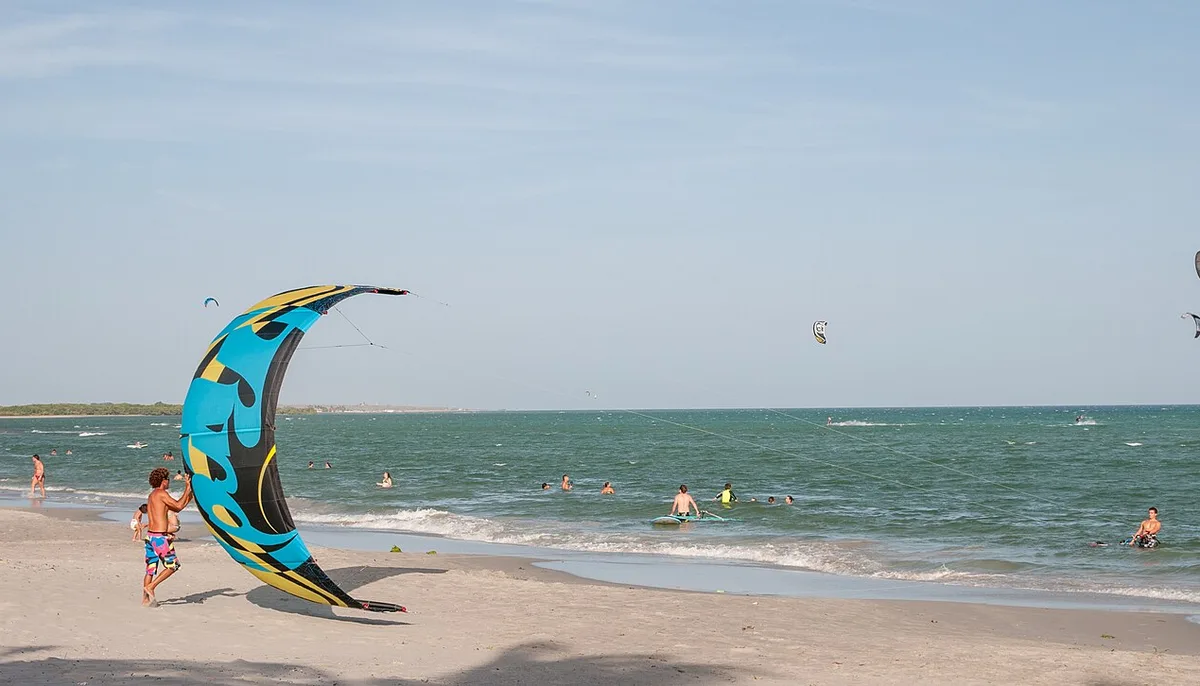
📍 Isla Margarita, Venezuela
This page is part of our Caribbean guide, but it sits apart from the others: Venezuela carries real, current travel-advisory concerns that Aruba, Bonaire and the Dominican Republic don't, and we say so plainly below rather than writing around it.
A trade wind sharpened by daytime heating, sideshore to cross-shore, typically 15-30 knots, blowing over water shallow enough to stand in hundreds of metres offshore. Good conditions run roughly October to July, most reliable February to June.
Windsurf guide arrow_forward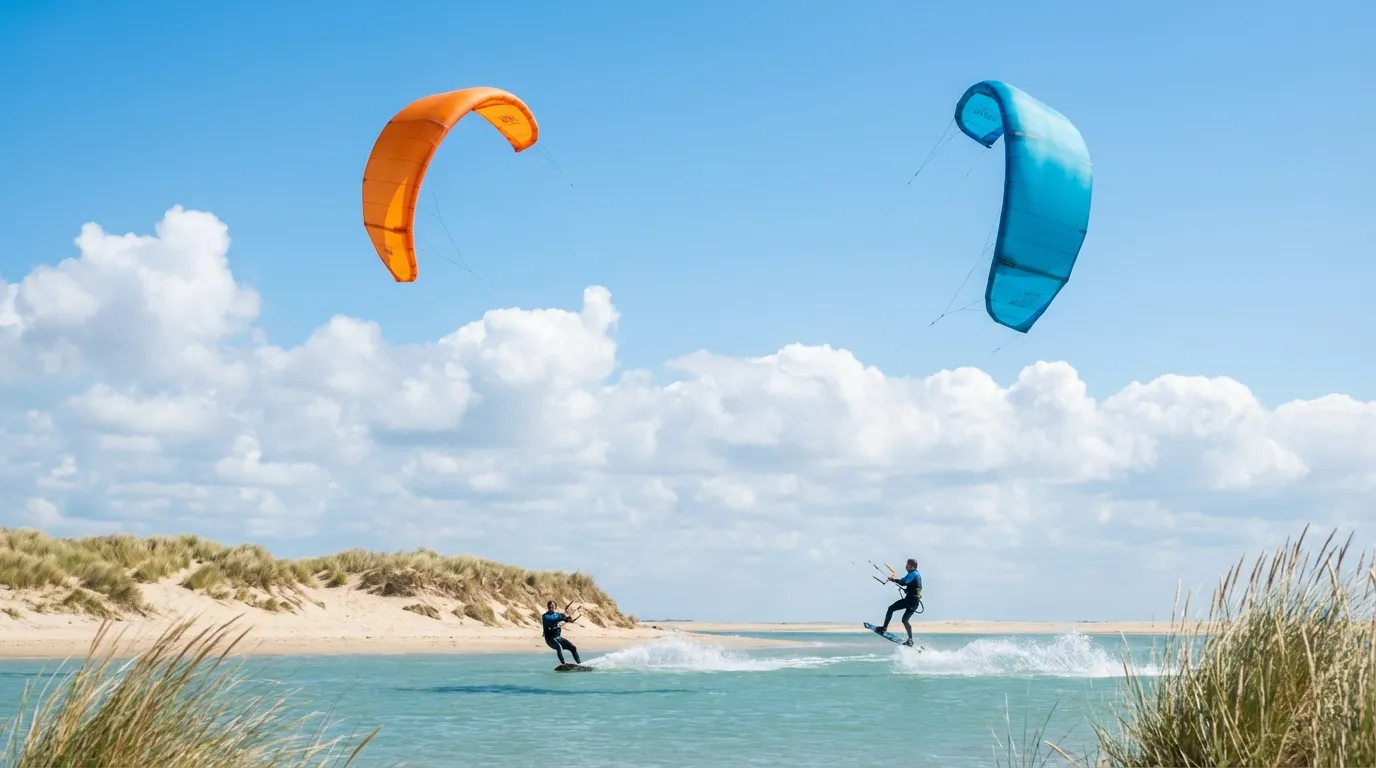
El Yaque remains a real windsurfing and kitesurfing centre with local schools operating in 2025-2026 — but its international tourism infrastructure is far less predictable than during its earlier heyday. Confirm everything before you book.
Kitesurf guide arrow_forward
Venezuela has no documented distance limit or PFD mandate for kitesurfers. Separately, several foreign governments maintain active travel advisories for the country — check your own government's current guidance before booking.
Watersports safety arrow_forwardWhat to know before you book — and what we could not confirm.
A trade wind sharpened by the island's own heating, over a bay shallow enough to stand in far from shore.
El Yaque is on the south coast of Isla Margarita, close to the airport, and is driven by the Caribbean's north-easterly to easterly trade flow; daytime heating over the island only augments that, so it is not a purely thermal spot. The wind blows sideshore to cross-shore across the bay at roughly 15-30 knots depending on the day and season, with no prominent reef documented at the main launch itself.
View on Google Maps open_in_newThe bay stays flat and shallow well offshore — documented as extending hundreds of metres from the beach — which is why El Yaque built its reputation as a windsurf-instruction bay long before kitesurfing arrived. That combination of standing depth and reliable wind still suits beginners and freestyle riders on both disciplines, though as with any shared launch area, awareness of other beach users and riders matters more as the bay gets busier.
El Yaque Kite by Leo Estredo and ZonaKite — the latter covering kitesurfing, windsurfing, wing foiling and wakeboarding — are the two operators we found current, documented evidence of trading in 2025-2026. Two other names that show up in older listings, Vela Wind and Kite Resort and Club Vacanze El Yaque, could not be confirmed as still operating: they may be historical, or simply harder to verify online than the two above. Confirm directly with any school before booking flights or lessons around it.
One informal report describes the main beach being reserved for windsurfers at peak hours, with kitesurfers directed to a separate area sometimes called "Kitebeach". We could not confirm this as an official municipal rule, and it may simply be local operator practice rather than anything written down. Treat it as something to ask about on arrival, not as a rule to plan around in advance.
What the research did — and didn't — turn up.
El Yaque is, as far as we could establish, essentially the only well-documented windsurfing and kitesurfing spot on Isla Margarita. The neighbouring island of Coche turns up in a handful of tourism directories as a possibility, but the coverage is thin — nowhere near enough to describe a spot, a wind pattern or a season with any confidence. Rather than pad this out with invented detail, we're saying plainly that Coche is not yet a spot we can document, and leaving it there until better sourcing turns up.
One international airport close to El Yaque — but verify your route before booking.
Also known as Del Caribe International Airport, this is the island's gateway, sitting near Porlamar and close to El Yaque. It has historically handled international charter services alongside domestic connections via Caracas, but which international routes are actually running changes over time and we can't state current availability with confidence. Verify current routes directly with an airline or a travel agent before booking — this is one of the few things on this page that genuinely needs a fresh check on the day you plan to travel, not a figure we can publish once and leave.
The official currency is the Venezuelan bolívar, though US dollars circulate widely in tourist areas; they are not universally accepted, and card acceptance and currency arrangements vary between businesses, so bring a mix of payment options.
A long window, with a clearer core than edges.
This is the period the research most consistently points to for reliable trade wind at El Yaque, in the 15-30 knot range depending on the day.
Beyond the core season, conditions are generally described as usable across this wider window, without the same level of consistency as the February-June peak.
Wind is weaker and can be interrupted by tropical disturbances passing through the wider Caribbean, even though Margarita sits south of the main hurricane belt.
No single kitesurf-specific rule, an emergency-number caveat, and a travel-risk picture that changes — check it independently.
Venezuela's maritime authority is INEA (Instituto Nacional de los Espacios Acuáticos), with the Armada Bolivariana (Bolivarian Navy) exercising coast-guard functions. We found no documented national rule specific to kitesurfing — no distance-from-bathing-zone limit and no personal-flotation-device mandate, the same kind of documented gap the jurisdiction table on this site already notes for several other markets. In practice, local operating custom at El Yaque, and whatever a school or beach authority tells you on the day, likely matters more than any single written rule. If in doubt, ask the school or a local INEA representative directly.
171 has historically served as Venezuela's national emergency number, and 911 has also been introduced, but coverage and reliability of both are inconsistent depending on where you are. VHF channel 16 is the international maritime distress convention, but there is no confirmed guarantee that a specific local operator at El Yaque monitors it. This is worth building into your own planning rather than assuming a UK- or US-style emergency response.
Venezuela carries real, current foreign-government travel advisories covering crime, kidnapping risk that varies sharply by location, political instability and periodic unrest, and limited consular support for some nationalities. This picture changes frequently, so rather than quote specific warning wording that may be out of date by the time you read this, we're pointing you to the source: check your own government's current travel advice — the UK FCDO or the US State Department, whichever applies to you — before booking, and again shortly before you travel.
El Yaque remains a genuine, active windsurfing and kitesurfing centre with a long wind season and local schools, but its current international tourism infrastructure is less predictable than during its earlier heyday. Confirm accommodation, school opening, equipment availability, flights, payment arrangements and local safety conditions before travelling — every one of those, not just the wind.
What riders ask most before booking.
Yes, on the fundamentals: the water stays shallow and flat hundreds of metres offshore, and the trade wind is dependable through most of the season. What we can't vouch for from here is which specific school will be open when you travel — confirm directly before booking.
El Yaque Kite by Leo Estredo and ZonaKite (kitesurf, windsurf, wing foil, wakeboard) are the two we found current evidence of trading in 2025-2026. Two other names sometimes listed online, Vela Wind and Kite Resort and Club Vacanze El Yaque, could not be confirmed as still operating — check directly before you plan around either.
We found no codified national distance limit or equipment mandate specific to kitesurfing in Venezuela. INEA is the maritime authority and the Armada Bolivariana carries out coast-guard functions; in practice, local operating custom and whatever a school tells you on site likely matters more than a single written rule.
This changes over time, so we're not going to quote a specific verdict that may be stale by the time you read it. Venezuela carries active foreign-government travel advisories covering crime, regional variation in risk and limited consular support. Check your own government's current guidance — the UK FCDO or the US State Department — before booking and again shortly before you travel.