

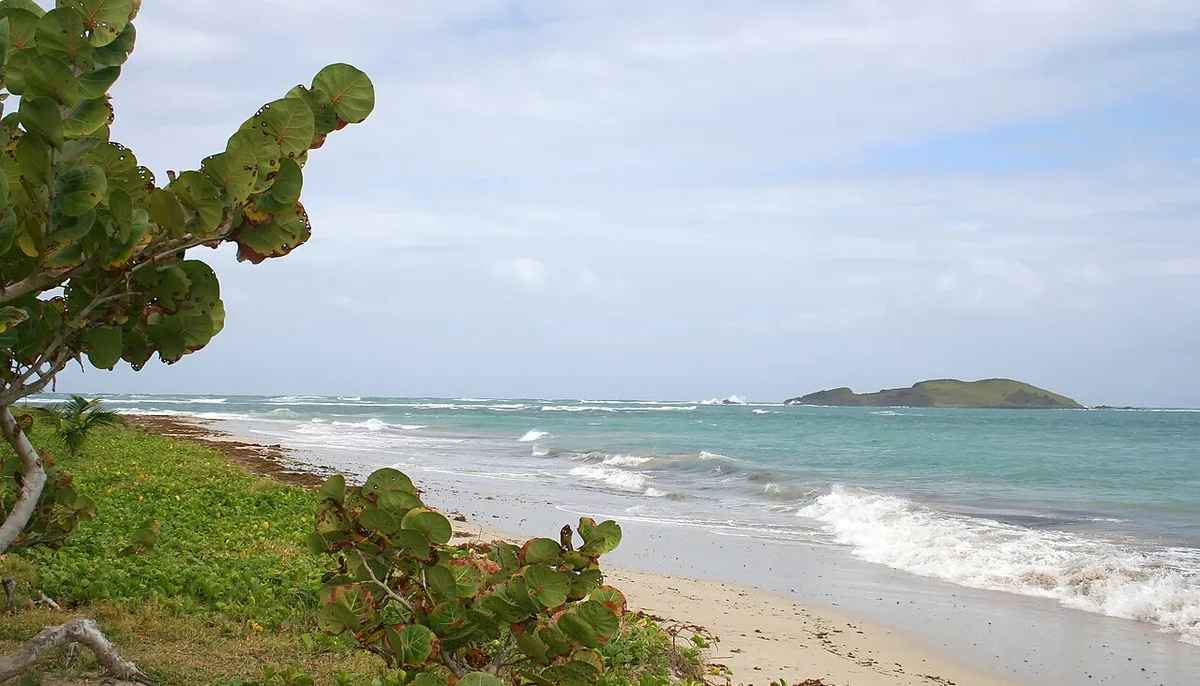
📍 St Lucia, Caribbean
Photo: madmack66 / Wikimedia Commons, CC BY 2.0
Part of our Caribbean guide. St Lucia is better known for the Pitons than for wind, but its Atlantic coast catches the trade wind, and two bays on that side have a long record as kite and windsurf spots.
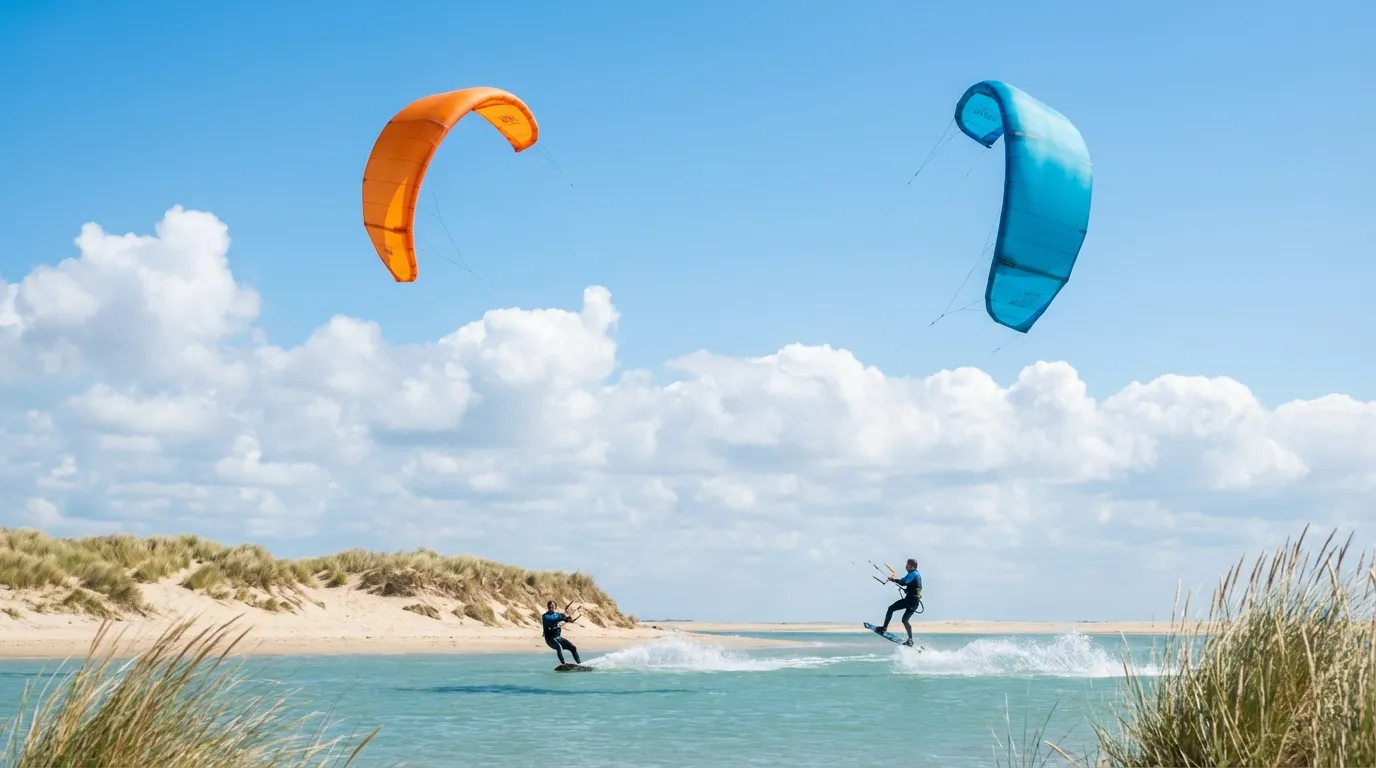
Anse de Sables, at Vieux Fort on the south-east tip, and Cas-en-Bas, near Gros Islet in the north-east. Both face the Atlantic and take the east to north-east trade wind, with chop rather than lagoon-flat water.
Kitesurf guide arrow_forward
Anse de Sables is described as one of the island's main windsurfing beaches, and its best-known centre has advertised windsurf lessons and hire alongside kite. Windsurfing is also associated with Cas-en-Bas, though the evidence there is thinner.
Windsurf guide arrow_forward
We found no published St Lucia rule on kitesurfing distances or mandatory kit. What does apply: protected areas near Anse de Sables, general maritime rules, and whatever the school and the Marine Police tell you on the day.
Watersports safety arrow_forwardWhat to know before you book, and what we could not confirm.
St Lucia's best-known kite and windsurf beach is minutes from the international airport.
Anse de Sables, also called Sandy Beach, sits on the exposed south-eastern tip of the island at Vieux Fort, next to Hewanorra airport. The trade wind comes from the east to north-east, and spot guides commonly describe it as side-onshore to onshore, from the left as you look out to sea. Expect a broad beach and wind-blown chop rather than a flat lagoon; shallow or reef areas may exist around the bay, but we could not find an authoritative chart of where they are, so ask on the beach before you launch.
View on Google Maps open_in_newThe Reef Kite + Surf is the best-documented operator at Anse de Sables, reported to have run from the beach since the 1990s, and its own material advertises kitesurfing and windsurfing lessons and hire, plus SUP and kayaks. What we could not establish is that it has been taking bookings throughout 2025-2026: parts of its online presence are older. A windsurf offer linked to the Coconut Bay resort nearby also turns up in listings, again without current confirmation. Contact any operator directly before building a trip around it.
Easy beach access and a long-standing school make Anse de Sables a plausible place to learn, but an onshore-leaning wind, chop and possible shallow patches mean it is not a spot to teach yourself. Book supervised lessons rather than launching alone on your first sessions.
The Maria Islands, off the Vieux Fort coast, are a protected nature reserve within the wider Pointe Sable Environmental Protection Area, and the Saint Lucia National Trust is associated with their management. The islands are reported to close to visitors during the seabird nesting season, but sources disagree on the window (mid-May to the end of July in some, May to August in others, with dates set each year), and we could not confirm whether kitesurfing is restricted in the surrounding water. Keep well clear of the islands unless the managing authority tells you otherwise.
Trade wind, a reef-influenced bay and a longer drive from the airport.
Cas-en-Bas is an Atlantic-facing bay north-east of Gros Islet, also listed as Plantation Beach or Cotton Bay. It takes the same east to north-east trade wind, usually described as side-onshore, though the angle shifts with the wind and the launch point. Kite spot guides describe a reef-protected or reef-influenced bay with chop and some swell. We could not confirm the reef's exact position, so treat the safe launch and riding corridor as something to learn from a local, not from this page. Reports also describe the final approach road as rough or partly unpaved.
View on Google Maps open_in_newTwo names are associated with Cas-en-Bas in recent travel and spot listings: Aquaholics and Kitesurf St Lucia, the latter described as offering lessons, hire and supervision. We could not verify from a current booking page or an official source that either is trading continuously in 2025-2026. Confirm dates, instructors, insurance and kit before you travel.
What the research did, and didn't, turn up.
A few spot directories name other places, such as 'Kite Beach' on the east coast, but we found nothing current enough to describe access, conditions or who, if anyone, runs lessons there. Resort watersports around Rodney Bay – on the sheltered Caribbean side – also appear in searches, but we could not confirm a current windsurf programme there, and resort offers are often seasonal or guests-only. Until better sourcing turns up, Anse de Sables and Cas-en-Bas are the two spots we can honestly document.
A long trade-wind season with a quieter, stormier tail.
Spot guides put the trade-wind season at roughly November to June at Cas-en-Bas and November to July at Anse de Sables. Published monthly averages for Cas-en-Bas sit around 15-16 knots in the windier months, but they are spot-guide figures, not official meteorological data, and gusty days and squalls happen.
This is the period most often recommended, with March to June sometimes suggested for learners because December to February can be gustier.
Wind probability drops and averages fall towards 12-13 knots. These months also sit in the heart of the Atlantic hurricane season, which officially runs from 1 June to 30 November. St Lucia is exposed to tropical storms, and even a system that passes by can bring heavy rain, rough seas and flight disruption. Not the months to book a wind-dependent trip.
Land at the south end of the island and you're next to the southern spot.
Hewanorra, at Vieux Fort, handles St Lucia's long-haul flights and sits a few minutes' drive from Anse de Sables. British Airways flies from London Gatwick: the St Lucia government has announced a daily direct Gatwick service from 25 October 2026 for the winter season, and says flights tagged with other Caribbean stops return in the summer months. We could not confirm a current nonstop Virgin Atlantic route from Heathrow or Manchester. Schedules change, so check routes and frequencies with the airline before you book. The island's other airport, George F. L. Charles near Castries, mainly handles regional Caribbean flights.
The drive from Hewanorra to the Gros Islet area takes somewhere around one and a half to two hours on winding roads, often slower around Castries and Rodney Bay. Treat that as an estimate and factor it into where you stay: base yourself near the spot you plan to ride.
The Eastern Caribbean dollar is the currency; US dollars are widely accepted in hotels, taxis and tourist areas, though usually at a less favourable rate. UK visitors generally don't need a visa for a short holiday, but entry rules change – check the FCDO's current St Lucia travel advice before you go.
St Lucia's own authorities apply – not UK or French rules – and no kite-specific rule was found.
The Marine Unit of the Royal Saint Lucia Police Force (the Marine Police) handles policing and incidents at sea, the Saint Lucia Air and Sea Ports Authority (SLASPA) runs ports and harbours, and the Maritime Affairs Unit deals with national maritime administration. We found no published St Lucia rule specific to kitesurfing: no distance-from-shore limit, no buoyancy-aid mandate and no licensing scheme. That is not the same as having no rules. Marked swimming areas, vessel traffic rules, protected-area restrictions and instructions from the Marine Police all still apply, and in practice the school on the beach is your best guide to local custom.
The St Lucia Tourism Authority lists 911 for police, fire and ambulance. The Canadian government's travel advice splits it differently: 999 for police, 911 for medical and fire. In an emergency, try 911 first. VHF channel 16 is the international maritime distress channel if you have a radio. We could not find an official number for a stand-alone coastguard, so ask your school or accommodation for the Marine Police's direct line before you ride, and tell someone ashore when you launch and when you expect to be back.
The Pointe Sable Environmental Protection Area, which includes the Maria Islands, lies around the Vieux Fort coast. On the south-west coast, the Soufrière Marine Management Area has its own zoning, though it is well away from both kite spots. We could not confirm whether either area restricts kitesurfing specifically; if you want to ride anywhere near them, get current guidance from the managing authority or the Marine Police first.
What riders ask most before booking.
The two consistently documented spots are Anse de Sables, at Vieux Fort in the south, and Cas-en-Bas, near Gros Islet in the north-east. Both are on the Atlantic side and take the east to north-east trade wind. Anse de Sables is the more convenient if you fly into Hewanorra.
Roughly November to June or July, with February to June the most commonly recommended stretch. August to October is lighter and falls within the Atlantic hurricane season.
Yes, with an instructor. The Reef Kite + Surf at Anse de Sables is the longest-documented school, and Aquaholics and Kitesurf St Lucia are listed at Cas-en-Bas, but we could not confirm any of them as trading this season, so contact them directly. Neither spot is a flat lagoon, so don't try to teach yourself.
Yes. Anse de Sables is described as one of the island's main windsurfing beaches, and The Reef Kite + Surf has advertised windsurf lessons and hire there. Windsurfing is also associated with Cas-en-Bas, though the evidence for a current windsurf centre there is weaker.
We found no published rule specific to kitesurfing: no distance limit and no mandatory kit. General maritime rules, marked swimming areas, protected areas such as the Pointe Sable Environmental Protection Area, and instructions from the Royal Saint Lucia Police Force's Marine Unit still apply.