📍 Barbados, Eastern Caribbean
This page is part of our Caribbean guide, with the detail the regional overview leaves out: each break, each school, and which coast to be on.
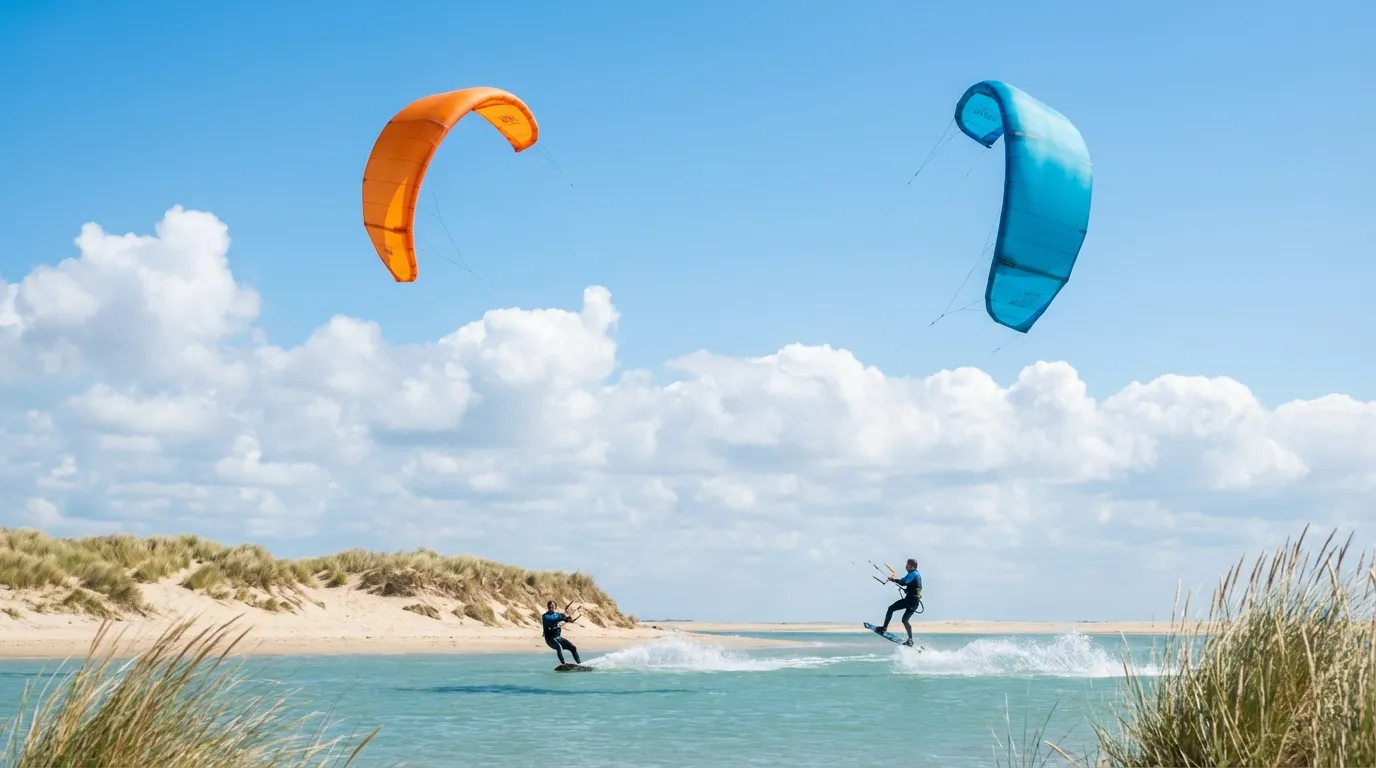
Steady east-north-east wind, often 20 knots and up, and a water state that mixes sheltered flat water with small waves to work: Silver Sands is Barbados' historic kite and windsurf spot, with schools that have been established here for decades.
Kitesurf guide arrow_forward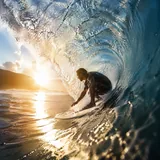
On the east coast at Bathsheba, this powerful, barrelling reef break is one of the most respected surf spots in the Eastern Caribbean and hosts the Barbados Surf Pro, a World Surf League Qualifying Series event. A serious wave, not somewhere to learn.
Surf guide arrow_forward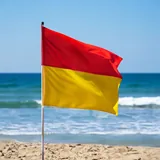
English-speaking, a former British territory, driving on the left: Barbados has an oddly familiar feel for a UK visitor, while still delivering a thoroughly Caribbean climate and set of spots.
Watersports safety arrow_forwardWhat to know before you book.
A trade wind that blows on nearly every day, a long-standing local scene, and a school run by an island legend.
On the south coast, between Silver Sands and the neighbouring hamlet of Silver Rock, near the fishing town of Oistins, blows one of the steadiest trade winds anywhere in the Caribbean. The wind, from the east-north-east, is close to constant from November through July, gusting to 28-30 knots on peak-season days. The water state varies depending on exactly where you're riding: a more sheltered, flatter zone close to shore that suits learning, and more textured stretches further out where chop and small waves let more advanced riders work on jumps. That combination is what has made Silver Sands the island's reference spot since the 1980s.
View on Google Maps open_in_newYou can't talk about Silver Sands without mentioning Brian Talma, nicknamed "de Action Man", a fixture of Barbadian windsurfing and kitesurfing for more than thirty years. His shop-school, deAction, based right on Silver Rock beach, rents kite, windsurf and SUP kit, and passes on a detailed reading of local conditions built up over decades of sailing this exact stretch of coast. It's close to a required stop for anyone landing at Silver Sands, both for equipment and for advice on the day's best wind window.
Upwind Kitesurf School is the other big name on the beach: founded by Rolf Joosten, who moved to Barbados in 1996 and ran two Club Mistral windsurf centres on the island between 1996 and 2005 before switching to kitesurfing in 1998, the school now has close to two decades of dedicated kite experience, with IKO-certified instructors. It offers lessons, courses and equipment rental for every level, from first waterstarts through to wing foiling. Smaller operators, such as Endless Kiteboarding and LinUp Kite and Surf School, round out the scene around Silver Rock, giving visitors real choice on a fairly compact stretch of coast.
Silver Sands suits a wide range of levels: the more sheltered zones close to shore are ideal for first waterstarts, whether kiting or windsurfing, while more experienced riders like being able to string together jumps and wave hits without straying far from the beach. The wind's consistency, rare at these latitudes outside the December-to-April peak, also makes it a good spot for fast progression over a single week's holiday, with very few days lost to no-wind conditions.
A wild east coast, a powerful reef wave, and a fixture on the professional surfing calendar for the region.
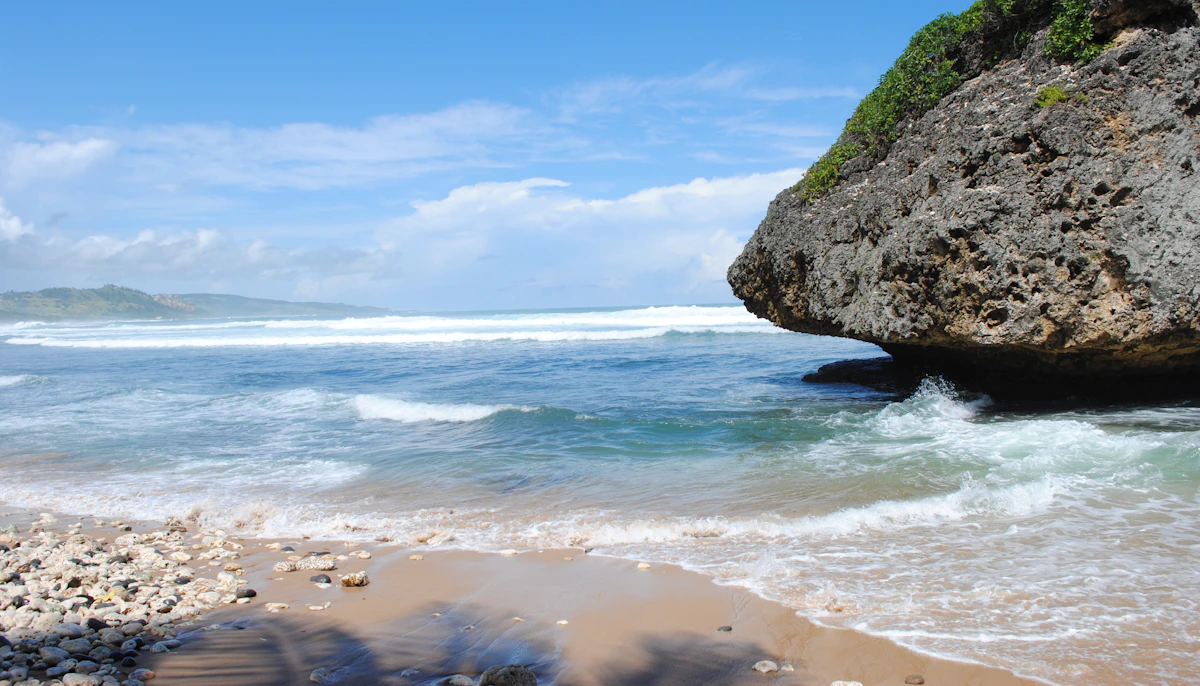
Bathsheba, on the Atlantic-facing east coast, is a completely different landscape to the white-sand, turquoise-water beaches of the south or west coast: low cliffs, huge weathered coral boulders sitting on the sand, dense vegetation, and ocean swell arriving unfiltered from the open Atlantic. It's here, by the small fishing village, that you'll find the Soup Bowl, a right-hand reef break that takes its name from the way the whitewater churns and froths on impact. It's rated among the most respected surf spots in the Eastern Caribbean, and professional surfers have compared its shape and consistency to world-class waves elsewhere.
View on Google Maps open_in_newIt's worth being honest here: the Soup Bowl is not a beginner wave. The coral bottom breaks the surface in places, swell can build fast, and when the wave is well-formed it barrels and hits with real force. This is a spot for surfers who are already comfortable on a reef break, able to read an Atlantic swell and handle a committed take-off. Beginners wanting to try surfing in Barbados head instead to the south coast, to Freights Bay or Surfers Point, where the wave is longer, gentler, and the sandy bottom far more forgiving, with schools such as Zed's Surfing Adventures, founded by Barbadian surfer Zed Layson, a former national team member, regularly rated among the best surf schools in the Caribbean for its teaching.
Every year, the Soup Bowl hosts the Barbados Surf Pro, a stop on the World Surf League's Qualifying Series and a major step towards Challenger Series qualification, drawing more than 200 surfers from around a dozen countries in what's billed as one of the largest surf competitions ever staged in the Caribbean. The event runs alongside the Live Like Zander Junior Pro, held in memory of young Barbadian surfer Zander Venezia. For anyone visiting during the event, typically in late February, it's a chance to watch some of the region's best surfers tackle the wave on its most demanding stage.
An international airport well connected to the UK, Canada and the US, under thirty minutes from the spots.
Grantley Adams International Airport serves Barbados directly, about 20-25 minutes' drive from Bridgetown, Silver Sands or Bathsheba. From the UK, the connection is particularly well established: British Airways flies a daily direct service from London (Heathrow and Gatwick), a route that recently marked more than 70 years in operation, and Virgin Atlantic adds up to 15 direct weekly flights, including 11 from Heathrow and 4 from Manchester. From Canada, Air Canada and WestJet both run direct flights from Toronto several times a week, stepping up in frequency over the winter high season. From the US, American Airlines, JetBlue and Delta serve the island from several cities. There's no direct flight from continental Europe; routing through London or the US is the simplest option.
Barbados was a British colony from 1627 until independence in 1966, and remains a member state of the Commonwealth today. English is the official language, and driving is on the left, just as in the UK — a small detail that matters to anyone flying in from London or Manchester, and one worth remembering if you're used to driving on the right.
Hiring a car makes it much easier to move between the south coast, home to Silver Sands and the beginner surf spots, and the wilder east coast, where Bathsheba sits: expect around 30 minutes' drive between the two, on often winding back roads. Local minibuses, known as "ZR vans", also cover much of the island cheaply for anyone who'd rather not drive. The official currency is the Barbadian dollar, pegged to the US dollar at a fixed rate, though USD is accepted almost everywhere.
Two calendars worth combining: the south coast's wind season and the east coast's swell season.
This is the strongest window for combining both disciplines: the trade wind blows on nearly every day at Silver Sands, 20 to 28 knots, while North Atlantic winter groundswells regularly light up the Soup Bowl at Bathsheba. It's also when the Barbados Surf Pro runs, usually in late February, and the driest stretch of the year, making it the most sought-after compromise for visitors chasing both wind and waves.
The trade wind stays present at Silver Sands through July, with mornings often windier than afternoons as the season winds down. On the surf side, the North Atlantic groundswells that feed the Soup Bowl become scarcer and less consistent. This is a better window for prioritising kiting and windsurfing on the south coast over surfing on the east coast.
Wind weakens and becomes less consistent, with more frequent southerly components, and humidity rises noticeably. This is also the most active stretch of the Atlantic hurricane season. As the most easterly island in the Caribbean, Barbados sits at the geographic front line for systems forming off the West African coast — it's statistically among the first islands in the path of these storms, even though direct hits remain rare. It's worth watching forecasts closely if travelling during this window, roughly June through November.
Barbados runs its own emergency numbering system, distinct from North American 911.
Barbados has its own three-digit emergency numbers, a legacy of its administrative history separate from North American territories: 211 for police, 311 for fire, and 511 for ambulance. The Barbados Coast Guard handles marine emergencies and continuously monitors VHF channel 16. Travel insurance with medical evacuation cover is strongly recommended, particularly for surfers heading out to the Soup Bowl, an exposed reef spot that can feel isolated when the swell is running big.
On kit: no wetsuit or boots needed for kiting or windsurfing, with water sitting around 27-29°C year-round, though reef boots can be worth having at the Soup Bowl given the coral bottom. Reef-safe sunscreen remains essential across every spot on the island. Silver Sands schools rent full kite and windsurf kit by the day or week; surfers planning to paddle out at the Soup Bowl, on the other hand, are better off travelling with their own board suited to a technical, powerful wave rather than relying on rentals.
What riders ask most before booking.
On the south coast, between Silver Sands and Silver Rock, near Oistins. It's the island's historic spot, with a steady east-north-east trade wind, a mix of flat water and small wave riding, and several long-established schools: Upwind Kitesurf School and deAction, the shop-school run by Brian Talma, a Barbadian windsurf and kite legend of more than thirty years.
No. The Soup Bowl is a powerful, technical reef break for experienced surfers, and it hosts the Barbados Surf Pro, a World Surf League Qualifying Series event that's a major step towards Challenger Series qualification. Beginners head to the south coast instead, to Freights Bay or Surfers Point, with schools such as Zed's Surfing Adventures.
The trade wind blows almost continuously from November to July, peaking for consistency between December and April at 20-28 knots. The calmer, more humid period runs from July to October.
Barbados runs its own three-digit emergency numbering system, separate from North American 911: 211 for police, 311 for fire, and 511 for ambulance. The Barbados Coast Guard handles marine emergencies and monitors VHF channel 16.
Grantley Adams International Airport (BGI) takes direct flights from London (British Airways, Virgin Atlantic), Toronto (Air Canada, WestJet), and several US cities (American Airlines, JetBlue, Delta). There's no direct route from continental Europe. Discover our guides to Bonaire and Aruba, or explore the rest of our Caribbean guide.