

📍 Antigua, Antigua and Barbuda
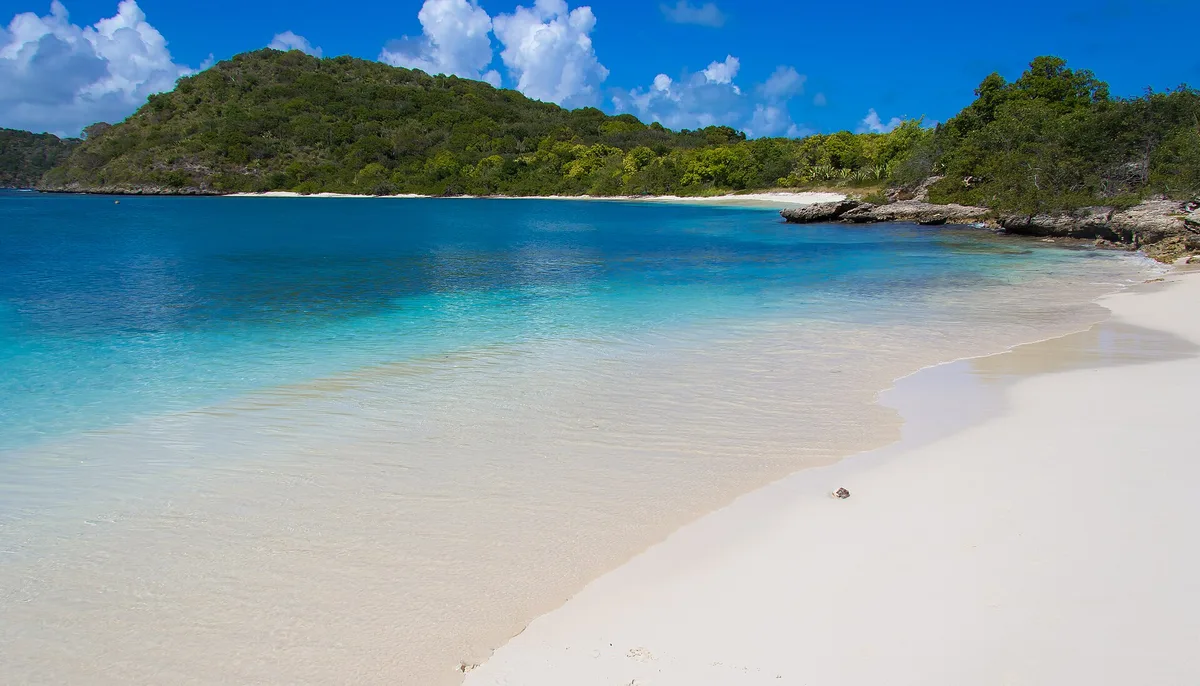
Photo: Green Island, Antigua (scenic shot, not a kite session) – Andrew Moore / Wikimedia Commons, CC BY-SA 2.0
Two very different kite set-ups on one small island, and a season that runs most of the year.
Open, side-onshore beaches by the airport, or a boat ride to flatter water on the east coast.
Jabberwock is the beach most kite guides point to first, a broad sandy beach on the north coast about 3.6km from V.C. Bird International Airport, going by the national tourism board's own listing. Spot guides describe the usual east to south-east wind as side-onshore from the right when you look out to sea, a forgiving angle for learning since a rider in trouble drifts back towards the beach rather than out. The water is open sea, so expect chop rather than a flat lagoon. One widely used spot listing records no particular hazards here; we'd still treat swimmers, other kites and whatever the sea is doing that day as the real ones.
View on Google Maps open_in_newDutchman's Bay lies beside Jabberwock on the same stretch of coast, with much the same trade-wind exposure and a smaller launch and landing area. Kelsick Watersports uses it as a meeting point for kite lessons. We couldn't find a windsurf operation there today.
The east coast offers flatter water. Green Island lies at the mouth of Nonsuch Bay, and the bay behind it is described by several guides as noticeably more protected than the north-coast beaches. It is a private island that can only be reached by boat, so this is not a spot you simply turn up at. 40Knots, the school based on its north beach, arranges the boat access. Guides also mention shallow and reef sections in the area, which is one more reason to ride it with a school rather than on your own.
Half Moon Bay on the south-east coast, and a few beaches on the south and west coasts, appear in some guides as occasional kite spots. There is nothing we could rely on for wind angle, launch conditions or whether kiting is allowed. We're leaving them as names to ask a local school about, not spots to plan a trip around.
A long season with a clear low point in late summer.
Antigua lies in the path of the Atlantic trade wind and kite guides we checked put typical strengths at 12-25 knots from late November to July. One Jabberwock spot listing adds that January to March can reach around 30 knots (35 mph) for several days at a time, and that May to July is the most consistent stretch, with the fewest light days.
The same listing names September and October as the weakest months; they are also the peak of the Atlantic hurricane season, which officially runs from 1 June to 30 November. A tropical storm doesn't need to hit the island to disrupt a trip: heavy rain, shifting wind and closed beaches can all follow a system passing nearby.
These figures are spot-guide and school estimates, not long-term station data; treat them as a guide to the pattern, not a promise for your week.
One on each of the main spots, and none for windsurfing that we could confirm.
Kitesurf Antigua lists Jabberwock Beach on its website and has recent reviews on independent listings. Kelsick Watersports teaches kitesurfing and wing foiling and meets at Dutchman's Bay. 40Knots teaches kitesurfing and wing foiling from the north beach of Green Island, with boat access only.
A few other names appear in older listings, including a 'KiteAntigua' and a windsurf operation, but we found no current evidence that either is trading. The wind suits windsurfing; we just couldn't confirm anywhere you can hire a board or book a lesson today.
Some operators work seasonally, particularly outside the main wind months. Confirm dates, meeting points and, for Green Island, boat transfers directly with the school before you book flights around them.
Antigua and Barbuda's own authorities, not UK or US rules, and no kite-specific law that we could find.
Maritime matters sit with the Antigua and Barbuda Department of Marine Services and Merchant Shipping (ADOMS) and sea rescue with the Antigua and Barbuda Coast Guard, part of the Antigua and Barbuda Defence Force. We found no national rule specific to kitesurfing or windsurfing; no set distance from shore, no designated kite zones in law and no lifejacket requirement we could verify either way. That's a gap in what's published, not proof that no local or harbour rule exists, so follow what the school or beach staff tell you on the day.
The UK Foreign Office lists 999 or 911 for police, fire and ambulance; we couldn't verify a published direct number for the Coast Guard. VHF channel 16 is the international maritime distress channel, but we couldn't confirm who monitors it locally, so don't rely on it as your only plan.
For a general safety briefing, see our kitesurfing safety guide.
Direct flights from London, and the main kite beach a short hop from the airport.
V.C. Bird International Airport (ANU) is Antigua's international gateway, and Jabberwock is close by. Current tourism information lists British Airways flying direct from London Gatwick and Virgin Atlantic flying direct from London Heathrow, the latter mainly in winter. Schedules change by season, so check what's actually flying for your dates.
UK citizens generally don't need a visa for a short tourist stay, but entry conditions can change, so check the FCDO's current advice before you travel. The local currency is the Eastern Caribbean dollar, pegged to the US dollar at about EC$2.70 to US$1.
What riders ask most before booking.
Yes, with a school. Jabberwock's side-onshore wind is a forgiving angle for learning, and Green Island offers flatter water. All three schools we could confirm teach beginners; the open-sea chop at Jabberwock and the boat-only access to Green Island are both reasons not to go it alone at first.
Roughly late November to July, with typical winds of 12-25 knots. January to March can be the strongest, and May to July the most consistent, according to one Jabberwock spot listing. September and October are the weakest months and the peak of hurricane season.
The trade wind suits it. We couldn't find a windsurf school or rental operation we could confirm as trading now. Bring your own kit or ask the kite schools before you travel.
999 or 911 are the numbers for police, fire and ambulance, according to the UK Foreign Office. The Coast Guard is part of the Antigua and Barbuda Defence Force; we couldn't verify a published direct number for it.