

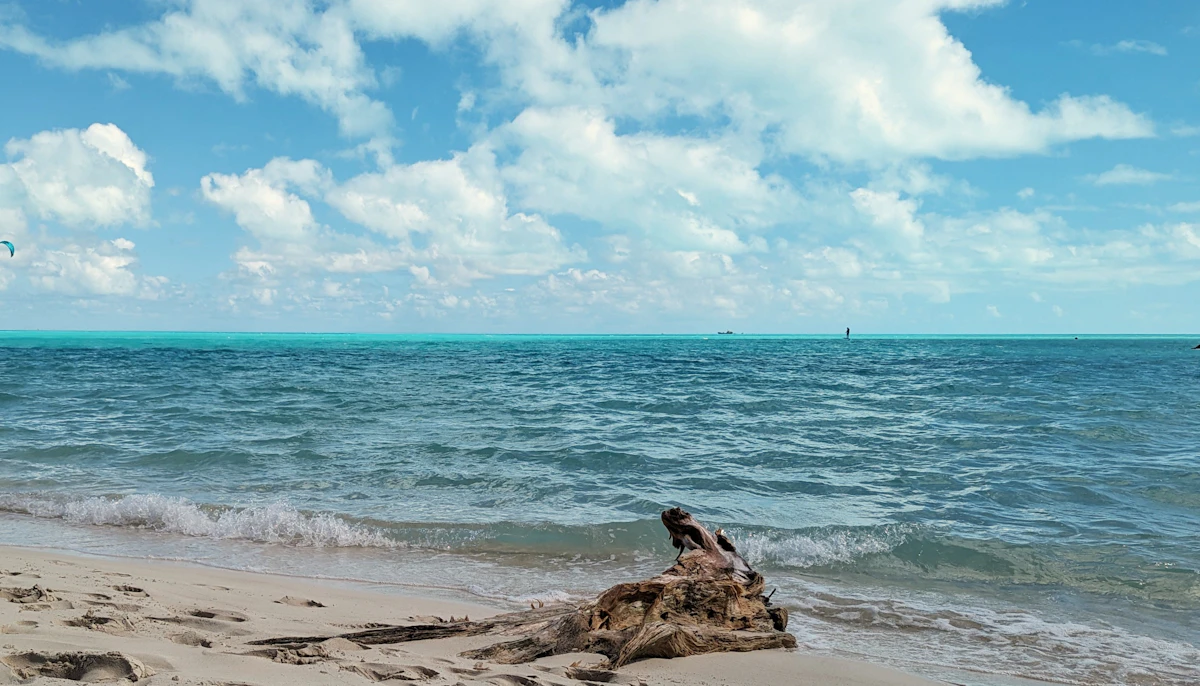
📍 Turks and Caicos, northern Caribbean
Part of our Caribbean guide, taken beach by beach: where to kite, where not to, and why the two are only ten minutes apart.
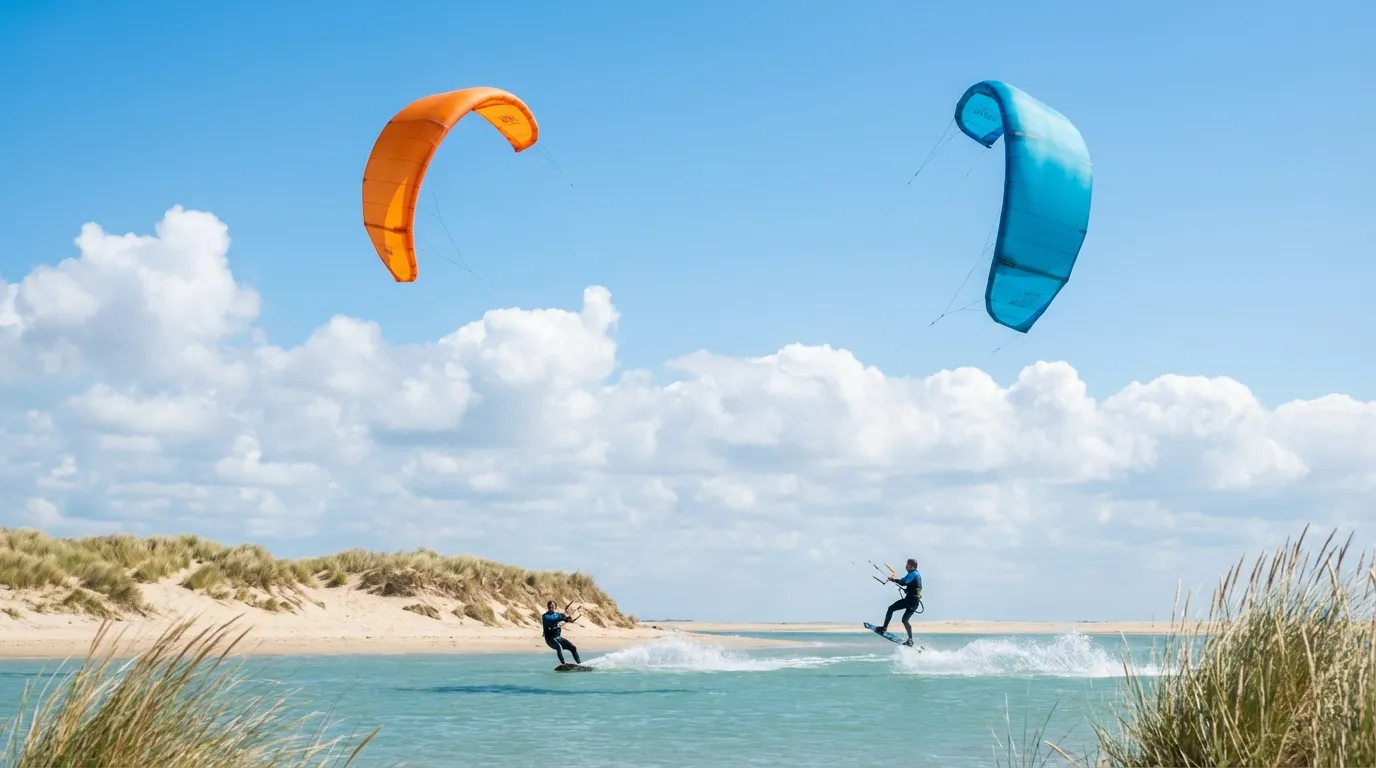
Miles of shallow turquoise water, wadeable for a long way out, and a trade wind that's rideable for close to nine months of the year. Long Bay Beach is rated among the best spots in the Caribbean for learning and progressing at kitesurfing.
Kitesurf guide arrow_forward
Regularly ranked among the world's best beaches, Grace Bay draws holidaymakers for swimming and lounging, but its unfavourable wind, deep water and beachfront hotels make it a poor kiting choice. Admire the view here; kite at Long Bay.
Windsurf guide arrow_forward
English-speaking, a British Overseas Territory where driving is on the left, yet the official currency has been the US dollar since 1973 – an unusual combination that reflects the islands' economic ties to the nearby United States.
Watersports safety arrow_forwardWhat to know before you book.
Shallow water for miles, a dependable trade wind, and several well-established schools.
On the south coast of Providenciales, Long Bay Beach runs for miles of white sand facing turquoise water that stays shallow, often knee to waist deep, for a striking distance before it forms up into anything more textured. That set-up is unusual in the Caribbean. You can stand almost everywhere, sort out your kit on your feet, and get going again without ever needing to swim. The trade wind blows here with real consistency for much of the year, which is what has made Long Bay the archipelago's headline kitesurfing spot.
View on Google Maps open_in_newThree schools do most of the teaching on Long Bay Beach. Big Blue Collective runs the bulk of its lessons just east of The Shore Club, with a tight-knit team of IKO-certified instructors. Kite Provo, founded in 2006, bills itself as the territory's first and largest kitesurf school, with close to two decades of experience on this exact beach. TC Kiteboarding (TCK), operating since 2012, has built a strong local reputation and is regularly rated among Providenciales' top-reviewed schools by visitors. All three offer private and group lessons, equipment rental, and jet-ski-assisted teaching to speed up learning safely.
Because so much of the lagoon stays shallow, beginners can attempt waterstart after waterstart without the fatigue of constant swimming, which noticeably speeds up progress. More experienced riders find slightly choppier stretches further out, or depending on the tide, to work on jumps and transitions. The wind's reliability across most of the year also means you can string together sessions over a week's holiday without depending too heavily on any single day's forecast.
Postcard scenery on the north coast, reserved for swimming and relaxing.
Grace Bay, on the north coast of Providenciales, is regularly ranked among the world's best beaches by international travel awards, on the strength of extremely fine white sand, brilliant turquoise water and an offshore reef that keeps swell right down. It's the island's tourist hub, lined with hotels, restaurants and shops, and the default choice for anyone visiting for a swim.
For all its beauty, Grace Bay is a poor choice for kiting. The prevailing wind direction is unfavourable, the water drops to several metres not far from shore, so riders need to be confident going upwind and relaunching out of their depth, and the row of beachfront hotels wrecks the airflow. Launch space is also limited and the tourist footfall is high. As a result, schools and local riders concentrate almost entirely at Long Bay, leaving Grace Bay to swimmers, families and sunset photos.
An airport well connected to the US and Canada, with a direct route from London.
Providenciales International Airport serves the island directly, about 15-20 minutes' drive from Long Bay Beach. From the US, the schedule is packed – American Airlines from Miami and Charlotte, Delta from Atlanta, United from New York and Houston, plus JetBlue and Southwest from several cities, with daily rotations in peak season. From Canada, Air Canada and WestJet run direct services. From the UK, British Airways operates the only direct transatlantic route to Turks and Caicos, flying twice weekly from London Gatwick, with a technical stop in Antigua where passengers stay on the aircraft. Nothing flies direct from continental Europe, so route through the US or London.
Turks and Caicos is a British Overseas Territory, administratively and fiscally distinct from the UK itself. English is spoken throughout and driving is on the left, both legacies of British colonial rule. Entry is straightforward for UK travellers – no visa for a stay of up to 90 days, and your passport only needs to stay valid for the length of the trip, rather than the six months most other nationalities must show. The odd part, for a British visitor, is the money: the official currency is the US dollar, not sterling, adopted back in 1973 on the strength of the islands' trading and tourism ties to the nearby United States.
Hiring a car is the most practical way to get around Providenciales, a compact island where Long Bay Beach, Grace Bay and the airport are all within about 30 minutes' drive of each other. Worth knowing before you collect the keys: most vehicles are imported from the US, so you'll often be in a left-hand-drive car on a left-hand-traffic road. That mismatch calls for extra care, particularly when overtaking. Taxis are readily available across the island for anyone who'd rather not drive.
One of the Caribbean's longest wind seasons, with a hurricane season worth watching later in the year.
This is when the trade wind is most reliable at Long Bay Beach, running 15 to 25 knots depending on the day, with generally clear skies and lower humidity. It's also the archipelago's peak tourist season, so expect busier conditions on the beach and in the schools.
Unlike much of the Caribbean, where wind tails off by spring, Turks and Caicos' kite season stays rideable through August, making it one of the longest wind windows in the region. It's a good stretch for dodging the peak-season crowds while conditions are still solid.
Wind becomes weaker and less consistent in September-October, which coincides with the peak of the Atlantic hurricane season, running officially from June through November. No point glossing over it – Turks and Caicos took a direct, severe hit from Hurricane Irma in September 2017, a Category 5 storm whose eye passed just south of the archipelago, with some of its most powerful winds sweeping the islands for over two hours. Damage was extensive on Grand Turk and South Caicos, but no lives were lost across the territory, and Providenciales, Middle Caicos and North Caicos came through relatively unscathed. Power was fully restored by November 2017, and the islands, heavily dependent on tourism, have since rebuilt and modernised throughout. Travelling in September-October is still perfectly feasible, but it's worth watching forecasts closely and taking out appropriate travel insurance.
A single emergency number for the whole territory, distinct from the systems used in the UK or elsewhere.
Turks and Caicos runs its own emergency call centre, 911, launched in 2010 and operational across all the islands for police, fire and medical assistance; 999 also works as an alternative number. Marine emergencies are handled by the Marine Branch of the Royal Turks and Caicos Islands Police Force, which carries out search and rescue and patrols territorial waters; it's also reachable via 911. This system is specific to the territory – it is not the UK's 999/112 setup, despite the shared British connection. Travel insurance covering medical costs, and ideally medical evacuation, is strongly recommended.
You won't need a wetsuit for kiting, with water sitting around 26-29°C year-round, but reef-safe sunscreen is essential given the long exposure over such clear, shallow water. Long Bay Beach schools rent full kit by the day or week, so travelling light is entirely realistic. It's also worth checking the wind forecast the evening before a session, since the most reliable window is generally in the morning.
What riders ask most before booking.
At Long Bay Beach, on the south shore of Providenciales – miles of shallow turquoise water, often knee to waist deep for a long way out, under a steady trade wind. Three schools work the beach: Big Blue Collective, Kite Provo and TC Kiteboarding (TCK).
Grace Bay is Providenciales' most famous beach for swimming and relaxing, but it isn't well suited to kitesurfing – unfavourable wind direction, water that turns deep close to shore, hotels that disrupt the airflow off the beach, and limited launch space. Long Bay Beach, on the south coast, remains the go-to spot for kiting.
The trade wind is rideable from November to August, peaking for consistency between December and April at 15-25 knots. It's one of the longest wind seasons in the Caribbean. September and October are weaker and coincide with the peak of hurricane season.
911 covers police, fire and medical emergencies across all the islands, via a single call centre launched in 2010; 999 also works as an alternative number. Marine emergencies are handled by the Marine Branch of the Royal Turks and Caicos Islands Police Force, also reachable via 911.
Providenciales International Airport (PLS) takes direct flights from several US cities (American Airlines, Delta, United, JetBlue, Southwest), from Canada (Air Canada, WestJet), and from London Gatwick with British Airways, via a technical stop in Antigua. Nothing flies direct from continental Europe. Discover our guides to Bonaire and Barbados, or explore the rest of our Caribbean guide.