

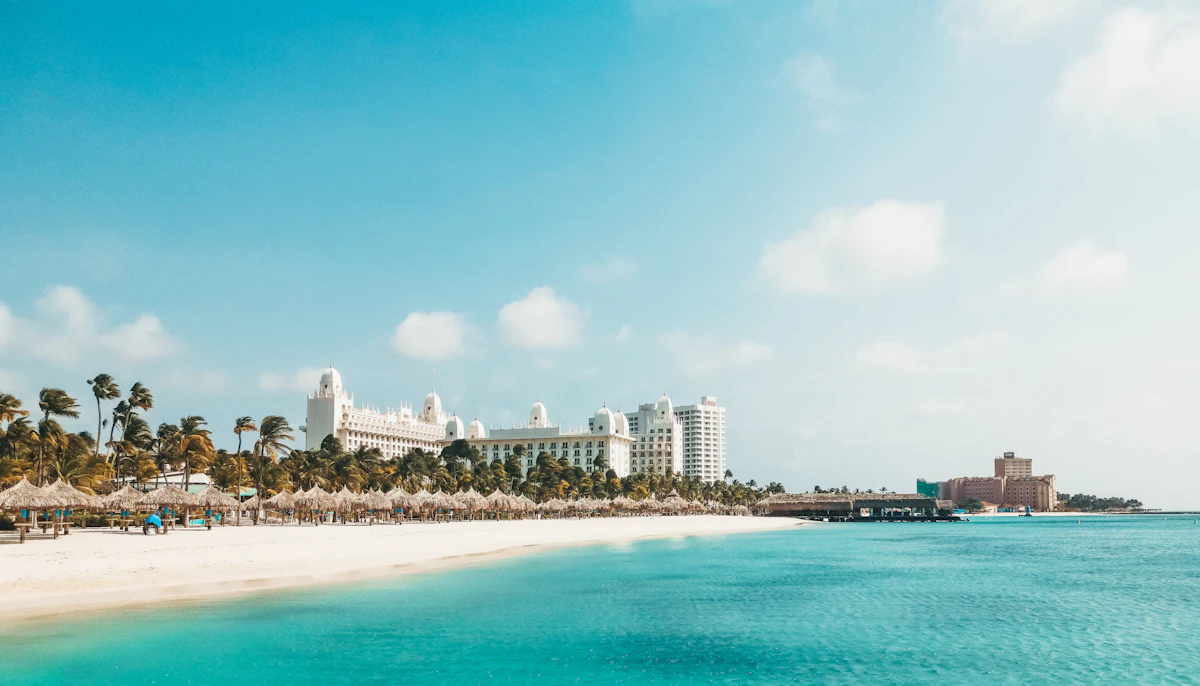
📍 Aruba, Dutch Caribbean
This page is part of our Caribbean guide — it goes further than the regional overview, spot by spot and school by school.
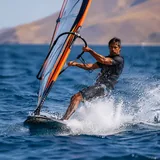
Steady east trade winds around 20 knots, shallow, calm water often only waist-deep: Fisherman's Huts suits families as well as advanced riders, on a beach shared with swimmers.
Windsurf guide arrow_forward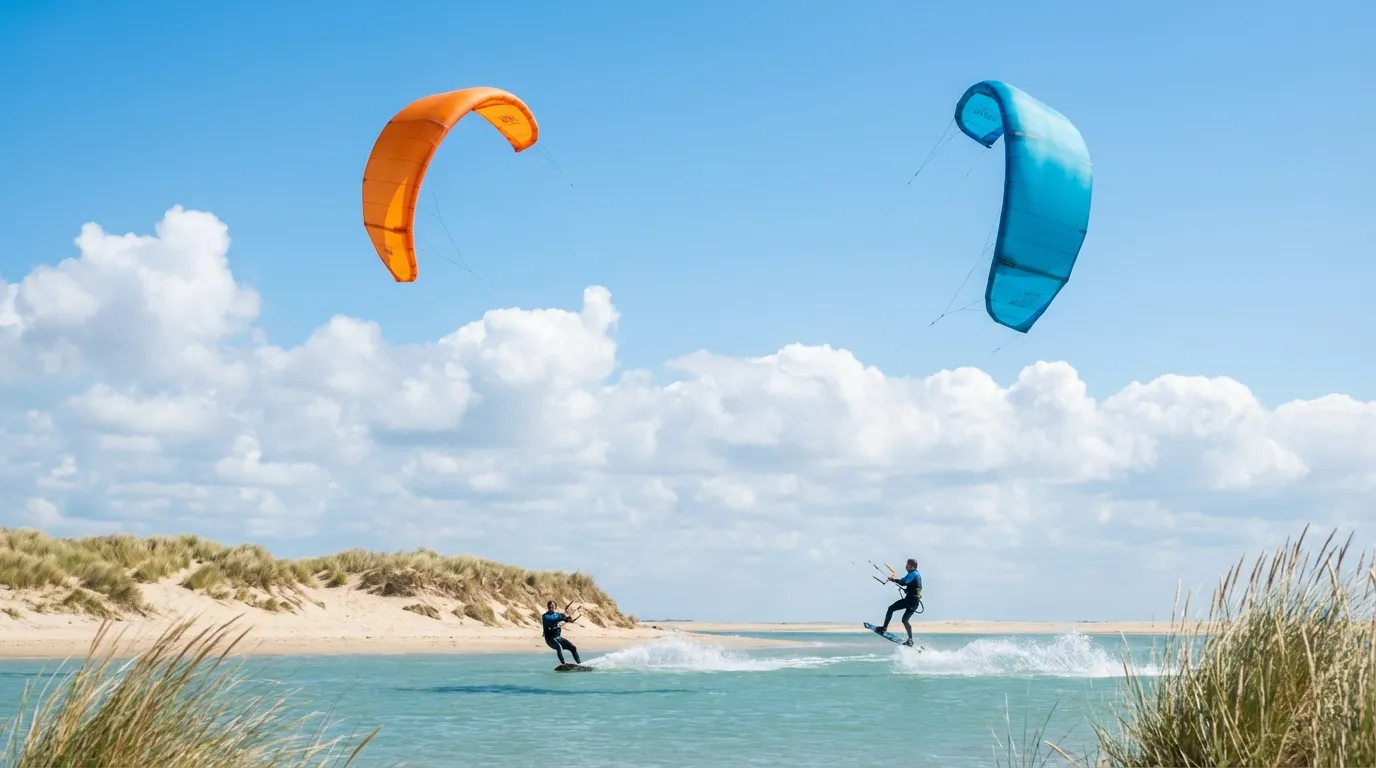
On the south-east coast, this experienced-riders-only spot combines strong wind (20-30 knots) with waves of 0.5-2m. No school or facilities on site — turn up already kitted out.
Kitesurf guide arrow_forward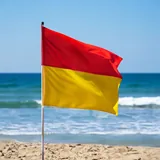
Founded in 1986 on an idea from two local windsurfers, this festival is now the region's longest-running watersports event, drawing 200+ competitors each mid-May.
Watersports safety arrow_forwardWhat to know before you book.
An east trade wind that barely lets up, shallow water, and a beach shared between riders and swimmers.
Fisherman's Huts, also known by its Papiamento name, Hadicurari Beach, runs along Aruba's north-west coast, between the Ritz-Carlton and Malmok Beach, a short drive from the big Palm Beach hotels. The island sits around 29km north of Venezuela's Paraguaná Peninsula, outside the Atlantic hurricane belt, which gives it one of the most dependable trade-wind regimes anywhere in the Caribbean — Aruba has a reputation for some of the most predictable weather in the region, with very few windless days across the whole season. The water stays shallow across a wide stretch of the beach, often waist-deep, which is why the spot draws holidaying families just as readily as riders chasing back-to-back sessions.
View on Google Maps open_in_newUnlike Bonaire's Lac Bay, where kitesurfing is banned outright, Fisherman's Huts is properly mixed-use: windsurfers, kitesurfers, swimmers and families all share the same stretch of water. A line of yellow buoys marks the outer limit of the riding zone, roughly 100m offshore, where a shallow coral reef begins that's best avoided if you come off your gear. That mix demands constant awareness, especially closer to shore where swimmers and children learning to ride tend to cluster. Local schools are upfront with students about this: Fisherman's Huts isn't a private club spot, it's a busy public beach year-round.
Three operators run out of the beach. Aruba Kitesurfing School, based between Fisherman's Huts and the Aruba Marriott Resort, has been teaching kitesurfing since 2002 and claims more than twenty years on the spot; it also runs wing foil lessons and hydrofoil kiteboarding sessions for already-confident riders. Aruba Active Vacations covers both kitesurfing and windsurfing, with rental gear and lessons for every level, alongside a broader menu of watersports and land-based activities on the island. Vela Windsurf Aruba, the local outpost of the well-known international Vela network, runs lessons from complete beginner through to advanced clinics, with a rental fleet dedicated to windsurfing. All three rent full kit by the day or week, which saves travelling with your own gear.
The shallow water and steady wind make this an excellent spot to learn, in both windsurfing and kitesurfing. More advanced riders appreciate the consistency of the trade wind for stringing sessions together without the lulls typical of a purely thermal wind, while still staying alert to beach traffic and the nearby reef. It's also a spot where you'll easily bump into other travelling riders — Aruba's windsurf and kite scene is tightly knit around this one beach.
On the south-east coast, more exposed and much wilder — a different side of Aruba entirely.
Boca Grandi, Papiamento for "big mouth", takes its name from its wide, half-circle bay on the island's south-east coast, near Baby Beach and Seroe Colorado. The wind blows side-shore here, ranging from 20 to 30 knots, with swell and chop that build into natural kickers much sought-after for jumping. Inside the bay itself, waves stay modest, around 0.5-1m, but cross the reef towards open water and waves of 1-2m draw riders who want to actually ride them.
View on Google Maps open_in_newIt's worth being honest about this: Boca Grandi is not a beginner spot. Currents can run strong and unpredictable, the swell and chop demand solid gear control, and there's no school or rental operator on site. You arrive already self-sufficient, with your own equipment, food, water and shade, since there's no infrastructure whatsoever. Most riders go in pairs or groups and let someone know their plans — sensible caution on an isolated spot.
The two spots sit the best part of an hour's drive apart, which makes it worth planning ahead when you swap between them depending on level and mood: Fisherman's Huts for a relaxed flat-water session or a lesson, Boca Grandi for chasing strong wind and jumps when conditions allow. Plenty of advanced riders on holiday in Aruba try Fisherman's Huts first before pushing on to Boca Grandi once they're dialled into local conditions.
Born on a beach in 1986, the event is now in its 38th edition.
Hi-Winds traces back to 1986, when two Aruban windsurfers, Anthony Blok and Ruben Croes, decided after a session to put their island on the world watersports map. The first Pro-Am ran in 1987 and was a hit from the start: major windsurfing names of the era, including Björn Dunkerbeck, Robby Naish, Anders Bringdal, Stephan van den Berg, Jutta Müller, Britt Dunkerbeck and Natalie Lelièvre, travelled in to compete. The event was originally held at Eagle Beach, a spot more exposed to swell and wind, before moving to the calmer, more accessible waters of Fisherman's Huts, better suited to a wider field of amateur competitors.
From the late 1990s and into the 2000s, kitesurfing and then freestyle windsurfing joined the programme, broadening the event's international audience. Today, Hi-Winds spans seven disciplines, including windsurfing, kitesurfing, wing foiling and even mountain biking, and draws more than 200 competitors from around the world each edition.
The 38th Aruba Hi-Winds runs 13-18 May 2026 at Sarah-Quita Beach, in the Palm Beach area. For anyone planning a trip around that window, it's a chance to watch some of the region's best amateur and professional riders in action, alongside a lively beach atmosphere for the whole week. Riders after a quieter session should simply avoid that stretch, since the beach is noticeably busier than usual.
A well-connected international airport, close to the US and Europe, a short drive from Fisherman's Huts.
Queen Beatrix International Airport serves Aruba directly, about 15 minutes from Oranjestad, the capital, and roughly twenty minutes from Fisherman's Huts. From the US, the choice is particularly good: American Airlines connects the island from Miami, Charlotte, Philadelphia and Dallas; United Airlines flies in from Newark, Washington, Houston and Chicago; JetBlue runs services from New York, Boston and Newark; and Delta links Aruba to New York and Atlanta. From Europe, both KLM and TUI fly run nonstop services from Amsterdam Schiphol, though combined frequency between the two varies by season — check current timetables directly rather than assuming a fixed schedule. There's no direct flight from the UK; routing through Amsterdam or the US is the simplest option.
Aruba, Bonaire and Curaçao form the informal "ABC islands" of the southern Caribbean. Regional carriers such as Divi Divi Air run daily flights between the three islands, a handy way to combine Aruba with Bonaire's Lac Bay on the same trip — Matosurf's Bonaire guide and this Aruba page work well together for a multi-island itinerary.
Hiring a car makes getting between Fisherman's Huts, on the north-west coast, and Boca Grandi, on the south-east coast, far easier: allow around 45-50 minutes each way. Taxis and hotel shuttles cover the Palm Beach area well, but become less practical for reaching the more isolated Boca Grandi. The official currency is the Aruban florin (AWG), but the US dollar is accepted almost everywhere, from restaurants to watersports schools, which simplifies things for most visitors.
A long wind season running December to June, with a clearly defined late-season peak.
This is when wind is most consistent, with an east trade blowing nearly every day at Fisherman's Huts. The Aruba Hi-Winds festival, in mid-May, traditionally caps off this run and draws together the season's most committed riders — worth booking lessons and kit ahead if your trip lines up with that week.
This is the punchiest window of the year, with wind reaching 20-30 knots, felt most strongly at Boca Grandi. Advanced riders chasing strong wind and jumps favour this stretch, while families and beginners still find solid conditions at Fisherman's Huts, where the shallow water stays manageable even as the wind picks up.
Wind eases to a gentler 10-18 knots, which suits beginners and anyone after a quieter beach. It's also a period when Aruba, sitting outside the Atlantic's main hurricane belt, remains a safer bet than some other Caribbean destinations that see more storm exposure at this time of year.
Well-established emergency infrastructure, plus a few precautions specific to a shared beach.
Aruba's emergency number is 911, covering police, fire and ambulance. For emergencies at sea, 913 reaches the Coast Guard Maritime Operations Center, also monitored on VHF channel 16. As with any long-haul destination, travel insurance covering medical evacuation is strongly advised, particularly for riders heading out to Boca Grandi, an isolated spot with no lifeguards or facilities.
On kit: no wetsuit, no boots needed — the water sits around 27-28°C year-round. Reef-safe sunscreen is still worth packing near Fisherman's Huts, where a shallow coral reef lines the riding zone. Most schools on the beach hire full kit by the day or week, which spares you the excess-baggage argument at check-in.
What riders ask most before booking.
Both disciplines share the same beach with swimmers and families. A line of yellow buoys marks the outer limit of the riding zone, about 100m offshore, where a coral reef begins. Beyond that, riders should stay alert to other beach users, since the beach is busy year-round.
Several schools run out of the beach, including Aruba Kitesurfing School (operating since 2002), Aruba Active Vacations and Vela Windsurf Aruba. All offer lessons and equipment rental, from beginner through to advanced levels.
Boca Grandi, on the south-east coast near Baby Beach, offers wind of 20-30 knots and waves of 0.5-2m depending on your position relative to the reef. It's a spot for experienced riders only, with no school or facilities on site.
The Caribbean's longest-running watersports event, launched in 1986 by two local windsurfers. The 2026 edition, the 38th, runs 13-18 May and brings together more than 200 competitors across windsurfing, kitesurfing, wing foiling and other disciplines.
Queen Beatrix International Airport (AUA) takes direct flights from American Airlines, United, JetBlue and Delta from the US, from KLM and TUI fly out of Amsterdam, and from regional carriers connecting Bonaire and Curaçao. Explore our Bonaire guide and the rest of our Caribbean guide too.