
📍 Guadeloupe, France's Caribbean department
This page is part of our Caribbean guide, breaking the island down coast by coast and school by school.

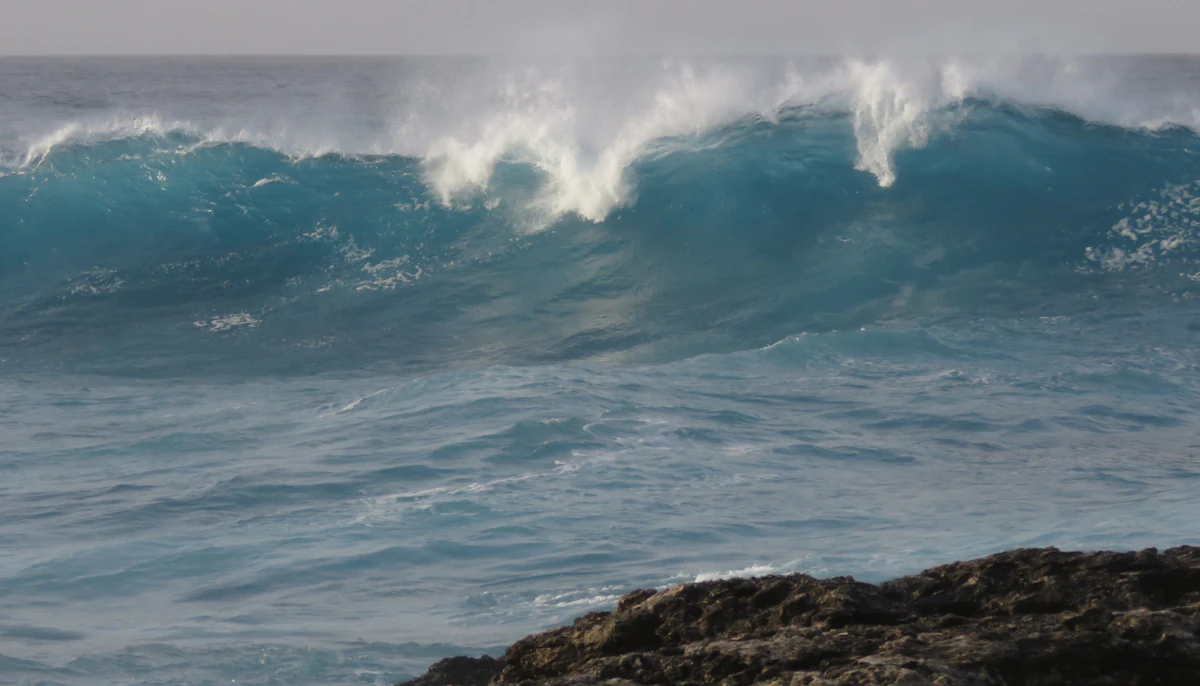
At Le Moule, on the Atlantic coast of Grande-Terre, the Damencourt reef break is the island's most consistent spot. It has hosted the Quiksilver King of the Groms and the Rip Curl Grom Search.
Surf guide arrow_forward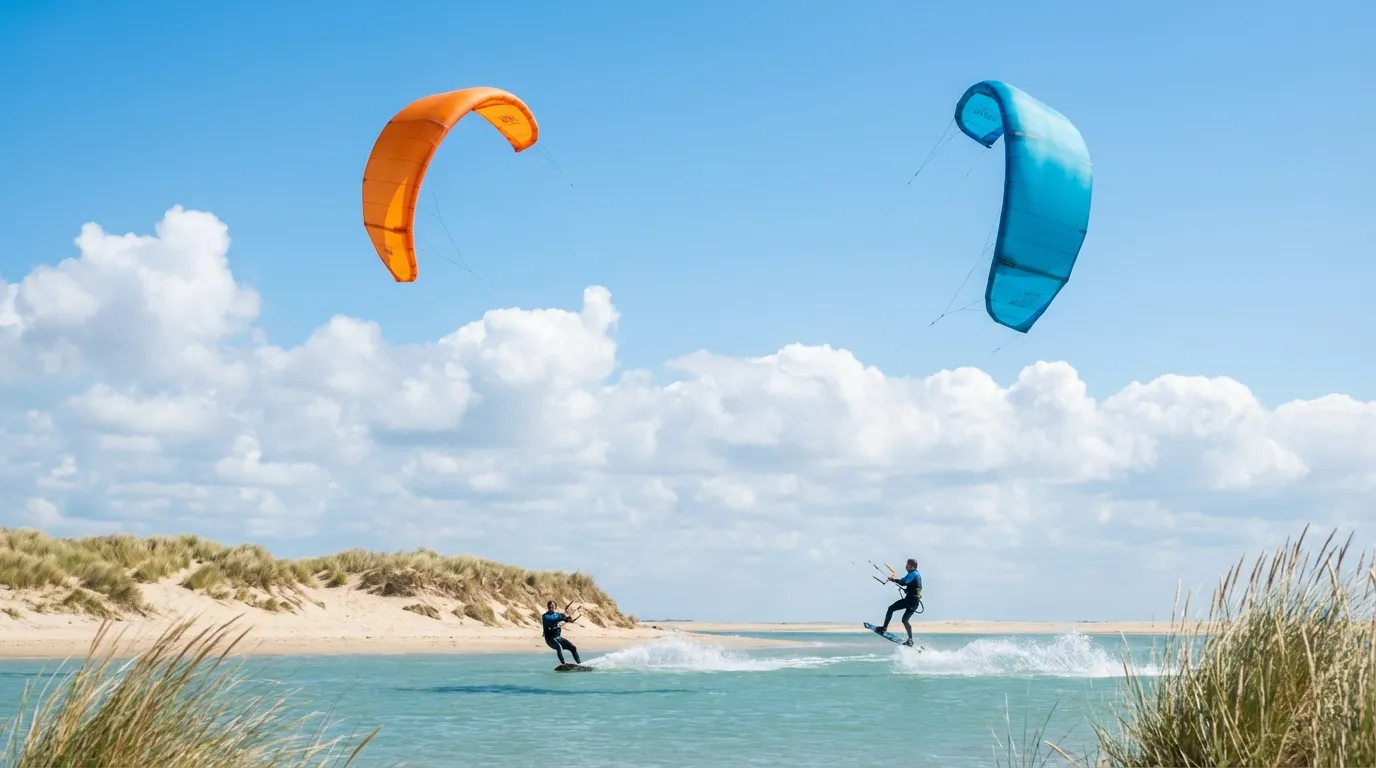
Around the Saint-François lagoon and Plage de la Caravelle in Sainte-Anne, several schools make the most of shallow water and steady trade winds, running nearly year-round.
Kitesurf guide arrow_forward
ID card, euros, mainland French emergency numbers (15, 17, 18, 112): for a French or EU visitor, Guadeloupe strips away everything that makes another Caribbean island more complicated.
Watersports safety arrow_forwardWhat to know before you book.
A reef break exposed to Atlantic swell, consistent enough to host international competitions.
On the east coast of Grande-Terre, facing the open Atlantic, the town of Le Moule is home to Damencourt, known locally simply as 'the spot'. Exposed mainly to the north, it also works on north-east and east swells, which makes it the most reliable spot in Guadeloupe: there's a wave here for nearly the whole year. Damencourt has hosted several notable international competitions, including the Quiksilver King of the Groms and the Rip Curl Grom Search — recognition that reflects the quality and consistency of the wave. The coral bottom demands care entering and exiting the water: it's worth locating the channel at low tide and wearing reef boots.
View on Google Maps open_in_newSeveral operations are based directly at Le Moule. Madras Surf School offers surf, bodyboard and stand-up paddle lessons suited to beginners and experienced surfers alike. Poyo Surf Club is permanently based at the Damencourt break. Nearby, between Morne-à-l'Eau and Le Moule, Ride In (formerly Frédo Surfcamp) runs as a surf camp with accommodation, group and private lessons. UCPA also runs a sports village, 'Surf House Le Moule', organising surf stays that rotate between several north-coast spots: Helleux, Le Souffleur and Damencourt.
Further up the north coast of Grande-Terre, Plage de la Chapelle at Anse Bertrand offers a decent reef break with both lefts and rights over a sand-and-coral bottom — a spot popular even with supervised beginners, since entry is relatively low-risk. A little further south, Port-Louis and its Plage du Souffleur roll out a wide reef shelf with long rights, accessible to most levels. Both spots are especially sought after when the swell runs too big elsewhere, offering more manageable waves.
Damencourt suits intermediate to advanced surfers best: the coral bottom and the power of North Atlantic swell call for experience. Beginners will find a friendlier setting at Anse Bertrand, at Port-Louis, or in a supervised lesson with one of Le Moule's schools, which pick the day's spot to match conditions and group level.
Shallow water and steady trade winds, on the south coast of Grande-Terre.
On the opposite side of the island from Le Moule's Atlantic swell, Grande-Terre's south coast offers a much more sheltered stretch of water around Saint-François. The lagoon, shallow and protected, paired with steady east to north-east trade winds, makes it particularly well suited to learning kitesurfing, wing foiling and windsurfing. Several schools have set up here: Bluesoley, based next to the lagoon since 2019, runs kitesurfing lessons and watersports rental; Concept Kite teaches kitesurfing, kitefoil and wing foil, affiliated with the French free-flight and kite federation; Action Kite Caraïbes operates seven days a week on wing foil and kitesurf; and Easykite rounds out the local offer of lessons and courses.
View on Google Maps open_in_newJust west of Saint-François, the town of Sainte-Anne and its Plage de la Caravelle form the other sought-after kite and windsurf area, with the same steady trade winds and a stretch of water well suited to progression. The Centre nautique José Bahadour, at Plage du Bourg near Saint-François marina, adds broader watersports access to the area.
Grande-Terre offers two distinctly different coastlines less than half an hour's drive apart: the east coast, exposed to the Atlantic and its swells, built for surfing around Le Moule; and the south coast, more sheltered, built for kite and windsurf around Saint-François and Sainte-Anne. Plenty of visitors switch between the two within the same week, depending on the day's conditions.
What being part of France means for entry, currency and emergencies.
Unlike the other Caribbean destinations featured in our guide, Guadeloupe isn't an independent country, nor a Dutch, British or US territory: it's an overseas department and region, an integral part of the French Republic and the European Union, exactly like any mainland French department. In practical terms, that means French citizens can travel on a valid ID card alone, with no passport or visa needed. Citizens of other EU countries travel under the same rules that apply on the mainland.
The currency is the euro, so budget for the same £/€ exchange you would anywhere in the eurozone. French mobile plans generally work here without extra roaming charges within the territory; UK plans vary, so check yours before you travel. Bank cards are accepted everywhere, just as on the French mainland, and cash machines are common in tourist areas like Saint-François or Le Moule.
The upshot is a straightforward trip to plan: schools and accommodation booked in euros, instructors who speak French (and often English in the tourist areas), and a healthcare system and emergency numbers identical to mainland France. That counts for a lot if you're taking your first steps into tropical surfing or kitesurfing without wanting to also navigate the admin complications of a more far-flung destination.
An international airport, direct flights from Paris and regional Caribbean connections.
Guadeloupe's international airport, at Le Raizet near Pointe-à-Pitre and renamed Maryse-Condé Airport in honour of the Guadeloupean author, serves the island directly from Paris. Air France, which moved its French Antilles routes from Orly to Paris-Charles de Gaulle in March 2026, runs up to fourteen weekly flights from CDG on Boeing 777-200 and 777-300ER aircraft, for a flight of around 8.5 hours. Air Caraïbes, for whom Pointe-à-Pitre is one of its main hubs, also runs several flights a week from Paris-Orly, and its low-cost subsidiary French bee offers a budget alternative on the same route through a codeshare agreement. There's no direct flight from other European countries — routing through Paris is the simplest option.
Air Caraïbes also connects Pointe-à-Pitre to Martinique, Saint-Martin and Saint-Barthélemy, making it easy to combine Guadeloupe with another French-speaking stop in the archipelago, such as Martinique. Several regional carriers add further links to other islands in the Lesser Antilles.
Hiring a car is the most practical way to move between spots: allow around thirty minutes between the airport and Le Moule, and about 40 minutes between Le Moule and Saint-François across Grande-Terre. Road quality is generally good and distances across the island stay manageable. Driving is on the right, as on the mainland, and French road rules apply in full.
Two calendars worth knowing: swell for surfing, trade winds for kite and windsurf.
Grande-Terre's Atlantic coast picks up North Atlantic swell from November to April, with a particularly reliable core running December to March. That's when Damencourt and the neighbouring spots at Anse Bertrand and Port-Louis run at full capacity, with consistent, well-formed waves.
The trade wind season runs broadly from late November to late July, but two windows stand out for consistency: late December to early March, and July. That's the most reliable stretch for sailing at Saint-François and Sainte-Anne, with steady east to north-east winds over the lagoon.
Like the rest of the Antilles chain, Guadeloupe sits within the Atlantic hurricane belt. The official season runs June to November, peaking between August and October. Swells generated during this period are known to be dangerous and unpredictable — not a recommended window for a watersports trip, whatever the discipline.
Because Guadeloupe is a French territory, its emergency numbers are exactly those of mainland France.
This is one of the things that sets the destination apart from the other Caribbean islands in this guide: as a French department, Guadeloupe's entire emergency system is strictly identical to mainland France's. 112, the single European emergency number, works everywhere on the island. 15 reaches SAMU for any medical emergency, 17 reaches police or gendarmerie, and 18 reaches the fire service. At sea, it's CROSS Antilles-Guyane, based in Fort-de-France, Martinique, that coordinates rescue operations across the whole French Antilles chain: it can be reached on 196, a free number dedicated to sea rescue, or on VHF channel 16. That number doesn't replace 112, but adds a route specifically for marine emergencies.
Guadeloupe's healthcare system runs on French Sécurité sociale, with public hospitals including the CHU de Guadeloupe. A European Health Insurance Card or French healthcare cover is enough for most situations; supplementary travel insurance is still worth having in case a serious emergency requires repatriation to mainland France. On kit, as with any tropical destination: no wetsuit needed, but reef boots are worth packing for coral-bottomed spots like Damencourt, along with sunscreen suited to the swimming areas.
What riders ask most before booking.
Because Guadeloupe is an overseas department and region of France, it is legally part of France and the European Union. French and EU citizens need no passport (a valid ID card is enough), no visa and no currency exchange: everything is priced in euros and the emergency numbers are the same as on the French mainland.
Damencourt, at Le Moule, is considered the most consistent and best-known spot in the archipelago. This reef break has hosted international events including the Quiksilver King of the Groms and the Rip Curl Grom Search. Several schools, including Madras Surf School and Poyo Surf Club, are based directly on the spot.
The Saint-François area, around the lagoon and Plage de la Caravelle in Sainte-Anne, is home to most of the island's kitesurf and wing foil schools, including Bluesoley, Concept Kite and Action Kite Caraïbes. The lagoon's shallow water and steady trade winds make it a favoured learning ground.
Guadeloupe Pôle Caraïbes Airport (PTP), renamed Maryse-Condé Airport, takes direct flights from Paris with Air France, Air Caraïbes and French bee, a flight of around 8.5 hours. Air Caraïbes also runs regional connections to Martinique, Saint-Martin and Saint-Barthélemy.
The same as mainland France, since Guadeloupe is a French territory: 112 (the European emergency number), 15 for SAMU medical emergencies, 17 for police and 18 for fire services. At sea, CROSS Antilles-Guyane can be reached on 196 (a free number) or on VHF channel 16. Discover Martinique, the other French département in the Caribbean, plus Bonaire and Aruba, or explore the rest of our Caribbean guide.