

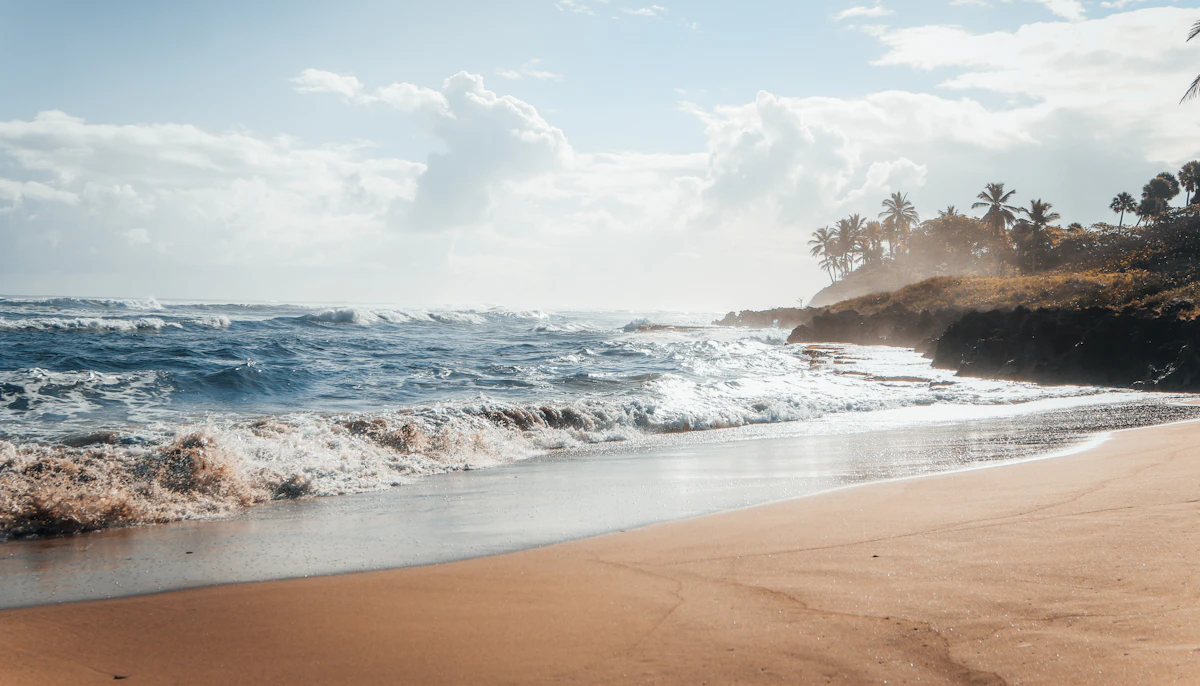
📍 Cabarete, Dominican Republic
This page is part of our Caribbean guide, taking each of the three beaches and the schools on them in turn.
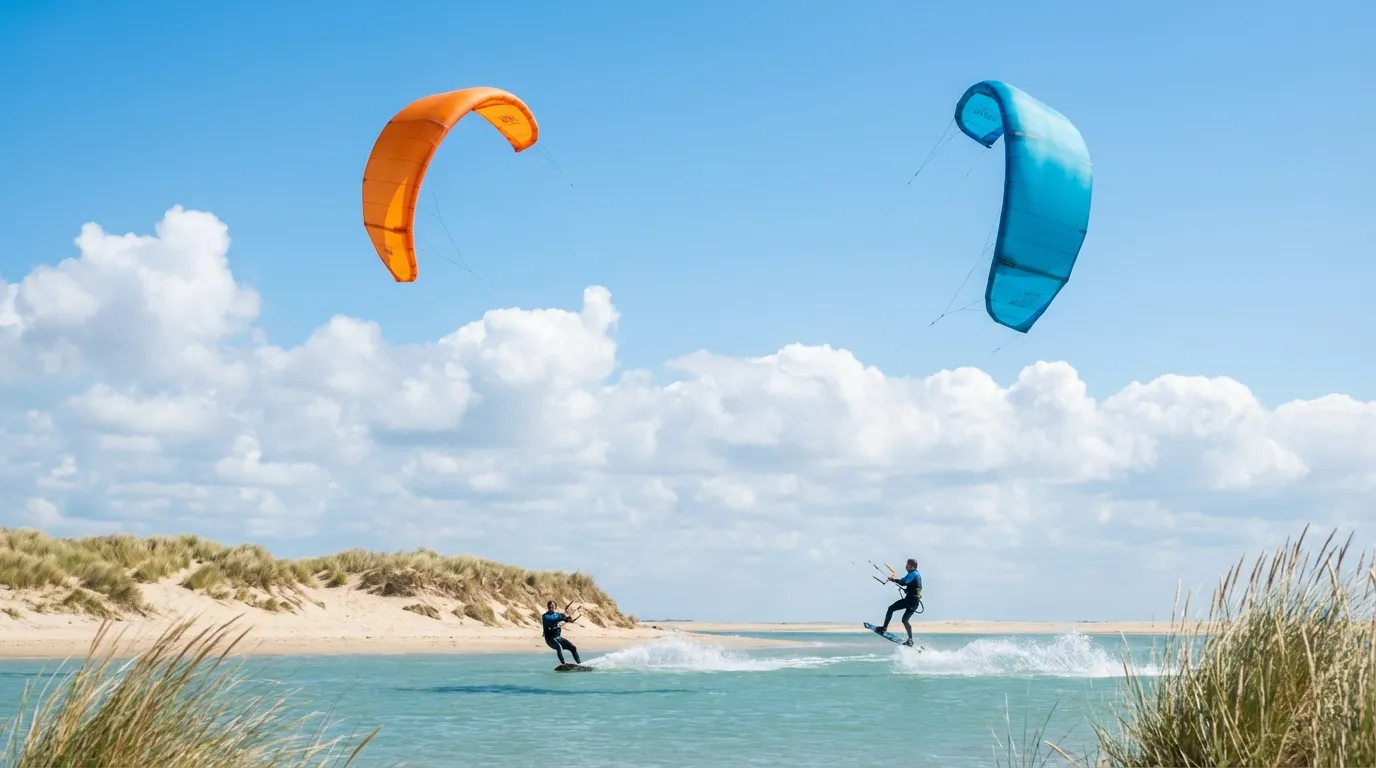
Cabarete's original beach, and still the busiest: schools, beachfront cafés, a strong presence of advanced riders, steady wind and enough room to launch safely.
See Kite Beach arrow_forward
A wide bay protected by a reef roughly a kilometre offshore, with several schools and far more room to manoeuvre — the natural next step once you're past the basics.
See Bozo Beach arrow_forward
Cabarete Bay, the town's historic windsurfing beach, sits at the centre of the bars and restaurants. A few minutes away, Encuentro Beach is the island's reference surf spot.
See Cabarete Bay & Encuentro arrow_forwardWhat to know before you book.
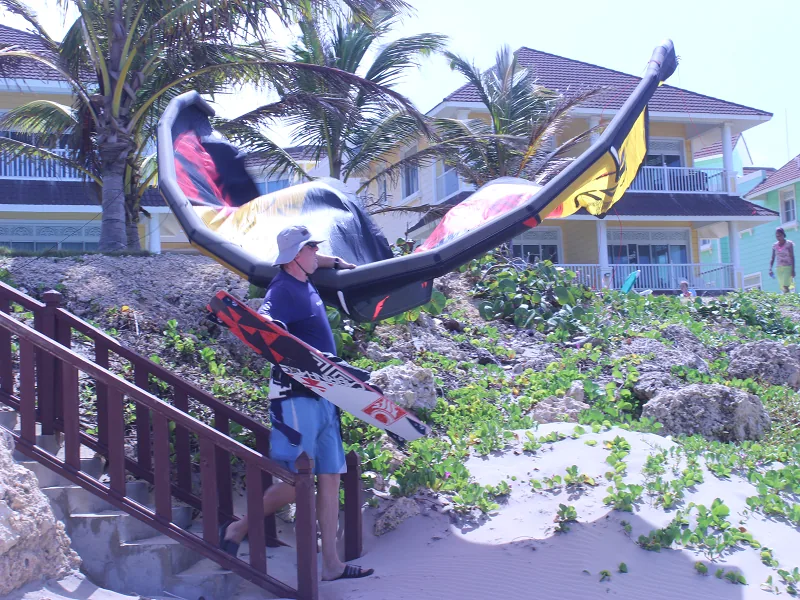
A beach with a worldwide reputation, a strong presence of advanced riders, and a dense cluster of schools.
Cabarete is one of the world's top kitesurfing destinations, and the numbers back that up: the town claims over 300 windy days a year. The whole scene is built around three beaches, each with a distinct character, and Kite Beach is the most iconic of them. It's the original home of Cabarete's kitesurfing scene, with a heavy concentration of schools, beachfront cafés and advanced riders stringing sessions together year-round. The thermal wind fills in reliably most afternoons, and there's still enough launch space despite the crowds.
View on Google Maps open_in_newLaurel Eastman Kiteboarding (LEK) has been teaching kitesurfing in Cabarete since 2003, with IKO-certified (International Kiteboarding Organization) instructors and a range spanning complete beginners to advanced coaching, private and group lessons alike. Cabarete Kite Point operates from inside the Agualina Kite Resort on Kite Beach, bundling lessons, a bed and meals into one booking. Kite Club is the third option on that same stretch of sand. Day and weekly kit hire is standard at all three, so there's no need to check a board bag onto the flight.
Kite Beach is a fairly narrow strip of sand, busy with advanced riders during peak season. Complete beginners still do well here thanks to the dense school coverage, but anyone after more room to run through manoeuvres without worrying about traffic often heads to Bozo Beach instead, just a few minutes away in the same bay.
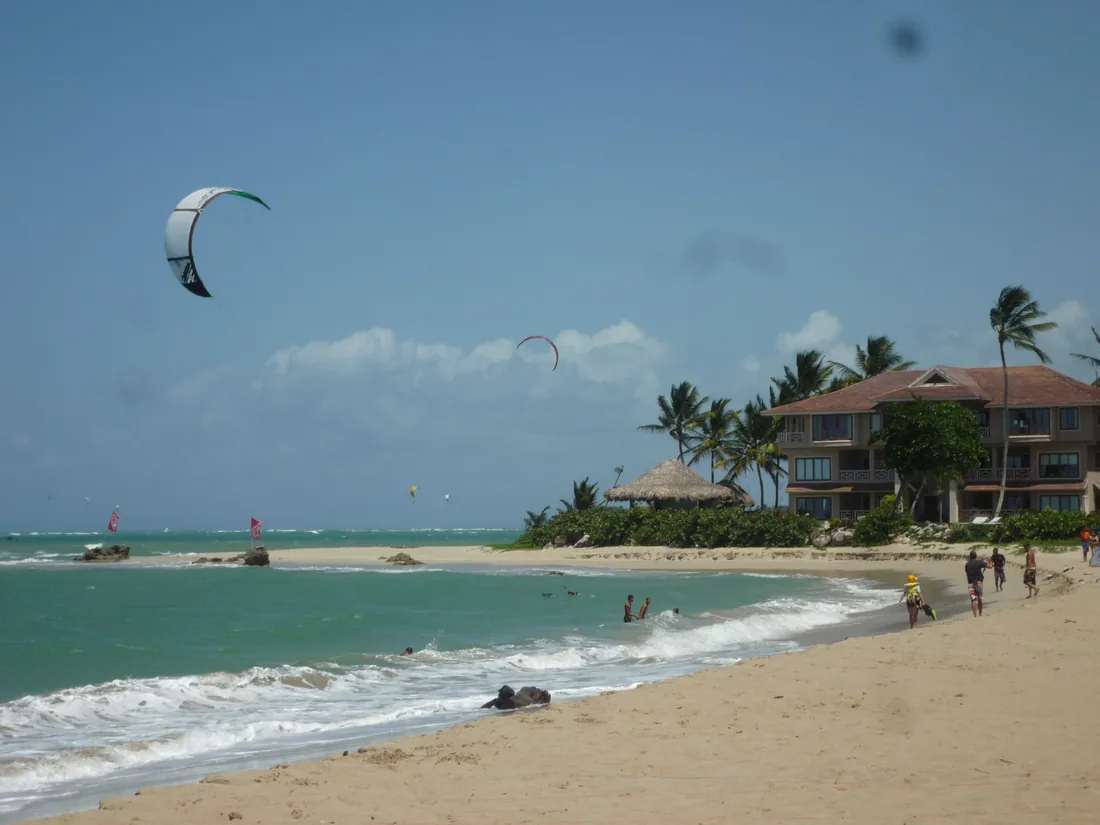
A wide bay protected by a reef offshore, with several schools and plenty of open water.
Bozo Beach, also known as Punta Goleta Beach, is Cabarete's biggest kitesurfing and windsurfing spot, right in the town centre, close to the main hotels, restaurants and shops. A reef protects the bay roughly a kilometre offshore, which flattens the swell and creates a more manageable stretch of water than Kite Beach, with far more room to manoeuvre. The first hours in the water can still be tricky, with chop and variable depth close to shore, but the cross-shore wind and the long run of beach more than make up for that initial difficulty.
View on Google Maps open_in_newBIG AIR Kite School, running out of Bozo Beach for several years now, teaches with VDWS- and IKO-certified instructors across several languages, including English, German, Spanish and Italian. Dominikite also runs lessons on the same spot. Between them they take riders from a first session through to freestyle and foiling.
The two beaches sit just a few minutes apart, within the same Cabarete bay, which makes it easy to swap between them depending on the day: Kite Beach for the atmosphere and rider density, Bozo Beach for space and a quieter session once the basics are dialled in. Plenty of visitors start their lessons on one beach before trying the other partway through their trip.
Two complementary sides of the town, just minutes apart.
Before kitesurfing took off in the 2000s, Cabarete first made its name as an international windsurfing destination, and Cabarete Bay is the living reminder of that history. This is the bay the town wraps around, and where most of the bars and restaurants sit. It's more sheltered than Kite Beach or Bozo Beach, which still makes it a sound windsurfing option for intermediates who want the noise and the nightlife on their doorstep.
View on Google Maps open_in_newFor travellers combining kitesurfing with surfing, or a mixed group of riders, Encuentro Beach sits a short drive west of Cabarete towards Sosúa. It's the most consistent surf spot in the Dominican Republic, with several distinct peaks packed into the same stretch of beach: Bobo's, the most forgiving wave, reserved for beginners and longboarders; the Main Break, which works nearly year-round with several take-off points; the Encuentro Left, offering good shoulders for intermediate riders; and Destroyers, a reef break for experienced surfers when the north swell is big enough. The best swell window runs November to March, while summer brings calmer conditions well suited to learning or longboarding.
Puerto Plata's international airport, about 25 minutes from the Cabarete beaches.
Gregorio Luperón International Airport serves the town of Puerto Plata, about 25 minutes' drive from the Cabarete beaches. From the US, the choice is good: American Airlines, Delta, United and JetBlue all run direct services, with Miami as the main gateway. From Canada, Air Canada, Air Transat and WestJet connect the airport to Toronto and Montreal. From Europe, Condor runs a direct year-round service from Frankfurt twice weekly, and Edelweiss links Zurich to Puerto Plata on a seasonal basis, broadly from late October to April. There's no direct flight from the UK; routing through the US or a European hub is the simplest option.
Cabarete's three beaches — Kite Beach, Bozo Beach and Cabarete Bay — all sit within the same town-centre stretch, easily reached on foot or by a short moto-taxi ride. To reach Encuentro Beach, further west towards Sosúa, hiring a scooter or car is the easier option, or using shuttles run by some of the surf schools. The official currency is the Dominican peso (DOP), but the US dollar is widely accepted at hotels, restaurants and watersports schools across the tourist area.
More than 300 windy days a year, split across two clearly distinct seasonal peaks.
This first wind peak fills in most afternoons, driven by the thermal contrast between land and sea, a classic pattern that keeps conditions particularly reliable through this window. It's the busiest period for advanced riders chasing consistent sessions at both Kite Beach and Bozo Beach.
This winter window combines steady trade winds, heavier tourist traffic across all three beaches, and the best swell period for surfing at Encuentro. It's also the busiest season for booking schools and accommodation, worth planning ahead for if your trip lines up with it.
The Atlantic hurricane season runs June to November, peaking August to October. Unlike Aruba, Bonaire or Curaçao, which sit further south and largely outside the main hurricane track, the Dominican Republic is more directly exposed. That's not a reason to rule out a late-summer trip, but it's an honest factor to build into planning, particularly around travel insurance.
The national emergency number, the tourist police, and a few sensible precautions.
The emergency number in the Dominican Republic is 911, working across the whole country except in some areas near the Haitian border, where coverage stays more limited. The tourist police, POLITUR, can be reached on 809-222-2026 for any tourism-related question or incident. It's worth being upfront about this: the country's emergency infrastructure and ambulance network are less standardised than in Europe, particularly outside the main tourist areas. Travel insurance covering medical evacuation earns its keep here rather than just ticking a box, especially for a trip combining multiple spots or a run out to Encuentro.
On kit: no wetsuit, no boots needed — the water sits between 26 and 29°C year-round depending on the season. Most schools across the three beaches hire full kit by the day or week, which is the easier option on a long-haul flight than shipping your own quiver.
What riders ask most before booking.
Kite Beach is the original, busiest spot, with the highest concentration of schools, cafés and advanced riders, on a fairly narrow stretch of sand. Bozo Beach, a little further round the bay, is protected by a reef roughly a kilometre offshore, giving more room to manoeuvre and making it the better pick once you're past the basics.
At Kite Beach, Laurel Eastman Kiteboarding (LEK) has been teaching since 2003 with IKO-certified instructors, alongside Cabarete Kite Point and Kite Club. At Bozo Beach, BIG AIR Kite School (VDWS and IKO) and Dominikite run lessons and rentals. All cover every level, from a first flight through to advanced coaching.
Yes. Encuentro Beach, a short drive west of Cabarete towards Sosúa, is considered the Dominican Republic's reference surf spot, with several peaks including Bobo's for beginners and Destroyers for experienced surfers. The best swell window runs November to March.
The Atlantic hurricane season runs June to November, peaking August to October. The Dominican Republic sits more directly in the hurricane belt than islands such as Aruba, Bonaire or Curaçao, which is worth factoring into planning for a late-summer or autumn trip.
Gregorio Luperón International Airport (POP) in Puerto Plata, about 25 minutes' drive away, takes direct flights from American Airlines, Delta, United and JetBlue out of the US, from Air Canada, Air Transat and WestJet out of Canada, plus Condor from Frankfurt and Edelweiss from Zurich. There's no direct flight from the UK; routing through the US or a European hub is the simplest option. Explore the rest of our Caribbean guide too.