
📍 The Bahamas
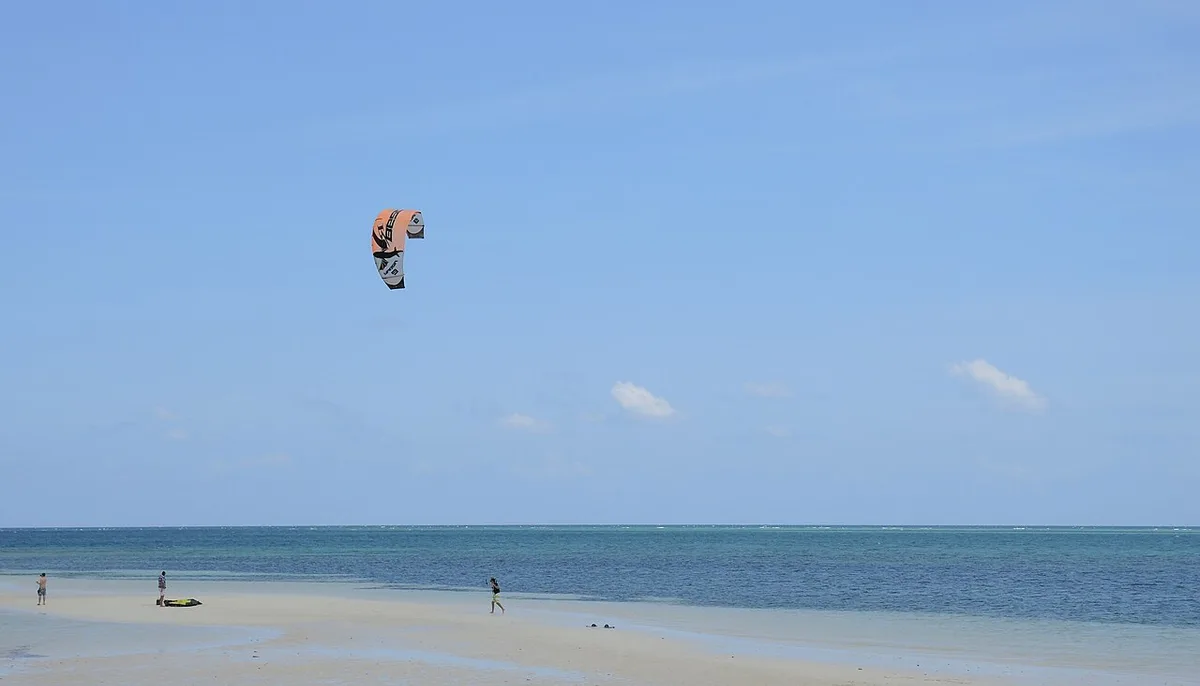
Photo: Banana Bay, Grand Bahama (2013), by Pietro / Wikimedia Commons, CC BY-SA 3.0
The Bahamas sit in our Caribbean guide because that's how the region is usually grouped, but the islands lie in the Atlantic, not the Caribbean Sea. Of roughly 700 islands, only two have current, spot-level kitesurfing evidence we could find, and this page is built around those.
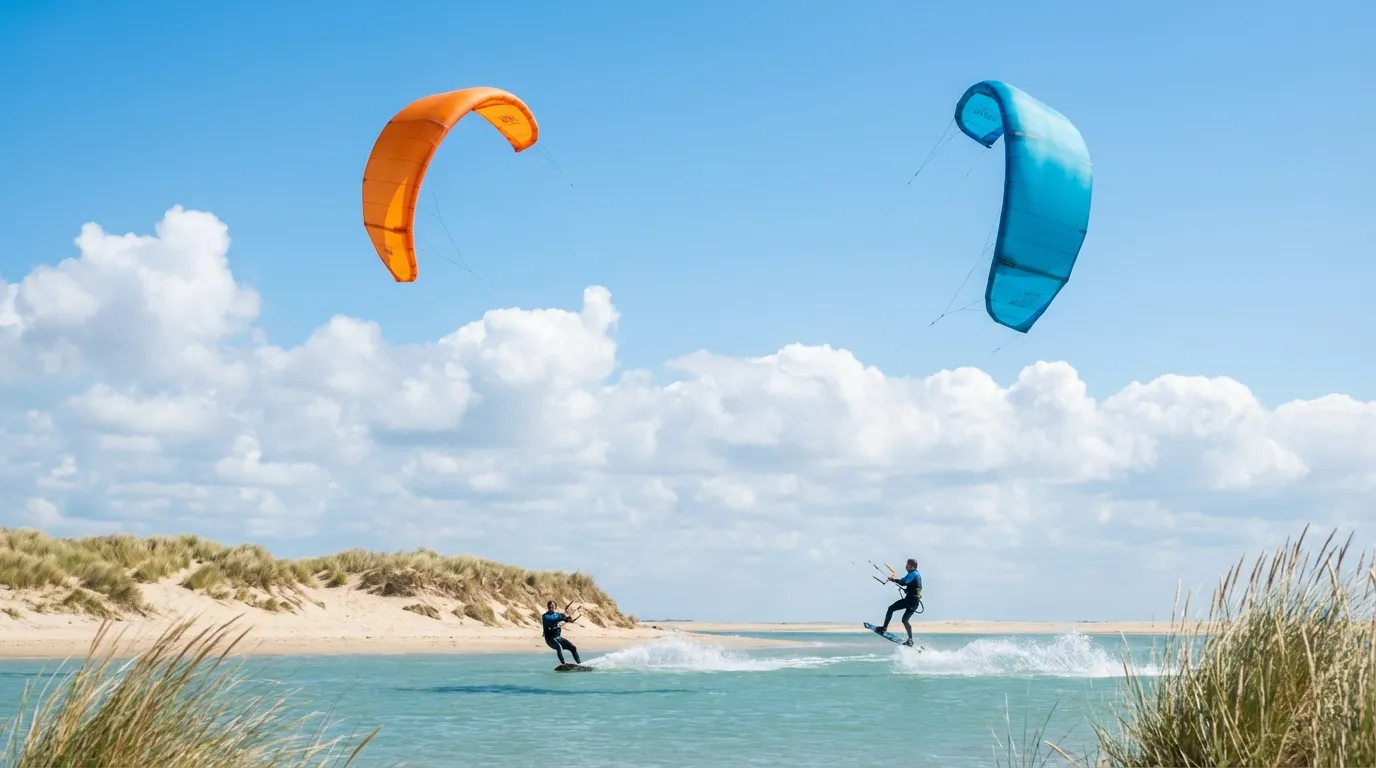
Coco Plum Beach, with shallow water and a sandbar, works in an easterly; Tar Bay takes north-east to east. Exuma Kitesurfing runs lessons and rental on the island.
Kitesurf guide arrow_forward
Yamacraw for the north-east to east trades, South Beach and Coral Harbour for flatter water in an east to south-east, and Goodman Bay on the north shore when the wind swings northerly.
Caribbean guide arrow_forward
We found no Bahamian law written for kitesurfing. The Royal Bahamas Defence Force and the volunteer Bahamas Air Sea Rescue Association (BASRA) take part in sea rescue; the emergency numbers are 919 and 911.
Watersports safety arrow_forwardWhat to know before you book, and what we couldn't confirm.
The best-documented kitesurfing in the Bahamas, with a school that's demonstrably still trading.
Coco Plum is the spot most often mentioned for Exuma. Its exposed position makes it windy, and riders describe shallow water and a sandbar that work in an easterly, which is the direction the prevailing trade wind usually comes from. Shallow water over sand is forgiving for learning, but a sandbar also means the depth changes with the tide, so check it before you launch rather than after.
View on Google Maps open_in_newTar Bay (also listed as Tar Beach) is the other Great Exuma spot with current documentation. Spot guides recommend north-east, east-north-east and east winds, and note that the wind here is lighter in summer, which fits the island-wide pattern of a winter-to-spring season.
Exuma Kitesurfing (exumakitesurfing.com) is the school we could confirm with the most confidence: its own site, updated in 2024 and 2025, advertises beginner lessons on land and water, private and group instruction, equipment rental and SUP tours. It doesn't publish a single fixed launch beach, which is consistent with a school that picks its spot by wind direction on the day. It doesn't state its operating months either, so ask before you book around a particular week.
Other Exuma names, including Stocking Island, Moriah Cay and Staniel Cay, appear in kite-spot catalogues. We found nothing current enough to describe them as spots, so we're leaving them as names to ask the school about.
The capital's island has no single kite beach. Which one works depends on where the wind is coming from.
Spot guides describe Yamacraw as a popular local spot that works best in the north-east to east trade wind, which makes it the default on a normal trade-wind day.
On the south-west side of the island, South Beach and Coral Harbour are described as flatter water that needs an east to south-east wind. Treat South Beach and Yamacraw as two different places: they're sometimes run together online, but they sit on different stretches of coast and want different wind.
On the north shore, Goodman Bay is listed as working mainly in north-west to north winds; the same listing also mentions north to east-north-east sectors without making clear which part of the bay they apply to. The published detail is thin enough that we'd treat it as a spot to ask about locally rather than one to plan a trip around.
Montagu is occasionally used; the one current guide that covers it calls the wind there shifty and gusty. Jaws Beach, Cable Beach and Love Beach sometimes appear in general lists, but we found no current evidence of any of them being used as a kite launch.
A current Tripadvisor listing names Cross-Shore Bahamas Kiteboarding in Nassau, run by AJ Watson, an IKO instructor, offering private and group lessons and out-island kite camps. We couldn't find an official website or confirm which beaches it teaches from, so contact it directly before you plan around it.
What the research turned up beyond Exuma and Nassau, and how far it goes.
Kite-spot catalogues list places on most of the larger islands, but a name in a catalogue doesn't prove there's a legal launch, a school, rental kit or anyone around if things go wrong. Here's what we found island by island.
None of this means there's no kitesurfing on those islands; we couldn't document it well enough to send you there. If you go, be self-sufficient – bring your own kit, ride with someone else and don't assume a rescue boat is nearby.
A winter-to-spring trade-wind season, and a hurricane season that overlaps the lighter months.
Kitesurfing guides most often put the peak between December and March, with one source stretching it to April. The wider usable season runs roughly November to May, with the trade wind typically quoted at 15-25 knots.
Summer wind is lighter and less reliable, and the Atlantic hurricane season runs from 1 June to 30 November. The Bahamas are directly exposed to it. Hurricane Dorian caused catastrophic damage on Abaco and Grand Bahama in 2019. If you travel in those months, watch the forecasts and check your travel insurance covers named storms.
The sea runs roughly 22-30°C over the year, coolest in late winter and warmest in late summer. Many riders go without a wetsuit in summer, though a shortie or a light wetsuit can be welcome in the cooler, windier months.
A direct flight to Nassau, and island-hopping from there.
Lynden Pindling International Airport in Nassau is the main gateway; the Bahamas' tourism authority reports a daily non-stop British Airways service from London Heathrow. Great Exuma has Exuma International Airport at George Town. Schedules change – check the current route with the airline before you book.
British passport holders don't usually need a visa for a holiday, but the permitted length of stay and passport-validity rules are set out on the UK government's entry requirements page for the Bahamas; check it before you travel. The Bahamian dollar is pegged one-to-one to the US dollar, and the official tourism site says the two are accepted interchangeably on all islands, though change may come back in Bahamian dollars.
Bahamian authorities, Bahamian numbers, and no kite-specific rule we could find.
Recreational watercraft come under the Bahamas' Port Department. The Commercial Recreational Watercraft Act and its 2006 regulations cover rented and commercially operated craft and require approved personal flotation devices, but we couldn't establish whether they apply to a kite, which is wind-powered and privately ridden. We found no Bahamian law or regulation written specifically for kitesurfing, and no Nassau rule on distance from swimmers. In practice you should follow the school, keep well clear of bathers and boat traffic and ask locally if you're unsure.
The UK Foreign Office's travel advice gives 919 or 911 for ambulance, fire and police in the Bahamas. At sea, the Royal Bahamas Defence Force takes part in search and rescue, alongside the volunteer Bahamas Air Sea Rescue Association (BASRA), which boating sources report as reachable on VHF channel 16. UK emergency numbers and UK flag systems don't apply here.
Great Exuma and Nassau are documented kitesurfing destinations with warm water and a winter-to-spring trade wind. Beyond them the Bahamas are mostly a self-sufficient proposition, so confirm the school, the launch and the season before you book.
What riders ask most before booking.
Great Exuma and New Providence (Nassau) are the two islands with current, spot-level evidence. On Great Exuma, Coco Plum Beach works in an easterly and Tar Bay in north-east to east winds; around Nassau, Yamacraw suits the north-east to east trades and South Beach and Coral Harbour an east to south-east wind.
Roughly November to May, with December to March the most often cited peak; the trade wind is typically quoted at 15-25 knots. Summer wind is lighter, and the hurricane season runs from 1 June to 30 November.
Exuma Kitesurfing on Great Exuma has a current website advertising lessons and rental. In Nassau, a current listing names Cross-Shore Bahamas Kiteboarding, run by IKO instructor AJ Watson. We couldn't confirm a currently trading school on any other island; contact any school directly before booking.
Not geographically: the Bahamas are an Atlantic archipelago, not in the Caribbean Sea. They're usually grouped with the Caribbean for travel, which is why this page sits in our Caribbean guide.