

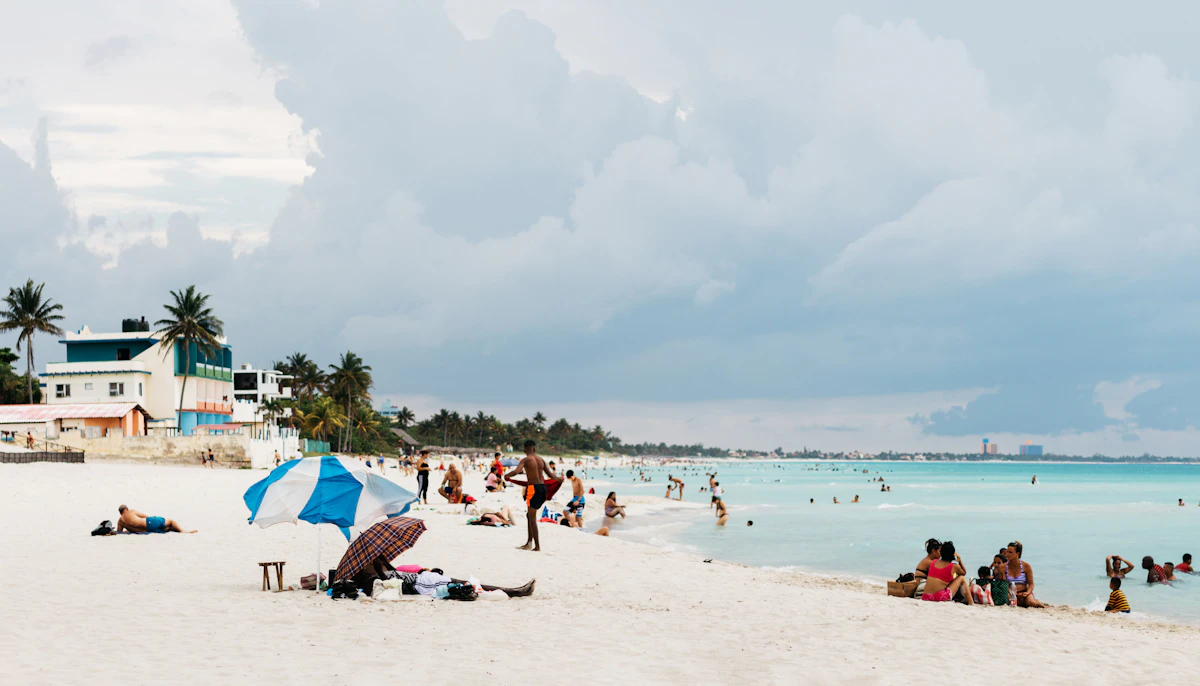
📍 Cuba, Caribbean
This page is part of our Caribbean guide — it goes further than the regional overview, spot by spot and school by school, without glossing over the country's real logistical hurdles.
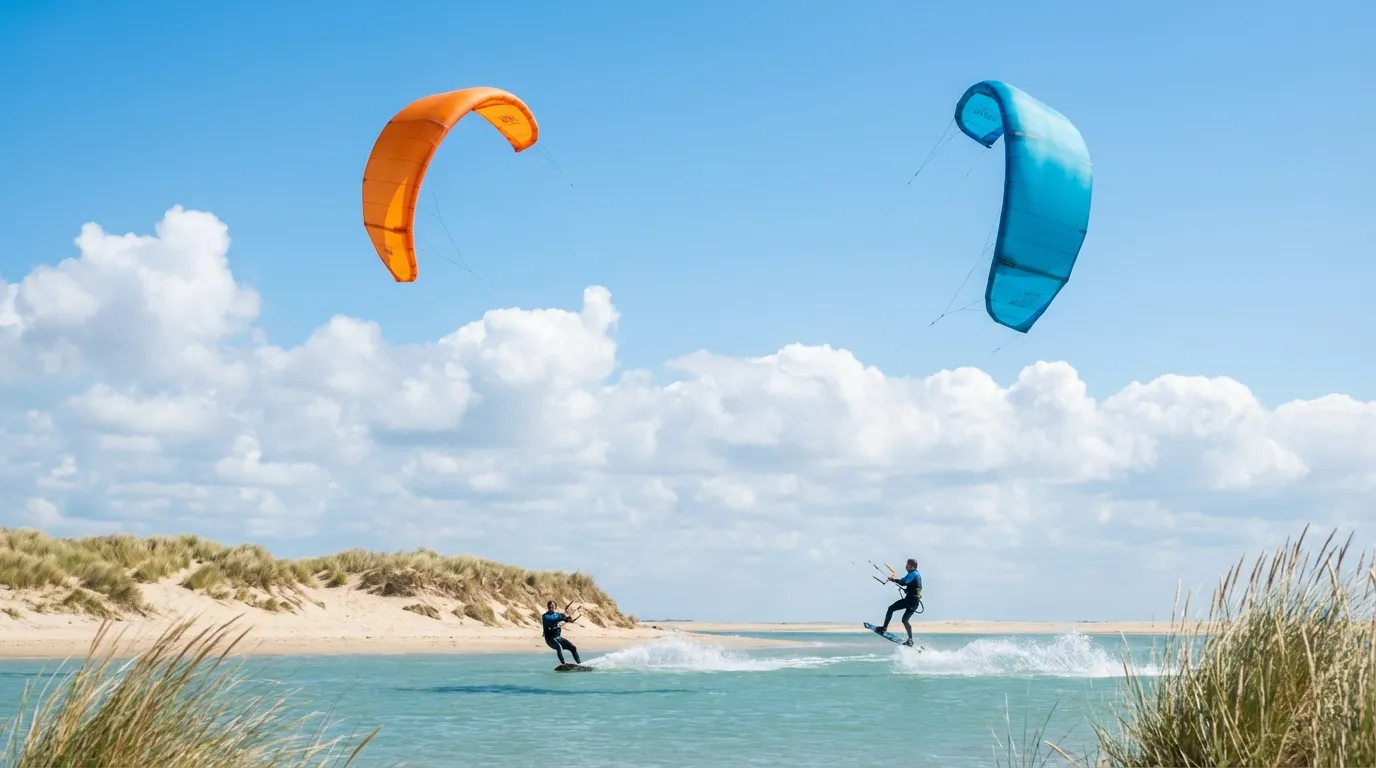
Under two hours from Havana, a 25km white-sand beach and a decent trade wind from November to April: Varadero remains the simplest entry point into kite and windsurf in Cuba, with the Cuba Kiters school on site.
Kitesurf guide arrow_forward
At Playa El Paso, steadier wind, a flat, shallow lagoon, and several year-round schools, all within a system of managed kite zones run by the state operator Nautica Marlin.
Windsurf guide arrow_forward
A cash-based economy, unreliable ATMs, limited internet, and shrinking direct flight options from Europe: Cuba demands more upfront planning than Aruba, Bonaire or the Dominican Republic.
Watersports safety arrow_forwardWhat to know before you book.
A vast beach close to Havana, and a single go-to school for kitesurfing and windsurfing.
Varadero runs for around 25km of fine white sand, largely free of coral or seagrass, which leaves plenty of room to launch and land a kite without crowding anyone out. The wind, from the east to north-east, blows side-onshore, averaging around 15-20 knots during the season, occasionally gusting to 25 knots. It's far from the most powerful spot in the Caribbean, but it's wind enough, and a very forgiving water state to progress on, whether freestyle or freeride.
View on Google Maps open_in_newCuba Kiters is the go-to school in Varadero, running courses on site, renting kit, and coaching everyone from complete beginners to more experienced riders who just want to session without any logistical fuss. Unlike Cayo Coco and Cayo Guillermo, the school scene here stays fairly compact: don't expect the same density of operators you'd find at Silver Sands in Barbados or Lac Bay in Bonaire.
Varadero is best suited to a first trip to Cuba that combines kite or windsurf with exploring the country, or to those who'd rather stay close to Havana with more developed tourist infrastructure than chase maximum wind reliability. Riders after the steadiest conditions and a properly shallow lagoon should instead head for Cayo Coco and Cayo Guillermo, covered below.
A flat lagoon, steadier wind, several established schools, and a state-run navigation zone system.
In the Jardines del Rey archipelago, off the north coast of Ciego de Ávila province, Playa El Paso is where the bulk of Cuba's kitesurf scene is based. The bottom is sandy, the water shallow over a wide stretch in front of the beach, and the wind, generally 11-25 knots depending on the season, is rated more consistent than at Varadero. That combination of flat lagoon and steady wind makes it popular with beginners as well as more advanced riders chasing freestyle.
View on Google Maps open_in_newThree operators share Playa El Paso. The Kite Center Starfish Cayo Guillermo, based at the Hotel Starfish, runs lessons and rentals for guests of that resort area. Right next door, between the Iberostar Origin Daiquiri and Starfish hotels, the Havana Kiteboarding Club, founded in 2013 by Matteo Gatti, coaches both kite and wing foil. Finally, Kite-Cuba, based at Hotel Vigia and operated by the German company OLA Sportreisen GmbH, rounds out the offer with instructors trained to international standards. This concentration of schools on a single spot is unique in Cuba.
A local quirk worth knowing before you show up: kitesurfing at Cayo Coco and Cayo Guillermo is managed by Nautica Marlin, the state body running watersports across the island. Every kitesurfer must pay a stay-long fee for access to the marked navigation zones, known locally as the "Polygono", which includes on-water rescue cover and is settled in cash on site. This setup, quite different from a free-access spot elsewhere in the Caribbean, is designed to keep the sport safe and to organise how the space is shared with boat traffic and swimmers.
A few kilometres away, Cayo Coco offers a similar setup: wide shallow zones, a sandy bottom and calm water, with just as steady a wind. It's a solid alternative to Cayo Guillermo for anyone staying on the Cayo Coco side, with a slightly less concentrated school scene but equally usable conditions.
Trickier air logistics than elsewhere in the Caribbean, with European routes shrinking.
Havana's José Martí International Airport is the most reliable point of entry from Europe, with more airlines and frequencies than Cuba's provincial airports. From Havana, Varadero is roughly 1.5-2 hours away by road or organised transfer.
Juan Gualberto Gómez Airport, serving Varadero directly, long carried direct flights from a number of European cities. That offer has thinned out considerably since 2024: several carriers have dropped their direct Varadero routes, and the airport now runs mostly on Canadian carriers (Air Canada, Air Transat, WestJet) plus a handful of US links. A visitor travelling from the UK stands a decent chance of needing to route via Havana rather than landing directly in Varadero.
Jardines del Rey Airport, serving Cayo Coco and Cayo Guillermo, runs overwhelmingly on seasonal charter flights, mainly from Canada, generally operating from around October through May. Direct European links there are scarce and not guaranteed year to year. In practice, for an independent traveller flying from the UK, the most realistic route is landing at Havana or Varadero, then travelling on to Jardines del Rey by road (a journey of several hours) or by a Cubana domestic flight where one's available. It's clearly not as simple as a direct flight to Aruba or the Dominican Republic, and that needs building into your trip planning.
A broad wind season that must be weighed carefully against hurricane risk.
This is the most reliable window, on both the north coast and in the Jardines del Rey archipelago: wind blows more consistently, 12-25 knots depending on the day and area, with a slight edge for consistency at Cayo Coco and Cayo Guillermo over Varadero. Late October and April are often cited as the best windows, sitting right at the hinge between the end of hurricane season and the depths of winter.
In high summer, a weaker thermal wind, around 15 knots, sets in, particularly around Cayo Guillermo, Cayo Coco and Santa María. It's usable for lighter kiting, but it's not the window to prioritise if wind strength is the main goal — and, crucially, it's also the heart of hurricane season.
Cuba is regularly exposed to Atlantic hurricanes, with the highest risk August through October. The starkest example is Hurricane Irma, which made landfall as a Category 5 storm near Cayo Romano in September 2017, just tens of kilometres from Cayo Coco and Cayo Guillermo in the same Jardines del Rey archipelago — the first Category 5 landfall on Cuban soil since 1924. More recently, Hurricane Ian struck Pinar del Río province in the west of the country in 2022. A trip planned between June and November needs close weather monitoring and real flexibility on dates from the start.
A cash-based economy, unreliable ATMs, and an emergency system quite distinct from the rest of the Caribbean.
It's worth being upfront about this: Cuba still runs largely on cash. The official currency is the Cuban peso (CUP), with a floating exchange rate introduced in late 2025, but ATMs are thin on the ground, sometimes out of order or out of cash, and cards issued by US banks simply don't work on the island — including cards issued by non-US banks affiliated with a US institution. In practice, very few businesses outside the large hotel resorts take card payment, and cash remains the norm, including for paying for kite or windsurf lessons and equipment hire. Best practice is to travel with cash, ideally in euros, which are more widely accepted and exchanged locally than US dollars.
On connectivity, internet access stays limited and often unstable outside paid hotel and public-square Wi-Fi zones, which makes last-minute online booking or contacting a school once you're there harder work: it's better to arrange lessons and rentals in advance, by email, rather than counting on booking spontaneously at the spot.
For emergencies, Cuba runs its own numbering system, unrelated to the numbers used elsewhere in the Caribbean or in the UK: 106 for police, 105 for fire, and 104 for ambulance, valid nationwide. Operators mainly speak Spanish, so a little basic Spanish, or help from hotel staff, counts for a lot in an emergency. Travel insurance with medical evacuation cover is strongly recommended, as arranging international medical care is more complicated in Cuba than in most of the other Caribbean destinations covered in this guide.
On kit: no wetsuit is needed, with water sitting between 26 and 29°C year-round. Schools at Varadero and Playa El Paso rent kite and windsurf equipment, but the range stays narrower than in Aruba, Bonaire or the Dominican Republic: riders particular about their gear, especially less common kite or sail sizes, are better off travelling with their own equipment.
What riders ask most before booking.
Two main areas: Varadero, on the north coast near Havana, a 25km easy-access beach with the Cuba Kiters school; and the Jardines del Rey archipelago, Cayo Coco and Cayo Guillermo, where Playa El Paso has steadier wind and several schools (Kite Center Starfish, Havana Kiteboarding Club, Kite-Cuba).
Only with real difficulty outside the large hotel resorts. Cuba still runs largely on cash, in Cuban pesos (CUP), with unreliable ATMs, and cards issued by US banks simply don't work on the island at all. It's best to travel with cash, ideally euros.
Late October to early May, peaking for consistency November to April, at 12-25 knots depending on the area. A weaker thermal wind, around 15 knots, also blows in July-August around Cayo Guillermo and Cayo Coco.
106 for police, 105 for fire, and 104 for ambulance, right across Cuba. Operators mainly speak Spanish.
Havana's José Martí Airport (HAV) has the best European connections. Varadero (VRA) has lost some of its direct European routes since 2024. Jardines del Rey Airport (CCC), serving Cayo Coco and Cayo Guillermo, runs mostly on seasonal charter flights from Canada; from the UK, you'll typically route via Havana or Varadero and then travel on to the archipelago by road or domestic flight. For steadier trades and shorter transfers, compare Bonaire and Aruba in our Caribbean guide.