
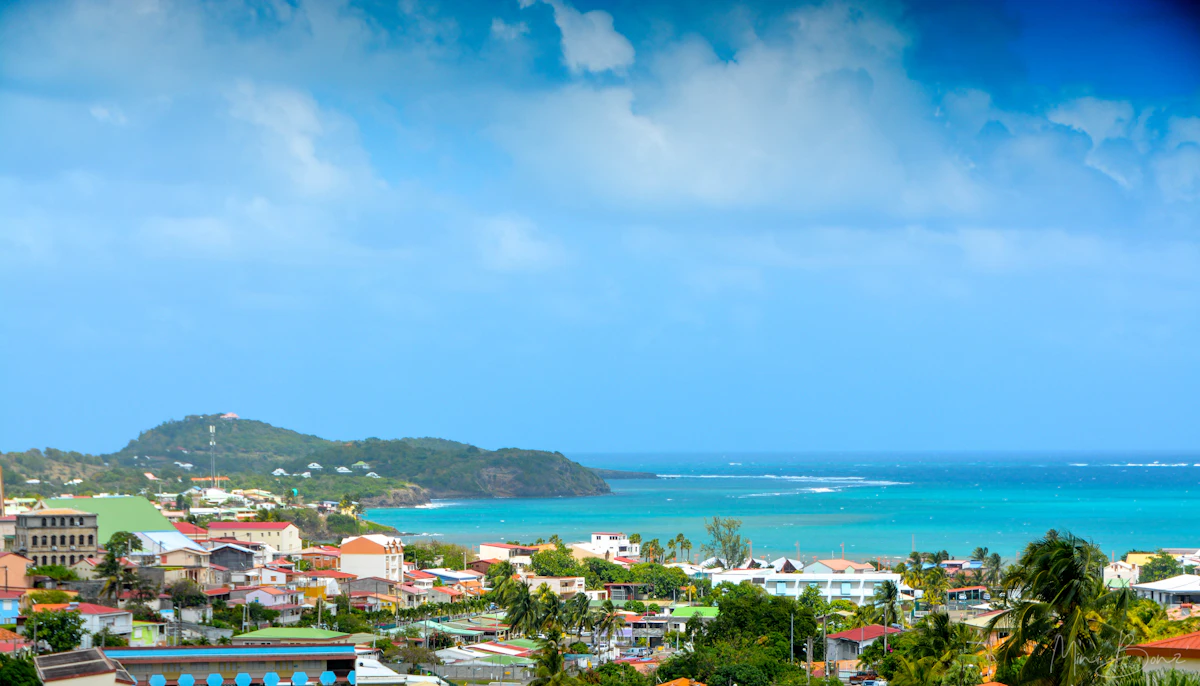
📍 Martinique, French Caribbean
One island from our Caribbean guide, covered here in detail: the lagoon, the Atlantic surf, and what French status actually changes on the ground.
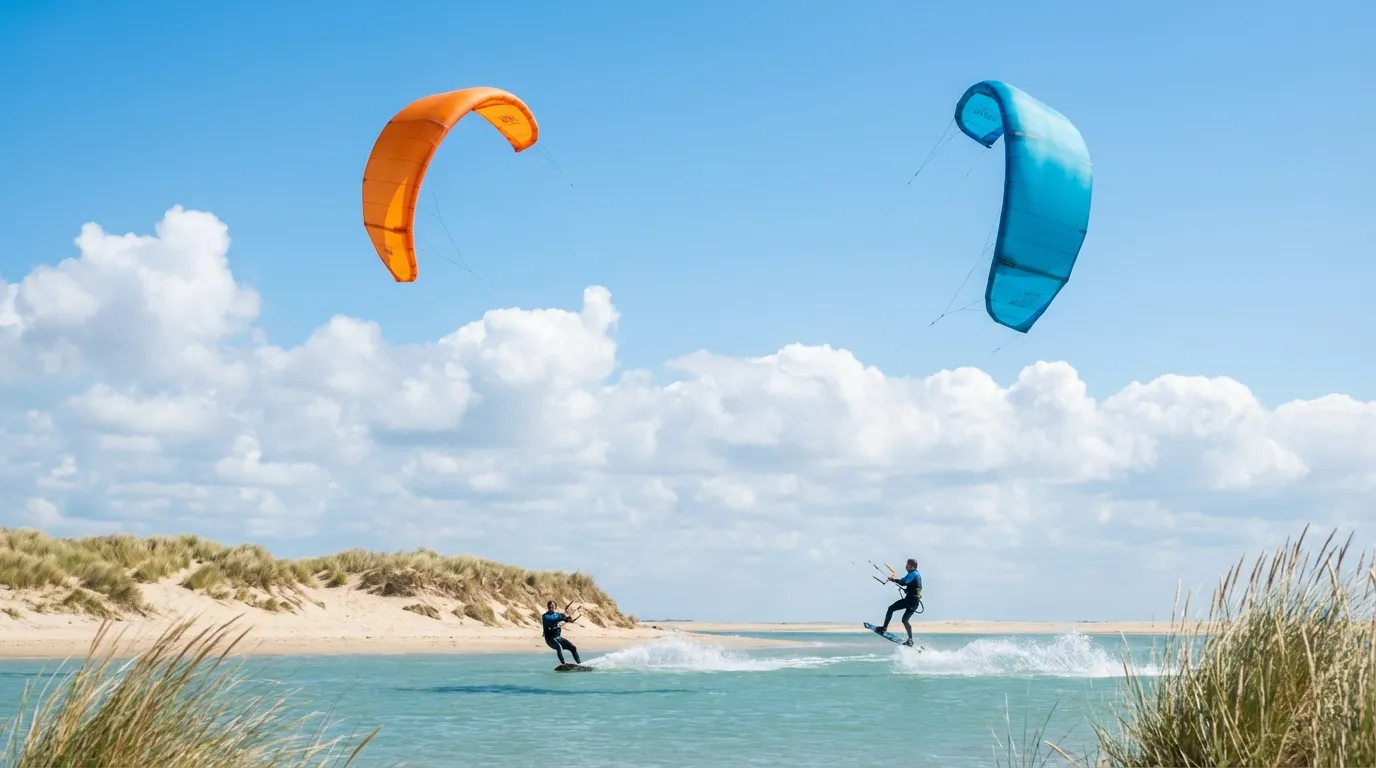
A sandbar runs over 400 metres out into water less than 40cm deep, all of it shielded by a barrier reef. Pointe Faula, at Le Vauclin, is the island's kitesurf spot, with a flat zone to progress in and a wave zone near the reef for more advanced riders.
Kitesurf guide arrow_forward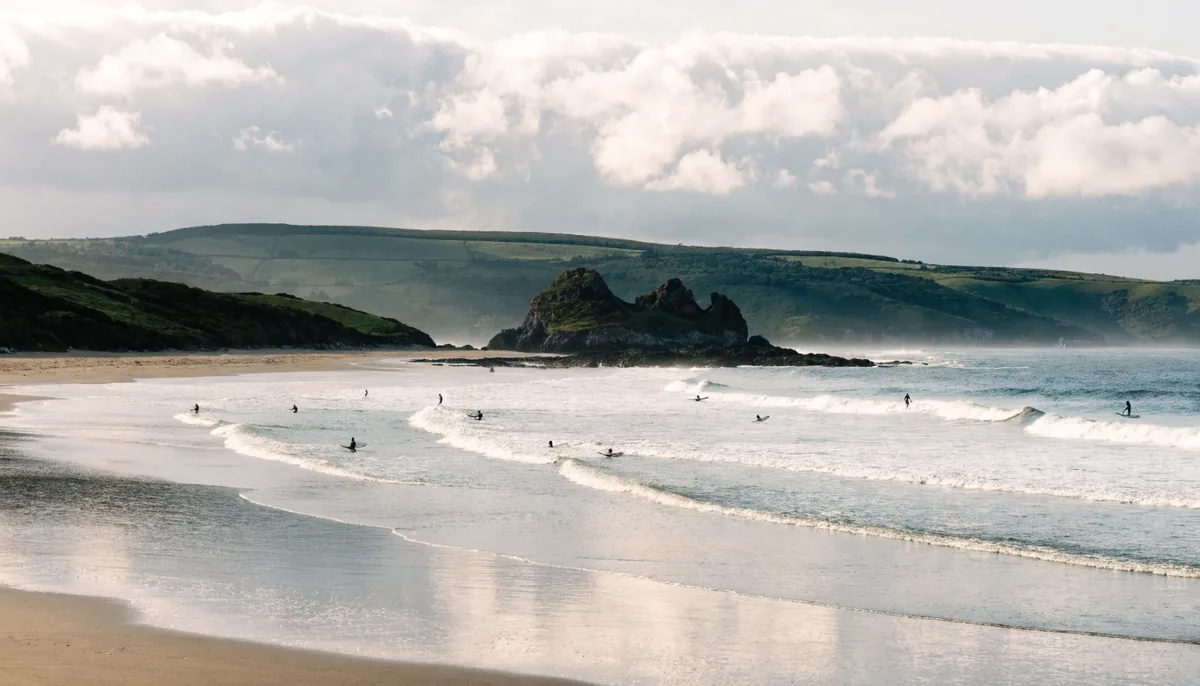
A demanding left at Basse-Pointe in the north, a friendlier beach break at Anse Trabaud in the south. Martinique picks up Atlantic swell for much of the year, well beyond its reputation as a pure wind destination.
Surf guide arrow_forward
No passport for French and EU citizens, the euro in your pocket, 112 and 15 for emergencies. Martinique is a French department in every legal sense, which takes a good deal of friction out of the trip compared with the rest of the Caribbean.
Watersports safety arrow_forwardWhat to know before you book.
At Le Vauclin, a sandbar reaching out to sea, a protective barrier reef, and reliable trade winds.
Pointe Faula sits in the commune of Le Vauclin, just past the fishing port, on Martinique's south-east coast. What makes the spot unusual is the sandbar reaching out to sea, which lets you walk over 400 metres from the shoreline in less than 40cm of water. The whole area sits inside a lagoon protected by a barrier reef that breaks the open-sea swell before it reaches riders. Inside, the water stays flat and you can stand across most of the zone, which puts first-timers at ease within minutes.
View on Google Maps open_in_newThe lagoon splits naturally in two. Over the sandbar in the middle, flat, shallow water lets beginners work on waterstarts and their first tacks in safety. Closer to the barrier reef, more advanced riders find a bit of chop and small ramps to push on towards freestyle or light wave-riding. Few spots offer both, which is why Pointe Faula can run a beginner course and an experienced riders' session on the same afternoon.
Several outfits share Pointe Faula beach. Martinique Kiteschool, a family-run school, offers lessons, courses and rental, from the first land-based kite flight through to advanced camps. Airfly is based right on the beach and also runs as a specialist shop, exclusive distributor for several major brands across the French Antilles. Club Nautique du Vauclin teaches kitesurfing and wing foiling through a long-established local association. The UCPA Martinique centre has also set up here, a sign of the spot's national reputation, running multi-day supervised trips. About ten minutes' drive away, on Cap Est beach at Le François, CKS Martinique rounds out the offer for anyone after a bit less crowding.
Le Vauclin benefits from steady trade winds, broadly present from December to June, with generous sunshine that makes it one of the island's most dependable areas for riding almost every day in peak season. Wing foiling and kitefoiling are also growing here, taking advantage of the same flat water to progress without worrying about chop.
The island's Atlantic coast picks up swell for a good part of the year, well beyond its reputation as a pure wind destination.
In the north of the island, right in front of Basse-Pointe's fishing port, breaks one of Martinique's most respected – and most difficult – waves: a fast, powerful left over a reef break that throws proper tubular sections when it's on. It picks up swell almost continuously year-round, a rarity in the region, which is why experienced surfers chasing a real wave end up here. It's no place to learn – the coral bottom and the wave's power both demand solid reef-break experience.
View on Google Maps open_in_newAt the other end of the island, in the south, Anse Trabaud offers a picture-postcard setting and a far more approachable beach break. On east or south-east swell days, decent waves form here, particularly well suited to bodyboarding and foam-board surfing while progressing. It's a spot that's open to most levels, except in very large conditions, making it a good option for anyone discovering surfing in Martinique or simply after a more relaxed session than Basse-Pointe offers.
View on Google Maps open_in_newReckon on a bit over an hour's drive between the Pointe Faula lagoon in the south-east and the northern surf spots such as Basse-Pointe – easily done as a day trip. Plenty of riders combine a kite trip at Le Vauclin with a few surf sessions on the Atlantic coast, a variety of disciplines that's fairly rare on a single Lesser Antilles island.
Unlike the rest of this Caribbean guide, Martinique is legally part of France, and that shows in the practicalities.
Martinique is a French overseas department and region (DROM), fully part of French territory and the European Union, on the same footing as Guadeloupe or Réunion. In practice, for a French or EU traveller, that means no passport to dig out, no visa, a valid ID card is enough, and the euro is the official currency – no currency exchange required. That sets it apart from most of the other islands in this Caribbean guide, where customs formalities and local currencies are part of the trip.
The same status means hospitals, emergency services and rescue numbers match mainland France, with a full teaching hospital (the CHU de Martinique) and a network of clinics to match. For French residents covered by Sécurité sociale, treatment on the island follows the same reimbursement rules as at home, which is a good deal simpler than a trip somewhere that needs dedicated medical travel insurance. Visitors from outside France or the EU should still check their own insurance covers care and, if needed, medical evacuation.
This administrative status doesn't erase geography: Martinique remains fully exposed to the Atlantic hurricane season, running from June to November with peak risk between August and October. Météo-France Antilles-Guyane provides weather monitoring and hurricane alerts every bit as rigorous as mainland France, but it's still best to avoid this window for a watersports trip, or at minimum follow the warnings closely if travelling during this period is unavoidable.
Frequent direct links from Paris, plus regional flights to the rest of the Caribbean.
The airport sits at Le Lamentin, about 7 miles (12 km) from Fort-de-France and roughly thirty minutes' drive from Pointe Faula. From Paris, several carriers run regular direct services: Air France, which moved its French Antilles routes from Orly to Roissy-Charles de Gaulle in March 2026, plus Air Caraïbes, French bee and Corsair, all from Orly. That's one of Martinique's real advantages over the rest of the Caribbean for a French traveller: no connection needed to reach the island from mainland France, on a flight of around 8.5 hours. Nothing flies direct from the UK, so routing via Paris is the simplest option.
American Airlines and Air Canada run seasonal or scheduled services from the US and Canada. For regional hops, Air Antilles connects Martinique to Guadeloupe, Saint Lucia and other neighbouring islands on short flights, a handy way to combine a Martinique trip with another destination in the region.
Hiring a car remains the most practical way to reach Pointe Faula in the south-east, or to head up to Basse-Pointe in the north: the road network is good, but the distances between spots are still real at island scale. Road signs, driving rules and petrol stations all work exactly as in mainland France, which takes the edge off hiring a car abroad for the first time – except this isn't really abroad.
A fairly wide trade wind window, December to June, best kept clear of the hurricane season.
This is the most reliable window for kitesurfing at Pointe Faula: the trade winds blow consistently, skies stay clear, and Le Vauclin's schools run at full capacity. This window also coincides with the end of the dry season (le carême) and comes before the hurricane season ramps up, making it the safest bet for a watersports trip.
Wind stays broadly present outside the February-May peak, with a bit more variability. June marks a transition period worth watching closely, at the tail end of the dry season and just as hurricane season officially begins on 1 June.
The Atlantic hurricane season officially runs June to November, with a clear peak in risk between August and October. It's not the best window for planning a kitesurfing or surfing trip to Martinique: better to aim for the December-to-June window and follow Météo-France Antilles-Guyane bulletins closely if travel outside that period is unavoidable.
Martinique uses French emergency numbers and rescue bodies – the exception in this Caribbean guide.
Unlike the rest of the destinations in this Caribbean guide, Martinique is legally part of France, so the emergency numbers are the same as mainland France. 112 is the single European emergency number, reachable from any phone, even without credit or a SIM card. 15 reaches SAMU (medical emergencies), 17 reaches the police or gendarmerie, and 18 reaches the fire brigade. For emergencies at sea, it's the CROSS Antilles-Guyane, based at Fort-de-France, that coordinates maritime search and rescue, reachable on VHF channel 16 or on 196 from a mobile phone.
You'll need neither wetsuit nor boots – the water sits around 27-29°C year-round. On reef breaks like Basse-Pointe, light reef boots are still worth wearing to protect your feet going in and out over the coral. Most schools at Pointe Faula rent full kit by the day or week, which saves travelling with your own quiver from mainland France.
What riders ask most before booking.
Pointe Faula, at Le Vauclin on the south-east coast. A sandbar stretches over 400 metres into a lagoon protected by a barrier reef, with under 40cm of water across most of the area – you can stand almost everywhere, with a flat zone in the middle and a more technical wave zone near the reef for advanced riders.
Several outfits run directly on the beach: Martinique Kiteschool, Airfly (also a gear shop), Club Nautique du Vauclin and the UCPA Martinique centre. CKS Martinique, based slightly further north on Cap Est beach at Le François, rounds out the offer about ten minutes' drive away.
Yes, the Atlantic coast picks up swell for much of the year. Basse-Pointe, in the north, offers a powerful, technical left over a reef break rated as one of the toughest on the island, reserved for experienced surfers. Anse Trabaud, in the south, has a more accessible beach break that catches east to south-east swell well.
Not for French or other EU citizens: Martinique is a French overseas department and region, fully part of France and the European Union. A valid ID card is enough, the currency is the euro, and the emergency numbers are the same as mainland France (112, 15, 17, 18). Visitors from outside the EU should check standard French entry requirements before travelling.
The trade wind season runs broadly from December to June, peaking for consistency between February and May. The Atlantic hurricane season, June to November with a peak between August and October, is worth watching closely for any trip outside that main window. Discover Guadeloupe, the other French département in the Caribbean, plus Bonaire and Aruba in our Caribbean guide.