

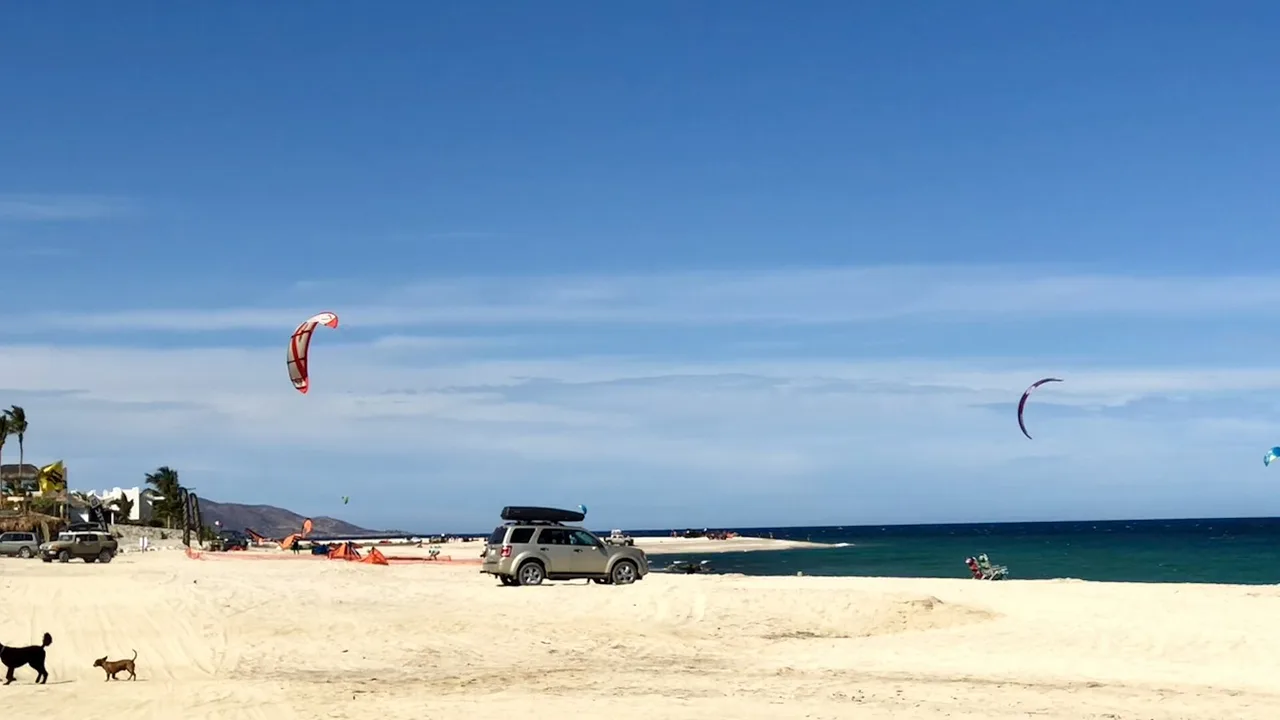
Mexico is not one riding destination for a US-based rider — it is four, and they don't share a wind, a swell, or a rulebook.
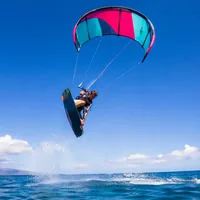
La Ventana and Los Barriles's winter "El Norte" wind on the Sea of Cortez, plus Pacific-side surf near Todos Santos. The closest thing on this list to a classic kite trip.
Baja California Sur guide arrow_forward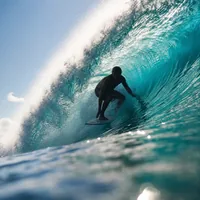
K38, Salsipuedes, and the boat-only big-wave break at Isla Todos Santos ("Killers") — the classic Southern California "Baja run." Surf only; kite and wind barely register here on the numbers.
Baja California guide arrow_forward
Isla Holbox and Isla Blanca's real kite scene on the Caribbean coast, Laguna Bacalar, and beginner-friendly surf in Cancún's hotel zone — a different Mexico from the Pacific side entirely.
Quintana Roo guide arrow_forwardZicatela Beach's "Mexican Pipeline" at Puerto Escondido — one of the heaviest beach-break waves in the world, for experienced surfers, with mellower La Punta next door for everyone else. Surf only; no kite content, on the numbers.
Oaxaca guide arrow_forwardSourced directly from INM (Instituto Nacional de Migración) and SRE consular guidance — not a travel blog's summary.
A valid US passport is required either way: a passport book for air travel (Los Cabos, Cancún, or any other airport), or a passport book or passport card at a land border crossing into Baja California. Beyond the passport, every tourist stay under 180 days — including a short weekend trip — requires an FMM (Forma Migratoria Múltiple), the tourist permit that documents you as a "visitante sin permiso para realizar actividades remuneradas." Official INM and consular guidance does not carve out a lighter document or a formal exemption for a short stay near the border; the FMM can be completed online before travel or obtained at the airport or land-border INM office, with a fee paid by card.
Flying is straightforward from most of the US: Los Cabos (SJD) serves Baja California Sur, Tijuana (TIJ) or a land crossing at San Diego serves Baja California, Cancún (CUN) serves Quintana Roo, and Puerto Escondido International Airport (PXM) serves Oaxaca directly. Baja California's land border also makes a car-and-passport road trip a realistic option the other three coasts don't offer.
The single most common mistake in Mexico kite-travel content: assuming one park's rule applies to another.
Cabo Pulmo National Park (Baja California Sur): CONANP's own management plan, read directly, names zero kite or wind activity and describes the park as a diving and reef-conservation destination — anchoring is banned in its two preservation subzones. Never treat Cabo Pulmo as a wind spot.
Yum Balam Flora and Fauna Protection Area (Isla Holbox, Quintana Roo): the opposite finding. CONANP's own management plan for Yum Balam explicitly names "kite surf," "wind surf," and "paddle board" as permitted low-impact-tourism activities, alongside a real vessel speed limit in its sensitive zones. Sian Ka'an, the other reserve near this coast (close to Tulum), names no board sport in its plan at all — a genuine documented difference between two reserves on the same stretch of coast, not an oversight. See the Quintana Roo guide for what that means spot by spot.
No visa — but you do need a valid passport and an FMM (Forma Migratoria Múltiple) tourist permit for any stay under 180 days, even a short weekend trip. There is no lighter document for a quick visit, per INM and consular guidance.
Baja California Sur (La Ventana and Los Barriles) for a reliable named wind season, or Quintana Roo (Isla Holbox and Isla Blanca) for a Caribbean-water kite scene. Baja California, the northern state, is surf country — kite and wind barely register there.
No. Cabo Pulmo is a federally protected marine park run for diving and reef conservation; CONANP's own management plan names no kite or wind activity there. It's often mentioned alongside La Ventana because they're both in Baja California Sur, but they're not the same kind of destination.
No — there is no single federal watersports law, and protected areas vary sharply: Cabo Pulmo restricts kite/wind activity by omission, while Yum Balam (Isla Holbox) explicitly permits it. Always check the specific coast, which is why this site covers each one separately rather than with one generic "Mexico rule."
Zicatela Beach itself is not — it's a heavy, hollow beach break nicknamed the "Mexican Pipeline," for experienced surfers. La Punta, the next beach over, is the beginner- and intermediate-friendly option most first-time visitors actually want.