

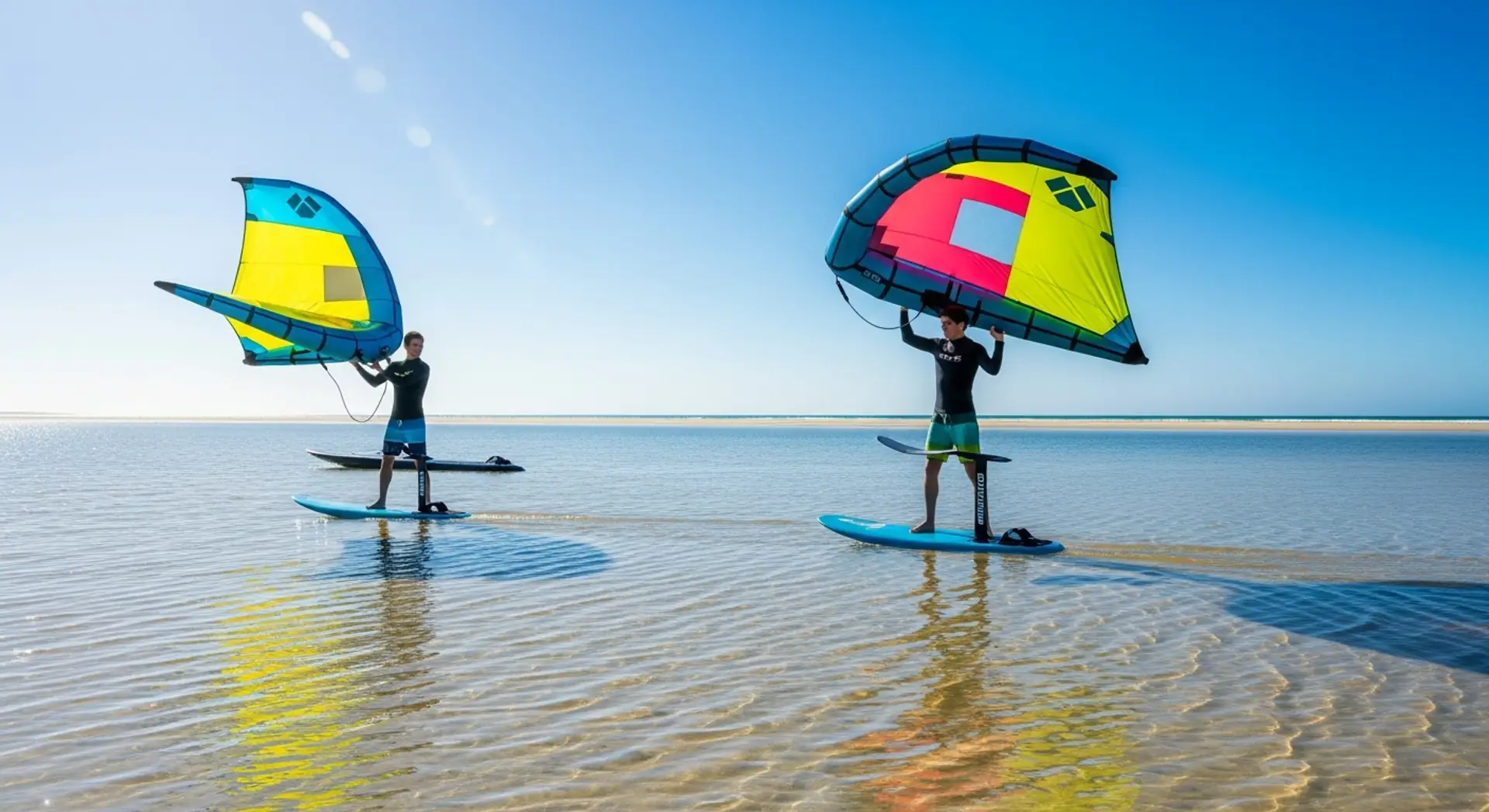
The wing is the engine — get the size wrong and nothing else helps
Wing foiling is the most expensive watersport on this site to get into, and the order you buy in matters more than the brands do.
We don't publish prices here: nothing on this site keeps them fresh, and a stale price is worse than none. Check the figure on the product page before you order.
| Wing | Wind | Who it suits |
|---|---|---|
| 6m² | 10–16 knots (12–18 mph) | A powerful wing for light wind or heavier riders (90kg-plus). Handy early in a session while the wind is still light, but quickly cumbersome as it builds. |
| 5m² | 12–20 knots (14–23 mph) | The benchmark size for learning. It strikes a good power-to-control balance, and suits riders of 70 to 90kg. |
| 4m² | 18–28 knots (21–32 mph) | The ideal size for a lighter beginner (under 70kg), or for riding in a solid breeze once you reach intermediate level. |
| 3m² | 25–35 knots (29–40 mph) | A light wing for strong wind and experienced riders after manoeuvrability and speed. |
Same sizes as our wing foil gear guide, which is where these figures live and get updated. Notice the wind bands overlap — that is deliberate, not sloppy. Two riders of different weights want different wings in the same breeze, so the calculator shows you both candidates rather than picking one with a crossover point nobody published.
| Front wing | 1,500–2,000 cm² |
| Mast | 75–85 cm |
| Fuselage | 40–50 cm (short) |
| Rear wing (stabiliser) | 300–500 cm² |
| Material | Aluminium to start — tough, forgiving and affordable |
A big front wing flies sooner and at lower speed, which is what forgives a beginner's mistakes. Carbon and small front wings are an upgrade for later, not a head start.
Wing sizing has two inputs pulling at once. Wind sets how much power is available; your weight sets how much of it you need. A 65 kg rider and a 95 kg rider in the same 18 knots are genuinely on different wings, which is why the published bands overlap instead of tiling neatly. When the tool gives you two sizes, the weight note underneath is how you choose between them — and if you are between the two, the larger one is the more forgiving thing to learn on.
For wing foiling, aim for a board whose volume in litres is your bodyweight in kilograms plus 40 to 60. This is a wing number and nothing else. It is not the paddle board rule and it is not the surfboard rule — those sit on their own tools, with their own arithmetic, because the same rider genuinely needs different floats for different sports. Confusing the three is one of the most common ways to buy a board that does not work.
A stand-up paddle board with foil inserts is the most common route into wing foiling, not a compromise. The extra volume makes standing up and managing the wing far less stressful in the first few sessions, and if you already own one, the cheapest thing you can do is fit a foil to it before buying anything dedicated.