

Water temperature in, millimetres out — and whether you need the hood
Thickness gets you to the right shelf. These are the three specs that decide whether the suit is still warm in its third season.
We don't publish prices here: nothing on this site keeps them fresh, and a stale price is worse than none. Check the figure on the product page before you order.
| Thickness | Water temp (°F) | Water temp (°C) | What to look for |
|---|---|---|---|
| 2 mm / shorty | 64°F and above | 18°C and above | Shorty or sleeveless full suit. Sun protection matters more than insulation here. |
| 3/2 mm | 59–64°F | 15–18°C | Chest-zip, sealed seams. |
| 4/3 mm | 52–59°F | 11–15°C | Taped seams, optional attached hood. |
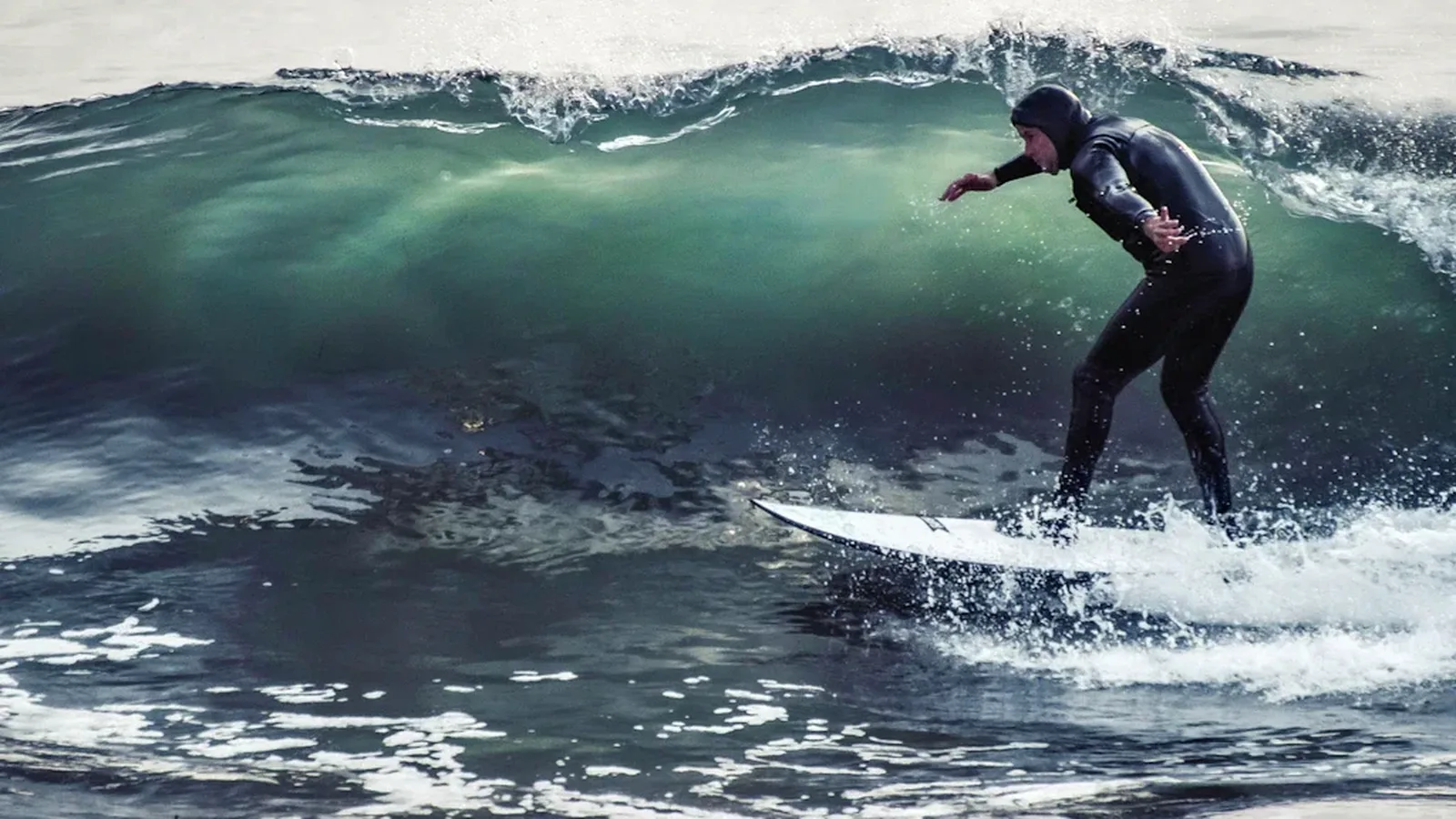
| 5/4 mm + hood | 43–52°F | 6–11°C | High-stretch panels, hooded suit. |
Same bands as our wetsuit guide, which is where these figures live and get updated.
The number that matters is the water, and it lags the air by weeks. A 75°F afternoon in June on the Northern California coast can sit over water in the low 50s; the Gulf in October is still warm long after the air has turned. Guessing from how the day feels on the sand is how people end up shivering.
For US coastal water, NOAA's National Data Buoy Center publishes live readings from buoys and coastal stations, and NOAA Tides & Currents carries water temperature at many tide stations. Find the station nearest your break and use that figure.
These bands describe the water. If your sport keeps you standing in the wind — kitesurfing, windsurfing, wing foiling — evaporative cooling does the rest, and the same water temperature will feel a band colder than it does to a surfer who is mostly submerged. Sitting between two bands is the moment to take the warmer one.
Thickness is the headline; seams and fit decide whether you stay warm. Flatlock seams let water through and belong on summer suits only. Blind-stitched and taped seams are what make a winter suit worth its price. A suit that is slightly too big will flush on every wipeout no matter how many millimetres it has — which is why buying one size down in doubt is usually right. The detail is in our wetsuit guide.