

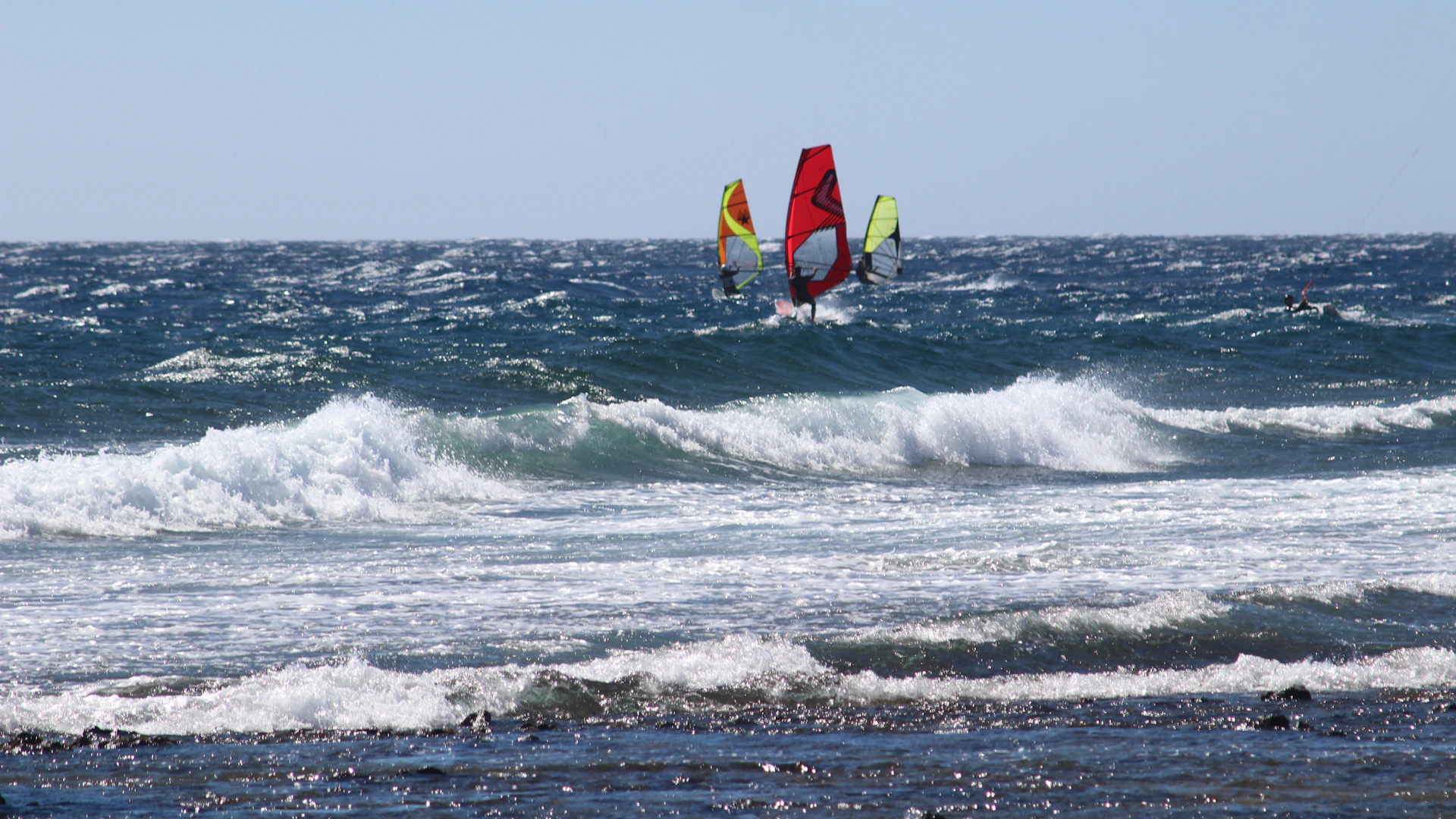
Your weight and the wind decide the sail — not the shop's stock
A windsurf rig is four purchases that have to agree with each other. Getting the sail size right is the first, and the cheapest one to get wrong is the last.
We don't publish prices here: nothing on this site keeps them fresh, and a stale price is worse than none. Check the figure on the product page before you order.
| Rider weight | Light wind (8–15 knots) | Moderate wind (15–22 knots) |
|---|---|---|
| 55–65 kg | 4.0–4.5 m² | 3.5–4.0 m² |
| 65–75 kg | 4.5–5.5 m² | 4.0–4.5 m² |
| 75–85 kg | 5.5–6.5 m² | 4.5–5.5 m² |
| 85–95 kg | 6.5–7.5 m² | 5.5–6.0 m² |
Same table as our windsurf gear guide, which is where these figures live and get updated. The calculator above is a lookup over it, not a second opinion — which is why it tells you when your weight or the wind falls outside it rather than guessing.
| Sail | Mast |
|---|---|
| 4.0–4.5 m² | 370–390 cm |
| 5.0–5.5 m² | 400–430 cm |
| 6.0–6.5 m² | 430–460 cm |
A rough guide, and length is only half of it: every mast carries an IMCS stiffness value from 16 to 34, and the sail prints the one it wants on its leech. Check both.
A bigger sail makes more power, so it looks like the shortcut to getting going. It is the opposite. A large sail is heavier to uphaul out of the water, which is most of what a first session consists of; it is harder to hold down when a gust arrives; and it punishes a mistake instead of absorbing it. Our windsurf gear guide is blunt about the 7.5 m²-plus end of the range — too powerful and too heavy for a beginner, hard to uphaul, tiring to handle. Start small and work up.
Volume is what lets you stand still and sort the sail out, and standing still is the whole skill early on. The calculator gives you the beginner minimum from the same rule the guide publishes — your bodyweight in kilograms multiplied by 2.5 to 3, in litres. Note that this is a windsurf number and has nothing to do with the surfboard volume rule; different sport, different arithmetic. If you want the surf one, that lives on the surfboard volume calculator.
US forecasts usually give mph, marine forecasts give knots, and European sailors mostly talk in knots or Beaufort. One knot is 1.15 mph, so 15 knots is about 17 mph. The tool takes either. What it cannot take into account is gust factor: a steady 15 knots and a gusty 10-to-20 are very different days on the same sail, and the gusty one is where an oversized rig stops being fun.