
📍 North Carolina, United States
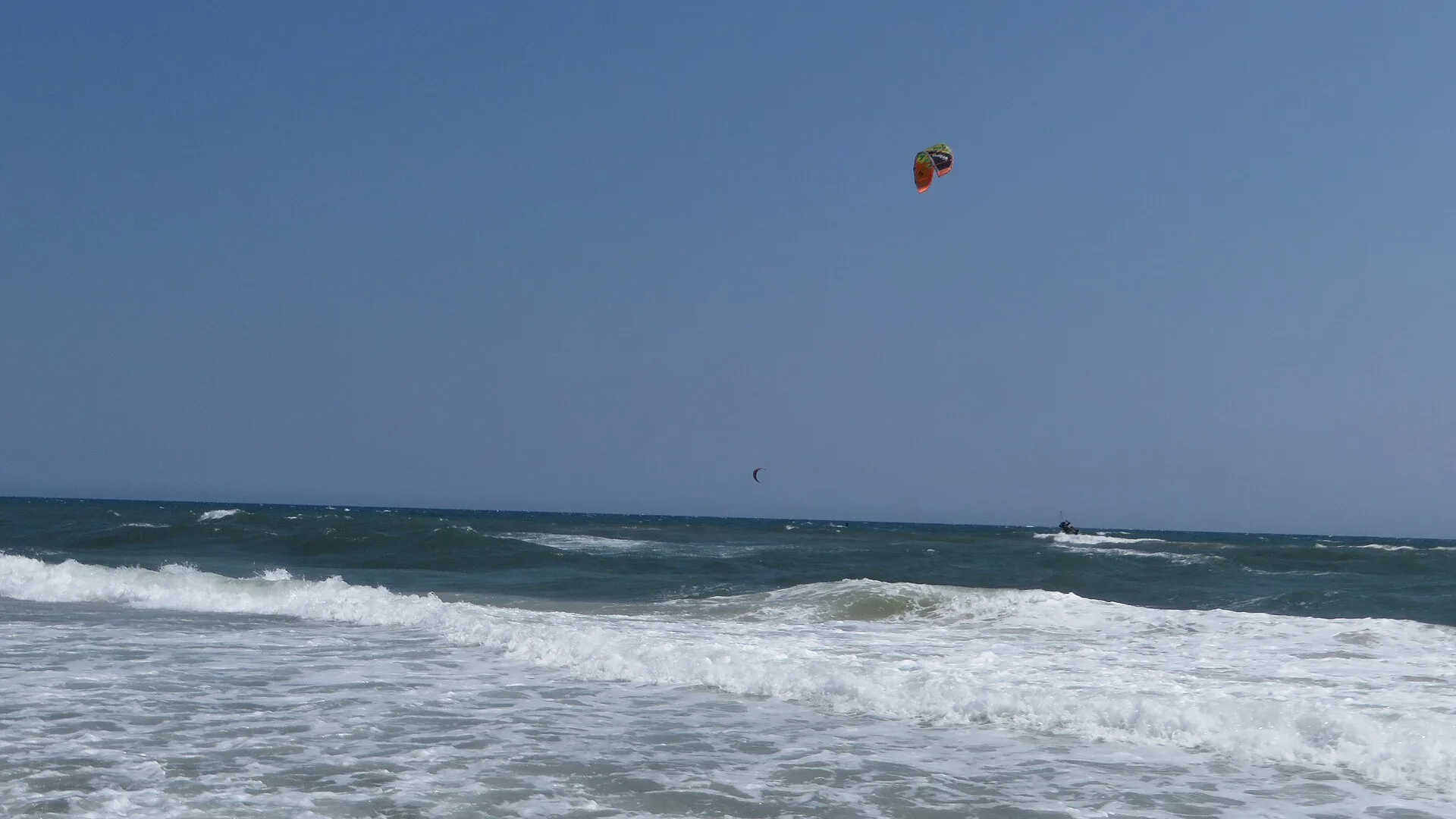
Photo: Ken Lund / Wikimedia Commons, CC BY-SA 2.0
The Outer Banks' sound-side flats are the reason North Carolina is on the map — but real kiting also happens north of the National Seashore, and well south of it.
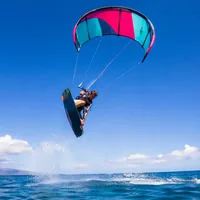
Canadian Hole to Ocracoke: the longest, best-documented flat-water kite corridor on the US East Coast.
The Seashore in detail arrow_forward
Outside NPS jurisdiction entirely, with a genuinely different rulebook — and one nearby spot to treat with caution.
Corolla and Duck in detail arrow_forward
Two real, documented spots well south of the Outer Banks — with the state's only actual municipal kitesurfing ordinance.
The southern coast in detail arrow_forwardOne long flats corridor, plus real spots on either side of it that don't share its rules.
A single sound-side flats corridor running the length of Hatteras Island, plus its own island further south.
The National Park Service names four official kiteboarding sites on its own page for the Seashore: Haulover (Canadian Hole), Kite Point (about a mile south of the Canadian Hole parking area, via a small sound-side access ramp), Salvo Soundside Beach Access, and Springer's Point on Ocracoke Island — with any sound-side access on Ocracoke separately approved for windsurfing, a slightly broader allowance worth stating precisely rather than blurring with the kiteboarding-specific designation. All of it sits on Pamlico Sound: flat, shallow water for miles, one of the best beginner venues on the US East Coast on a north-north-west to north-east wind.
Beyond those four official sites, operators and spot guides name real, more granular sub-spots within the same corridor. In Frisco: the Sandy Bay Day Use Area (NC-12, Milepost 69.5, a 26-space paved lot with a boardwalk to both the ocean and sound sides, officially listed by the NPS as a kayak-and-kiteboard launch); The Washout (also called Isabel's, named for the inlet Hurricane Isabel cut through the island in 2003) — its sound-side access faces north, making it one of the only spots in the corridor that stays onshore-safe on a due-NE wind, a genuine point of difference from Kite Point and Salvo; and a couple of informally-named beginner turnouts ("2nd Turnout," "D Spot") cited by one local school's own spot guide, though independent detail on their exact location is thin. On Ocracoke Island, beyond Springer's Point, Sea Monkey Lodge & Kite School is the island's own dedicated school (run by Keith Croghan, 15+ years teaching), running beginner lessons in the shallow sound plus downwinders and wave/trick clinics for advanced riders.
See on Google Maps open_in_newFor riders who want more than flat water, named ocean-side downwind routes run the length of the corridor — the South Side near the Hatteras Ferry Docks, a Rodanthe-to-Salvo run, Ramp 34 to the Avon Pier, and the Ferry Docks to the Frisco Bathhouse — all intermediate-to-advanced wave terrain, distinct from the beginner-friendly sound-side flats. At Waves itself, REAL Watersports runs a named flat-water feature directly in front of its base, The Slick, with a built kite park (obstacles including an 80 ft slider called the "John Wayne A-Frame") for trick and park riding — a level of built infrastructure genuinely distinct from the rest of the corridor's natural flats.
Beyond REAL Watersports (Waves) and Sea Monkey Lodge (Ocracoke), two more schools operate in Avon: OceanAir Sports (on Pamlico Sound at the north end of Avon, operating seasonally March-November since 1987) and Kite Club Hatteras (IKO-certified, launching by boat or jet-ski to knee-to-waist-deep water, with on-site lodging). Kitty Hawk Kites, the large multi-location Outer Banks outdoor-recreation operator, also runs kiteboarding lessons on Ocracoke and elsewhere on the Banks. There's no airport on the island: the nearest is Norfolk International (ORF), about 115-150 miles/2h15-3h45 by car depending on the spot, with shuttle services available.
Real kiting, but a different jurisdiction entirely — no NPS rules apply here.
Corolla and Duck sit north of Cape Hatteras National Seashore's boundary — the National Park Service has no jurisdiction here at all, unlike every spot in the section above. At Corolla, a sound-front grass area behind the Whalehead in Historic Corolla Park, on Currituck Sound, offers public parking and restrooms. At Duck, a town park boardwalk area on Currituck Sound (or a sound public access point north of the town centre) is used for kiting, though power-line poles standing in the water there are a documented hazard worth flagging.
One nearby spot needs a caution, not a listing: Jockey's Ridge State Park, in Nags Head, is genuinely famous — but as a land-based stunt-kite-flying and hang-gliding dune park, not a water kitesurfing launch. Some sources loosely call Nags Head "the scene" for central Outer Banks kiting, but no independent source confirms an actual water kitesurfing launch there distinct from kite flying on the dunes. Treat this as unverified for kitesurfing specifically, rather than repeating it as an established spot.
Real spots well south of the Outer Banks — and the state's clearest example of local rule-making.
Wrightsville Beach, near Wilmington in New Hanover County, is not an Outer Banks town at all, but it has real, documented kitesurfing — governed by an actual town ordinance (see the regulations section below), which makes it the clearest example anywhere in North Carolina of kitesurfing-specific local rule-making. Emerald Isle, on the Crystal Coast in Carteret County, about 1h15 from Wilmington, has a named operator, Carolina Kitesurfing, working a prevailing south-west wind with flat water plus up to roughly 30 miles of downwindable beach break, in a season running mid-March to early December.
Inland lakes are a genuine "not really a destination" finding, not a gap to fill. Central North Carolina's Jordan Lake and Falls Lake do see occasional kitesurfing, per rider-forum chatter, but the consistent characterisation is that lake wind there is too gusty and inconsistent to be a real destination — no named school, no real infrastructure, and local kiters themselves reportedly drive to the coast instead. One forum post claims a launch restriction at Jordan Lake's Ebenezer Point, but this is a single, low-authority source not confirmed against a written North Carolina State Parks rule — reported here as an unverified claim, not a fact. No other North Carolina coastal county beyond those named on this page turned up documented kitesurfing activity.
North Carolina itself has no statute that names kitesurfing at all.
Inside Cape Hatteras National Seashore, the National Park Service names the approved kiteboarding locations (see above) with no permit or fee identified beyond general weather awareness; the park's seasonal shorebird-protection closures apply to ocean-side beach and ORV-ramp areas, not the sound-side kite launches.
North Carolina's own General Statutes, Chapter 75A (Boating and Water Safety), don't clearly capture kitesurfing at all: G.S. 75A-13.3 defines a "personal watercraft" as a motorised vessel, which a kiteboard is not; G.S. 75A-13 governs devices towed behind a vessel, which doesn't obviously describe a kite either. No North Carolina Wildlife Resources Commission guidance naming kitesurfing was found. The honest statement is that state law is silent here, not that it grants an exemption.
Outside the park, regulation is municipal. Wrightsville Beach has a real town ordinance requiring kitesurfers to launch and land only via marked multi-use access points, stay 100 yards clear of lifeguard-flagged "no surfing" zones, avoid beach launching, yield to swimmers, and follow lifeguard signals — the clearest documented example of kitesurfing-specific rule-making anywhere in the state, precisely because it exists at the town level rather than the state one.
In a sea emergency, contact the US Coast Guard (VHF channel 16) or 911.
What riders ask most before heading to North Carolina.
The sound-side flats of Cape Hatteras National Seashore — Canadian Hole/Haulover, Kite Point, Salvo, and Sandy Bay in Frisco all offer flat, shallow water for miles. The Washout in Frisco is the one spot in the corridor that stays onshore-safe on a due-NE wind.
No. North Carolina's boating statutes define "personal watercraft" as motorised and towed-device rules as behind-a-vessel — neither clearly covers a kite. Federal NPS rules apply inside Cape Hatteras National Seashore; outside it, only individual towns like Wrightsville Beach have set their own rules.
Yes — Wrightsville Beach near Wilmington and Emerald Isle on the Crystal Coast both have real, documented kitesurfing. Inland lakes like Jordan Lake and Falls Lake see occasional sessions but aren't a real destination: the wind is too gusty and inconsistent, and there's no school or built infrastructure.
Jockey's Ridge, in Nags Head, is a well-known dune park for land-based stunt-kite flying and hang gliding. No independent source confirms it as a water kitesurfing launch — don't confuse kite flying on the dunes with kitesurfing on the water.