

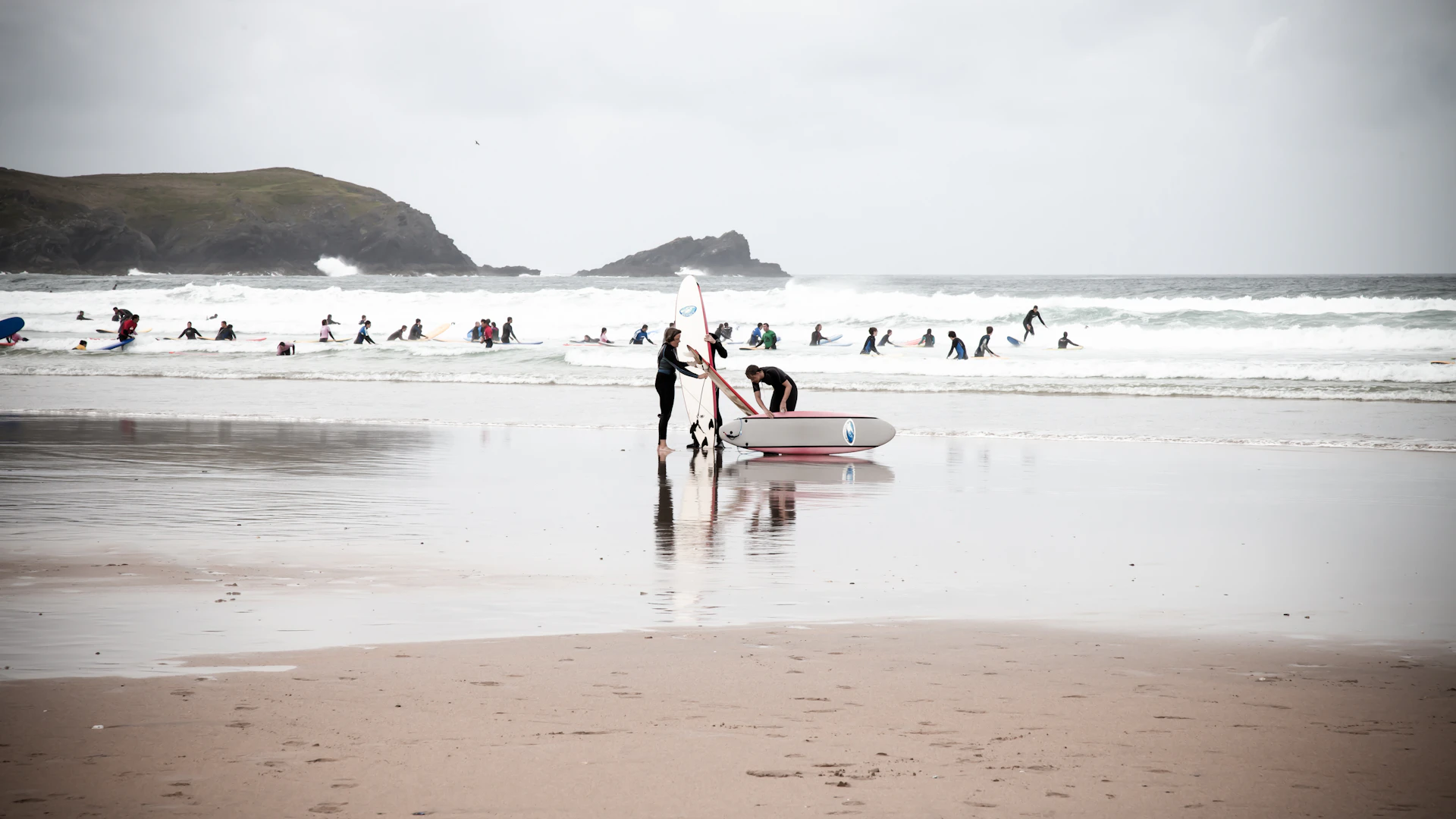
The UK is a far better surfing country than it gets credit for. Cornwall's west-facing beaches catch almost every Atlantic swell, North Devon hides one of England's heaviest beach breaks, the Gower Peninsula soaks up everything the ocean sends at South Wales, and the far north of Scotland holds a world-class reef. Here are the best surf spots in the UK, ranked, with the wave type, the ability level it suits and the best season to go, each linking to our full destination guide.
The UK's best surf spots at a glance
| Spot | Region | Wave type | Level | Best season |
|---|---|---|---|---|
| Newquay – Fistral | Cornwall | Exposed beach break, very consistent | All levels | Autumn |
| Thurso East | Caithness, Scotland | Right-hand reef barrel | Advanced to expert | Oct – Mar |
| Croyde | North Devon | Hollow, powerful beach break | Confident intermediate + | Autumn |
| Llangennith | Gower, South Wales | Exposed beach break, swell magnet | All abilities | Autumn |
| Sennen Cove | Cornwall | Beach break, swell magnet | All levels | Sep – Nov |
| Freshwater West | Pembrokeshire, Wales | Powerful beach + reef break | Experienced only | Autumn – winter |
| Saltburn | North Yorkshire | Pier sandbar beach break | All levels | Autumn – winter |
| Woolacombe | North Devon | Mellow, forgiving beach break | Beginner to improver | Summer – autumn |
| Perranporth | Cornwall | Gentle, rolling beach break | Beginner to improver | Summer – autumn |
| Saunton Sands | North Devon | Long, mellow longboard wave | Beginner to improver | Autumn |
Newquay is the UK's surf capital, and Fistral is the beach that made it so. Facing due west into the open Atlantic, this exposed beach break catches almost every swell going, which is why it's so consistent and why it hosts national and international contests. On a small, clean day the peaks are friendly enough for improvers; when a solid groundswell lines up, Fistral throws up fast, punchy walls that test the best in the line-up. Around the headland, the more sheltered town beaches of Towan, Great Western and Tolcarne often hold a cleaner wave when Fistral is maxing out, and Crantock offers a quieter session across the Gannel estuary.
Nowhere in the UK makes it easier to book a lesson or hire a board, and the main beaches are RNLI-lifeguarded in season. A 3/2mm wetsuit does the job in late summer at around 15 to 16°C; winter drops to roughly 8 to 9°C and calls for a 5/4mm with boots, gloves and a hood. Read our full Newquay and Fistral guide for the breaks, schools and seasons.
Read our Newquay guide arrow_forwardThurso East, on Scotland's far north coast, is one of the UK's finest waves full stop: a long, hollow, fast right-hand barrel breaking over a Caithness flagstone reef, below a ruined castle. It's a world-class, cold-water reef break strictly for experienced surfers – shallow rock, strong currents and heavy, hollow waves leave no room for guesswork. Beginners should head to Dunnet Bay, about 10 minutes' drive east.
The water runs from around 6°C in winter to 14°C in summer, so a 5/4mm or 6mm wetsuit is essential year-round, with hood, gloves and boots non-negotiable in winter. October to March brings the most solid North Atlantic groundswell, with autumn pairing good waves with reasonable weather. It's a long drive north, so read our full Thurso East guide before you commit to it.
Read our Thurso East guide arrow_forwardCroyde is North Devon's powerhouse: a powerful, hollow, high-quality beach break in Croyde Bay that's heavier than neighbouring Woolacombe and best around mid-to-low tide. It's the wave confident intermediate and advanced surfers come to for proper punch on an English beach, and it draws a crowd whenever it's working, so line-up etiquette matters.
Autumn is prime time, with regular Atlantic groundswell, lighter winds and water still relatively mild after summer. A 3/2mm covers late summer at around 15 to 16°C; winter drops to roughly 8 to 9°C and demands a 5/4mm with boots, gloves and a hood. Tide state matters more here than at most beaches; our Croyde guide covers it in full.
Read our Croyde guide arrow_forwardAt the tip of the Gower Peninsula, Llangennith is a roughly three-mile, exposed, west-facing beach that picks up the most swell in South Wales – it often has a small wave to ride even in flat summer spells when other Welsh beaches are dead. There's space to spread out for every ability, with surf schools on the beach and RNLI lifeguards in season, and the walk out to Worms Head to fill the flat days.
Autumn is prime time, when regular Atlantic groundswell meets water that still holds some warmth – a 4/3mm covers most sessions, moving to a 5/4mm with boots, gloves and a hood as winter bites. The peaks, the tides and the seasons are covered in our Llangennith guide.
Read our Llangennith guide arrow_forwardNear Land's End on Cornwall's far-west coast, Sennen Cove is a swell magnet: an exposed, west-facing beach break that catches Atlantic swell even when other UK spots are flat. It works all year and suits every level on the right day, with the more exposed Gwynver Beach at its northern end for surfers wanting a bit more.
September to November is often the pick, with mild water and increasingly consistent swell; winter brings the biggest waves for experienced surfers. The water peaks at around 15 to 19°C in August – warm enough for a 2mm shorty or a 3/2mm – and bottoms out at roughly 8 to 10°C in February, when a 5/4mm with hood, gloves and boots is essential. There's a break-by-break rundown in our Sennen Cove guide.
Read our Sennen Cove guide arrow_forwardFreshwater West is Wales' most powerful beach: an exposed beach and reef break in Pembrokeshire that catches powerful, consistent Atlantic swell and hosts the Welsh National Surfing Championships. Strong rips and a fast-flooding tide make it a spot for experienced surfers, and outside the lifeguard season the beach often flies a permanent red flag, so it demands respect.
Autumn and winter bring the most powerful, consistent swell. The water peaks at around 14 to 18°C in late August, when a 4/3mm is enough, and bottoms out at roughly 7 to 9°C in late February, when a 5/4mm with boots, gloves and a hood is essential. This is not a spot to turn up cold to – read the full Freshwater West guide before you paddle out.
Read our Freshwater West guide arrow_forwardSaltburn is the North East's home break and its most reliable, versatile spot. Sandbars formed around the Victorian pier produce rippable left and right-hand waves across the tides, suiting everyone from first-timers to experienced cold-water surfers. When a cold Arctic swell arrives, Saltburn serves up its best and most challenging waves.
The North Sea is cold: in winter the water can drop to around 4°C, calling for a 6/5/4mm or a well-fitting 5/4mm wetsuit with gloves, 5mm boots and a hood, while in early to mid-August it peaks at 14 to 17°C and a 4/3mm or 3/2mm with 3mm boots is usually enough. Autumn and winter bring the most consistent North Sea swell. For more on the breaks and how they work across the tide, see the Saltburn guide.
Read our Saltburn guide arrow_forwardWoolacombe is one of the best beaches in the UK to learn to surf: around three miles of Blue Flag sand facing due west, with mellow, forgiving beach-break waves and room for everyone to spread out. Several surf schools work the beach and RNLI lifeguards cover it in season, and it's a far gentler proposition than Croyde just around the headland.
Summer offers the smallest, friendliest waves and the warmest water – a 3/2mm is plenty – while autumn brings more consistent groundswell and lighter crowds. From late autumn into spring, a 5/4mm with boots, gloves and a hood is the kit as the water drops to around 8 to 9°C. Planning a first trip? Start with our Woolacombe guide.
Read our Woolacombe guide arrow_forwardPerranporth is a broad, west-facing Cornish beach that stretches to around three miles at low tide, where it joins Penhale Sands. Its shallow, gently sloping seabed produces gentle, rolling waves that make it one of the most beginner-friendly surf beaches in the county, with RNLI lifeguards and several well-regarded surf schools in season. It's known for strong rips and tidal cut-off at the north end, so surf between the flags and check the tide times.
Water peaks at around 15 to 18°C in August – a 3/2mm or 4/3mm with 3mm boots is plenty – and drops to roughly 9 to 10°C by early March, when a 5/4mm or 5/3mm with gloves and boots is the way to go. The breaks, the schools and the safety notes are in our Perranporth guide.
Read our Perranporth guide arrow_forwardSaunton Sands is the classic UK longboard wave: a vast, gently sloping North Devon beach with long, mellow, rolling waves that give you time to walk the board and work on your trim. Forgiving rather than powerful, it's superb for beginners catching their first green waves and for improvers – and it stays more forgiving than the heavier breaks nearby even in winter, which makes it a good cold-water option.
Autumn is the sweet spot for many longboarders, when regular groundswell arrives while the water still holds some warmth and a 4/3mm covers most sessions. Summer needs only a 3/2mm; winter means a 5/4mm with boots, gloves and a hood at around 8 to 9°C. Our Saunton Sands guide goes further on the wave and the seasons.
Read our Saunton Sands guide arrow_forwardMore UK surf spots worth knowing
Ten spots barely scratch the surface of the British coastline. In Cornwall, Polzeath is a Blue Flag beach break whose long, slow-breaking waves make it a firm favourite with beginners and families, while Watergate Bay offers two miles of sand near Newquay with room for every level and its cleanest surf in winter. In South Devon, Bantham is a reliable rivermouth beach break at the Avon estuary with a long right-hander – and strong ebb-tide rips to respect. And on the Gower, Rhossili Bay and Langland Bay pair a huge, scenic beach with the well-known Crab Island reef near Mumbles.
How to choose your spot by level
Matching the spot to your ability is what keeps UK surfing fun and safe. A few pointers:
- Beginner: pick a mellow beach break over sand with surf schools and RNLI lifeguards – Woolacombe, Saunton Sands, Perranporth or Polzeath are ideal first stops. Surf between the black-and-white flags and start in the whitewater.
- Intermediate: Fistral, Llangennith, Sennen Cove and Saltburn all offer proper waves with an escape route when it gets bigger, and Croyde on a moderate day is a worthwhile step up.
- Advanced: Croyde at mid-to-low tide, Freshwater West and, above all, Thurso East offer the hollow, powerful waves the UK is quietly famous for – with the rock, rips and cold that come with them.
Watch for rip currents. Rips are the main hazard on exposed UK beaches. Where lifeguards are on duty, surf between the RNLI's black-and-white flags and keep out of the red-and-yellow bathing zone; never surf a red-flagged beach. If a rip takes you, don't fight it head-on – paddle across it, parallel to the beach, until you're free.
Whatever the season, the right rubber makes the difference: a 3/2mm wetsuit in late summer, a 4/3mm through the shoulder seasons and a 5/4mm with boots, gloves and a hood in winter on most coasts – thicker still in Scotland and on the North Sea. For gear and technique, start with our surf guides.
Keep exploring
Ready to plan a trip? Dive deeper with our regional guides to Cornwall & Devon and the Wales & Gower coast, browse every spot on our destinations hub, or brush up on boards, wetsuits and technique in our surf guides. Fancy warmer water for the off-season? Our Portugal and Morocco guides cover the classic winter escapes.