

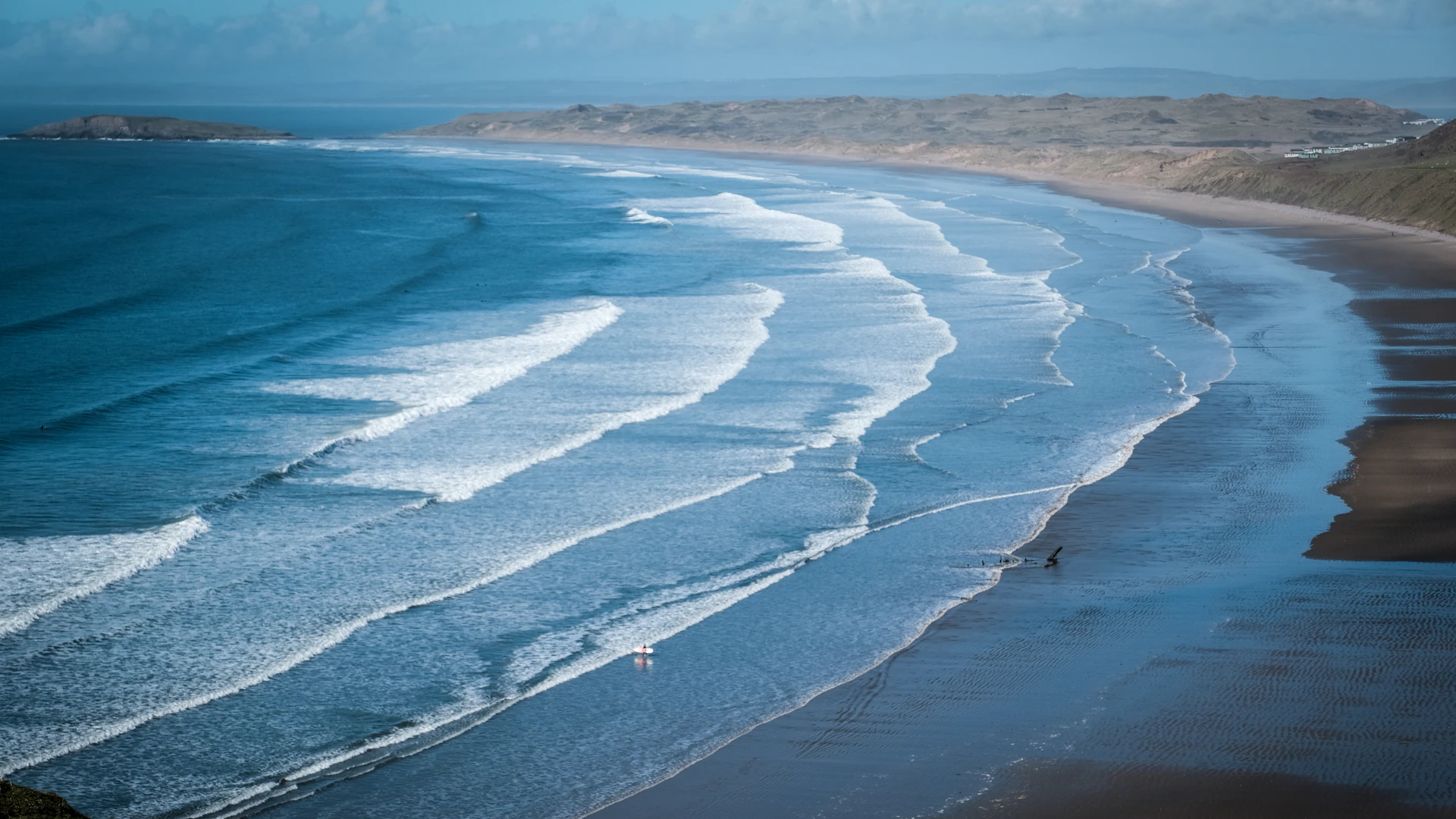
Two contrasting Gower spots: one wild and exposed, one sheltered with a famous reef.

A 3-mile exposed Atlantic beach break that catches almost any swell going and suits all abilities on the right day. Wild, scenic and unlifeguarded, with the tidal causeway to Worm's Head at its southern end.
Surf guides arrow_forward
A more sheltered bay near Mumbles, mixing reef and beach breaks and holding a Blue Flag for water quality. Home to Crab Island, one of the best-known reef breaks in South Wales.
Surf guides arrow_forward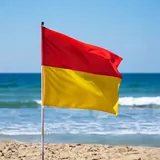
Langland is RNLI lifeguarded in summer; Rhossili is not. Watch for strong undertows and rips, and never cross the Worm's Head causeway without checking the tide with HM Coastguard first.
Surf safety arrow_forwardA big exposed beach at one end of the Gower and a sheltered reef-and-beach bay at the other.
Rhossili is a 3-mile exposed Atlantic beach break, celebrated for its consistency and its knack for picking up any swell on offer, and it works for all abilities on the right day. Up at the northern end, near the island of Burry Holms, the Three Peaks (or Peaks) is the pick of it: powerful, well-shaped right and left-handers amplified by an exposed reef, working at both low and high tide and usually less crowded thanks to the tougher access. The southern end, below Rhossili village, is more sheltered and picks up less swell, so it holds smaller, cleaner waves when the northern Llangennith end of the same beach is too messy.
View on Google Maps open_in_newLess than five minutes' drive from Mumbles, Langland Bay is far more sheltered, tucked out of the prevailing westerlies and mixing reef with beach breaks. Crab Island, the reef on the eastern side, is the headline act – hollow, steep and breaking shallow, holding good size and working best on an offshore northerly, though it's one for experienced surfers only. The main bay serves up pleasant A-frame peaks at mid-tide with a slightly longer left, while the Reef is a popular longboard wave that runs a foot or two smaller than the rest. Further out, the Sandbar only shows on bigger swells and is strictly for the experienced, and Saga Point is a slow, peeling right-hander loved by longboarders and paddleboarders.
View on Google Maps open_in_newLessons and hire cluster at the Llangennith end of Rhossili, with more options around Langland.
At Rhossili, the surf schools operate from the car park at Llangennith, the northern end of the bay, where the gentler whitewater on smaller days makes a good place to learn. Near Langland, Surfability UK CIC, a surf school for people with additional needs, is based just around the coast at Caswell. Expect a first lesson to begin on the sand with safety and the pop-up before you take a soft-top into the whitewater. See our learn to surf guide to know what to expect.
PJ's surf shop in Llangennith hires out boards and wetsuits, handy if you're travelling light or want to try something different for a session. Our surf gear guide runs through boards, wetsuits and leashes for UK waves.
Water on the Gower peaks at around 14 to 18°C in late August, cools through autumn and bottoms out at roughly 8 to 9°C in early March. A 4/3mm is the sensible year-round core, with a 5/4mm plus boots, gloves and a hood for the coldest months and a 3/2mm doing the job on warm summer days. Get the rubber right and the Gower goes all year.
One lifeguarded bay, one that isn't, and a tidal causeway that demands real caution.
Langland Bay is RNLI lifeguarded, with patrols daily from 10:00 to 18:00 through the summer season (typically around 2 May to 13 September). At lifeguarded beaches, swim and bodyboard between the red-and-yellow flags, keep surf-craft to the black-and-white chequered zone, treat a red flag as no entry and heed an orange windsock warning of offshore wind. Rhossili Bay, by contrast, has no lifeguard patrol at all. It's known for occasional rips, particularly near Rhossili village; the Llangennith section throws up strong rip-tide currents, and powerful undertows build in big surf. This is a beach for confident surfers who can read the water.
At the southern end of Rhossili, the causeway out to Worm's Head is only safe to cross for around 2.5 hours either side of low tide, a 5-hour window. Always check tide times with HM Coastguard or the National Trust centre before setting off. The causeway is rocky, slippery and covered in sharp barnacles, so wear sturdy footwear, and the currents become extremely dangerous once it floods. Never attempt the crossing unless you've got ample time to get back to the mainland, and report your crossing to the Coastwatch centre before you set off. In any coastal emergency, dial 999 and ask for the Coastguard.
Langland can be rocky in parts, and the Crab Island break sits on an exposed reef that breaks shallow, which makes it dangerous for novices. Give the reef a wide berth unless you're experienced, and check the water quality – Surfers Against Sewage (SAS) run a Safer Seas & Rivers Service app with real-time alerts, worth a look after heavy rain, when both bays can see sewage discharge.
Both sit on the Gower peninsula, an easy run west and south-west of Swansea.
The nearest major station for both bays is Swansea, roughly 15 miles from Rhossili and 15 to 20 minutes' drive from Langland. From there it's onward by bus, taxi or hire car, which is simpler if you're travelling light or hiring a board at this end.
Cardiff Airport (CWL) is around 55 miles away with domestic and international flights. Swansea Airport (SWS), which sits on the Gower itself around 12 miles from Rhossili, is a small general-aviation field rather than a scheduled hub, so most visitors fly into Cardiff and drive on.
Most surfers drive. For Rhossili, park at the Llangennith campsite at Hillend or the National Trust car park in Rhossili village (SA3 1PP), both with charges. At Langland, Pay and Display car parks sit just a few metres from the sand, behind the beach huts or Langland's Brasserie, with a Swansea Council car park around 100 metres away. In peak season all of them fill by mid-morning.
Surf all year on the Gower, though the two bays trade places as the wind turns.
Autumn and spring generally serve up the most consistent surf on the Gower, with larger Atlantic swells and a better chance of easterly and northerly winds grooming the waves. Rhossili comes into its own, and a 4/3mm wetsuit sees you through most sessions. Water sits around 12 to 15°C in autumn, cooler in spring.
Summer brings the warmest water, at around 14 to 18°C, RNLI lifeguards at Langland and generally smaller 2 to 4 foot swells that are ideal for learning and longboarding. It's the busiest stretch of the year, so surf early or late and keep clear of the bathing zones at the lifeguarded beach.
Winter brings the biggest, most powerful surf, and it's cold work. The water drops to around 8 to 9°C at its coldest, so a 5/4mm wetsuit with boots, gloves and a hood is essential. The south and west-facing bays still give you sheltered options when it's huge, but the undertows at unlifeguarded Rhossili are stronger, so be honest about your limits and read the forecast. Our gear guide covers choosing a winter wetsuit.
The questions surfers most often ask before a trip to Rhossili and Langland Bay.
Gower is a year-round surf destination. Autumn and spring tend to offer the most consistent swells, with larger Atlantic waves and a better chance of easterly and northerly winds. Winter can bring very large swells, while summer usually sees smaller 2 to 4 foot swells that are ideal for longboarding.
Langland Bay is a lifeguarded beach, with RNLI patrols typically running daily from 10:00 to 18:00 through the summer season (roughly early May to mid-September). Rhossili Bay has no RNLI lifeguard patrol, and visitors are warned against swimming in big surf because of strong undertows.
A 4/3mm wetsuit is a strong all-round choice for much of the year in South Wales. A 5/4mm is recommended for winter, usually with boots, gloves and a hood for the colder water and air. In warmer summer conditions a 3/2mm can be enough.
The causeway to Worm's Head is only safe to cross for roughly 2.5 hours either side of low tide, a 5-hour window. Check tide times with HM Coastguard or the National Trust centre first. The rocks are slippery and covered in sharp barnacles, so wear sturdy footwear, and the currents become extremely dangerous once the causeway floods. Never cross without ample time to return, and report your crossing to the Coastwatch centre.
Langland Bay holds Blue Flag status, indicating good water quality and cleanliness. Both bays can still be affected by sewage discharges after heavy rainfall. Surfers Against Sewage (SAS) run a Safer Seas & Rivers Service app with real-time alerts for designated bathing waters, so it's worth checking the live status before you paddle out. Other Welsh and UK spots are listed on our UK destinations hub.
Fancy a change of coastline? Three more British breaks worth the drive.
The sandbanks at the mouth of the River Avon make South Devon's steadiest beach break.
See the spot arrow_forward
Wales' heaviest beach – an exposed Pembrokeshire break, and no place for a first session.
See the spot arrow_forwardSandbar peaks around a Victorian pier, and the North East's most dependable surf.
See the spot arrow_forwardSee how Rhossili & Langland Bay compare to the rest of the region in our Wales & Gower surf guide.