

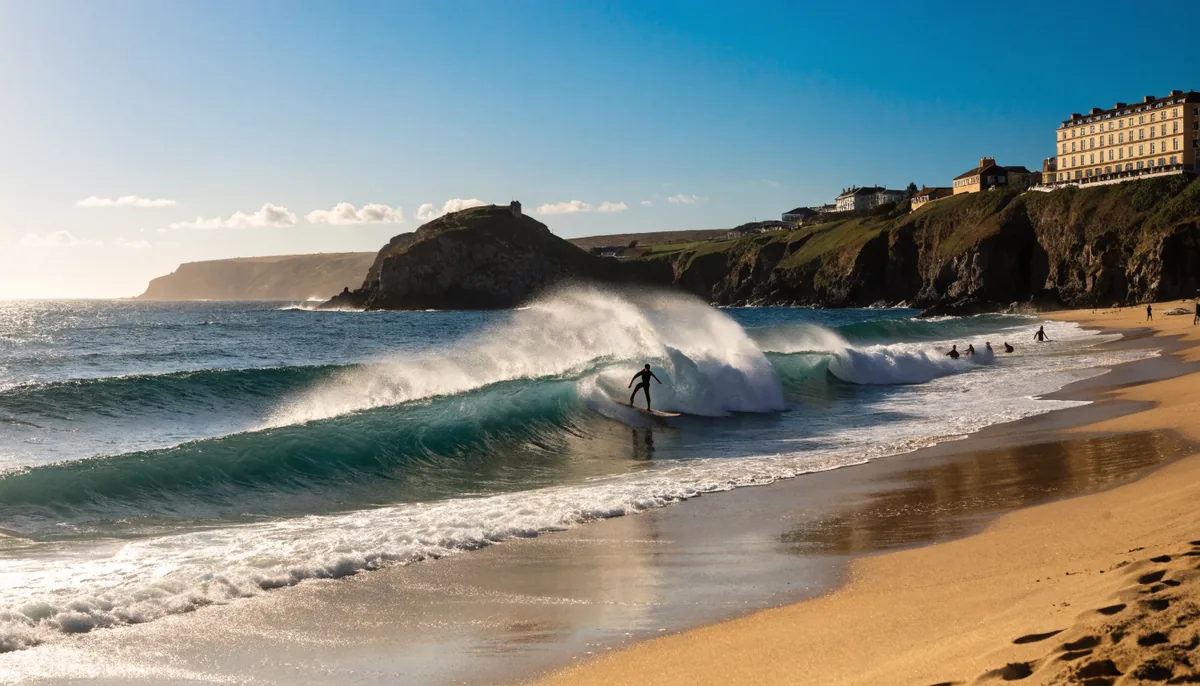
📍 Cornwall & North Devon, England
Eight spots, one exposed peninsula: from first lessons to some of the UK's heaviest beach breaks.
A single exposed peninsula, sticking out into the Atlantic, that catches groundswell almost every day of the year.
Cornwall and North Devon aren't really two separate surf regions — they're one long, west-facing coastline that happens to cross a county line. From Sennen Cove near Land's End, up through Newquay's beaches and Polzeath, and on round into the wide North Devon bays of Woolacombe, Saunton and Croyde, the same Atlantic swell rolls in and the same surf towns have grown up around it. Driving between spots to chase the best conditions of the day is completely normal here: Newquay, Watergate Bay, Perranporth and Polzeath are all within about half an hour of each other, and Croyde, Woolacombe and Saunton sit within a few miles in North Devon. What changes from beach to beach is exposure, sand shape and crowd — which is exactly what this guide compares.
Best for, skill level and wave type at a glance — read on for the detail on each beach.
| Spot | Best for | Skill level | Wave type |
|---|---|---|---|
| Newquay & Fistral | All-rounder, contests | All levels | Exposed beach break |
| Croyde | Powerful, hollow surf | Confident intermediate+ | Hollow beach break |
| Woolacombe | Learning to surf | Beginner–improver | Mellow beach break |
| Saunton Sands | Longboarding | Beginner–improver | Long, rolling beach break |
| Perranporth | Space & gentle waves | Beginner–improver | Wide beach break |
| Polzeath | Family-friendly surf | Beginner–improver | Long, slow beach break |
| Watergate Bay | Versatile, uncrowded peaks | All levels | Two-mile beach break |
| Sennen Cove | Consistent far-west swell | All levels (seasonal) | Exposed beach break |
Skill level reflects typical conditions on an average day; every beach can get bigger and heavier on a large swell.
A short summary of each beach, with a link through to the full guide.
Fistral is the UK's flagship beach break: exposed, west-facing and consistent enough to host national and international contests, yet friendly enough for improvers on a small day. Newquay's town beaches and Crantock sit close by for when Fistral is too big or too busy. Read the full Newquay guide.
A hollow, high-quality beach break in North Devon, at its best around mid-to-low tide and heavier than any of its neighbours. Croyde rewards confident, intermediate-and-above surfers who can take off late on a fast wave. More on the tides and the take-off in our Croyde guide.
A long, gently shelving, west-facing Blue Flag beach with mellow, forgiving waves, and one of the best places in the UK to catch your first green wave. Gentler than Croyde just around the headland. Our Woolacombe guide has the schools and the best stretches of sand.
A vast, gently sloping beach roughly three miles long, with long, mellow, rolling waves that make it a classic UK longboard wave — forgiving rather than powerful, and superb for first green waves. See the Saunton guide for tides and longboard sessions.
Around three miles of golden sand on Cornwall's north coast. The seabed shelves so gradually that waves break long and slow, making this one of the most beginner-friendly beaches in the county. Full detail in our Perranporth guide.
A west-facing Blue Flag beach with long, slow-breaking waves that suit beginners and improvers, sitting a touch more sheltered than Fistral. Currently works best around mid-tide. Our Polzeath guide covers the tide windows.
An exposed two-mile beach break just north of Newquay, with left and right-hand peaks that shift with the sandbanks and a wave that isn't fussy about the tide — plenty of room to walk and find your own peak. Walk it yourself with our Watergate Bay guide.
Near Land's End on Cornwall's far-west coast, Sennen is a swell magnet that catches Atlantic groundswell even when other UK spots are flat. Gwynver Beach, at its northern end, runs bigger for those who want more. The Sennen Cove guide covers the far-west swell window.
The questions surfers most often ask before picking a beach on this coastline.
Woolacombe, Saunton Sands and Perranporth are the most forgiving. All three are long, gently sloping, sandy beaches with mellow, rolling waves and plenty of surf schools working the sand through the season.
Fistral in Newquay and Watergate Bay both offer a versatile beach break that works for improvers on a small day and rewards more experienced surfers when the swell picks up. Polzeath is another good step-up spot with long, slow-breaking waves.
Croyde is the standout: a hollow, punchy beach break that's heavier than any of its North Devon neighbours and best left to confident, intermediate-and-above surfers. Sennen Cove, out towards Land's End, also picks up serious swell thanks to its far-west exposure.
Broadly yes. A 3/2mm sees you through late summer when the water is around 15 to 16°C, while winter needs a 5/4mm with boots, gloves and a hood as the sea drops to roughly 8 to 9°C across both coasts.
Yes. Croyde, Woolacombe and Saunton sit within a few miles of each other in North Devon, and Newquay, Watergate Bay, Perranporth and Polzeath are all within about half an hour's drive on the north Cornwall coast, so it's easy to chase the best conditions of the day. Explore more on our UK destinations hub.