

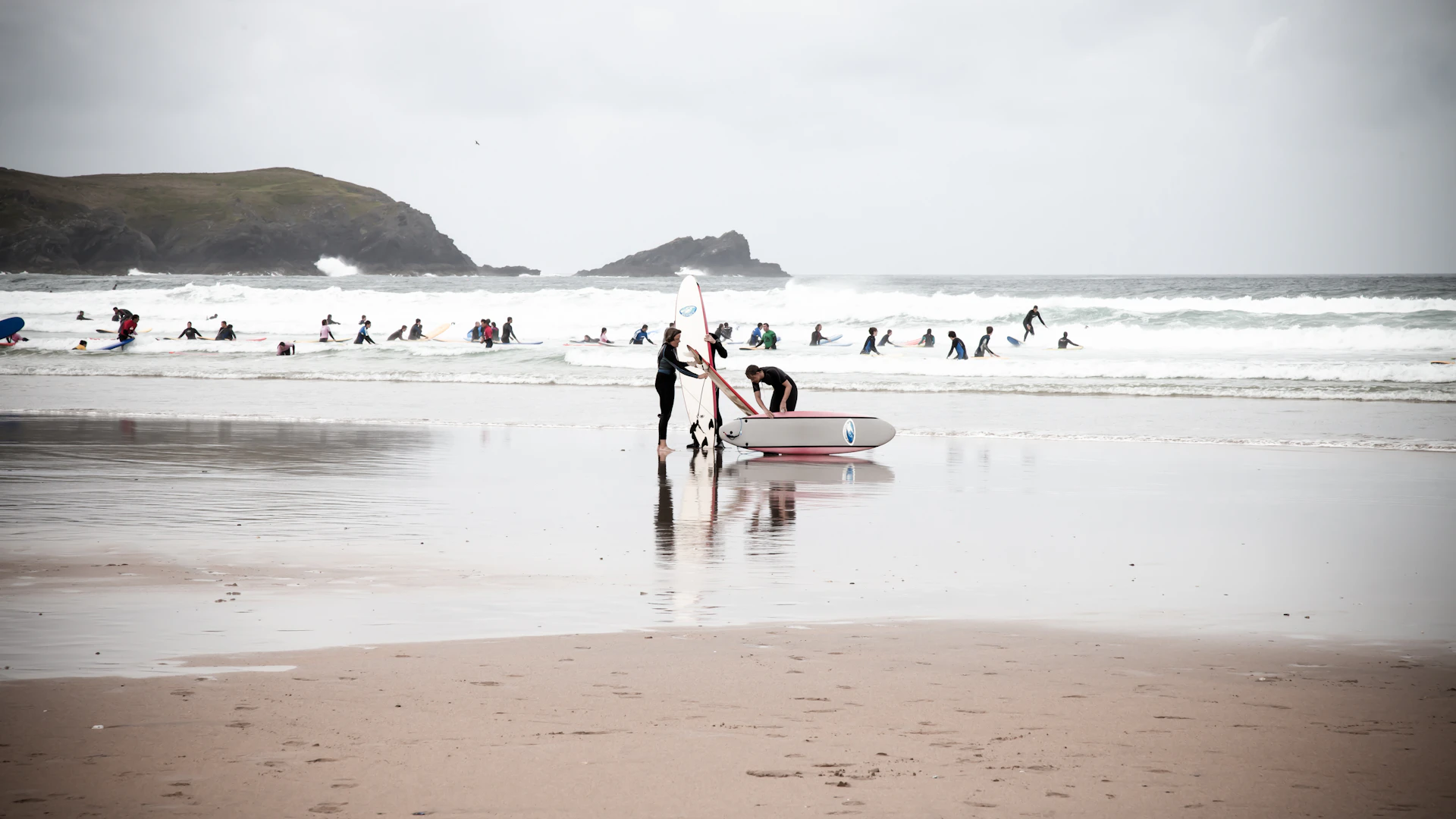
The UK's surf capital, with a flagship beach break that catches almost every Atlantic swell.

An exposed, west-facing beach break that picks up more swell than almost anywhere else on the coast. Consistent, and on the right day it works for every level, from first-timers to contest surfers.
Surf guides arrow_forward
Newquay is packed with surf schools and board hire, and the town beaches offer gentle waves for your first sessions. Nowhere in the country makes it easier to get started.
Learn to surf arrow_forward
The main beaches are RNLI lifeguarded in season. Surf between the black-and-white flags, keep out of the red-and-yellow bathing zone and watch for rip currents.
Surf safety arrow_forwardOne flagship beach break and a string of town beaches, each with its own character and its own best conditions.
Fistral is the beach that made Newquay the home of UK surfing. Facing due west into the open Atlantic, it catches almost every swell going, which is why it stays so consistent and why it hosts national and international contests. On a small, clean day the peaks are friendly enough for improvers to find their feet; when a solid groundswell lines up, Fistral throws fast, punchy walls that test the best in the lineup. It gets busy when it's on, so pick your peak, watch your right of way and give the stronger surfers room.
View on Google Maps open_in_newJust around the headland from Fistral, Newquay's town beaches – Towan, Great Western and Tolcarne – sit more sheltered from the prevailing wind and often hold a cleaner, more manageable wave when Fistral is maxing out. A couple of miles up the coast, the wide sands of Watergate Bay give you room to spread out and are a favourite for lessons and longer, mellower rides. Between them you can almost always find a beach that matches the swell, the wind and your level on any given day.
View on Google Maps open_in_newJust across the Gannel estuary to the south, Crantock is a beautiful beach that tends to be quieter than Fistral and the town beaches. It picks up plenty of swell and offers a more relaxed session when the main spots are crowded, though the estuary means the sandbanks and rip currents shift, so keep an eye on the water and stay near the lifeguards in season.
View on Google Maps open_in_newNowhere in the UK makes it easier to book a lesson, hire a board or rent a wetsuit.
Newquay has one of the highest concentrations of surf schools anywhere in the country, on Fistral, Watergate Bay and the town beaches. Lessons run in well-drilled groups: half an hour on the sand covering safety, the pop-up and how to read a wave, then out on a soft-top for the whitewater. It's a low-pressure way to get your first rides and to work out where and when it's safe to paddle out. Our learn to surf guide sets out what a first session involves.
Most schools and surf shops in town also hire out boards and wetsuits by the hour, the day or the week, which is handy if you're travelling light or fancy trying something different before you commit. With this many shops in one town you can work through a shortboard, a mini-mal and a fish in a single week. Our surf gear guide covers boards, wetsuits and leashes for UK waves.
Cornish water is never tropical. In late summer the sea sits around 15 to 16°C, warm enough for a 3/2mm wetsuit, while in winter it drops to roughly 8 to 9°C, when you'll want a 5/4mm suit plus boots, gloves and a hood. Get the rubber right and Newquay is comfortable all year round.
A proper surf town, with beaches, coast path walks and plenty to do between sessions.
Newquay has been the beating heart of British surf culture for decades, and it shows. Surf shops, cafés and board makers line the streets, and the seven main beaches are all within a short walk or drive of the centre. For a weekend or a fortnight, it's an easy base with everything a travelling surfer needs close to hand.
When the surf goes flat or the wind turns onshore, the South West Coast Path runs right along the clifftops, with headland walks and views over every beach in town. Add the coves and estuary beaches nearby and a flat spell passes quickly enough.
By plane, train or car, Cornwall's surf capital is easier to reach than you might think.
Newquay Cornwall Airport (NQY) sits just outside the town, with seasonal and year-round flights from several UK cities. It's the quickest way down if you're coming from the north, and only a short taxi or bus ride from the beaches once you land.
Newquay has its own station on a branch line from Par, on the main London to Penzance route. Change at Par and you're into Newquay in around 45 minutes. The run down the Gannel valley is a fine way to arrive, though a board bag makes it hard work unless you're hiring at the other end.
Most surfers drive. Newquay is around 40 minutes from the A30, the main road through Cornwall, and driving gives you the freedom to chase the swell between beaches and up and down the coast. In peak season the car parks by the busier breaks fill by mid-morning.
Surf all year, but the town changes character season by season.
For many surfers autumn is the best time to be in Newquay. Clean Atlantic groundswell rolls in more often, the summer crowds have thinned and the water is still relatively mild after the summer. A 3/2mm or 4/3mm wetsuit sees you through most sessions, and Fistral in particular comes into its own.
Summer brings the warmest water, at around 15 to 16°C, lifeguards on all the main beaches and smaller, friendlier waves, which makes it the ideal time to learn or to get the family in the water. The beaches are busiest at this time of year, so surf early or late and keep clear of the bathing zones.
Winter delivers the biggest, most powerful surf, and it belongs to experienced surfers who don't mind the cold. With the water down around 8 to 9°C, a 5/4mm wetsuit with boots, gloves and a hood is essential. Fistral empties out, but the waves get heavier, so be honest about your limits and read the forecast before you paddle out. Our gear guide covers choosing a winter wetsuit.
The questions surfers most often ask before a trip to Cornwall's surf capital.
Yes. On a small-to-moderate day Fistral and the town beaches work well for first-timers, and there's no shortage of surf schools or board hire. Always surf between the RNLI's black-and-white flags and pick a beach that suits your level. See our learn to surf guide.
A 3/2mm wetsuit is fine through late summer, when the water sits around 15 to 16°C. In winter the sea drops to roughly 8 to 9°C, so you'll want a 5/4mm suit plus boots, gloves and a hood.
Autumn is the classic season: clean Atlantic groundswell, lighter winds and warmer water than winter. Summer is best for learning, while winter brings the biggest, most powerful surf for experienced surfers.
Newquay Cornwall Airport (NQY) is just outside the town. A branch train line runs in from Par, on the main London–Penzance route, and by car it's around 40 minutes from the A30. Explore more spots on our UK destinations hub.
See how Newquay compares to the rest of the region in our Cornwall & Devon surf guide.