

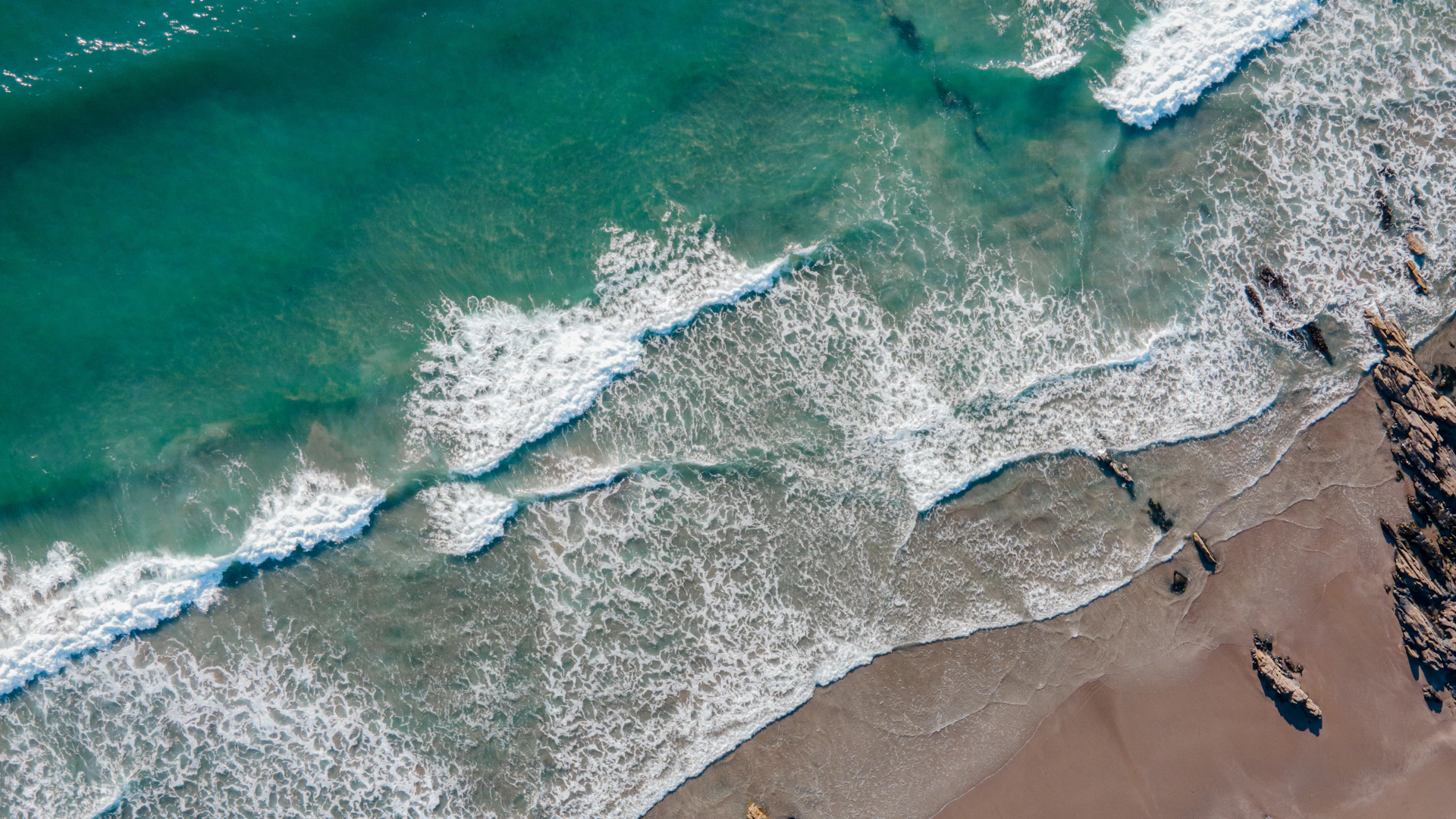
An exposed, powerful beach and reef break in Pembrokeshire – one of Wales' premier waves, for experienced surfers.

Facing south-west into the open Atlantic, Freshwater West catches powerful, consistent swell across a long sandy beach and a reef at the southern end. It hosts the Welsh National Surfing Championships.
Surf guides arrow_forward
This is no beginner beach. If you're learning, go with a qualified local school such as Outer Reef Surf School, which runs ISA-instructed lessons in the area.
Learn to surf arrow_forward
Strong rips, powerful waves and a fast-flooding tide that can cut off the beach. RNLI cover is summer-only and a red flag often flies. In an emergency dial 999 for the Coastguard.
Surf safety arrow_forwardA vast main beach and a reef that shows itself as the tide drops – both powerful, both exposed.
The main beach to the north is a vast expanse of sand that can handle substantial swell, with peaks forming along its whole length. The most consistent breaks are often found around the stream towards the southern third of this section. Powerful, exposed and prone to strong rip currents, it demands respect and experience. On its day this is one of the best beach breaks in Wales — but never a place to take chances.
View on Google Maps open_in_newAt the southern end of the bay, the reef becomes prominent as the tide recedes, creating two well-formed waves including a favoured left-hander. It's a quality wave for experienced surfers who know how to read a reef, but the same warnings apply: powerful surf, strong currents and a tide that floods quickly. Further south, Frainslake Sands is strictly out of bounds – it lies within the Castlemartin Ministry of Defence firing range, so never venture beyond the marked limits.
View on Google Maps open_in_newGiven the conditions, lessons here should always be with a qualified local school.
Outer Reef Surf School, founded in 1999, operates near Freshwater West from its base at Gupton Farm, run in partnership with the National Trust since 2018, and delivers surf lessons with ISA-qualified instructors. Barefoot Boardriders also uses Freshwater West for summer lessons. Because the beach is powerful and rip-prone, learning here should always be under qualified supervision – see our learn to surf guide for what a first lesson involves.
The water at Freshwater West peaks at around 14 to 18°C in late August and bottoms out at roughly 7 to 9°C in late February. A 4/3mm wetsuit covers the warmer months, while a 5/4mm suit with boots, gloves and a hood is essential through the winter. Pack for the conditions on the day rather than the forecast. Our surf gear guide goes through the boards and rubber that hold up in surf this heavy.
A dramatic, dune-backed beach within the Pembrokeshire Coast National Park.
Freshwater West sits within the Pembrokeshire Coast National Park and is backed by an extensive system of fragile dunes, where camping and barbecues are strictly prohibited to protect the environment. It's a wild, undeveloped beach with no town on its doorstep, and it has stood in as a filming location for 'Harry Potter and the Deathly Hallows' and 'Robin Hood'. The scenery and the raw power of the surf, rather than any facilities, are what draw people here.
The Pembrokeshire Coast Path runs along this stretch of coastline, with cliff-top walks and wide Atlantic views, and the historic towns of Pembroke and Tenby are a short drive away. It's a beautiful part of Wales to explore on a day when the surf is too big or the tide is wrong.
A car is really the only practical way to reach this remote Pembrokeshire beach.
Access is primarily via the B4319 road, and a car or hire vehicle is highly recommended. From Pembroke it's around 15 minutes, from Tenby about 30 minutes and from Swansea, the nearest major city, roughly 1.5 hours. There are two small free car parks that fill quickly when the surf is good, plus roadside parking along the narrow lane – park responsibly so you don't block emergency access or farmers' gateways.
The nearest railway station is Pembroke, about 15 minutes' drive away, though you'll still want a car to reach the beach. For those flying in, Swansea Airport (SWS) is around 43 miles (69 km) away and Cardiff Airport (CWL) about 76 miles (122 km), both a fair drive from the coast.
There's swell much of the year, but lifeguard cover and conditions change with the seasons.
Summer, roughly early June to September, is the only time RNLI lifeguards are usually on duty, which makes it the safest window to visit, especially if you're surfing with a school. The water is at its mildest and a 4/3mm wetsuit is fine. Even so, the rips and the fast-flooding tide never fully relax, so stay alert.
Autumn and winter bring the most powerful, consistent Atlantic swell, but lifeguard cover has gone and the beach often flies a permanent red flag. The water is colder, so a 5/4mm suit with boots, gloves and a hood is essential. This is experienced-surfer territory only – never surf alone and always check the tide before you go.
Spring keeps plenty of swell about with quieter lineups, though the water is still cool and lifeguards aren't yet on the beach. A 4/3mm or 5/4mm suit covers most spring sessions. Our gear guide covers choosing a wetsuit for UK conditions.
The questions surfers most often ask before a trip to this powerful Pembrokeshire beach.
Yes. Freshwater West is widely regarded as one of Pembrokeshire's premier surf beaches, favoured by experienced surfers for its consistent Atlantic swell and powerful waves. It regularly hosts the Welsh National Surfing Championships.
Only under the right conditions and ideally with a qualified local surf school. The beach is known for powerful waves and strong rip currents, so it's not a spot for beginners to surf unsupervised. See our learn to surf guide.
RNLI lifeguards are usually on duty during the busier summer months, typically from early June to September. Outside that period, cover is limited and the beach often flies a permanent red flag because of the dangerous conditions.
Freshwater West has powerful rip currents, strong waves and a rapidly incoming tide that can cut off parts of the beach. Together these present serious risks for inexperienced swimmers and surfers, and there have been reports of drownings and near-misses. Always check the tide times and, in an emergency, dial 999 for the Coastguard.
With water peaking at around 14 to 18°C in late August and bottoming out at roughly 7 to 9°C in late February, a 4/3mm wetsuit covers the warmer months, while a 5/4mm suit with boots, gloves and a hood is essential in winter. This is a guide based on typical water temperatures, so pack for the conditions on the day. Explore more spots on our UK destinations hub.
Fancy a change of coastline? Here are three more British breaks worth the trip.

South Devon's most reliable beach break, shaped by the sandbanks at the mouth of the River Avon.
See the spot arrow_forwardTwo contrasting Gower classics: a wild, exposed 3-mile beach and a sheltered reef-and-beach bay.
See the spot arrow_forward
The North East's most reliable spot, with versatile sandbar peaks around a Victorian pier.
See the spot arrow_forwardSee how Freshwater West compares to the rest of the region in our Wales & Gower surf guide.