

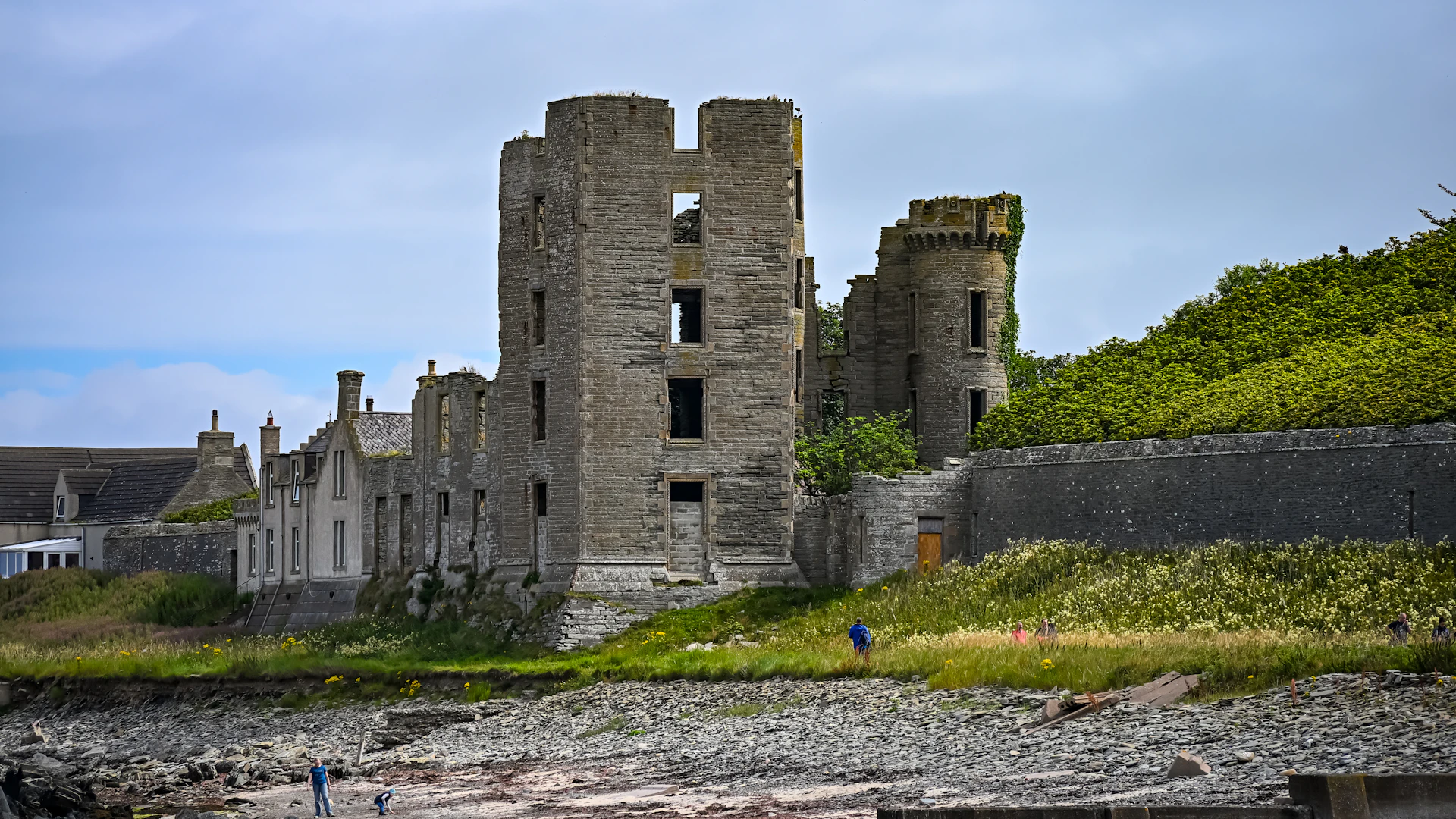
A world-class right-hand barrel over a flagstone reef, in the far north of Scotland – for experienced cold-water surfers.

A long, hollow, fast right-hander breaking over Caithness flagstone, capable of holding swell up to 15 feet (4.5 metres). One of the finest reef breaks in the UK and Europe – and strictly an advanced wave.
Surf guides arrow_forward
Thurso East is no place to start. Dunnet Beach, 15 minutes east, is the area's beginner spot, with mellow, forgiving waves and lessons from North Coast Watersports.
Learn to surf arrow_forward
This is a remote, unlifeguarded reef with cold water and a genuine hypothermia risk. Never surf alone, wear the right rubber and know the tide. In an emergency dial 999 for the Coastguard.
Surf safety arrow_forwardOne world-class reef and a scattering of powerful breaks – plus one gentle beach for beginners.
Thurso East is the wave that put Scotland on the surfing map. It produces long, hollow, fast right-hand barrels over a Caithness flagstone reef, and on its day it stands comparison with the heaviest waves in Europe. It works best on a north to north-west swell with a southerly offshore wind, ideally on an incoming to mid-tide – too much water and it loses its power. It can hold swell up to 15 feet (4.5 metres) and has hosted major contests, including the O'Neill Cold Water Classic. This is a wave exclusively for very experienced surfers with solid reef knowledge.
View on Google Maps open_in_newNear Thurso Beach, the Shit Pipe is a powerful A-frame reef break offering both rights and lefts, suited to intermediate and advanced surfers on a decent north-west swell and south-west offshore wind. Its name comes from a former sewage outflow, though the tea-coloured water today is peat-stained river run-off rather than sewage. About 10 minutes' drive west, Brims Ness is a shallow reef with several peaks: the famous Bowl is a slab barrel that needs a huge north-west groundswell of 8 to 15 feet (2.4 to 4.5 metres) and is for highly experienced surfers only, while a more manageable right-hander breaks under the castle.
View on Google Maps open_in_newAbout 15 minutes' drive east of Thurso, Dunnet Beach is a two-mile (3.2 kilometres) stretch of sand and the best spot in the area for beginners. With minimal rocks, gentle currents and a shallow, low-gradient sand bottom, it produces mellow, forgiving waves and still picks up North Atlantic swell easily. It's where the local lessons happen, and the sensible place to find your feet long before you go anywhere near the reefs.
View on Google Maps open_in_newNobody learns on the reef. Lessons happen on the gentle sand at Dunnet Beach.
North Coast Watersports runs surf lessons in the area, mainly on Dunnet Beach, which is ideal for first-timers. Seasoned instructors and full kit come as standard, which matters more than usual in water this cold. If you're new to the sport, start here – see our learn to surf guide for what to expect from a first lesson. The Scottish Surfing Federation is the sport's governing body north of the border.
Thurso water is cold, from a monthly average of 8.0°C at its coldest (March) to 13.4°C in August (Scottish Government Marine Directorate, North Scotland Coast, 1997–2013). A 5/4mm or 6mm wetsuit is essential year-round, and in winter a hood, gloves and boots are non-negotiable. Even in summer, most surfers keep boots and gloves on. Get the rubber wrong here and hypothermia is a real risk, so kit up properly for every session. Our surf gear guide covers choosing a cold-water wetsuit and accessories.
A remote Caithness town, closer to Norway than to London, and the base for surfing the far north.
Thurso is the most northerly town on the British mainland, and the reef breaks right on its doorstep, below the old castle. It's a small, hardy place with a tight-knit cold-water surf community, and everything a travelling surfer needs sits close to hand. The remoteness is part of the appeal – uncrowded lineups and world-class waves, a long way from anywhere.
When the surf goes flat, the North Coast 500 route runs right past the door, giving easy access to beaches, cliffs and the wider coastline. The scenery is wild and empty, and a day spent waiting on the next North Atlantic low is no hardship up here.
It's a long way north, and once you arrive a car is essential for chasing the swell.
Inverness Airport (INV) is the nearest sizeable airport, around 110 miles (177 kilometres) south of Thurso. From there you can hire a car, take the Stagecoach X99 bus (about 3 hours 15 minutes) or the train (around 4 hours). Wick John O'Groats Airport (WIC) is closer, around 20 miles (32 kilometres) east, but has only limited flights.
Thurso railway station is the most northerly on the UK mainland, served by ScotRail. The journey from Inverness takes around 4 hours and few railway lines in Britain beat it for scenery, though a board bag makes it hard work unless you're hiring at the other end.
Most surfers drive. Thurso is the last major stop on the A9, which runs up the Scottish east coast – roughly 2.5 hours from Inverness and about 5.5 hours from Edinburgh. Public transport on the north coast is limited, so a car is essential for reaching the different reefs and beaches along the North Coast 500.
Swell arrives all year, but the reef only really comes alive in the colder months.
For many, autumn – September to November – is the best time to be in Thurso. Solid North Atlantic groundswells arrive more often and the weather is still reasonable before the depths of winter. The water sits at the warmer end of its range, though you'll still want a 5/4mm suit with boots and gloves.
Winter delivers the most consistent, most powerful surf, as big low-pressure systems track across the North Atlantic. It's also brutally cold, with the sea averaging only 8°C even in its coldest month (March), so a 6mm wetsuit with hood, gloves and boots is essential and hypothermia a real risk. Short daylight and heavy conditions mean this is a season for experienced, well-prepared surfers only.
Summer brings the mildest water, averaging about 13°C in August, and the odd good swell, but the North Atlantic is quieter and the reef fires less often. It's a gentler time to visit, and the right time to surf the beginner-friendly sand at Dunnet Beach, though you'll still need a 5/4mm suit. Our gear guide covers choosing a cold-water wetsuit.
The questions surfers most often ask before a trip to the far north of Scotland.
No. Thurso East is strictly for intermediate to advanced surfers, because of its powerful, hollow waves, a shallow flagstone reef, strong currents and very cold water. Beginners should head to Dunnet Beach, about 15 minutes' drive east of Thurso. Start with our learn to surf guide.
The water is cold all year, from a monthly average of 8.0°C at its coldest (March) to 13.4°C in August (Scottish Government Marine Directorate, North Scotland Coast, 1997–2013), so a 5/4mm or 6mm wetsuit is essential. In winter a hood, gloves and boots are mandatory, and in spring, summer and autumn a 5/4mm suit with boots and gloves is still strongly recommended.
Autumn through spring, roughly October to March, is best, when solid North Atlantic groundswells are most common. Autumn in particular pairs good swell with reasonable weather. The wave can fire in summer too, but the biggest, most consistent surf arrives with the colder-month low-pressure systems.
Yes. North Coast Watersports offers lessons, mainly at beginner-friendly Dunnet Beach with experienced instructors and equipment. Thurso East itself is no place to learn. The Scottish Surfing Federation is the sport's governing body in Scotland.
The main hazards are the shallow, rocky Caithness flagstone reef, strong currents and extremely cold water, which brings a real hypothermia risk. The area is also remote, so help takes longer to arrive than it would further south. In an emergency, dial 999 and ask for the Coastguard. Other Scottish and UK spots sit on our UK destinations hub.