
Portugal, a surf destination first and foremost
Three sides of one country: Nazaré's giant waves, Peniche's consistency, and Sagres' versatility at the tip of the Algarve.
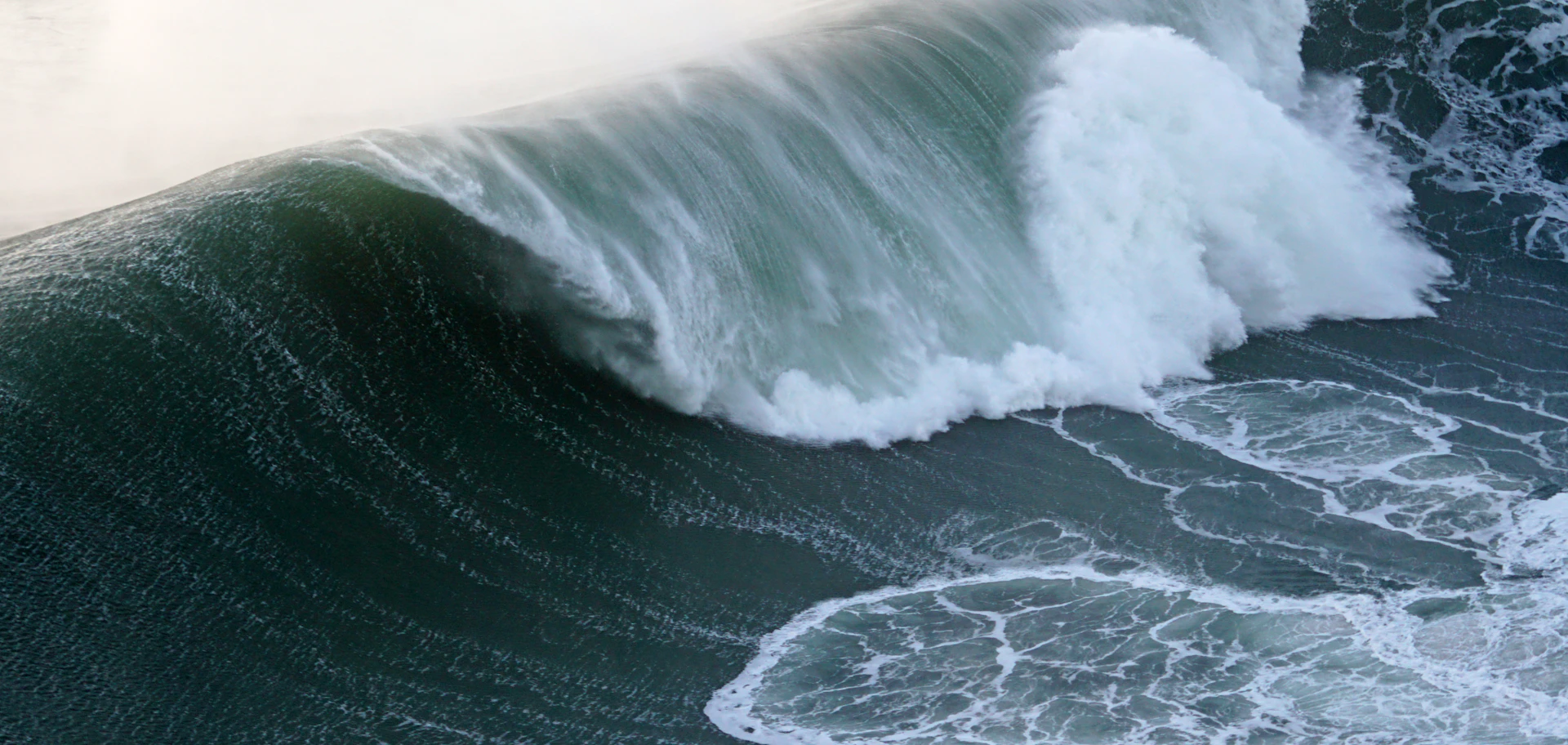
Nazaré, the world's big-wave capital
Praia do Norte holds the certified record for the largest wave ever surfed, 26.21m, set in 2020. Most visitors come to watch rather than paddle out; the town beach stays open to beginners.
Surf guide arrow_forward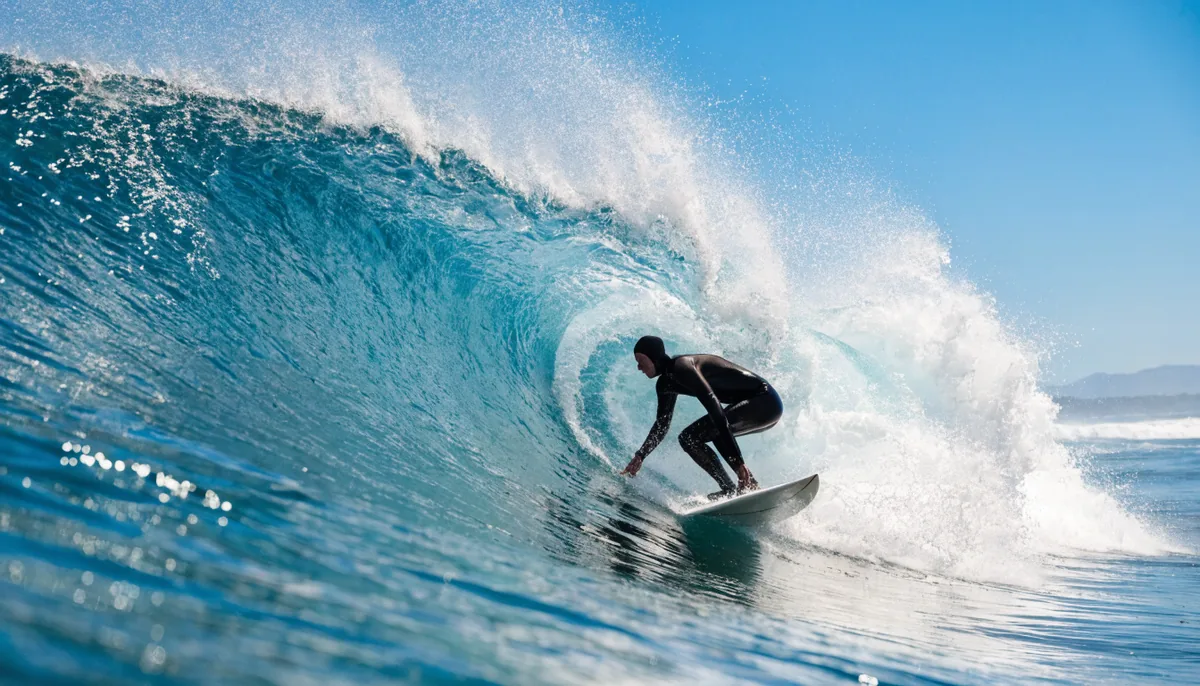
Peniche, the "Portuguese Hawaii"
Supertubos hosts a postseason WSL Championship Tour stop in 2026. Around it, Baleal, Lagide and Molho Leste cover every level, with one of the densest surf school scenes in Europe.
Surf holidays arrow_forward
Sagres, the Algarve's surf hub
At the south-western tip, Sagres picks up both west and south swells depending on which beach is chosen, making it one of the country's most consistent spots to progress.
Surf techniques arrow_forwardSurfing in Portugal at a glance
What to know before you book.
- Status: Western European country, EU member state, entirely Atlantic-facing coastline.
- Big-wave zone: Nazaré, on the west-central coast, with Praia do Norte for giant waves and Praia da Vila for learning.
- Main surf zone: Peniche and Baleal, home to Supertubos, a WSL Championship Tour stop (22 October-1 November 2026).
- Algarve zone: Sagres, at the south-western tip, with beaches facing both west and south depending on swell.
- Big-wave season at Nazaré: October to March, peaking November to February.
- Surf season at Peniche and Sagres: almost year-round, more consistent from autumn through spring.
- Water temperature: around 14-16°C in winter, 19-22°C in summer, noticeably colder on the west coast than in the Algarve.
- Wetsuit: 4/3mm to 5/4mm in winter, 3/2mm in summer – this is not a wetsuit-free destination.
- Airports: Lisbon (LIS) for Nazaré and Peniche, Faro (FAO) for Sagres and the Algarve, Porto (OPO) as a northern option.
- Emergency number: 112, nationwide, including for emergencies at sea.
- Language: Portuguese; English is widely spoken in tourist areas and surf schools.
- Currency: euro (EUR).
Nazaré: the world's big-wave capital
An underwater canyon that turns an ordinary Atlantic swell into a mountain of water, and a town that lives off surfing without necessarily surfing itself.
Why the canyon makes the waves so big
Praia do Norte, Nazaré's north beach, owes its reputation to the Nazaré Canyon, an underwater trench roughly 5km deep and 230km long that points straight at the coastline. As it narrows from 15km wide offshore to just 2km near shore, the canyon funnels Atlantic swell energy like a lens, before it hits a shallow rocky shelf right in front of the beach. Swell can triple in height over a few hundred metres, which is how Nazaré produces some of the biggest waves ever surfed anywhere on the planet.
View on Google Maps open_in_newFrom Garrett McNamara to today's record
It was American surfer Garrett McNamara who put Nazaré on the world surfing map, in November 2011, with a Guinness World Records-certified 24m (78ft) wave – until then, nobody realised this spot could produce rideable waves of that size. Brazilian Rodrigo Koxa took the record in November 2017 with a 24.38m (80ft) wave. German surfer Sebastian Steudtner currently holds the officially certified record: 26.21m (86ft), ridden on 29 October 2020 and certified by Guinness World Records in May 2022. Even bigger waves have been reported at Nazaré since, including by Steudtner himself in 2024, but measuring a wave precisely remains a contested business in this sport, so treat the record as a moving figure rather than something settled.
Spectator first, surfer second
No point pretending otherwise – the vast majority of people who travel to Nazaré during the big winter swells don't surf at all. They come to watch, from the Farol da Nazaré (the lighthouse on the headland above Praia do Norte) or the surrounding clifftops, camera in hand or simply for the spectacle. Praia do Norte is nothing like a learner spot – only a handful of elite big-wave surfers, often towed in by jet-ski to reach the speed required, take it on, backed by dedicated safety cover (rescue jet-skis, medical teams on standby during the biggest sessions).
Praia da Vila: the town beach, open to beginners
On the opposite side to Praia do Norte, Praia da Vila (also called Praia da Nazaré), the long sandy beach fronting the town centre, offers far more manageable waves. This is where the local schools operate: Nazaré Surf School, open since 2012 and still the only one with a permanent building right on the sand, and Surf4You Nazaré, which specialise in lessons for beginner and intermediate levels on the more forgiving waves at the southern end of the bay. This is by far the best way to actually surf in Nazaré, rather than simply watch the giants at Praia do Norte from a distance.
Peniche: the "Portuguese Hawaii" and the country's busiest surf scene
Supertubos, a stop on the world tour, surrounded by spots for every level at Baleal, Lagide and Molho Leste.
Supertubos, a stop on the WSL Championship Tour
Supertubos, on the Peniche peninsula, is one of Europe's most powerful and tubular beach breaks, earning it the nickname "Portuguese Hawaii". The 2026 WSL Championship Tour schedule confirms Peniche as one of the season's postseason stops, from 22 October to 1 November 2026, under the name MEO Rip Curl Pro Portugal. It's a demanding spot, best left to confident surfers once the swell picks up – all power, fast tubes and a sand bottom that closes out quickly.
View on Google Maps open_in_newBaleal, Lagide and Molho Leste: every level, close together
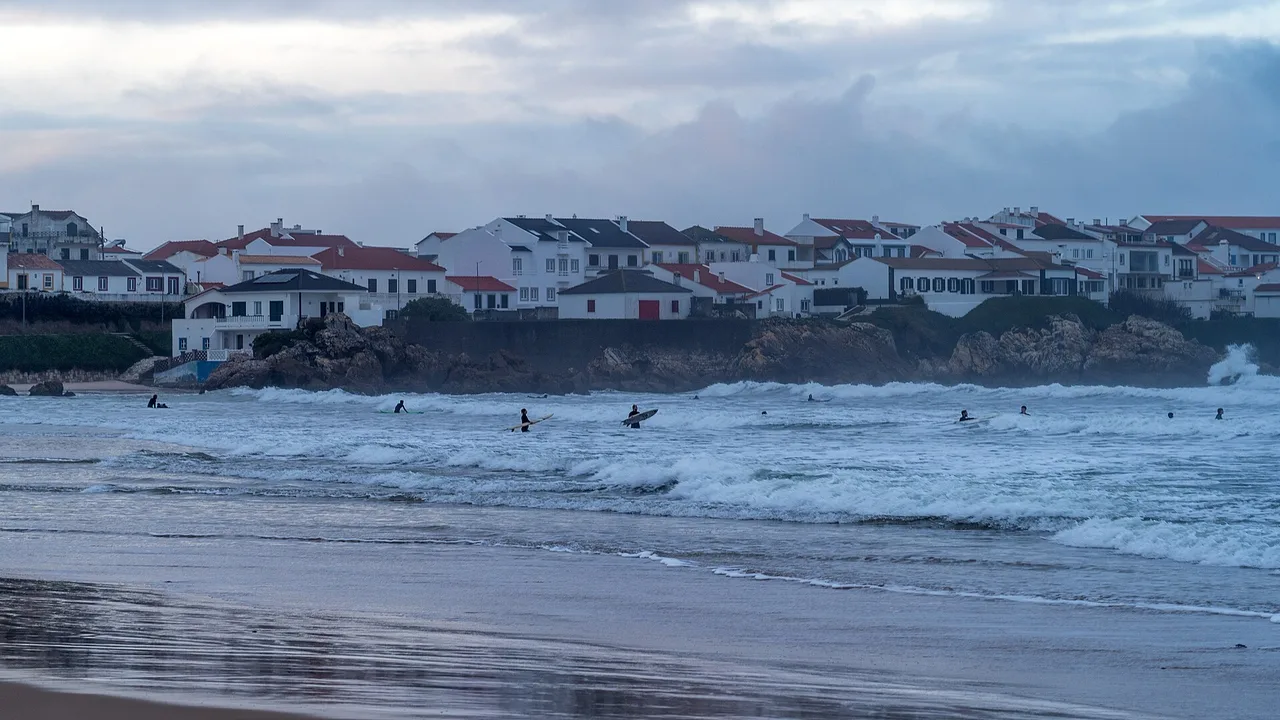
Baleal, a small peninsula linked to Peniche by a sandbar, packs several differently-angled beaches into one spot, which usually means there's a manageable stretch of water for beginners whatever the wind or swell direction – it's historically one of the very first corners of Portugal ever surfed. Lagide, a point break, becomes the peninsula's most consistent spot once swell tops 5ft (1.5 m), suited to intermediate-to-advanced surfers who've already got a handle on their pop-up. Molho Leste, sheltered by the harbour's east breakwater, delivers solid intermediate conditions on strong north days, when Baleal turns hard going.

The region's schools and surf camps
Peniche and Baleal have one of the densest concentrations of surf schools anywhere in Europe. Baleal Surf Camp, based at the Cantinho da Baía spot on the north side of the peninsula, is among the very first schools ever opened in the region and still teaches with kit matched to each level. Ferrel Surf House, around fifty metres from Baleal beach, is a family-run operation combining accommodation with lessons for every level. That density of schools and surf-focused accommodation is one of the region's biggest strengths: you can put a full surf trip together here, lessons included, without bringing a board.
Ericeira: Europe's first World Surfing Reserve
North of Lisbon, Ericeira's reef breaks, from Ribeira d'Ilhas to Coxos, form a World Surfing Reserve designated in 2011, with Foz do Lizandro for beginners just south of town. See our Ericeira surf guide for the breaks, the season and the local rules.
Sagres: the Algarve's surf hub, between two coasts
At Portugal's south-western tip, a unique position that picks up both west and south swells depending on the day.
A geography that multiplies your options
Sagres sits at the exact point where Portugal's west Atlantic coast turns into the Algarve's south coast. That position lets local schools pick the best-facing beach each day: west-facing beaches like Cordoama, a quiet beach break inside the Southwest Alentejo and Vicentine Coast Natural Park, or Praia do Amado further north towards Carrapateira, respond well to west and north-west swells; south-facing beaches like Tonel and Mareta come alive with a south swell, or a big west swell paired with a north to north-westerly wind, producing fast lefts and rights, occasionally barrelling.
View on Google Maps open_in_new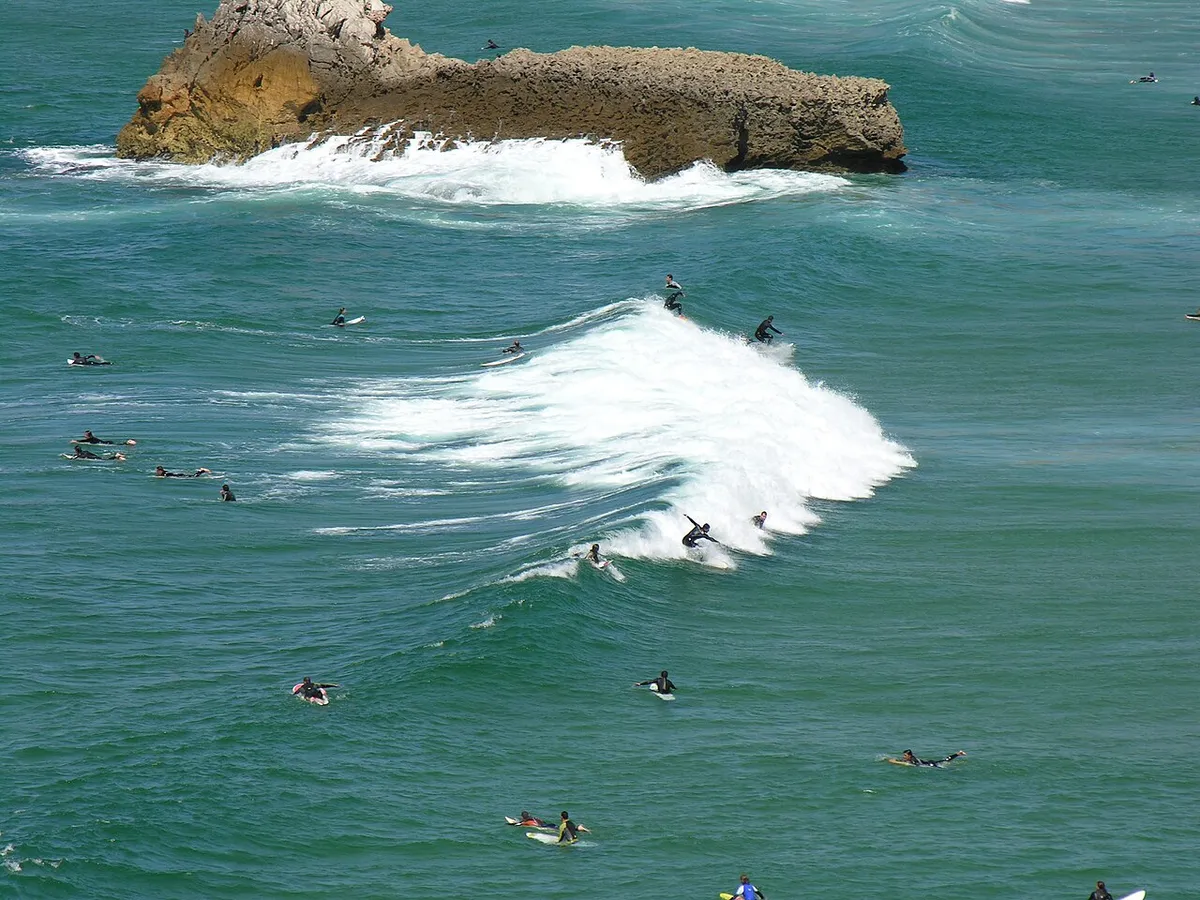

The schools of Sagres
Algarve Surf School teaches mainly at Praia da Mareta, in Sagres, and Praia do Amado, in Carrapateira, two of the region's most consistent and beginner-friendly beaches, choosing the day's location based on wind and swell. FreeRide Surfing, the local benchmark since 2002, operates out of Cordoama and Memmo Baleeira, coaching riders progressing beyond beginner level. This combination of well-established schools and the area's dual exposure makes Sagres a strong choice for stringing together several days of progression, whatever the conditions throw up.
A solid spot to progress
Sagres has neither Supertubos' raw power nor Nazaré's sheer scale – which is exactly what makes it such a good training ground for beginner-to-intermediate surfers, able to string sessions together across several beaches instead of being at the mercy of a single temperamental spot. More advanced surfers get plenty out of it too during south swells, which are rarer elsewhere along the Portuguese coast.
Getting to Portugal
Three airports, depending on where you're headed – Lisbon for the west coast, Faro for the Algarve, Porto as a northern option.
Lisbon (LIS), for Nazaré and Peniche
Lisbon Airport is the obvious entry point for the west coast. Peniche sits about 53 miles (85 km) away, roughly 45 minutes to 1.5 hours depending on traffic and transport (bus or car), and Nazaré about 73 miles (117 km) away, a little over 1.5 hours by road. Lisbon is served by numerous low-cost and full-service European carriers, which usually makes it the simplest and most frequent option from the UK.
Faro (FAO), for Sagres and the Algarve
For Sagres, Faro Airport is by far the closer option, about 72 miles (116 km) away, a little over an hour's drive. From Lisbon, it takes around 3 hours by road to reach Sagres, which makes Faro the better choice for a trip focused on the Algarve. Faro also has strong connections to major European cities, particularly during the summer season.
Porto (OPO), a northern option
Porto remains a secondary option for the three spots covered here, but it can make sense if you want to combine a stop in the city with a run down to Nazaré (about 140 miles, 225 km) before continuing on to Peniche. It's not the airport for Sagres, though, which sits over 250 miles (400 km) further south.
Getting around
Hiring a car is the most flexible option for combining all three regions, or for switching between Sagres' various beaches depending on the day's swell. Long-distance buses also connect Lisbon to Peniche, Nazaré and the Algarve for anyone who'd rather travel without a car, particularly for a trip focused on one spot with surf camp accommodation.
When to go surfing in Portugal
A two-speed calendar – Nazaré's big-wave season, and near-year-round surfing at Peniche and Sagres.
October to March: Nazaré's big-wave season
North Atlantic storms generate, from October to March, the swells capable of producing Praia do Norte's outsized waves, with a peak in frequency between November and February. This is the window to target if you want a shot at witnessing a big-wave session from the Farol da Nazaré, though nothing is guaranteed, because conditions that extreme stay unpredictable day to day.
Autumn to spring: the best window at Peniche and Sagres
Peniche and Sagres are surfable nearly all year round, but swell is generally more regular and consistent from autumn through to spring, while summer brings smaller waves, more thermal wind and warmer water. That makes summer a decent compromise for beginners, who get gentler conditions overall, while more experienced surfers tend to favour the shoulder seasons for wave quality.
The Supertubos event, late October-early November
The WSL Championship Tour stop at Supertubos, from 22 October to 1 November 2026, is a good hook for anyone wanting to combine a surf trip with the chance to watch top-level competition. Outside that window, it's worth checking swell forecasts before booking, since wave quality at Peniche can vary noticeably from one week to the next.
Further afield: Madeira. Portugal's Atlantic island has its own surf scene, mostly reef and point breaks for experienced surfers, with a few sheltered beaches for lessons. See our Madeira surf guide.
Safety and useful numbers
112 works nationwide, and a wetsuit is needed almost all year round.
Portugal's single emergency number is 112, free to call from any phone, including for emergencies at sea, where the operator routes the call through to the relevant maritime rescue service. Travel insurance covering medical evacuation is still worth having, particularly for committed spots like Praia do Norte at Nazaré or Supertubos on a big swell, where wave power alone can cause serious injury. At Praia do Norte, never approach the cliff edge or the impact zone outside marked viewing areas – the swell there can be extremely dangerous even for a spectator standing well back.
Portugal is not a warm-water destination, and a wetsuit is essential for nearly the whole year. Expect a 4/3mm, or even a 5/4mm with boots, from November to April, when water drops to 14-16°C on the west coast; a 3/2mm is usually enough from May to October, with a 2mm shortie possible at the height of summer in the Algarve, where water climbs to 22-23°C. Schools at Nazaré, Peniche and Sagres all rent full kit, wetsuit included, which saves travelling with your own quiver.
Surfing in Portugal: FAQ
What riders ask most before booking.
The Guinness World Records-certified title belongs to German surfer Sebastian Steudtner, for a 26.21m (86ft) wave ridden on 29 October 2020 at Praia do Norte, certified in May 2022. He beat Brazilian Rodrigo Koxa's record (24.38m, 80ft, November 2017), who had himself surpassed American Garrett McNamara's record (24m, 78ft, November 2011) – the pioneer who first put the spot on the map. Even bigger waves have reportedly been ridden at Nazaré since, including by Steudtner himself in 2024, but without official validation to date.
No, and most visitors aren't: during the big winter swells, the vast majority of people at the Farol da Nazaré lighthouse are spectators and photographers, not surfers. Praia do Norte is not a learner spot; only a handful of elite big-wave surfers, often towed in by jet-ski, ride there. Beginners and families head to Praia da Vila, the town beach, which is far more manageable.
Yes. The 2026 WSL Championship Tour schedule confirms Peniche as one of the postseason stops, at Supertubos, from 22 October to 1 November 2026, under the name MEO Rip Curl Pro Portugal. The spot has been part of the world tour for many years, which is how Peniche earned its nickname of the "Portuguese Hawaii".
Sagres suits a wide range of levels thanks to its position at the south-western tip of the Algarve. Depending on the day's swell you can pick a west-facing beach (Cordoama, Amado) or a south-facing one (Tonel, Mareta), which usually means manageable conditions somewhere when one side is too powerful. Local schools such as Algarve Surf School and FreeRide Surfing coach beginners and progressing surfers alike.
Portugal is not a warm-water destination. Water temperature ranges from around 14-16°C in winter to 19-22°C at the height of summer, noticeably colder on the west coast (Nazaré, Peniche) than in the Algarve. A 4/3mm wetsuit, or even 5/4mm, is needed from November to April, while a 3/2mm is usually enough from May to October. Explore our destinations guide and the rest of our surf guide too.