

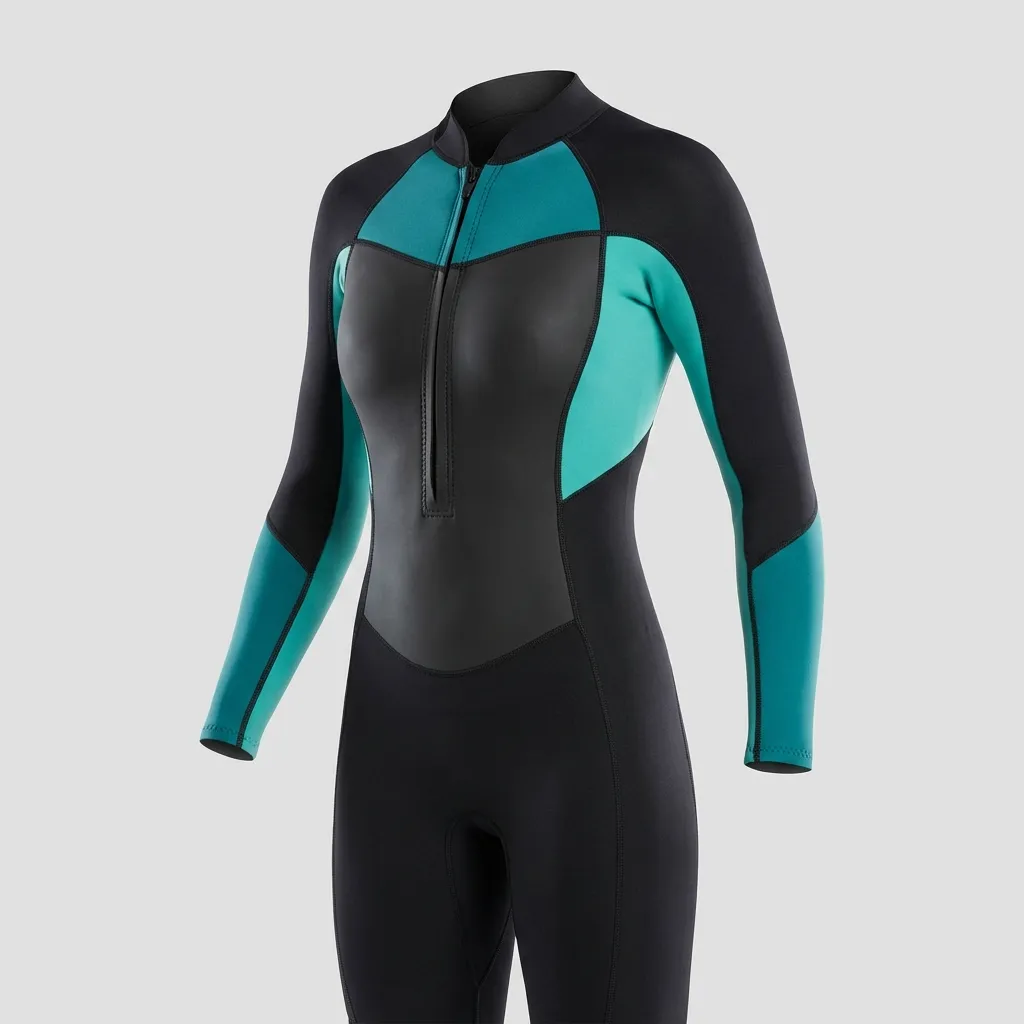
The wetsuit is the most important bit of kit a surfer owns, right after the board. A good one keeps you warm, lets you move freely and lasts for years. A bad one wrecks your session inside the first half-hour. Here's how to choose a men's surf wetsuit that stands up to UK water, whatever the season.
How to choose your wetsuit thickness
Thickness (given in mm, for example 3/2mm) determines how much warmth the suit holds. The first number is the thickness on the torso, the second the thickness on the arms and legs – warmth where you need it, flex where you don't.
Thicknesses by season in UK waters
UK sea temperatures swing a long way through the year, from around 6°C in late winter to the high teens in a good summer. Match the suit to the season rather than trying to make one suit do everything:
- Shorty or 3/2mm full suit: high summer (July–September), water around 15–18°C. A shorty suits surfers who run warm; most will still prefer a 3/2mm full suit even in August.
- 3/2mm full suit: late spring and early autumn (May–June, September–October), water around 12–16°C. The most versatile suit and the one you'll wear most of the year.
- 4/3mm full suit: autumn into winter (October–December), water around 10–13°C. Add boots as the water cools, and gloves on the colder days.
- 5/4mm full suit with hood: deep winter and early spring (January–April), water around 6–10°C. Non-negotiable for a British winter, paired with 5mm boots, gloves and a hood.
If you only buy one suit to start with, make it a 3/2mm. It's the most versatile thickness and covers late spring through autumn on most of the UK coast. Add a 5/4mm with hood for winter and, if you like, a shorty for the warmest summer days to cover every season.
What makes a good surf wetsuit
| Type | Thickness | Strengths | Best for |
|---|---|---|---|
| Chest-zip 3/2mm full suit | 3/2mm | Flexible, low flushing, GBS seams, the year-round workhorse | 🏆 Best all-rounder |
| Premium 3/2mm (thermal lining) | 3/2mm | Warm quick-dry lining, taped seams, top-end stretch | ⭐ Warmth and comfort |
| Back-zip 3/2mm full suit | 3/2mm | Easy entry, reliable, kind on the wallet | 💰 First suit |
| 4/3mm full suit | 4/3mm | Warm, robust, ideal for autumn and mild winter days | 🥇 Autumn to winter |
| 5/4mm hooded full suit | 5/4mm | Warmest option, sealed seams, reinforced knees | 🧊 Deep winter |
The technical features to know
Zip type
There are three types of entry on a surf wetsuit:
- Back zip: the easiest to get in and out of, but lets a little water flush in at the back on your first duck-dive. A sensible first suit.
- Chest zip: warmer and flushes less, though slightly harder to get into on your own. Preferred by most regular surfers.
- Zip-free: the best of the lot for sealing out water. An elasticated entry panel removes the zip entirely. Usually reserved for premium suits.
Seams: GBS vs taped
The seams determine how watertight the suit is:
- GBS (glued and blind-stitched): panels are glued then blind-stitched. This is the standard on any decent 3/2mm suit. Good sealing, though a little seepage remains.
- Taped / fluid-sealed: seams are glued and sealed with liquid tape, without a needle passing through. Near-perfect sealing, and the standard on premium and winter suits.
The brands worth a look
C-Skins and Gul are UK-born brands that know cold water inside out, and both offer strong value across the range. O'Neill is the long-standing benchmark, with suits like the Psycho and Hyperfreak lines prized for stretch and warmth. Finisterre, born in Cornwall, focuses on quality and more sustainable neoprene. Xcel and Rip Curl (whose Flashbomb is among the warmest and fastest-drying suits going) round out a reliable shortlist. Whatever the badge, a well-made suit that fits will always beat a cheap one loaded with features.
Looking after your neoprene
A well-kept wetsuit lasts three to five years. The golden rules:
- Rinse in fresh water after every session: salt degrades the neoprene and the seams. A quick rinse is enough.
- Dry in the shade on a wide hanger: never in direct sun (UV degrades neoprene). A wide hanger avoids stretching the shoulders.
- Never fold the suit: store it flat or on a hanger. Creases crack the neoprene over time.
- Wash it every couple of weeks: with a dedicated wetsuit cleaner to shift bacteria and smells.
- Repair small tears quickly: a neoprene repair kit seals small splits before they spread.
A cheap, ill-fitting suit flushes cold water and wears out fast. You don't need a top-of-the-range model to stay warm – just a well-made one that fits snugly, with no loose pockets at the lower back or knees.