

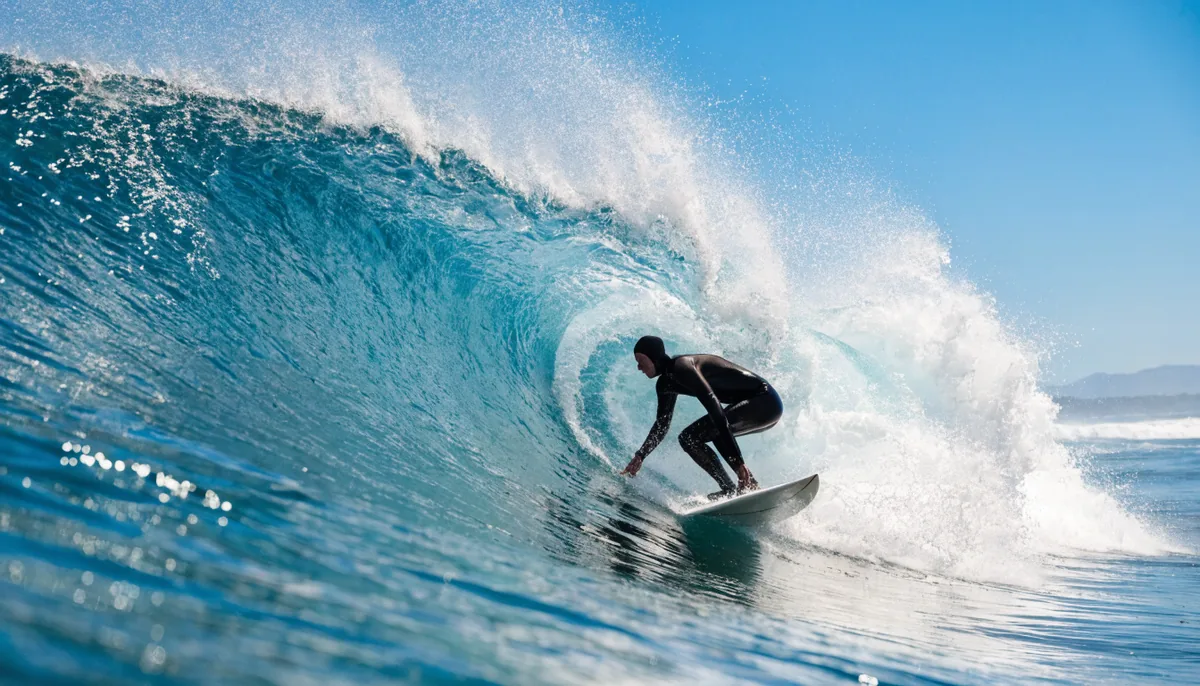
If you learned to surf anywhere in Britain, chances are it was in Cornwall. The county's north coast sticks out into the Atlantic like a catcher's mitt, hoovering up swell that has travelled thousands of miles, and its mix of wide sandy beaches and sheltered coves means there's nearly always somewhere working. This is our run-through of the spots that best sum up what Cornish surfing has to offer.
Why surf in Cornwall?
Cornwall is the beating heart of UK surfing, and for good reason. The north coast, from Bude down to Land's End, faces the full force of the North Atlantic. Low-pressure systems spinning up near Iceland and Newfoundland send groundswell marching across the ocean, and Cornwall's beaches are the first thing it hits after all those open miles.
What makes the county special is variety. A short drive can take you from an exposed, powerful beach break to a tucked-away cove that only works on the biggest days. When one beach is blown out or too big, the coastline's twists and headlands mean another is nearly always cleaner. Add a string of proper surf towns, decades of surf culture and more surf schools than anywhere else in Britain, and it's easy to see why so many people take their first waves here.
The swell and the conditions
Cornwall picks up swell almost year-round. Autumn and winter bring the most consistent groundswell, with periods that can push past 14 seconds, while summer is quieter and more suited to learning. The prevailing wind is south-westerly, which is onshore on the north coast, so the magic word is offshore: an easterly or south-easterly wind grooms the waves clean, and dawn is often the calmest, glassiest part of the day.
Tides matter more here than many beginners expect. The tidal range is large, and a beach that's playful at mid-tide can close out or drain dry a couple of hours later. Always check a tide table before you go, and ask in the local surf shop which state of tide the spot prefers.
The best season (September to November)
If you can only pick one window, aim for autumn. The Atlantic depressions start to wind up, delivering regular swell, the sea is still around 15-16°C after the summer, and the crowds thin out the moment the school holidays end. That combination is hard to beat: waves, offshore mornings and beaches you can share with a handful of people rather than a few hundred.
The essential Cornish surf spots
Here are the beaches we'd point any visiting surfer towards. Each has its own character, its own ideal conditions and its own crowd, and every one has a full destination guide on Matosurf if you want to dig deeper.
1. Fistral, Newquay
Fistral is the closest thing Britain has to a signature surf beach. This west-facing bowl on the edge of Newquay catches swell others miss and hosts national and international contests through the year.
Wave type: Powerful, exposed beach break with several peaks. The Cribbar reef off the northern headland handles genuine big-wave days.
Level: Intermediate to advanced on a decent swell. Beginners fine on a small, clean day.
Best conditions: West to south-west swell, with an easterly (offshore) wind.
Local tip: It gets busy and the rips firm up as the surf grows. Park early in summer and never underestimate the pull between the peaks.
Read our Newquay & Fistral guide arrow_forward2. Watergate Bay
Just north of Newquay, Watergate Bay is a two-mile sweep of sand backed by cliffs. All that room spreads the crowd out and gives you the space to find your own peak.
Wave type: Long, consistent beach break. The waves are a touch friendlier than Fistral's, with plenty of rideable walls at the right tide.
Level: All levels depending on the section and the size.
Best conditions: West to north-west swell, offshore in an easterly. Works best from low to mid tide.
Local tip: With so much beach, walk away from the central access to find quieter, cleaner peaks on a busy day.
Read our Watergate Bay guide arrow_forward3. Perranporth
Perranporth is three miles of golden sand and one of the most welcoming learner beaches in the county. The gently shelving bottom and forgiving waves make it a brilliant place to find your feet.
Wave type: Mellow, sandy beach break. Softer and more spread out than the Newquay beaches, with long, rolling walls when it's on.
Level: Beginner to intermediate. An excellent progression beach.
Best conditions: West to north-west swell, offshore in an easterly. Kinder around mid tide.
Local tip: Watch the tide carefully. The beach nearly disappears at high water and it's a long walk back if you drift down the strand.
Read our Perranporth guide arrow_forward4. Polzeath
Over on the softer side of the Camel Estuary, Polzeath is a wide, sheltered bay that has been introducing families to surfing for generations. It's one of the safest beginner beaches in Cornwall.
Wave type: Gentle beach break in a protected bay. Waves are smaller and more forgiving than the fully exposed beaches, ideal for learning.
Level: Beginner-friendly. Confident surfers should time a bigger swell.
Best conditions: West to north-west swell, offshore in a south-easterly. Best from mid to high tide.
Local tip: The bay picks up less size than New Polzeath's neighbours, so on a small day it can be flatter here while nearby beaches are working.
Read our Polzeath guide arrow_forward5. Sennen Cove
The last beach before Land's End, Sennen Cove sits at the far west of Cornwall and faces the open Atlantic. It's exposed, beautiful and picks up more swell than almost anywhere else in the county.
Wave type: Powerful, high-quality beach break over sand, with reef and rock at the edges of the bay. It can hold real size.
Level: Intermediate to advanced on a swell. Beginners possible on small, tidy days near the village end.
Best conditions: West to north-west swell, offshore in an easterly. It works when everywhere else is flat.
Local tip: Because it's so exposed, Sennen is often bigger than the forecast suggests. Check the size honestly before paddling out.
Read our Sennen Cove guide arrow_forwardMore Cornish beaches worth knowing
The five above are the pillars, but Cornwall is stacked with surf. A few more names to file away as you explore:
- Gwithian and Godrevy – a huge, sandy stretch in St Ives Bay that's friendly for learners on the inside and picks up plenty of swell on the outside.
- Porthtowan and Chapel Porth – punchy, less crowded beach breaks between St Agnes and Portreath, best at lower tides.
- Constantine Bay and Harlyn – a north-facing and a sheltered option near Padstow, so one of them is usually clean whatever the wind.
- Praa Sands – a rare south-coast beach break that fires when a big swell wraps round Land's End and the north coast is stormy.
- Gwenver – Sennen's wilder neighbour, more swell-magnet still and reached by a walk down the cliff path.
Ability and safety in Cornwall
Cornwall's beaches are beautiful but the Atlantic demands respect. Conditions change quickly, the water is cold for much of the year and rip currents are the number-one hazard.
The wetsuit: From November to May a 5/4mm suit with boots, gloves and often a hood is the minimum, as the sea drops to around 8-9°C in late winter. From June to October a 3/2mm does the job, with the water reaching about 16-17°C by late summer. A suit that floods in Cornwall ends your session in minutes.
Rip currents: Rips are present on every Cornish beach break, and they're the single biggest cause of rescues. Learn to spot them – a channel of calmer, often darker water cutting out through the breaking waves – and use them to your advantage rather than fighting back against the current. If you're caught, don't panic – stay on your board, raise a hand and let it carry you out before paddling across and back in.
The flags: On a lifeguarded beach, boards belong in the black-and-white chequered zone, and the red and yellow flags mark the swimmers-only bathing area – stay out of it. If a beach flies the red flag, don't go in. In an emergency, dial 999 and ask for the Coastguard.
The tides and rocks: The tidal range is big, and many spots have reef or rock at the edges. Get to know a beach at low water before you surf it at high, and always leave yourself an exit.
Clean water: After heavy rain, storm overflows can affect water quality. The Surfers Against Sewage Safer Seas & Rivers Service app flags pollution alerts in real time – worth a quick check before you paddle out.
Before every Cornish session: check the tide table, read the swell and wind forecast, pick a lifeguarded beach if you can, and be honest about whether the size suits your ability.
Kitting yourself out first? Read our surf guides for advice on boards, wetsuits and your first sessions, and browse the full range of UK surf destinations for spots beyond Cornwall.