

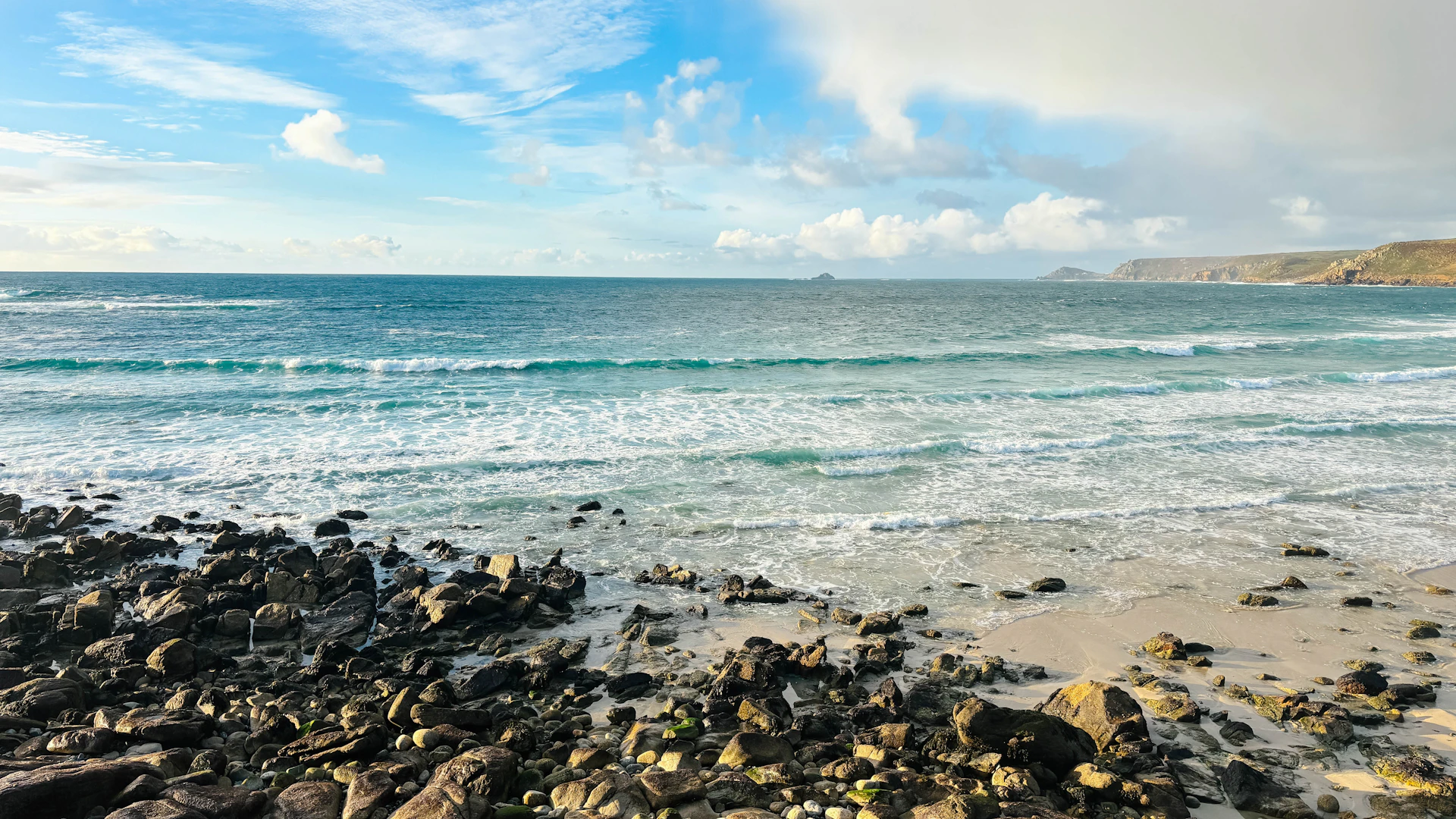
The last beach before Land's End, and one of the most consistent swell magnets in the UK.

An exposed, west-facing beach break sitting out on the far tip of Cornwall. Its position near Land's End means it picks up Atlantic swell when almost everywhere else is flat, and it works right through the year.
Surf guides arrow_forward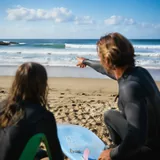
Sennen has long-running surf schools right on the beach, and smaller summer swells make it a friendly place to find your feet. Book a lesson, hire a board and start in the whitewater.
Learn to surf arrow_forward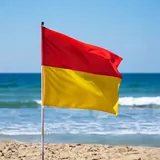
RNLI lifeguards patrol from Easter until early November. Surf between the black-and-white flags, watch for powerful rip currents on bigger swells and check the flags before you paddle out.
Surf safety arrow_forwardOne main beach break with shifting peaks, plus a more exposed neighbour just up the sands.
Sennen Beach is a beach break with multiple peaks that shift with the sandbanks, and the best of it is usually found in the middle or towards the southern end. Tide makes a real difference – low tide gives a more pitching, peely wave, while the push of high tide fattens things up and stretches the rides out. The ideal offshore wind blows from the east or north-east at around 10 knots (11.5 mph), grooming a clean face, and the spot loves a west swell rolling straight in off the Atlantic.
View on Google Maps open_in_newAt the northern end of Sennen, Gwynver Beach sits more open to the dominant swell direction and typically runs a touch bigger, often around 1 to 1.5 feet larger than the waves at Sennen Beach. You can reach it at low tide by walking along the sands from Sennen Cove. The extra size is worth the walk on days when Sennen itself feels a size too small.
View on Google Maps open_in_newTwo well-established schools on the beach, plus board and wetsuit hire for visiting surfers.
Sennen Surfing Centre sits directly on Sennen Beach and is one of the longest-running surf schools in the UK, offering both group and private lessons. Nearby, Smart Surf School is an award-winning, family-run outfit that keeps its ratios low, with a maximum of six students to one or two instructors. Either way, expect to start on the sand with safety and the pop-up before you take a soft-top into the whitewater. Our learn to surf guide covers the rest.
The schools on the beach also hire out boards and wetsuits, handy if you're travelling light or want to ride something new for a day before committing to it. For buying rather than borrowing, our surf gear guide is the place to start.
The water off Sennen peaks at around 15 to 19°C in August and bottoms out at roughly 8 to 10°C in February. Through summer a 2mm shortie or a 3/2mm keeps you comfortable, autumn calls for a 4/3mm, and in the depths of winter it's a 5/4mm with hood, gloves and boots. Get the rubber right and Sennen goes all year.
A working fishing cove at the very end of Cornwall, with coast path walks on the doorstep.
Sennen Cove is a small, working fishing village tucked in beside the beach, complete with its own RNLI lifeboat station housing a Tamar class all-weather lifeboat and a D class inshore boat. It's a low-key, scenic base – car parks right by the sand and another at the top of the hill, with everything you need for a session close to hand.
When the surf drops or the wind swings onshore, the South West Coast Path runs straight past towards Land's End in one direction and along the wild cliffs to Gwynver and beyond in the other. With Land's End itself a couple of miles away, a flat spell is easily filled.
Right out on the far-west tip of Cornwall, but easier to reach than its remoteness suggests.
The nearest station is Penzance, around 8 miles from Sennen Cove on the main London to Penzance line. From there it's a short taxi or bus ride out to the coast, though a board bag makes that final leg hard work unless you're hiring at the other end.
The Land's End Coaster bus service links Penzance with Land's End and stops at Sennen Cove, a scenic and low-cost way to reach the beach without a car.
Most surfers drive. Sennen has several car parks, one directly beside the beach and another at the top of the hill, so you can get close to the sand. In peak season the lower one goes early.
Sennen catches something most weeks of the year, but the character of a session shifts with the season.
For many, autumn is the best time at Sennen. Atlantic groundswell rolls in more often, the summer crowds have thinned and the water is still relatively mild after the summer. A 4/3mm sees you through most sessions, and the far-west exposure means Sennen fires when other spots are struggling.
Summer brings the warmest water, at around 15 to 19°C, RNLI lifeguards on the beach and smaller, friendlier waves – the pick of the year for a first lesson or a family session. It's also the busiest, so surf early or late and keep clear of the bathing zone.
Winter brings the biggest, most powerful surf, and the cold to go with it. The water drops to around 8 to 10°C, so a 5/4mm wetsuit with boots, gloves and a hood is essential. You'll have the lineup more or less to yourself, but the waves are heavier and the rips stronger, so be honest about your limits and read the forecast first. Our gear guide covers choosing a winter wetsuit.
The questions surfers most often ask before a trip to Cornwall's far west.
Autumn (September to November) is often the pick, with water still relatively mild and Atlantic swells becoming more consistent. That said, Sennen works all year, and winter brings the largest swells for experienced surfers.
Yes, especially through summer when swells are smaller and more manageable. Local surf schools run lessons for all abilities. Always surf inside the RNLI-lifeguarded area, keeping to the black-and-white chequered flags that mark the zone for boards. Our learn to surf guide explains how a first session runs.
Yes. RNLI lifeguards patrol Sennen Cove from Easter until early November, between 10:00 and 18:00. Swim between the red and yellow flags, and keep to the black-and-white chequered flags if you're on a board. In a maritime emergency, dial 999 and ask for the Coastguard.
The main hazard is powerful rip currents, particularly on stronger swells. Watch for rocks at high tide and respect the beach flags. If you're caught in a rip, float and signal for help rather than swimming against it.
It depends on the season. In summer a 2mm shortie may do, when the water reaches 15 to 19°C. In spring and autumn a 3/2mm or 4/3mm is the norm. In winter, when the sea drops to around 8 to 10°C, a 5/4mm with hood, gloves and boots is essential. Browse the rest on our UK destinations hub.
See how Sennen Cove compares to the rest of the region in our Cornwall & Devon surf guide.