📍 Wisconsin, United States
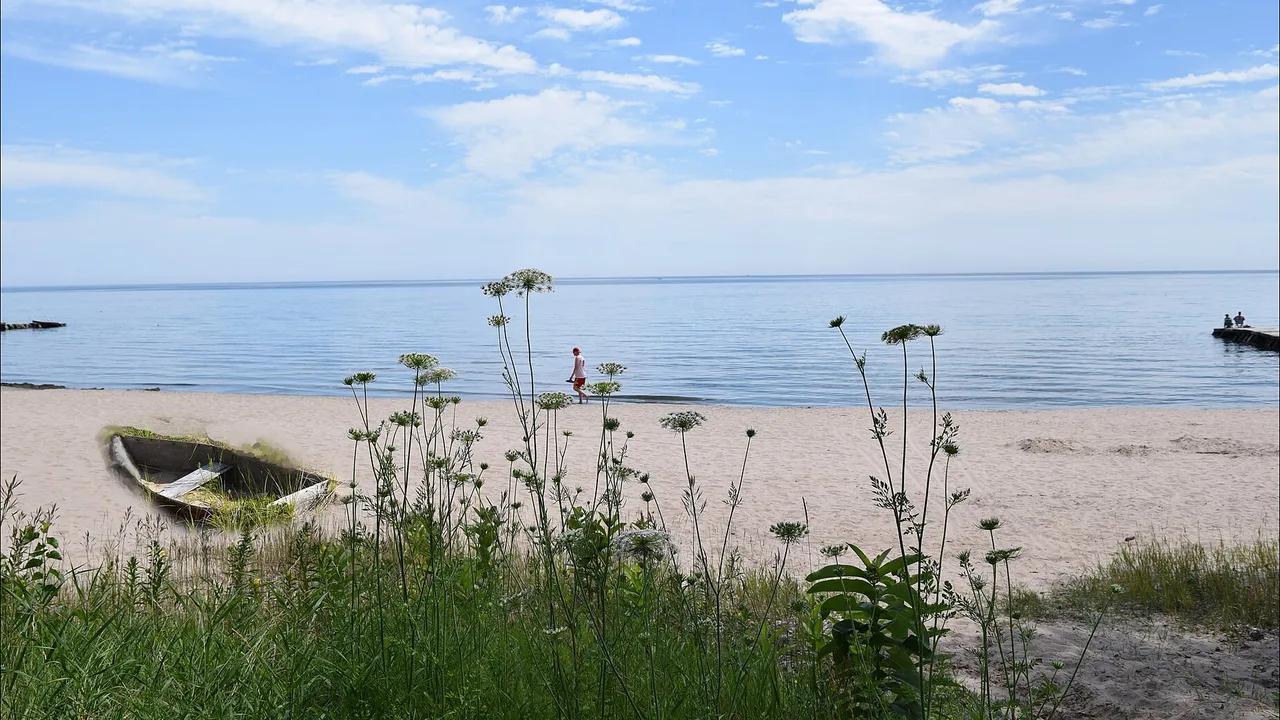
A scenic shot, not an action photo — no suitably licensed photograph of anyone surfing in Sheboygan was available on Wikimedia Commons. Photo: Djngsf / Wikimedia Commons, CC BY-SA 4.0
One coastline backed by 15,074 documented lakes — search interest varies, but both are worth the trip.
Wisconsin's kite and windsurf search volume sits at the noise floor — 0-10 searches a month, state-wide. That is not this state's story. Its story is Sheboygan, a single Lake Michigan town whose surf terms ("surfing sheboygan," "sheboygan surfing," "sheboygan surf") measure 1,300 searches a month each — the single largest state-level search signal found anywhere in this site's Great Lakes research — and its own real, separately-measured nickname, "Malibu of the Midwest" (590/mo). Real journalism, not internet folklore: Chicago Magazine, Wisconsin Public Radio, Travel + Leisure and Milwaukee Magazine have all used that phrase for Sheboygan, several tracing it to local surfer Larry "Longboard" Williams and the state's own long-running (1988-2012) Dairyland Surf Classic.
Wisconsin's second story is smaller but real: the state has 15,074 documented lakes, per the Wisconsin DNR's own count — and a current stand-up-paddleboard rental scene spread across at least six of them, named below with the actual outfitters we could verify. Search demand for "paddle boarding wisconsin" and similar terms is thin (10-70/mo per lake), which says more about how few people type a state name into a paddleboard search than about how few of these lakes are worth paddling. We built this half of the page at the same depth as the Sheboygan half for exactly that reason.
The "Malibu of the Midwest" is a documented freshwater surf scene at Deland Park/North Beach and the harbor breakwaters, and it works on both north and south storm winds off Lake Michigan.
Sheboygan surf in detail arrow_forward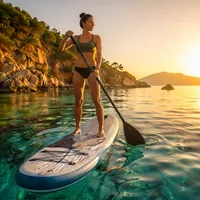
Geneva Lake, Madison's Mendota and Monona, Lake Winnebago, Devil's Lake State Park, Door County's bays and the Wisconsin Dells are six established outfitter clusters for stand-up paddleboarding.
The inland lakes arrow_forward
A stand-up paddleboard doesn't need registering in Wisconsin, but it is legally a "boat" and the state's under-13 life-jacket rule varies depending on which of this page's two halves you're paddling on.
Vessel status and PFDs arrow_forwardMultiple independent outlets corroborate this — not merely a blog claim — and one clear absence emerged: no city ordinance specific to surfing was found.
Lake Michigan has no tide, so Sheboygan's surf behaves differently from an ocean break. What supplies the waves is wind and fetch. Sheboygan's shoreline projects into the lake far enough to pick up strong winds from both the north and the south, and, per multiple outlets covering the town's surf scene, it is unusual among Great Lakes breaks in working on either direction. A prolonged north or south blow builds wind-driven swell across the open lake; that swell refracts and steepens around Sheboygan's harbor breakwaters and the beaches beside them. The best, biggest surf is a cold-season phenomenon: outlets covering the scene consistently describe late summer through winter, not high summer, as the real season, with reported wave heights up to around 8 feet in winter conditions.
The actual surf zone, named consistently across independent sources (Milwaukee Magazine, Travel + Leisure, a University of Wisconsin journalism-program feature): Deland Park and North Beach, in the center of town, and the harbor breakwaters that flank them. The town has a real, current surf shop — EOS Surf, described by Wisconsin Public Radio as the state's first — and a documented surf history: the Dairyland Surf Classic ran annually from 1988 to 2012 as, per that same coverage, the largest freshwater surfing competition in the world, and the book Some Like It Cold: Surfing the Malibu of the Midwest (Wisconsin Historical Society Press) tells that history through twin surfers Larry and Lee Williams.
"Malibu of the Midwest" is real, published usage — not forum folklore. Chicago Magazine, Wisconsin Public Radio, Travel + Leisure, Milwaukee Magazine and Spectrum News 1 Wisconsin have all used the nickname in published pieces, several tying it directly to the town's surf scene. It also has its own separately-measured search volume (590/mo) and a trend curve that does not match "sheboygan surfing"'s — a distinct signal, not the same search counted twice.
Water temperature follows the lake's seasonal cycle rather than any tide: in winter it's cold enough that thick wetsuits, boots, gloves and a hood are standard among the surfers described in local reporting, and by late summer the water warms into a range that suits a much thinner suit. Our wetsuit thickness guide turns a water-temperature reading into a suit recommendation for the day you plan to go.
No City of Sheboygan ordinance specific to surfing, surfboards or wetsuits was found — a genuine absence, not a ban and not a permission. NOAA maintains a coastal weather station at Sheboygan, C-MAN station SGNW3 (43.749°N, 87.693°W), which reports live wind and water temperature; NDBC's own listing shows it also carries a wave-height field, though the reading is frequently unavailable, so treat it as more reliable for corroborating the wind pattern above than for confirming wave height on any given day.
That's the Wisconsin DNR's count from its "Wisconsin Lakes" publication, together with the six currently operating outfitters we could verify.
The Wisconsin DNR's own count, from its "Wisconsin Lakes" publication: "Of the 15,074 documented lakes in Wisconsin, only about 40 percent have actually been named." The DNR's own current topic page restates it more roundly — "It's easy to fall in love with Wisconsin's 15,000 lakes" — same source, same fact, not a contradiction. Most of those lakes sit in the glaciated northern and eastern two-thirds of the state; the unglaciated "Driftless Area" in the southwest has comparatively few. That's the real substance behind "Wisconsin has thousands of lakes" — a specific, DNR-sourced number, not a round guess.
Search demand for paddleboarding on any single named Wisconsin lake is thin — 10 to 70 searches a month, the strongest being Geneva Lake at 70/mo. That's a reason to be specific rather than a reason to skip the topic: here are six real, currently-operating outfitter clusters, not a generic "rent a SUP somewhere in Wisconsin" gesture.
| Lake / area | Verified SUP outfitter(s) | Notes |
|---|---|---|
| Geneva Lake (Walworth County) | Clear Water Outdoor, Fontana Paddle Company, Gordy's Marine | The strongest measured lake-specific SUP search term (70/mo); Walworth County holds 44 named inland lakes per the county's own natural-resources report. |
| Lake Mendota & Lake Monona (Madison) | Marshall Boats (Mendota), Brittingham Boats (Monona), Outdoor UW at Memorial Union (Mendota) | Part of the city's own public boat-livery system; Brittingham Boats also runs a Thursday-night SUP race series in summer. |
| Lake Winnebago | Wind Power Watersports / Wind Power Surf Shop (Fond du Lac) | Wisconsin's largest lake at 137,708 acres, per the DNR's own publication. A second, nearby Oshkosh rental company explicitly does not serve Winnebago itself, only the connected Fox River — worth knowing before you drive there expecting it. |
| Devil's Lake State Park (Baraboo) | Devil's Lake Concession Company, on-site at both shore buildings | The one entry here the DNR's own state-park rental listings independently name. |
| Door County (Lake Michigan bays) | Bay Shore Outfitters (Sister Bay), Peninsula Kayak Company (four locations), Gravity Trails (Egg Harbor/Baileys Harbor) | Sheltered bay paddling on Lake Michigan's Door Peninsula shore, a different character from Sheboygan's open-lake surf further south. |
| Wisconsin Dells area | Dells Watersports (Lake Delton), Mirror Lake Boat Rentals (Mirror Lake State Park) | Two separate small lakes in the same tourist corridor, each with its own on-site rental operator. |
Each outfitter named above comes from either the business's own description or a tourism-board listing — current at the time of this research but not an independently audited government record. Treat that as COMMERCIAL-tier confirmation, not statute. The one exception is Devil's Lake, which the Wisconsin DNR's own state-park rental page independently names among the parks offering SUP rental.
There is also an organized SUP-racing scene: Madison's Brittingham Boats runs a summer race series on Lake Monona, and a regional Midwest Paddle League includes a long-running Wisconsin stop at Oconomowoc's Fowler Lake. Our paddle board size guide and SUP paddle length calculator both work the same on a Wisconsin lake as anywhere else — the physics of matching a board and paddle to your height and weight don't change with the water.
Wisconsin Statutes Chapter 30, §§ 30.50, 30.51, 30.62, plus the federal/state PFD split that affects requirements.
Wisconsin's statutory definition of "boat" or "vessel" (§ 30.50(9d)) is "every description of watercraft used or capable of being used as a means of transportation on water, except a seaplane on the water and a fishing raft" — broad enough that a stand-up paddleboard qualifies as a "boat" under Wisconsin law, the same way it does under most states' definitions in this guide, though seaplanes and fishing rafts are carved out by name. That might suggest registration is required, but § 30.51(2)(a)1 exempts "a nonmotorized boat which is not a sailboat" from both the certificate-of-number and registration requirements. A human-powered SUP, kayak or canoe falls under that exemption and does not need registration. Add any motor, including an electric trolling motor, and the exemption no longer applies.
On life jackets, § 30.62(3)(a) imposes a carry requirement for ordinary paddlecraft rather than a wear mandate: "every boat... shall carry at least one personal flotation device... for each person on board... so placed as to be readily accessible." Personal watercraft (jet skis) are treated differently — that same section's separate clause requires everyone aboard to wear a PFD.
The under-13 wear rule genuinely splits by which half of this page you're on. Wisconsin's own DNR "Life Jackets" page and its boater-safety course material both state the same thing: "Federal law requires children under the age of 13 to wear a USCG-approved life jacket while underway in an open vessel on federally controlled waters," and separately, for everywhere else, "it is strongly recommended that children also wear PFDs while on state waters." Wisconsin does not create its own under-13 wear mandate — it defers to the federal rule on federally controlled waters (Lake Michigan at Sheboygan qualifies) and only recommends PFD use on the state's inland lakes. Don't assume the rule is identical on both halves of this page: it is required at Sheboygan and merely recommended at Geneva Lake or Devil's Lake.
Kiteboarding and windsurfing aren't called out separately in this chapter's PFD or registration language; they fall under the same paddlecraft/boat rules described above. If you have an emergency anywhere in Wisconsin, call 911, or on Lake Michigan contact the Coast Guard on VHF 16. The federal flotation baseline that governs federal waters, which Wisconsin points to, is summarized on our United States guide.
The Wisconsin DNR's "Wisconsin Lakes" publication lists 15,074 documented lakes; only about 40% of them are named. The DNR's current website rounds that to "Wisconsin's 15,000 lakes," which reflects the same source rather than a different count.
It's real, published usage: Chicago Magazine, Wisconsin Public Radio, Travel + Leisure, Milwaukee Magazine and Spectrum News 1 Wisconsin have all used the nickname in actual reporting, several tracing it to local surfer Larry Williams and the town's own Dairyland Surf Classic, held annually from 1988 to 2012. It also has its own real, measured search volume (590/mo), distinct from Sheboygan's surf-specific search terms.
No — if it's human-powered. Wisconsin Statute § 30.51(2)(a)1 exempts any "nonmotorized boat which is not a sailboat" from registration, so a SUP, kayak or canoe qualifies. Adding a motor removes that exemption.
It depends on the water. Wisconsin follows the federal rule requiring children under 13 to wear a life jacket "while underway in an open vessel on federally controlled waters" — which covers Lake Michigan at Sheboygan. On the state's inland lakes (Geneva Lake, Devil's Lake, the Madison lakes and the rest), the same wear is only "strongly recommended," not required, by the state's own guidance.
At least six bodies of water have currently operating outfitters. Geneva Lake (Clear Water Outdoor, Fontana Paddle Company, Gordy's Marine); Madison's Lake Mendota and Lake Monona (Marshall Boats, Brittingham Boats, Outdoor UW); Lake Winnebago (Wind Power Watersports); Devil's Lake State Park (the park's own concession); Door County's bays (Bay Shore Outfitters and others); and the Wisconsin Dells area (Dells Watersports, Mirror Lake Boat Rentals).
Wisconsin is one of the four Great Lakes states covered on this site.
Nearby, Michigan's Grand Haven and South Haven sit on the "Third Coast," where a real city ordinance keeps surfing and kiteboarding open during dangerous-wave beach closures. Indiana's Indiana Dunes National Park coast has the thinnest-measured page in this series but hosts a real, decades-old freshwater surf community. Illinois's Chicago lakefront includes Montrose Beach, this coast's one genuinely documented kite spot.