
📍 Louisiana, United States
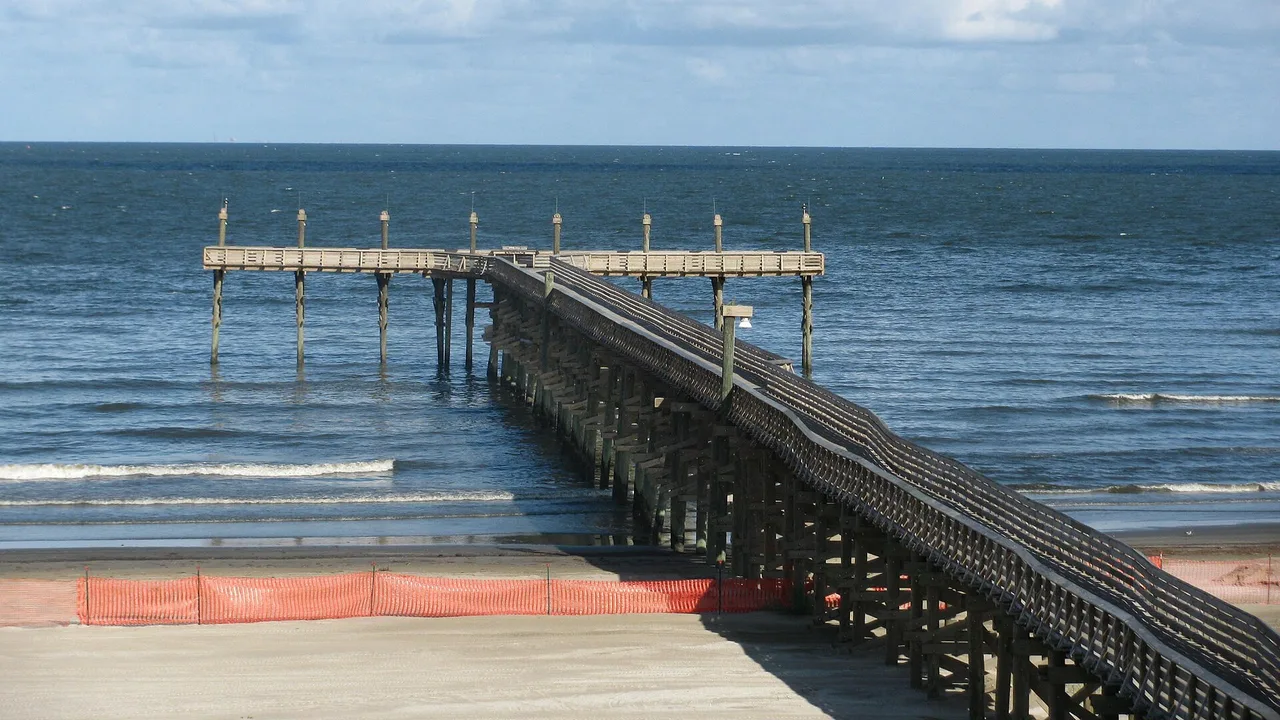
Photo: Rebecca Milby / Wikimedia Commons, CC BY 2.0
Not every US coastline is a water-sports destination; Louisiana is the clearest test case in this series.
Most of Louisiana's coast is river delta, tidal marsh and barrier-island wetland — there is no open Atlantic-style surf beach running for miles the way South Carolina's or Georgia's coasts do. Search demand reflects that — measured demand for "surfing Louisiana" runs at about 110 searches a month, "kiteboarding Louisiana" at about 10, and kitesurfing, windsurfing, paddleboarding and stand-up paddling in Louisiana all measure at zero. Even the surf figure — the strongest activity-specific number we found anywhere on this coast — is thinner than every other state in this guide, including Georgia's already-modest numbers.
There is still some activity. Two places carry the whole state's water-recreation story — Grand Isle, Louisiana's only inhabited barrier island and its one state-owned Gulf beach, which has a real, named surfboard-rental and lesson business plus a paddleboard outfitter — and Holly Beach, a small, storm-battered Cameron Parish community nicknamed the "Cajun Riviera," documented by surf media as an uncrowded, low-key surf spot. Neither is a kiteboarding or windsurfing destination on the evidence we could find. This page says so plainly rather than dressing up a fishing-and-paddling coast as something it isn't.
The state's one developed Gulf beach features a real fishing pier, and the piece names surf and paddleboard rental businesses — kiteboarding gets a mention, but no named operator.
Grand Isle in detail arrow_forward
The "Cajun Riviera" is a small, repeatedly storm-hit Cameron Parish town with an uncrowded, low-key surf spot that is best in September.
Holly Beach in detail arrow_forward
Louisiana's own definitions of "vessel" and "watercraft" are broader than South Carolina's and, unlike SC's, don't exclude surfboards or paddleboards.
The PFD law arrow_forwardNOAA NDBC Station GISL1, Grand Isle, Louisiana — view the station's readings directly and note what it does not measure.
Station GISL1 sits at Grand Isle itself, 29.265°N 89.958°W, run by NOAA's National Ocean Service Water Level Observation Network. The station provides wind speed, gust and direction, air temperature, water temperature, barometric pressure and tide, updated continuously. NDBC's own data table for the station also lists wave-height, dominant-period, average-period and mean-wave-direction columns alongside those readings, so a swell reading is technically part of this station's output — we did not verify how consistently it actually reports one. Either way, it's consistent with a coast sheltered by a wide, shallow continental shelf and a chain of barrier islands rather than one exposed to open-ocean groundswell, the same pattern this page's other sources point to.
We did not pull a verified multi-year climate dataset from this station this session — that would require more work than this coast's data justify, and we prefer to be clear rather than publish a table that looks more precise than our research actually was. What's well established generally about the northern Gulf applies here: Atlantic hurricane season runs June through November, peaking August-October, and water stays warm most of the year with cold fronts capable of dropping temperatures sharply for a few days in winter. Our wetsuit thickness guide can convert an actual water-temperature reading into a suit recommendation once you have one.
Jefferson Parish's tourism pages and Grand Isle State Park's manager were consulted and quoted directly.
Grand Isle is Louisiana's only inhabited barrier island and the site of the state's one state-owned-and-operated Gulf beach, inside Grand Isle State Park at the island's eastern tip. The park's own manager, Jerome Holmes, told Louisiana Sportsman in February 2026: "Grand Isle State Park offers a variety of recreational activities, including beach access, surfing, shrimping, kayaking and swimming in the Gulf." Read the rest of that same article and the emphasis is fishing and crabbing throughout — surfing is one activity named among several, not the park's identity.
Visit Jefferson Parish's own community page for Grand Isle — the parish's official tourism site — is more specific about water sports than the park itself, in its "Water Sports" section, verbatim: "Try kayaking, skateboarding, and even surfing. You can rent a surfboard and take lessons from Pontcha Surf Club. Go paddleboarding with Calypso Paddle Company. Like extreme sports? Try kiteboarding. ... Rent skimboards, bicycles, floaties, and more from Island Adventure Rentals." That's a real, named surf-rental-and-lesson business and a real, named paddleboard outfitter — genuinely more documented than kiteboarding, which gets one line and no named operator on the same page.
The pier's own length is given two different ways. Visit Jefferson Parish's page, read directly, gives Grand Isle State Park's public fishing pier as "400-foot long." A separate figure of "900 feet" for the same pier surfaced via other tourism and aggregator sources we did not read directly. We're reporting both rather than picking one, the same approach this guide took with Folly Beach's swimming-zone boundary on our South Carolina page.
Grand Isle's town ordinance (No. 1003, adopted 2022-05-25, read directly from the Grand Isle Police Department's site) is worth knowing before you drive down expecting beach access by car. It governs golf-cart/UTV use rather than general vehicle access: riders must be 16 or older, purchase an annual tag ($75-150), keep to 10 mph, use official levee crossings, and operate only from 30 minutes before sunrise to 30 minutes after sunset. Ordinary vehicles are barred from the beach south of the Hurricane Protection Levee outright, except for police, emergency and pre-approved use. We found no separate Grand Isle or Cameron Parish ordinance addressing surfing, kiteboarding or paddling access specifically — a real absence, not one we're filling in.
Grand Isle's barrier-island terrain shows in ongoing erosion: the US Army Corps of Engineers has run beach-nourishment projects there, according to a federal environmental statement surfaced during this research (not independently re-verified this session). The orange construction fencing visible in this page's hero photo is consistent with that kind of work, though the photo alone doesn't reveal which project or when.
Cameron Parish's small, storm-hit surf town — information drawn from Wikipedia's sourced history and surf-media coverage; we could not locate a parish government page.
Holly Beach, an unincorporated Cameron Parish community about 10 miles west of Cameron and roughly 27 road miles (around a 40-minute drive) from the Texas border, is nicknamed the "Cajun Riviera." The community has been devastated by hurricanes more than once — a 12-foot storm surge from Hurricane Audrey in 1957, a 10-15-foot surge from Hurricane Rita in 2005, reflooding from Hurricanes Gustav and Ike in 2008, and another hit from Hurricane Laura in 2020. Its beachfront homes, known locally as "camps," have long been deliberately "built-to-be-rebuilt" by residents who know the next storm is a matter of when, not if.
Surf-media coverage describes Holly Beach as an uncrowded surf spot with small, storm-season waves generally suitable for average-level surfers, best in September when the Gulf is most active. We found no evidence of an organized kiteboarding or windsurfing scene there, and no Cameron Parish ordinance specifically addressing watersports access at Holly Beach — again, a genuine absence rather than a rule we're inferring.
If you're weighing Holly Beach against Grand Isle: Grand Isle is the more developed of the two, with a state park, a campground and named rental businesses. Holly Beach is smaller, more storm-scarred, and known mainly for uncrowded surf and crabbing rather than any organized water-sports economy.
See Louisiana Revised Statutes §§ 34:851.2, 34:851.24 and 34:855.3 at legis.la.gov.
Louisiana's core definitions, at R.S. 34:851.2, are broader than they initially appear. A "vessel" is "watercraft ... used or capable of being used as a means of transportation on water," and "watercraft" is "any contrivance used or designated for navigation on water." Unlike South Carolina's statute, which explicitly excludes "surfboards" and "windsurfers" from its own definition of watercraft, Louisiana's definitions name no such exclusion — surfboards, paddleboards and kiteboards simply aren't mentioned, one way or the other.
That distinction matters for R.S. 34:851.24(F), the equipment-and-PFD rule. Every "motorboat or vessel" must carry at least one wearable PFD per person aboard, readily accessible — a carriage requirement that, given the statute's broad language, could cover a canoe, kayak or paddleboard. A separate clause requires every person 16 or younger aboard a "Class A or Class 1 motorboat or vessel" (Class A being under 16 feet — a size bracket that would include a paddleboard or small surfboard) to actually wear a PFD while underway. Whether that wear mandate reaches a minor on a paddleboard or surfboard is an open question on this text, not something we're resolving here: the definitions don't exclude it, but the clause's own wording ("such outboard motorboat or vessel") points toward powered craft.
LDWF's own boating-regulations page complicates the picture further. Its Intoxication rule bars operating "any motorboat or vessel" and, separately, manipulating "any waterski, surfboard, or similar device" while intoxicated — treating "surfboard" as its own category, not folded into "vessel." So the state's drafting in at least this one place cuts against the broader statutory wording above. We're presenting both authorities, unresolved, rather than choosing the version that makes the cleanest copy.
Personal watercraft (jet skis) are covered more clearly by R.S. 34:855.3: every person aboard must wear a USCG-approved Type I, II, III or V PFD, at any age — and no one under 16 may operate one.
For an emergency anywhere on this coast: 911. For boating incidents specifically — a crash, a missing boater, a safety violation — Louisiana Department of Wildlife and Fisheries runs a 24-hour line, read directly from LDWF's own site: 800-442-2511. The federal PFD baseline that fills gaps like the one above across every state is on our United States guide.
Not on the numbers, and not on the sources. Measured search demand for surfing terms in Louisiana is about 110/mo, kiteboarding about 10/mo, and kitesurfing, windsurfing and paddleboarding all measure zero — the thinnest figures anywhere in this guide. Grand Isle has a real, named surfboard-rental business and a paddleboard outfitter; Holly Beach has a genuine but small, storm-season surf spot. Neither is a wind-sports destination.
Grand Isle, per the parish's own tourism page: Pontcha Surf Club rents surfboards and gives lessons, and Calypso Paddle Company runs paddleboard outings. Kiteboarding is mentioned on the same page without a named operator.
Grand Isle is barrier-island terrain and has documented chronic beach erosion, addressed in the past with federal beach-nourishment work. It's a developed state park with camping and rental businesses, but check storm forecasts and evacuation guidance before travelling during hurricane season (June-November).
Louisiana's statute requires every vessel to carry one PFD per person, and requires anyone 16 or younger to wear one on a "Class A or Class 1 motorboat or vessel" underway — but whether that wear rule reaches a minor on a plain paddleboard or surfboard is unclear from the text, since Louisiana's definitions (unlike South Carolina's) don't explicitly exclude those items. Personal watercraft (jet skis) require a worn PFD for everyone aboard, any age, with no ambiguity.