

📍 Maryland, United States
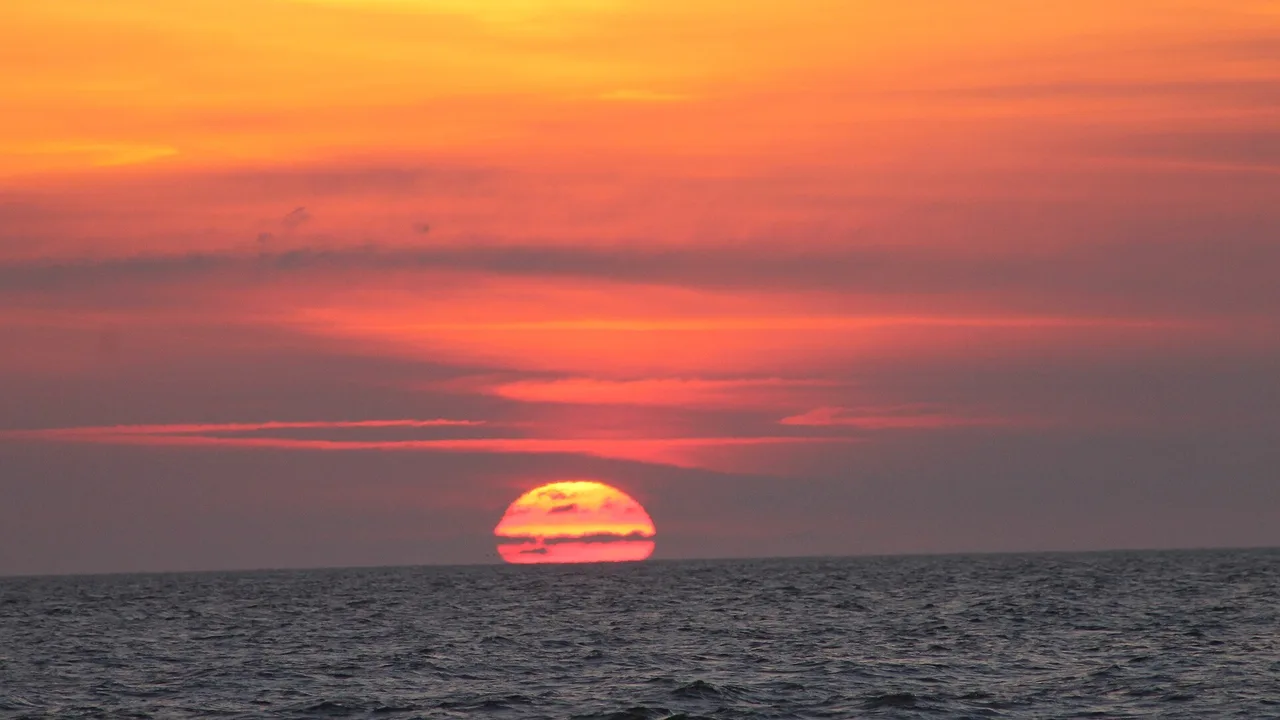
Photo: Robert J Banach / Wikimedia Commons, CC BY-SA 4.0 — a scenic shot, not an action photo: no suitably licensed photograph of anyone surfing or kiteboarding at Ocean City or Assateague could be found on Commons in this pass.
Ocean City's own rotating surf beaches, not a generic East Coast rule borrowed from somewhere else.
Maryland's entire ocean coastline is really just one town and one barrier island: Ocean City, a classic Mid-Atlantic boardwalk resort, and Assateague Island, the undeveloped, wild-horse barrier island immediately to its south. Search demand backs surfing heavily here — "Ocean City Maryland surfing" runs at roughly 480 searches a month against 10-40 a month for every kiteboarding or kitesurfing term we measured for this coast, a double-digit gap on every pairing. This page is built around surfing first, with a real, official section on Assateague's kite-surf rules further down — those rules are genuinely more documented here than the single-operator "kite beach" listings this guide has flagged on some other states, so kiteboarding earns a section, just not the lead.
Ocean City and Assateague run two completely different rulebooks. Ocean City's Beach Patrol manages a rotating system of surf-only beaches with fixed daily hours; Assateague is a federal national seashore whose own Superintendent's Compendium sets out kite-surf zones by season, not a municipal beach ordinance. Know which one you're on.

Two rotating surf-only beaches plus a permanent weekday surf beach at the Inlet, all run to a fixed daily window by the town's own Beach Patrol.
Ocean City's surf beaches arrow_forward
A federal national seashore with its own current Superintendent's Compendium — real, dated kite-surf zones on both the bay side and ocean side, and a hard line at every lifeguarded beach.
Assateague's rules in detail arrow_forward
Maryland's own boating-requirements guide: a carry rule for adult paddlers, a wear mandate for under-13s, and a specific wetsuit-or-harness alternative for sailboards.
The PFD law arrow_forwardNDBC's OCIM2 (Ocean City Inlet) and 44009 (Delaware Bay) — read directly at ndbc.noaa.gov, without a verified multi-year climate pull this session.
NDBC OCIM2, at 38.328°N, 75.091°W, sits inside Ocean City's own inlet — a NOAA National Ocean Service water-level station that also reports wind, air and water temperature and wave height. It's the closest station to the beach, but it's a sheltered inlet reading, not an open-ocean one: expect it to run calmer than the actual surf line. The nearest genuine open-water station is NDBC 44009 ("Delaware Bay"), a 3-meter discus buoy at 38.460°N, 74.692°W, roughly 20 nautical miles north-northeast of the inlet — real offshore wind and wave data, but far enough away, and far enough north, that it's a regional proxy for this coast, not an Ocean City-specific reading.
We did not pull a verified multi-year dataset from either station this session, so we're not stating specific monthly water-temperature or wave-height figures here — that would be inventing precision we don't have. What can be said with confidence, from NOAA's own general seasonal pattern for this stretch of the Mid-Atlantic: winter water runs cold enough that a full wetsuit, boots and a hood are standard, summer water is comfortable in a spring suit or less, and the Atlantic hurricane season (June-November, peaking August-October) is the main source of the long-period swell this coast sees. Our wetsuit thickness guide converts an actual water-temperature reading into a suit recommendation once you have one.
Ocean City's own Beach Patrol "Surf Beaches" page and its "Ocean City Ordinances" page, both read directly at oceancitymd.gov.
Ocean City doesn't ban surfing outside a window the way some East Coast towns do; instead it runs a rotating system of dedicated surf-only beaches, in effect for a fixed daily window during the guarded season. Read directly from the town's own current Beach Patrol page: two rotating surf beaches operate along the main beachfront — one moving south through the town's north half, one moving south through its south half, each shifting two city blocks south from one day to the next on a published schedule — plus a permanent surf-only beach at the Inlet, at the extreme south end of town, open on weekdays only (excluding holidays).
The operative hours, verbatim from the Beach Patrol's own page: the surf beaches are "in effect between 10:00 – 5:30 (Guarding hours)", running "from May 1 to September 30 from the Inlet to 27th Street, and from the Friday of Memorial Day weekend to September 30th for all other beaches in Ocean City." Within that window, on any given day, surfing is confined to whichever two beaches (plus the weekday Inlet beach) are announced for that day — announced daily on local radio and posted at area surf shops, per the town's own pages. Outside guarding hours, or outside the season, the surfing restriction lifts.
The designated surf beaches are for surfing only. The town's own pages are explicit that "no one except surfers on surfboards may be in the water on a designated surfing beach" — bodyboards, paddleboards and swimmers are excluded from the surf zone itself, while a leash is always required: "Always wear a leash."
Ocean City's own Charter gives the town authority to "regulate all activities in the surf and in the ocean, bays and other waterways within the town, including but not necessarily limited to swimming, surfing, boating, fishing, crabbing, clamming, etc." — confirming the town's power to run this system, though we did not read the Charter's full text ourselves this session. We also did not find a numbered Town Code section (the way Folly Beach's or Myrtle Beach's ordinances are numbered on our South Carolina guide) — Ocean City publishes this rule on its own current government pages rather than in a Municode-indexed section, so that's what we've cited here.
Assateague Island National Seashore's current Superintendent's Compendium (approved 03/02/2026) — read directly as a PDF at nps.gov.
South of Ocean City, Assateague Island is a genuinely different place: an undeveloped barrier island, famous for its wild horses, split between a National Park Service seashore (Maryland and Virginia districts) and a Maryland state park. Unlike Ocean City's town ordinances, Assateague's watersports rules come from the National Park Service's own Superintendent's Compendium, issued under 36 CFR — the same kind of document this guide already reads directly for Cape Hatteras and Padre Island rather than assuming a rule from a neighboring park.
Read verbatim from the current compendium's own kite-surfing entry: "Kite Surfing- Authorized at the following locations and during the following times: From October 1 through March 15 — OCEANSIDE: All waters open. BAYSIDE: All waters open. From March 16 through September 30 — BAYSIDE: Open from Verrazano Bridge to 1 mile south of Bayside Peninsula (Bayside Rd Picnic Area). The southern limit of this use area is located approximately 150 yards north of Lumber Marsh Island. OCEANSIDE: Open from the south boundary of Assateague State Park south to the area in the OSV zone known as the 'Bullpen' (@KM 21.5) except for the National Park lifeguard protected beach areas (Memorial Day to Labor Day) and the OSV zone when closed." In plain terms: from October to mid-March, the whole seashore is open to kite surfing on both the ocean and bay sides; from mid-March through September, it narrows to specific stretches, and always excludes the lifeguarded beach area in the summer season.
The lifeguarded zone is off-limits to more than just kites. Per 36 CFR §3.17, from the Friday of Memorial Day weekend through September 30, the following are prohibited inside the lifeguard-protected swimming zones (500 feet out from shore, 300 feet north and south of the protected beach): pets, kites, fires, glass, fishing, boats, surfboards, and "all other flotation devices, except properly worn U.S. Coast Guard-approved personal flotation devices." Separately, the compendium bans flying a kite "above or within 100 meters of any area designated by signs as a 'Closed – Bird Nesting Area', and on all lifeguarded beaches" — a year-round rule on lifeguarded beaches, not just a summer one.
For surfboards, SUPs and non-motorized watercraft outside the lifeguarded zone, the compendium (36 CFR §3.8(a)(2)) allows launching from all Bayside access points and the beach front south of the Assateague State Park boundary to the Virginia state line — again excluding the lifeguarded beach areas. Emergencies anywhere on this coast: 911, or the Coast Guard on VHF channel 16.
Maryland DNR's own "State Requirements for Recreational Vessels" guide, dnr.maryland.gov/boating — read directly.
Maryland's Department of Natural Resources states its paddlecraft rule plainly, in its own current guide: "All paddle craft (except those engaged in the act of surfing) are considered vessels by the U.S. Coast Guard and must follow all general boating rules and regulations, including: All paddle craft must have at least one wearable life jacket of a proper size for each person onboard." That's a carriage requirement for an adult paddler, not a universal wear mandate — and it carves surfing itself out of the "vessel" classification entirely while the board is actually being used to surf, a different shape from South Carolina's exclusion (which removes surfboards from the statutory definition of "watercraft" outright) but a similar practical result.
Children carry a real wear mandate: "All children under the age of 13 must WEAR a U.S. Coast Guard-approved life jacket (Type I, II, III or V) while underway on a recreational vessel under 21 feet in length on Maryland waters," with a child under 4 needing a jacket with a leg strap, inflatable headrest or high collar, and a grab handle. This clause doesn't apply to a moored or anchored vessel, or to a child below deck in an enclosed cabin — neither of which describes a surfboard, SUP or kiteboard.
Sailboards (windsurfers) get their own, specific alternative, stated directly by Maryland DNR: a windsurfer can meet the life-jacket requirement with a neoprene wetsuit or dry suit, a closed-cell foam padded chest/waist/seat harness, or a combination of the two — "Between Oct. 15 and May 15 inclusive, persons on sailboards must wear a neoprene wet or dry suit that covers the entire torso." Kiteboards aren't named in this guide at all, so where a kiteboard sits under Maryland's PFD rule is genuinely unaddressed — don't assume the sailboard alternative extends to it by analogy.
Personal watercraft (jet skis) are a separate, universal-wear case: "Anyone on board a personal watercraft must wear a U.S. Coast Guard approved [life jacket] for personal watercraft use," regardless of age, and no one under 16 may operate one. For the federal PFD baseline that fills gaps like the kiteboard one above across every state, see our United States guide.
Anytime, as long as you're on a designated surf beach during guarding hours (10am-5:30pm, per the town's own Beach Patrol page), from the Friday of Memorial Day weekend through September 30 (May 1 for the Inlet-to-27th-Street stretch). Two rotating beaches plus a permanent weekday beach at the Inlet are announced daily. Outside those hours or that season, the restriction lifts.
Yes, in season-specific zones set by the National Park Service's own current Superintendent's Compendium: the whole seashore (bay and ocean side) is open October 1 through March 15, narrowing from March 16 through September 30 to specific bayside and oceanside stretches that exclude the lifeguarded beach area. Kites are also banned outright on every lifeguarded beach, year-round, and within 100 meters of any posted bird-nesting closure.
Not as an adult surfer — Maryland DNR's own guide excludes anyone "engaged in the act of surfing" from the vessel classification that triggers the PFD rule. Other adult paddlers (kayak, SUP) must carry, not wear, one life jacket per person. Children under 13 must wear one on any vessel under 21 feet. Sailboarders can substitute a wetsuit/drysuit or harness, with a mandatory torso-covering wetsuit or drysuit from October 15 to May 15.
Surfing, on the numbers — measured search demand for "Ocean City Maryland surfing" runs at roughly 480 searches a month against 10-40 a month for any kiteboarding or kitesurfing term we measured for this coast. Assateague Island's kite-surf rules are real and officially documented, though, so kiteboarding gets a genuine section on this page rather than being left out.