
📍 Minnesota, United States
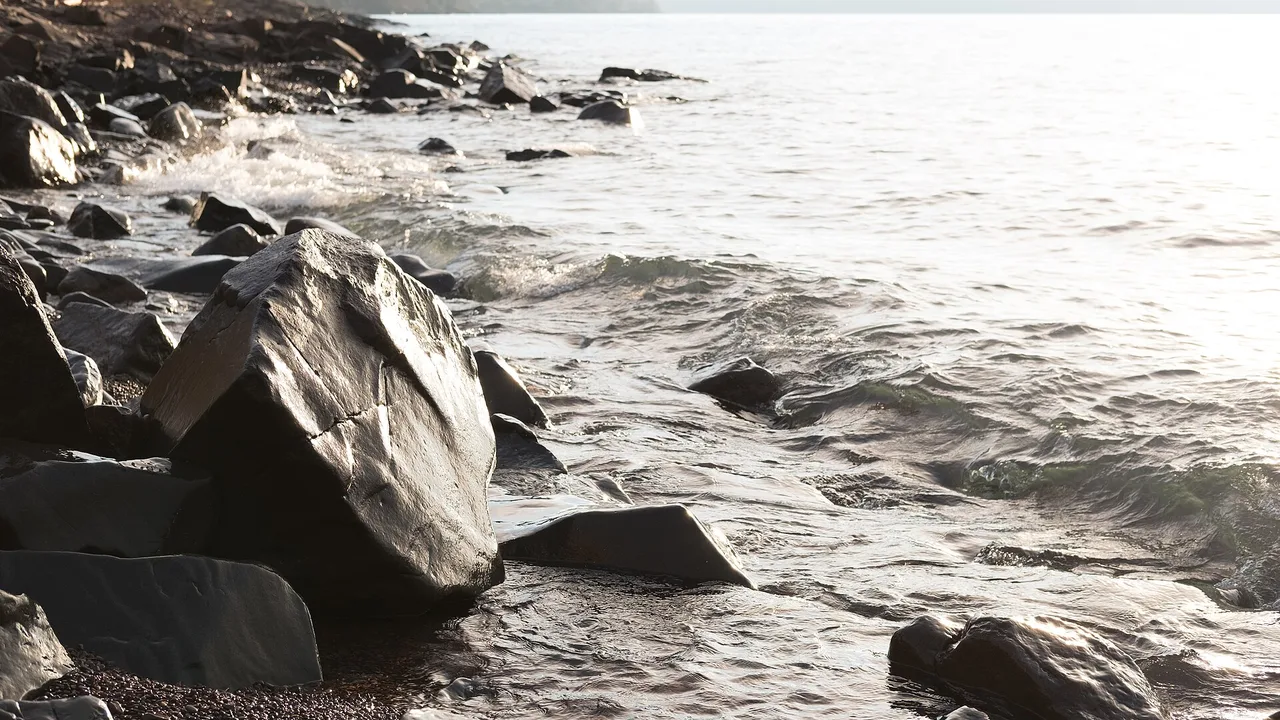
A scenic shot, not an action photo — no suitably licensed photograph of anyone surfing Lake Superior was found on Commons in this pass. Photo: Sharon Mollerus / Wikimedia Commons, CC BY 2.0
Search volume for "Lake Superior surfing" exceeds the combined kiteboarding and windsurfing search terms for Minnesota by roughly 43 to 1.
Minnesota's surf scene sits on Lake Superior's North Shore, centred on Duluth, and it runs on a genuinely unusual mechanism for a lake: real, gale-driven storm swell. The Duluth News Tribune's own explainer on North Shore surfing puts it plainly: "Northeast winds that occur in big, low-pressure storm systems create the necessary swells. Then, as the wind switches to northwest or north, the swells are 'groomed' by the offshore wind." That is a fetch-and-groom mechanism much closer to an ocean coast than to the wind-driven flatwater most Great Lakes pages describe — and it is why the best surf here comes with the worst weather, in fall and winter, not summer.
Search data from this session (Keywords Everywhere, GKP) shows that "surfing lake superior"/"lake superior surfing" runs 1,300/mo, peaking at 1,900-2,900/mo in December and January — winter, exactly when the swell is best, not a coincidence. "Duluth surfing" adds a further, independently-trending 260/mo. By comparison, "kiteboarding minnesota," "kitesurfing minnesota" and "windsurfing minnesota" each sit at 10/mo — Minnesota's noise floor. Nothing in this session's research turned up a documented Duluth kite spot, either. This page is built around surfing throughout.
Three named breaks on Duluth's North Shore, sourced from the Duluth News Tribune's surf explainer, plus Brighton Beach, which is less thoroughly documented.
The spots in detail arrow_forward
This coast is one of the coldest in the country where people regularly surf. The documented standard kit is a 6mm hooded fullsuit with 7mm gloves and booties.
Conditions in detail arrow_forward
Minnesota law defines a sailboard as a watercraft, then explicitly excludes it by name from the PFD equipment rule — read the statute, not a paraphrase.
The PFD law arrow_forwardDuluth News Tribune, "What you need to know to surf the North Shore" (Sam Cook, Feb. 13, 2016) — consulted directly and corroborated by a separate Star Tribune piece focused on Stony Point.
Stony Point, on the North Shore between Duluth and Two Harbors, is the North Shore's most consistent break. According to the Duluth News Tribune, "waves are typically larger there than at other places," and a separate Star Tribune feature on Great Lakes winter surfing calls it a major, popular Lake Superior spot in its own right — two independent sources on the same break, not one repeated. The same Tribune article identifies two real hazards specific to it. "Currents along shore at Stony Point can carry unwary surfers toward shoreline rocks. Ice-coated rocks along the shore can make entering and exiting the water difficult."
One surf-database source shows a conflicting location, and we did not resolve it by choosing the entry that suited us. Surf-forecast.com's "Stony Point" break page places its Stony Point at 46.70°N/91.98°W and labels the location "Wisconsin" — a different spot from the Minnesota break the Duluth News Tribune and Star Tribune both describe as sitting between Duluth and Two Harbors, and it gives a different offshore wind direction too. This page follows only the descriptions in those two news outlets, not the database entry, and notes the discrepancy instead of silently resolving it.
Park Point, Duluth's sand-spit beach, is the more approachable of the two — the same Tribune article calls its beach-break waves "good for beginning surfers." The mouth of the Lester River, further up the shore, is listed in that article as offering "decent point break surfing." All three — Stony Point, Park Point and the Lester River mouth — come from the same directly-read article, not three separate unverified claims stitched together.
Brighton Beach (Kitchi Gammi Park), shown above, is a real, well-photographed Lake Superior shoreline park and appears on at least one surf-ranking site's list of Duluth spots — however, that listing and a separate "where to surf in Duluth" piece that names it were located via search-engine results rather than read directly this session the way we read the Tribune piece. Treat it as documented, but with thinner sourcing than the trio above.
Boulder Park and the French River mouth were both checked specifically as potential locations, but no sources located during this session corroborate them as named surf breaks. That is a genuine absence, not a gap we are filling in with a guess.
A Duluth News Tribune article names the University of Minnesota Duluth's Recreational Sports Outdoor Program as a source of instruction and notes that "mentoring within the surf community" is common practice on this coast. For gear, Back Alley Surf & Coffee (backalleysurf.com) is a real, currently operating surf shop on Lake Superior in Duluth — its own site describes itself as "a surf, coffee, and cool things shop located on Lake Superior in Duluth, MN," open Tuesday through Saturday.
Water temperature and wetsuit specs per the Duluth News Tribune, read directly; Lake Superior's broader cold-water profile per NOAA's Great Lakes research, surfaced via search, not read directly this session.
The same Duluth News Tribune article provides the only water-temperature figure this page treats as fact. During the fall-and-winter storm season that produces the best surf, "water temperatures are in the 30s" Fahrenheit. The documented kit for it is a 6-millimeter hooded wetsuit with 7-millimeter gloves and booties, which are thicker than what most Atlantic and Gulf pages in this guide ever call for.
Lake Superior's broader reputation as the coldest of the Great Lakes is general limnology, not something specific to Duluth that we verified ourselves this session: NOAA's Great Lakes research describes the lake's enormous volume and depth keeping its bulk water near 39°F/4°C — the temperature of maximum freshwater density — through winter and spring, warming substantially by mid-summer (NOAA and National Park Service data put many surface readings in the 50s °F by then), while much of its open water still stays under 60°F/16°C even at the height of summer. We are presenting that as general background, attributed to NOAA, not as a Duluth-specific reading we pulled ourselves.
Cold-water immersion presents a real risk of hypothermia and cold-shock along this coast at any time of year, not only in winter. Our wetsuit thickness guide converts a water temperature into a suit recommendation. On Lake Superior, err toward the thicker end of any range it gives you.
Minnesota Statutes §§ 86B.005, 86B.501 and 86B.313 — can be read directly at revisor.mn.gov.
Minnesota's shape is different from every other state covered in this guide so far. § 86B.005 defines "watercraft" broadly — "any contrivance used or designed for navigation on water" — excepting only a waterfowl boat during hunting season, a rice boat during harvest, and a seaplane. Unlike South Carolina, which excludes surfboards and windsurfers from its watercraft definition outright, Minnesota does the opposite for what it calls a sailboard: the same section defines one as "a single passenger, nonmotorized watercraft using a surfboard type hull and a free sail system which, without capsizing, allows the sail to lie flat in the water when not being supported by the operator" — a sailboard IS a watercraft under Minnesota law.
The exemption is written directly into the equipment rule, not left inside it. § 86B.501, subd. 1(a) requires "watercraft and waterfowl boats using the waters of this state" to be "equipped with the number and type of personal flotation or lifesaving devices prescribed by the commissioner", which is the general rule. Subdivision 1(b) then carves sailboards out of it by name, "The commissioner may not: (1) require sailboards to be equipped with personal flotation or lifesaving devices; or (2) require persons on sailboards to wear personal flotation or lifesaving devices or have them readily available." Practically, Minnesota reaches the same no-PFD-mandate outcome that South Carolina applies to windsurfers; Minnesota arrives there through an equipment-rule exemption rather than a definitional exclusion, and the two are not the same legal mechanism.
A plain surfboard — no sail — is not named anywhere in Chapter 86B. Whether it counts as a "contrivance... designed for navigation on water" under the broad definition above, and so falls under the general equipment rule, is genuinely unaddressed by the statute text; we are not resolving that ambiguity for you. A kiteboard is not a sailboard either under Minnesota's definition (no "free sail system," i.e. no rigid handheld boom) and, like a plain surfboard, isn't named anywhere in this chapter.
Personal watercraft — jet skis — are regulated separately and far more strictly. § 86B.313 requires, with no age carve-out: "each person on board the personal watercraft wearing a wearable personal flotation device that is approved by the United States Coast Guard." The same section bans operation between one hour before sunset and 9:30 a.m., and sets a 150-foot slow-speed buffer around shorelines, docks, swimmers and moored craft. Separately, § 86B.501, subd. 3 (the "Grant Allen Law") requires any child under ten aboard a watercraft under way to wear an approved PFD or stay below deck — a general child rule, not specific to surf or sail craft.
No Duluth- or beach-specific rule was found for Park Point, Brighton Beach or Stony Point — we checked Minnesota's outdoor-recreation administrative rules and the Duluth city code and found only general, location-neutral swimming-area and watercraft provisions that do not name surfing or any of these three beaches. By way of comparison, Washington County elsewhere in Minnesota provides an example. Its parks ordinance bans "a surfboard, kneeboard, or jet ski" from designated swimming and launch areas, by name. We did not find a comparable provision in Duluth's code for these beaches.
If there's an emergency on this coast, call 911. Coast Guard Station Duluth is an active search-and-rescue station on Lake Superior; its stated area of responsibility runs from Duluth Harbor to Two Harbors, MN, and Port Wing, WI — sourced to the station's own unit information via search, not fetched directly by us this session. For the federal PFD baseline that fills gaps like the plain-surfboard question above, see our United States guide.
Yes — Lake Superior's North Shore near Duluth has a genuine, documented storm-swell surf scene, distinct from the wind-driven flatwater most other Great Lakes pages describe. Northeast winds inside big low-pressure storm systems generate the swell; the best conditions come in fall and winter, not summer.
The Duluth News Tribune's reporting directly names three spots — Stony Point (between Duluth and Two Harbors), Park Point (Duluth's own beach, better for beginners) and the mouth of the Lester River. Brighton Beach is also documented, though the sourcing is thinner.
According to the Duluth News Tribune, water temperatures fall into the 30s Fahrenheit during the fall-and-winter storm season that produces the best waves, making them among the coldest waters surfed anywhere in the US. Documented kit consists of a 6mm hooded wetsuit with 7mm gloves and booties.
Minnesota law expressly prevents the state's commissioner from requiring a sailboard (Minnesota's term for a windsurfer) to carry or wear a PFD. The statute does not mention a plain surfboard, so whether it falls under the general watercraft equipment rule is genuinely unaddressed — this page doesn't resolve that for you. Personal watercraft (jet skis) are treated differently; everyone aboard must wear a USCG-approved PFD with no age-based exceptions.