
Few countries pack in as much variety for paddleboarding as the UK: glassy Lake District lakes, sheltered south-coast harbours, wild Scottish lochs and slow-moving rivers winding through classic countryside. Whether you're after a calm sunrise paddle or a livelier session on the coast, there's a British spot to match. Here's our pick of the best, from mountain lake to open estuary.
Lake and reservoir spots: calm water, big scenery
Lakes and reservoirs are the best spots to learn on and for slower, more contemplative sessions. No tide, no sea current, and water that's largely sheltered from the worst of the wind. These are the ones worth the drive.
🏔️ Windermere: Lake District, Cumbria
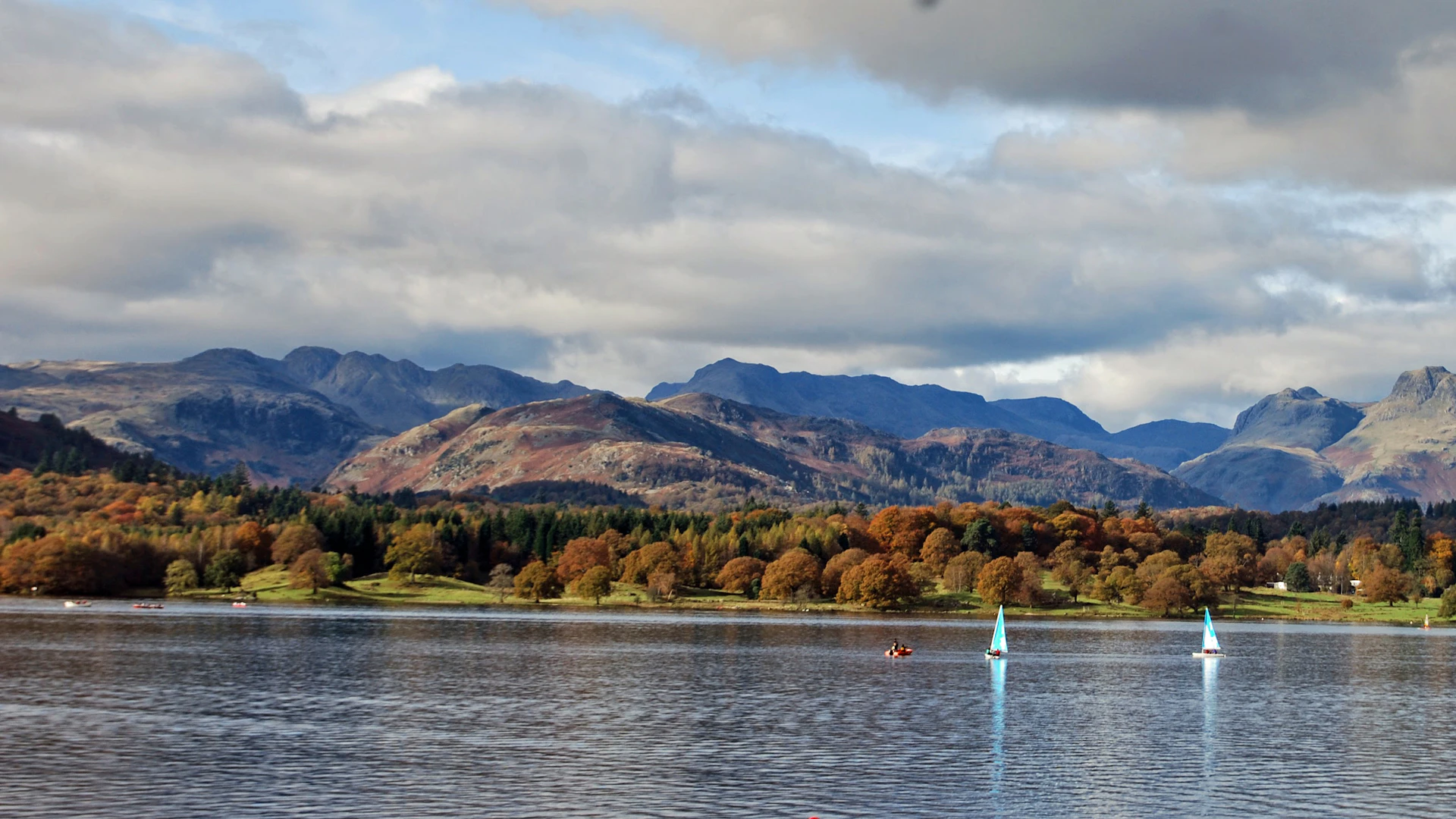
Windermere is England's largest lake and the UK's number-one paddleboarding spot. Ten and a half miles of open water framed by fells, with easy launch points and boat hire dotted along the shore. On a still morning the water turns glassy, making it a superb place both to learn and to enjoy a long, scenic tour.
Where to paddle: the southern reaches near Bowness and Fell Foot are calmer and less exposed to boat traffic. The northern end towards Ambleside offers quieter water and views up towards the fells. Read our full Windermere paddleboarding guide for launch points and local tips.
🌲 Coniston Water: Lake District, Cumbria
Coniston Water sits a short drive from Windermere but feels far quieter. Narrower and calmer, with the fells of the Coniston Old Man range rising steeply from the western shore, it's a favourite when Windermere gets busy in high summer. Sheltered bays near the boating centre make an easy, low-stress launch for beginners.
Where to paddle: stick to the eastern shore near the village for the most sheltered water. The northern end towards Brantwood is scenic and generally quiet outside peak weekends.
🚤 Rutland Water: Rutland, East Midlands
Built in the 1970s, Rutland Water is the largest reservoir by surface area in England and now a well-run watersports hub, with a dedicated centre at Whitwell on the north shore. Big, open and easy to reach from the Midlands, it's a reliable option when you want guaranteed flat water without heading to the Lakes.
Where to paddle: the sheltered bays near the Whitwell watersports centre suit beginners, while more confident paddlers can explore further along the shoreline nature reserve, home to ospreys in summer.
⛰️ Loch Lomond: Argyll and Bute, Scotland
Loch Lomond is Great Britain's largest lake by surface area and the gateway to the Scottish Highlands. Wooded islands, steep mountainsides and famously still water in the sheltered southern bays make it one of the most dramatic paddling backdrops in the country. The water stays cold even in summer, so plan accordingly.
Where to paddle: Luss and Balmaha, on the eastern shore, offer sheltered launch points and views across to Ben Lomond. The southern basin, dotted with islands, is calmer than the narrow northern arm, which can funnel wind.
Coastal spots: sea paddling with a bit more edge
Sea paddleboarding is a different game: exploring bays, tracing headlands, and reading tide and current. These spots reward a bit more experience with scenery and sensations you simply don't get on a lake.
🏖️ Studland Bay: Dorset
Studland Bay, on the Jurassic Coast next to Poole Harbour, is a gently shelving, sand-backed bay sheltered by the headland at Handfast Point. Warm, shallow water and a wide sandy beach make it one of the best introductions to sea paddleboarding in the country.
Where to paddle: launch from the National Trust beach and keep close to shore, staying well clear of the designated swimming and watersports zones. The bay can turn choppy quickly if the wind picks up, so check the forecast before heading out.
⛵ West Wittering & Hayling Island: the Solent, West Sussex
The sheltered waters of Chichester Harbour and the beaches either side of it – West Wittering and Hayling Island – give the Solent coast some of its calmest sea paddling. Flat, shallow water at low tide and long sandy beaches make this stretch a firm favourite for a first taste of coastal SUP.
Where to paddle: the harbour entrance channel has a strong tidal flow, so time your session around slack water. See our full guides to West Wittering and Hayling Island for launch points and conditions.
🌊 Salcombe & the Avon Estuary: South Devon
The Salcombe-Kingsbridge estuary and the neighbouring Avon estuary at Bantham offer some of the most beautiful sheltered paddling in South Devon: wooded creeks, sandbanks and clear water. It's a spot that rewards exploring at a gentle pace, tucked well away from Atlantic swell.
Where to paddle: the upper reaches of the Salcombe estuary near Kingsbridge are calm and current-free even for beginners. At Bantham, stay inside the estuary rather than crossing the river mouth, where currents and swell meet. Our Bantham guide covers the estuary and beach in detail.
🏄 The Camel Estuary: Padstow & Rock, Cornwall
Between Padstow and Rock, the Camel Estuary is one of the friendliest places to try sea paddleboarding in Cornwall: broad, sandy and sheltered from the worst of the Atlantic swell that pounds the county's north coast. Golden sandbanks appear at low tide, perfect for a stop-off.
Where to paddle: time your outing around slack water either side of high tide, when the current through the estuary is weakest. Avoid the ferry crossing lane between Padstow and Rock, and keep an eye on the wind funnelling up the estuary.
River spots: gentle water and quiet miles
River paddleboarding offers something different again: following a slow current, passing under old bridges, drifting past meadows and market towns. It's a good middle ground between a contemplative lake potter and a livelier coastal outing.
🏛️ The River Thames: Oxford to Henley & above Teddington
The Thames is one of the most accessible rivers for paddleboarding in the country. Above Teddington Lock the river is non-tidal, with gentle, near-flat stretches past water meadows, locks and riverside pubs. A licence is required on the non-tidal Thames, easily arranged online through the Canal & River Trust or Environment Agency.
Where to paddle: the stretch between Oxford and Henley-on-Thames is particularly scenic, with plenty of access points and towpaths. Keep to the right-hand side of the channel and watch for narrowboats and rowers, especially near Henley in regatta season.
🌿 The River Wye: Symonds Yat, Herefordshire & the Wye Valley
The River Wye is one of Britain's classic touring rivers, meandering through the wooded gorges of the Wye Valley between Herefordshire and Wales. Paddling beneath the limestone cliffs at Symonds Yat, with buzzards overhead and the ruins of Goodrich Castle nearby, is a highlight for any river SUP trip.
Where to paddle: the section from Symonds Yat down towards Monmouth is the most scenic and manageable for a day paddle. There is a small rapid at Symonds Yat itself (Symonds Yat Rapids); inexperienced paddlers should scout it from the bank first or put in just downstream.
🦢 The Norfolk Broads: Norfolk & Suffolk
The Norfolk Broads are a network of lock-free, largely wind-sheltered rivers and shallow lakes threading through classic English wetland scenery. Flat water, no rapids and no tide make this one of the most forgiving places in the country to build up river and lake touring miles.
Where to paddle: the rivers Bure and Ant, around Wroxham and Ludham, are quieter than the main cruiser routes. Expect to share the water with hire cruisers and abundant birdlife: herons, kingfishers and marsh harriers are common sights.
Best UK paddleboarding spots by ability level
🟢 Beginner: calm, accessible water
- Windermere: flat water, gentle bays, spectacular scenery
- Coniston Water: sheltered, quieter than Windermere
- Rutland Water: reliable flat water, watersports centre on site
- Studland Bay: gently shelving, sheltered from swell
- The Norfolk Broads: no current, no tide, family-friendly
🟡 Intermediate: currents, tides and wind
- West Wittering & Hayling Island: harbour tidal flow, exposed to wind
- Salcombe & the Avon Estuary: tidal currents, river-mouth conditions
- The Camel Estuary: tidal flow, ferry traffic to navigate
- The River Wye at Symonds Yat: light rapid, variable flow
- Loch Lomond: cold water, wind funnelling in the narrow arms
🔴 Advanced: committing conditions
- Open coast crossings: exposed headlands and open-water passages away from shelter
- Estuary mouths at spring tides: strong current where a river meets the sea
- SUP surfing: catching waves on a SUP at any UK surf break, advanced technique required
New to paddleboarding? Always start on a lake or reservoir before venturing onto the coast or a river. Solid balance and paddling technique come first, before you take on tide, current and swell. Read our learn to paddleboard guide for the basics.
How to choose your paddleboarding spot
Your choice of spot comes down to a few key factors, so run through these before you head out:
What's your ability level?
If you're a beginner, stick to calm water: lakes, reservoirs or sheltered bays. Coastal and river spots demand more experience managing current, wind and, on the coast, tide.
What's the forecast?
Wind matters more than anything else to paddleboarding safety. An offshore wind (blowing from land out to sea) can carry you away from the shore fast. An onshore wind (blowing from the sea towards land) brings you back in but can whip up uncomfortable chop. Always check the Met Office forecast before you set off.
What are the local conditions?
Tides, currents, boat traffic, swimming zones and surf zones: every spot has its own quirks. Check with local outdoor centres, hire operators or the RNLI's beach safety pages before you launch somewhere new.
What kit should you take?
For a lake outing: board, paddle, leash and buoyancy aid. For the sea, add a waist leash (never an ankle leash at sea, where the board can be swept away from you), a waterproof means of communication (a phone in a dry pouch) and plenty of water. For a river trip: a waist or quick-release leash is essential (never an ankle leash on moving water, due to entrapment risk), along with water shoes and a cap.
Need to kit yourself out for your paddling trips? See our SUP kit guide: boards, paddles, leashes, buoyancy aids and the accessories worth having.
Tides, currents and wind: what you need to know
If you're paddling at sea or on a tidal stretch of river, these basics are essential for your safety.
Tides
Around much of the UK coast, tidal range can reach 4 to 7 metres on stretches of the south coast, and far more in the Bristol Channel, which has the second-highest tidal range in the world at over 12 metres on spring tides. That means a channel that's easily navigable at high tide can be a sandbank two hours later. As a rule, check the tide times and aim to launch within two hours either side of high water, when there's the most water under your board and current is generally weaker.
Sheltered harbours and estuaries like the Solent and Chichester Harbour see strong tidal streams through their entrances even though the open water inside feels calm — always check the tide state for the specific channel you're paddling, not just the nearest beach.
Currents
Tidal streams through estuary mouths and narrow channels can run at 3 to 4 knots or more, faster than most paddlers can make headway against. Never try to fight a strong current. Paddle across it at an angle to get clear, or let it carry you while you plan your route back.
Rip currents on open beaches are narrow channels of water flowing out to sea, and they're one of the biggest hazards for anyone on the UK coast. If you're caught in one, don't fight it: paddle parallel to the beach to get clear of the rip, then head back in.
Wind
Wind is the most underestimated danger in paddleboarding. A gentle-feeling 15mph offshore breeze can push you 500 metres out in half an hour, and paddling back against it is exhausting. So always paddle out into the wind first, and let it help carry you home. And if the wind picks up while you're out, stay close to shore and don't attempt a crossing.
Safety on the water isn't optional. If you get into difficulty at sea, dial 999 (or 112) and ask for the Coastguard — HM Coastguard coordinates search and rescue around the UK coast, 24 hours a day. The RNLI also patrols many beaches in summer. Read our full SUP safety guide for the rules, kit and life-saving basics.
Paddleboarding techniques to mix things up
Once you've found your favourite spots, you'll want to progress. SUP covers a lot of ground:
- SUP touring: long distances on lakes and rivers, and exploring the coast. Best suited to a touring-shaped board (long and narrow).
- SUP surfing: catching waves on a SUP. Intense fun, and within reach once you've got your paddling and positioning sorted.
- SUP yoga: standing yoga and fitness work on the board. Brilliant for core strength and balance, best practised on flat water.
- SUP fishing: fishing from a SUP. Increasingly popular, and best done on a stable, wide board with fitting points for gear.
Want to work on your technique? Explore our SUP techniques guide: efficient paddling, turns, SUP surfing and tips to help you progress.
Planning to explore several of these spots over a season? A versatile all-round board with a pointed nose, like the Skiffo Suncruise 10'2" holds a straighter line and covers distance more easily than a round-nosed beginner shape.
Explore more UK paddleboarding destinations
Britain is full of brilliant paddleboarding spots beyond the ones listed here. Every region has its own quiet gems:
- Other Lake District lakes: Derwentwater near Keswick, Ullswater and Buttermere.
- Scottish lochs: Loch Morlich near Aviemore, Loch Earn and Loch Tay.
- South coast harbours: Poole Harbour, Chichester Harbour and Falmouth's Carrick Roads.
- Other rivers: the River Cam through Cambridge, the River Stour in Dorset, and the River Avon.
Browse all of our surf and paddle destinations on the Matosurf UK destinations page, and see our companion guide on where to paddleboard in the UK for more ideas by type of day out.
❓ Frequently asked questions about UK paddleboarding spots
Which UK paddleboarding spot is best for beginners?
A sheltered lake or reservoir with no current is ideal for beginners: Windermere, Coniston Water, Rutland Water or a calm section of the Norfolk Broads. Flat water, no tide and no strong wind make for the safest conditions to learn in.
Can you paddleboard in the sea in the UK?
Yes, sea paddleboarding is very popular around the UK coast. Studland Bay, the Solent around West Wittering and Hayling Island, the Salcombe and Avon estuaries in Devon, and the Camel Estuary in Cornwall all offer water suited to different ability levels. Watch for tides, currents and offshore winds, which can carry you away from the shore.
What is the best season for paddleboarding in the UK?
May to September is the ideal window: warmer water, long daylight hours and more settled conditions. July and August are busiest. A wetsuit extends the season into spring and autumn, but the water stays cold year-round, so always check conditions and dress for immersion.