

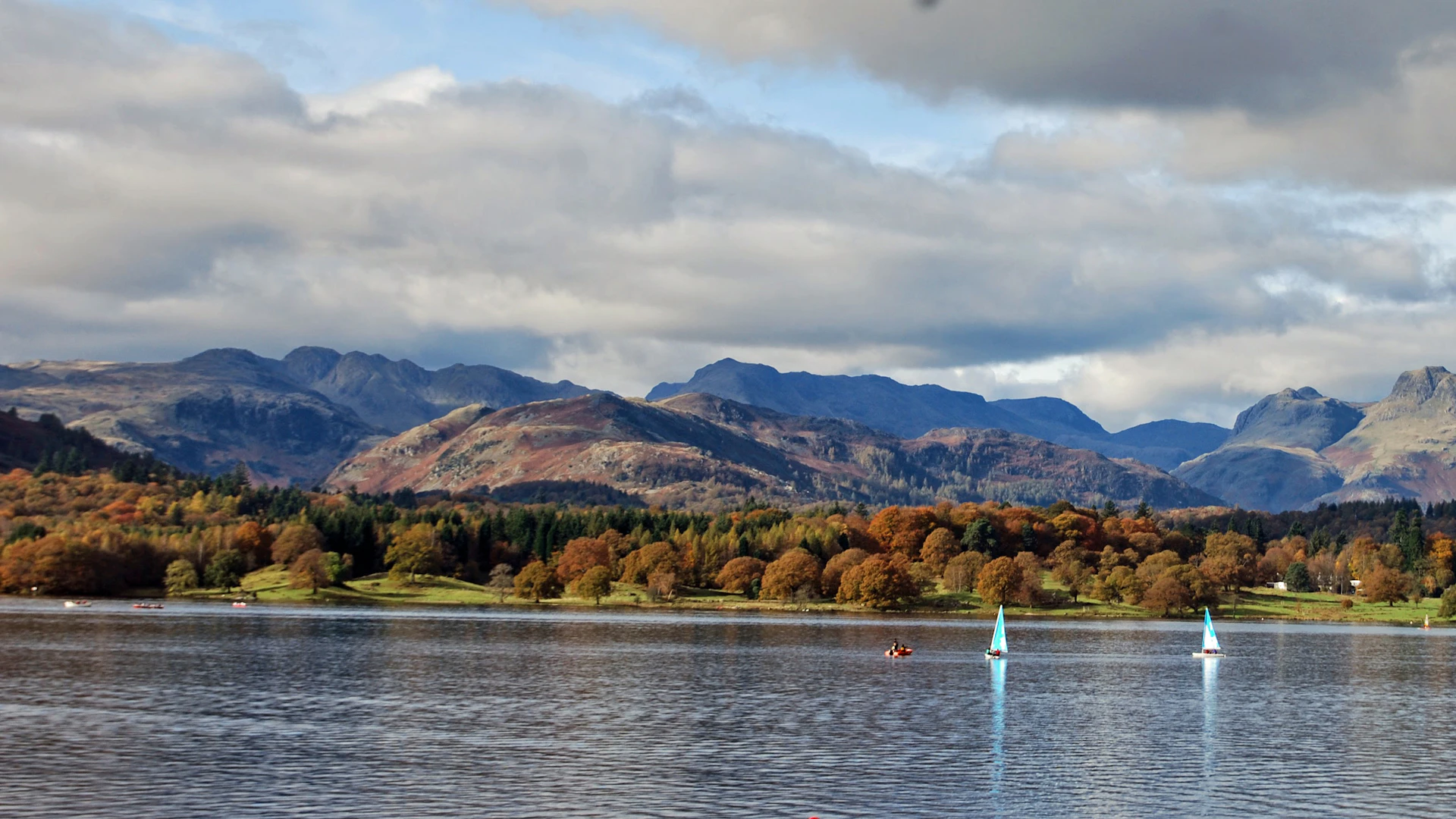
England's largest lake, 10.5 miles of open water in the Lake District and a superb spot for stand-up paddleboarding.

Stand-up paddleboarding is permitted on Windermere without a permit. Manually propelled SUPs aren't usually treated as power-driven vessels, so the 10-knot speed limit doesn't typically apply – though you must still paddle with due care.
UK spots arrow_forward
Red Nab, Ferry Nab, Waterhead and Fell Foot Park all give straightforward access, and Lake District schools run tuition and guided tours for anyone new to paddleboarding on open water.
Explore more arrow_forward
Windermere sits below 15°C for much of the year, so cold-water shock is a real risk. Wear a buoyancy aid and a leash, stay close to the shore and keep clear of ferries and larger boats.
Plan a trip arrow_forwardAccess points down both shores and at each end of the lake, from busy slipways to quiet free parking.
Red Nab Car Park, on the quieter west shore, is a favourite launch point, particularly for paddling south towards Ferry House. Parking is free, though spaces are limited and it can be busy at peak times. From here the islands – Thompson's Holme and Belle Isle – lie roughly 1 to 2 miles out and make a fine paddle, but keep a close eye on ferry traffic on the way across.
View on Google Maps open_in_newFerry Nab in Bowness has a public slipway, public toilets and food and drink close by, and is noted as being more accessible for disabled paddlers. The central stretch around Bowness-on-Windermere is the busiest part of the lake, with everything close at hand – and a lot of boats and passenger ferries to keep an eye on.
View on Google Maps open_in_newAt the north end, Waterhead is a convenient launch with nearby car parking. At the south end, Fell Foot Park offers free launching for kayaks, canoes and similar craft, with paid parking that is free for National Trust members. Between the two you've got the full 10.5-mile length of the lake to work with, though on open water it pays to stay close to the shore.
View on Google Maps open_in_newLessons, hire and guided tours from qualified Lake District instructors.
Lake District Paddleboarding runs introductory SUP sessions and guided tours on Windermere as well as Derwentwater, Ullswater and Coniston Water, plus river tours on the Derwent and Brathay. Its instructors hold national governing body SUP qualifications and first aid. Across the wider Lake District, Ullswater Paddleboarding is a fully accredited school, qualified with the British Stand Up Paddle Association (BSUPA).
Windermere Canoe Kayak offers SUP hire, tuition from taster sessions through to advanced coaching, and sells paddleboards and kit. If you're travelling light, or want to ride a board for a day before committing to one, hiring on the lake is the easy way in. For open water, a stable all-round board of around 10 to 11 feet and roughly 280 to 320 litres of volume gives a beginner plenty of confidence.
Windermere's water averages 4.9°C in winter and only 14.7°C in summer, so it sits below the 15°C cold-water-shock threshold for much of the year. A wetsuit or proper cold-water immersion gear, a buoyancy aid and a leash are not optional here. Dress for the water temperature, not the air.
England's largest lake, ringed by fells, islands and villages, at the centre of a national park.
Stretching 10.5 miles through the Lake District, Windermere is England's largest lake and one of the finest places in the country to paddle, with the fells rising on every side and wooded islands to explore. Bowness and the surrounding villages give plenty of bases, cafés and places to stay, so building a paddling trip around the lake is straightforward.
For quieter water, Derwentwater, Ullswater and Coniston Water are all within easy reach and all permit paddleboarding, each with its own character. Wherever you paddle, follow the Check, Clean, Dry routine when moving between lakes to help stop the spread of invasive non-native species.
By train to Windermere station or by car up the A591, from the North West and beyond.
Windermere station sits about 1 mile from the lake shore at Bowness-on-Windermere, at the end of a branch line, making it one of the more accessible Lake District spots by rail. A short bus ride or walk gets you down to the water.
The lake is reached via the A591, with car parks dotted around the shore – paid parking at Fell Foot and Brathay Hall and free but limited spaces at Red Nab. By road it's roughly 85 miles from Manchester, 90 miles from Liverpool, 140 miles from Glasgow and around 280 miles from London.
Cold water, changeable wind and busy boat traffic make preparation essential on the lake.
Cold-water shock is a serious risk in water below 15°C, causing involuntary gasping and difficulty breathing even for strong swimmers – and Windermere is below that threshold for much of the year. Wear a buoyancy aid at all times on or near the water and always use a leash to stay attached to your board. On flat water a coiled leash is generally recommended to keep it out of the way, while a quick-release waist leash is often preferred in moving water or busy areas so you can separate from the board easily if needed.
The wind can change suddenly on Windermere and make paddling much harder, so check the forecast and stay close to the shore. The lake is busy with boats and ferries, which need plenty of room to turn, so keep well clear of larger craft. The 10-knot (11.5 mph) limit under the Windermere navigation byelaws applies to power-driven vessels, but you must still navigate with due care and attention. In an emergency on inland water, dial 999 and ask for Mountain Rescue.
As an inland lake, Windermere sits outside the Surfers Against Sewage coastal alerts, but it does have four designated bathing waters, which have been rated 'excellent' since 2017. Those ratings cover the four designated sites rather than the whole lake, and water quality is still a live concern: United Utilities was found to have illegally discharged millions of litres of raw sewage into the lake between 2021 and 2023, and analysis reported by campaigners has described bathing water across much of Windermere as poor during the summer. Campaign group Save Windermere is working to end sewage discharges. Check the latest local advice before you paddle, particularly after heavy rain.
The questions paddlers ask most before heading to England's largest lake.
No. You don't need a permit or licence to paddleboard on Windermere. It's one of the largest lakes in the Lake District where stand-up paddleboarding is permitted without one.
The 10-knot (11.5 mph) speed limit on Windermere applies to power-driven vessels, and manually propelled paddleboards are not typically subject to it. All vessels must still be navigated with due care and attention under the Windermere navigation byelaws.
Popular launch points include Red Nab Car Park on the west shore, Ferry Nab in Bowness, Waterhead at the north end and Fell Foot Park at the south end. Red Nab has free parking but limited spaces, while Ferry Nab has a public slipway, toilets and food.
Average water temperature ranges from 4.9°C in winter to 14.7°C in summer. Water below 15°C carries a risk of cold-water shock, which can cause involuntary gasping and difficulty breathing even for strong swimmers, so wear a buoyancy aid and appropriate cold-water gear.
Yes. Other notable lakes where stand-up paddleboarding is permitted include Derwentwater, Ullswater and Coniston Water, each offering scenic paddling. Several Lake District schools run guided SUP tours across these waters. Other UK water is covered on our UK destinations hub.