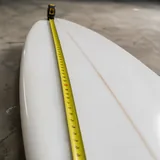

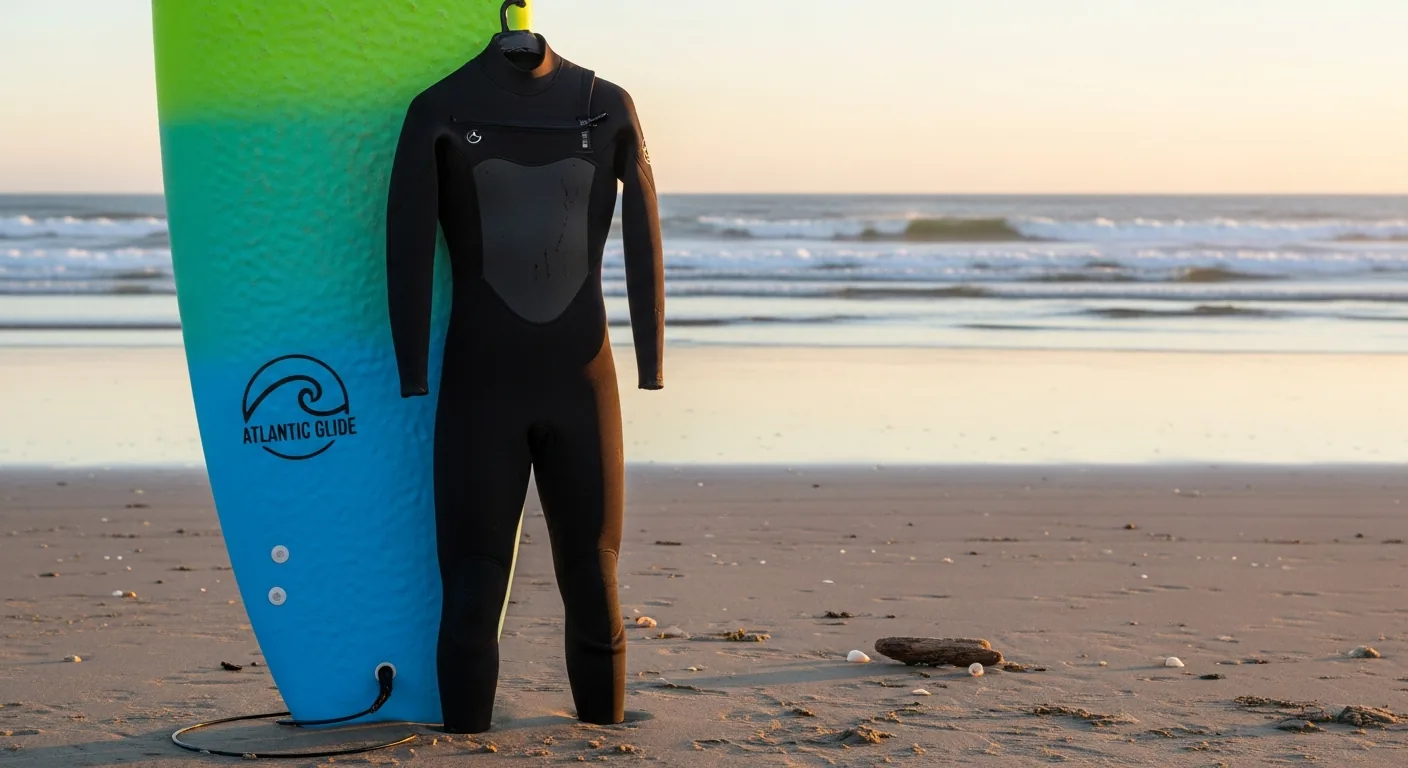
Getting the right kit is the single biggest thing you can do to progress quickly. A board that's too small will hold you back, a wetsuit that doesn't suit the conditions will cut your session short, and a worn leash can be dangerous. This is a straightforward run-through of the essentials, with sizing and the things worth checking before you commit.
1. The surfboard: the choice that matters most
Your board is the most important decision you'll make. Here are the options worth weighing up as you start out.
Foamie / mini-mal (the sensible first board)
Length: 7'6" to 8'6"
Volume: roughly 55 to 70 litres
Who it's for: adults of most builds, all abilities as you learn
The sweet spot for a first board. There's enough volume to catch waves and pop up easily, but it's manoeuvrable enough to start turning as you improve. A soft-top from the likes of NSP, Torq or Softech takes the knocks, is kinder if it hits you, and holds its value well.
Longboard
Length: 9'0" to 10'6"
Volume: 75 to 100+ litres
Who it's for: heavier riders and anyone after a smooth, glidey style
The benchmark for stability, and you'll be catching waves from your very first session. In return it's bulky, awkward to carry and store, and you'll want a shorter board eventually if you're keen to work on performance turns.
Shortboard (leave it for later)
Length: 6'0" to 7'0"
Volume: 25 to 35 litres
Who it's for: confident surfers regularly taking unbroken waves
Too little volume for a beginner. The pop-up is harder, catching waves becomes hit-and-miss, and progress slows right down. Resist the temptation to size down too soon.
What volume to aim for as a beginner
Learning on a forgiving board, budget roughly your body weight in litres: a 70kg beginner is well served between 60 and 80 litres, which is exactly the foamie and mini-mal range above. Our surfboard buying guide sets out the factors by ability, and the volume calculator works it out from your weight.
When in doubt, size up. A generous volume will have you catching waves and progressing faster than a board that's too small. Dropping to something shorter happens naturally once you're regularly taking unbroken waves.
New or second-hand?
A used board is a smart way to start, and holds its value if you look after it. Whatever the source, check it over carefully before parting with your money.
What to look for: delamination (the skin lifting away from the foam), pressure dings and cracks around the nose and tail, soft or crushed rails, water in the foam (a tell-tale yellow-brown stain) and the state of the fins and fin boxes. A repaired ding is fine if it's done properly and fully sealed; open cracks that let water in are not.
2. The wetsuit
UK water is cold for most of the year, so the wetsuit is the kit that makes or breaks your session. Match the thickness to the season rather than owning just one suit.
3/2mm full suit (summer, plus milder spring/autumn days)
Water: roughly 14–18°C
Brands worth a look: C-Skins, Gul, O'Neill, Finisterre
The workhorse for the warmer half of the UK surf year. A chest-zip entry keeps flushing to a minimum and is more comfortable than a back zip. For cooler spring and autumn sessions, size up to a 4/3mm.
5/4mm full suit with hood (UK winter)
Water: roughly 7–9°C
Brands worth a look: C-Skins, Gul, O'Neill
Non-negotiable for a British winter. Pair it with boots and gloves, and a hood (built-in or separate) once the water drops below about 10°C. A quality winter suit is the difference between a full session and a shivering ten minutes.
What makes a good wetsuit
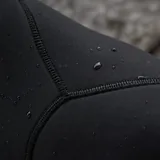
- Glued and blind-stitched (GBS) seams: sealed against flushing, and standard on any decent 3/2mm or thicker suit
- Chest zip vs back zip: a chest zip is warmer and flushes less; a back zip is easier to get in and out of
- Fit: snug with no loose pockets at the lower back or knees, but not so tight it restricts your paddle
- Thickness: 3/2mm means 3mm on the torso and 2mm on the arms and legs, for warmth where you need it and flex where you don't
If you only buy one suit to start, make it a 3/2mm and time your first sessions for late spring through autumn. Bargain-basement suits flush and wear out fast; you don't need a top-of-the-range model to stay warm, just a well-made one that fits.
3. The leash
Length, cord thickness, straight or coiled, ankle or calf: our leash buying guide goes through each criterion.
The leash is the cord tethering your ankle to the board. It's essential kit and a genuine safety item – it keeps a loose board from becoming a hazard to you and everyone around you.
Standard leash
Length: match it to your board (a 7' leash for a 7'6"–8'0" board)
Brands worth a look: FCS, Creatures of Leisure, Gul
Go for a slightly thicker cord for bigger, more powerful days and a thinner one for small-wave manoeuvrability. Check the ankle cuff Velcro, the stitching and the rail saver regularly, and replace it as soon as a fault shows rather than on a fixed schedule – our leash guide lists what to look for. A leash that snaps means a lost board.
4. Wax
Temperature grades, application and fitting a traction pad: our surfboard wax guide covers the lot.
Wax goes on the deck of the board to grip your feet. Without it, your feet slide straight off.
Cold-water wax (right for most of the UK)
Type: cold water (under about 14°C) or cool water (roughly 14–20°C)
How to apply: a base coat first, then a top coat rubbed on until small bumps form
Choose the temperature grade to suit the season – a warmer-water wax goes greasy in cold conditions and won't grip. Re-apply a top coat every few sessions, and strip and re-wax when it goes grey and flat.
Consider a reef-friendly, petroleum-free wax. Surfing is an outdoor sport that depends on clean water – small choices like this help look after the coast you're surfing.
5. The accessories worth having
Picked up a ding despite the bag? Our surfboard ding repair guide walks through the method, resin by resin.
Boots, gloves and hood
Through a UK winter, extremities are the first thing to go numb. Neoprene boots, gloves and a hood extend your season dramatically:
- 3mm boots: enough for autumn and mild spring days
- 5mm boots plus gloves and a hood: for the depths of winter, when the water sits around 7–9°C
- Fit matters – boots that are too loose let water swill and rob you of warmth
Earplugs
Surfer's ear (bony growths in the ear canal, brought on by repeated cold-water and wind exposure) is common among regular UK surfers. It's easily prevented:
- Wear vented surf earplugs so you can still hear
- Make them a habit in cold water and on windy days
- Rinse them after each session so they last
A changing robe
A towelling changing robe lets you get out of a cold, wet suit in the car park and warm up fast – a genuine game-changer on a British winter's day:
- A waterproof, insulated robe (dryrobe being the best-known) is worth it if you surf through winter
- A simple towelling poncho does the job in warmer months
- Look for one long enough to cover you while you wrestle out of your wetsuit
Sun cream
The sun reflects off the water and doubles your UV exposure, even on a grey UK day:
- Factor 50+ for the face, in a sport formulation that stays put
- Water-resistant: holds up for a decent stretch in the water
- Reef-safe: free of oxybenzone to protect marine life
- A rash vest also cuts UV and stops board rub in summer
Looking after your kit: rinse your board, wetsuit and leash in fresh water after every session, dry them in the shade (sun degrades neoprene and yellows a board), store the board flat or on a rack rather than stood against a wall, and hang the suit on a wide hanger. Well-kept kit lasts years.
Kitted out and ready to go? Have a read of our learn to surf guide and our surf safety essentials before your first proper session.