
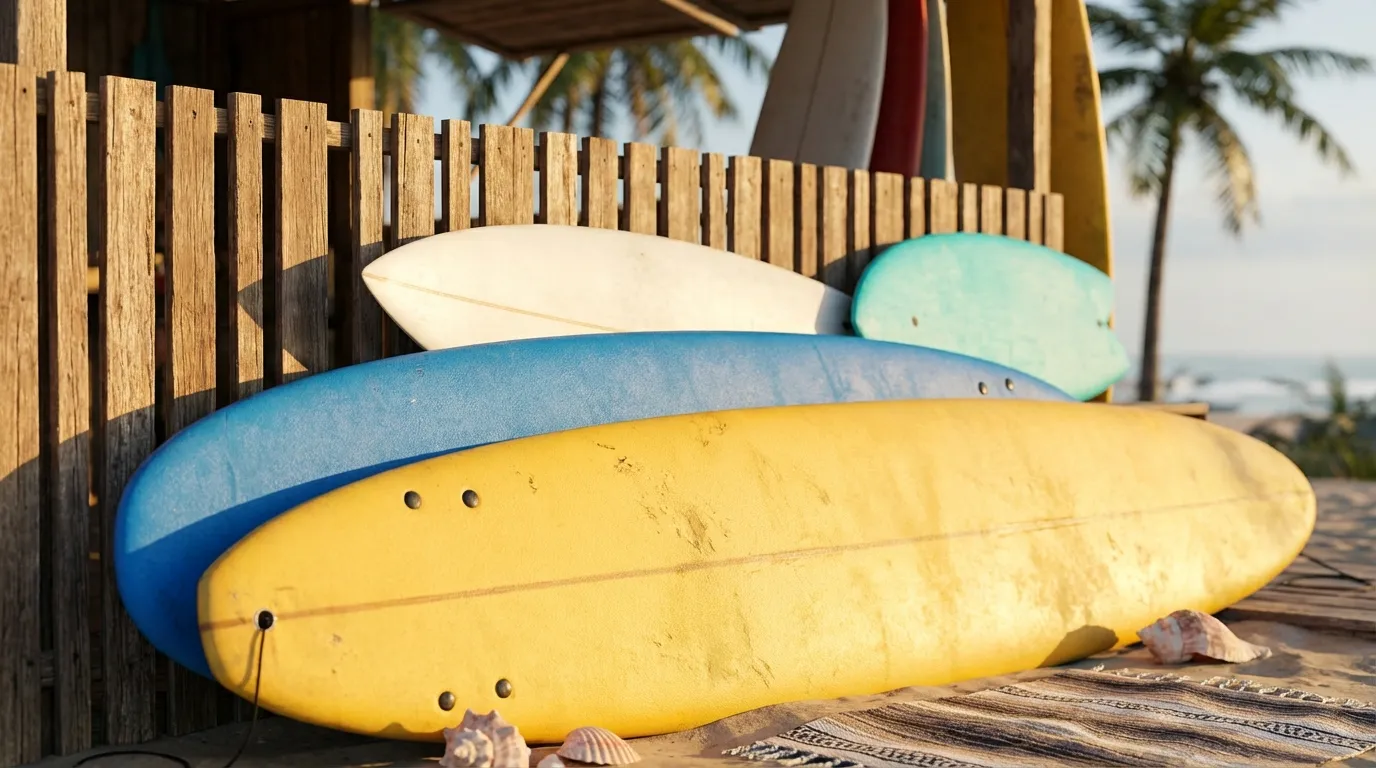
Choosing the right surfboard is a bit like choosing your first pair of skis: get it wrong and a fun sport turns into a frustrating one. There's no shortage of choice out there, but understanding the technical differences and matching a board to your level, weight and local conditions is what actually matters. Here's a rundown of the essentials, whether you're just starting out in surf or narrowing down your next board.
A good board is no substitute for reading the sea. Check conditions with the Met Office before you paddle out, and follow RNLI beach safety advice, especially if you're new to a spot or the water is anything other than calm.
The five main types of surfboard
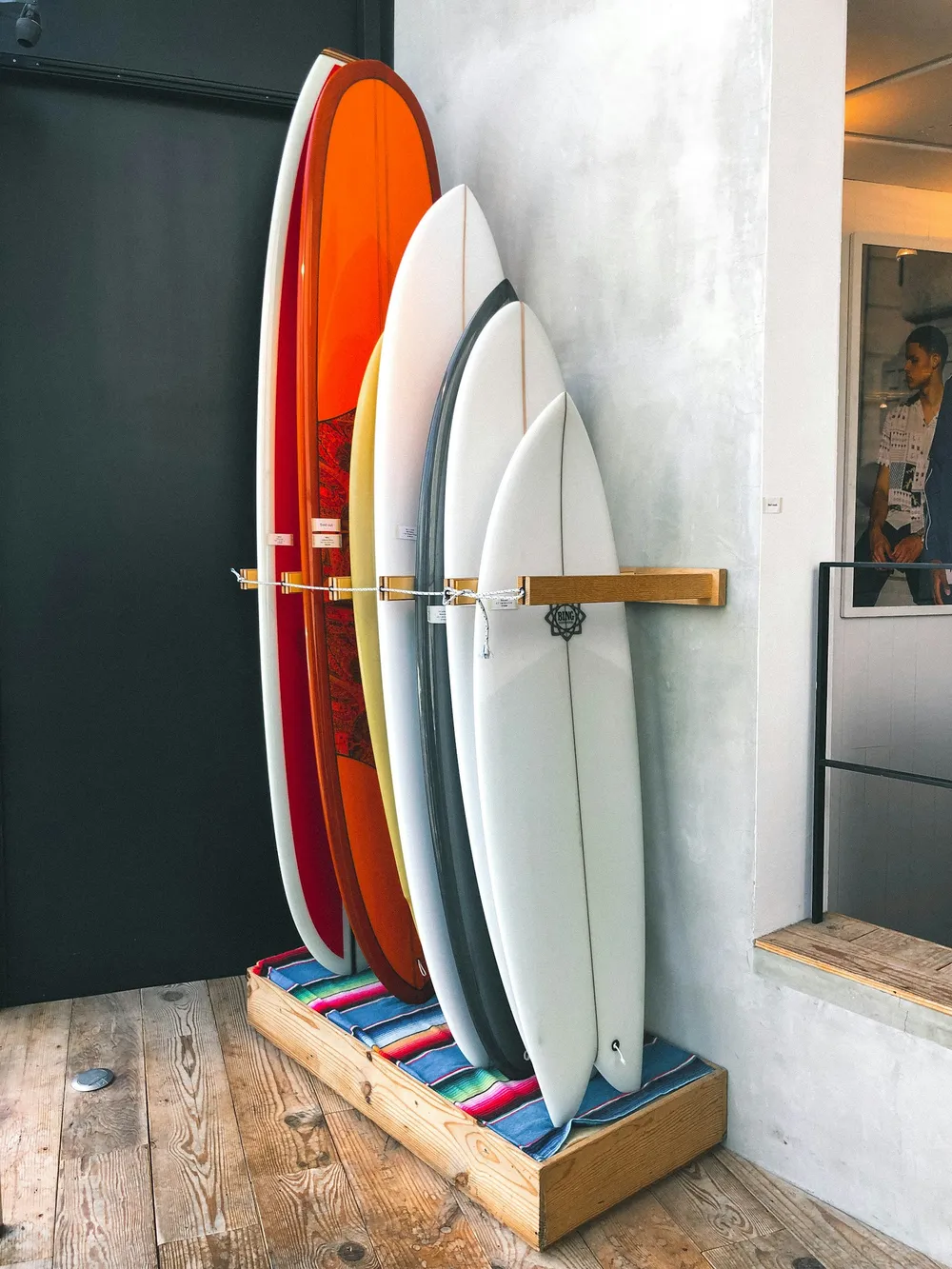
The longboard (9'0" and up): stability and glide, ideal for beginners
Built to sit high in the water, the longboard is the natural ally of beginners and anyone who prefers a relaxed, flowing style. Its generous volume (up to 100 litres or more) makes it easy to catch weaker waves and get up quickly. A board around 9'6" to 10' is a great length for learning balance and working through classic cutbacks. Longboards have also seen a real resurgence among more experienced surfers, with modern shapes that hold their own on more demanding days too.
The funboard / mini-mal (7'0" to 9'0"): the versatile step up
The funboard sits between a longboard and a shortboard, and it suits the improving surfer well. With a length of roughly 7'0" to 8'6" and 40 to 60 litres of volume, it offers a useful blend of stability and manoeuvrability across a wide range of waves. It's often the first board bought after moving on from a longboard, and lightweight EPS/epoxy constructions are particularly popular in this category.
The fish (5'4" to 6'4"): soft waves and flat spells
The fish is mostly ridden by more experienced surfers, and it comes into its own in weak surf and shallow water on unremarkable days. Its short, wide outline, swallow tail and relatively low volume (typically 25 to 35 litres) allow for tight turns and quick acceleration on waves with little power behind them. A useful board to have in the quiver for the flatter days most UK surfers know all too well.
The shortboard (5'8" to 6'6"): performance in punchy waves
The board most associated with modern surfing, the shortboard is best judged by its volume-to-weight ratio. A 75kg surfer might look at a board around 5'10" to 6'2" with roughly 30 to 35 litres. A pronounced rocker and narrow rails allow for tight, powerful turns in hollower, punchier waves, though the trade-off is a much less forgiving ride for anyone still building consistency.
The gun (7'0" and up): built for size
The gun is the go-to for seriously big waves. Long (typically 8'0"+), with a deep concave through the tail and a narrower nose, it's shaped to help you get into position early on a large, fast-moving wall of water. It's not built for tricks, but it's the board you want when the swell is well overhead.
Choosing by ability level
Beginner: 60L+ volume, 8'0"+ length, 22"+ width
A volume of at least 60 litres, and ideally close to your body weight in litres, gives you the float you need to pop up without being pulled under by the wave. Boards from 8'0" to 8'6" are a solid choice for learning the basics, striking a workable balance between stability and manoeuvrability. Look for a width over 22 inches for better hold on the water, and a soft-top or PU/PE board with a forgiving deck for those early falls. Our surfboard volume guide will help you work out your ideal volume by weight.
Intermediate: 35–55L, shortboard or fish depending on conditions
Once you're past your first take-offs, you need a board that responds to what you're doing rather than just floating you. With 40 to 55 litres of volume, you can start trying shortboards around 5'10" to 6'2", or a fish for weaker days. Length depends heavily on your local break: a shorter shortboard for hollow waves, a slightly longer fish for speed on gentle swell.
Advanced: performance shortboard, shaped for your local break
Experienced surfers focus on shape: the combination of rocker, concave and rail profile suited to their style in the water. A shortboard around 5'6" to 6'0" with roughly 28 litres is plenty for a 75kg surfer at this level. Fin systems that let you fine-tune the setup are worth having at this stage for the extra control they give.
Comparing boards by level
| Level | Type | Volume | Length |
|---|---|---|---|
| Beginner | Longboard / soft-top | 60–90L | 8'0"–9'6" |
| Intermediate | Funboard / fish | 35–55L | 6'4"–7'6" |
| Advanced | Shortboard | 25–40L | 5'8"–6'4" |
The technical criteria worth understanding
Volume (litres): a rule of thumb based on your weight
Volume comes from your body weight multiplied by a factor that depends on your ability. A complete beginner learning on a forgiving board (soft-top, mini-mal or longboard) wants 0.9 to 1.1 times body weight — so a 75kg surfer is looking at 65 to 80 litres. On a shortboard shape, a beginner drops to 0.55 to 0.70 (41 to 52 litres at 75kg), an intermediate to 0.40 to 0.50, an advanced surfer to 0.30 to 0.38, and an expert to 0.30 to 0.32. Less volume means more manoeuvrability but less float: drop below 40 litres too early and you spend the session paddling rather than surfing. Our volume calculator applies these factors to your weight.
Length: why the inches matter
A board's length is measured in feet and inches (6'2" = six foot two, roughly 188cm). The longer the board, the easier it is to paddle and the more stable it is; the shorter it is, the more manoeuvrable and quicker to turn. For an adult beginner, a board under 7 foot is best avoided: below that mark it lacks the float to paddle efficiently and get to your feet in soft waves. For most beginners and improvers the comfort zone sits between 7'2" and 9'6", depending on the discipline you're aiming for.
Shape: rocker, concaves and rails
The rocker (the board's vertical curve) determines how quickly it moves and how easily it turns. A flatter rocker suits weaker, mushier waves. A double concave through the tail improves grip, while thinner rails allow for more committed, engaged turns. More radical shapes have emerged for specific styles of riding but generally suit a confident, established surfer rather than someone still finding their feet.
Materials: PU/PE, EPS/epoxy, soft-top
PU/PE (polyurethane/polyester) remains the dominant choice for its feel and durability underfoot. EPS/epoxy, lighter and more buoyant, has gained ground steadily in performance and competition boards. Soft-top construction, with its foam deck, is the sensible pick for beginners, group lessons, and younger surfers.
Fins: systems and setups
The topic now has a page of its own: our surfboard fins guide compares systems, sizes and setups.
Removable fin systems remain the most widespread choice and offer a good range of fin options, while alternative clip-in systems can give slightly more direct power transfer through committed turns. Single-fin setups have made a comeback on vintage-styled longboards. On modern shortboards, three-fin (thruster) and four-fin (quad) setups dominate for performance surfing.
If you're torn between two volumes, always choose the bigger one. It's far more frustrating to miss waves for lack of float than to find your board a little too easy to handle.
Buying by budget
Budget: beginner boards and soft-tops
Soft-tops at the budget end of the market are a strong entry point. Well-known brands offer longboard/soft-top combinations around 8'0" and 70 litres, and pre-shaped PU/PE boards are also available at this level. A sound choice for a first go at the sport or an introductory course.
Mid-range: intermediate, reputable brands
At this level, intermediate surfers can look at EPS/epoxy boards from established shapers, or explore customisable options. Fish boards between 5'8" and 6'2" also sit comfortably here. This budget generally buys a board from a recognised brand with dependable build quality.
Premium: performance and custom shapes
Beyond this point, you're into custom and high-end territory. A performance EPS shortboard from a well-regarded shaper starts here, and independent or local shapers also offer bespoke, made-to-measure boards at a similar level for surfers who know exactly what they want.
New or second-hand?
Either way, protect the purchase: our surfboard bag guide explains which type suits which use.
Buying new gives you full control over your board's history and condition. But the second-hand market, boosted by online marketplaces and specialist forums, can turn up real bargains, especially if you're just starting out. For boards under five years old, always check carefully for dings or soft spots. A good second-hand find can save you a meaningful amount against the price of new.