

📍 Surf destinations · England
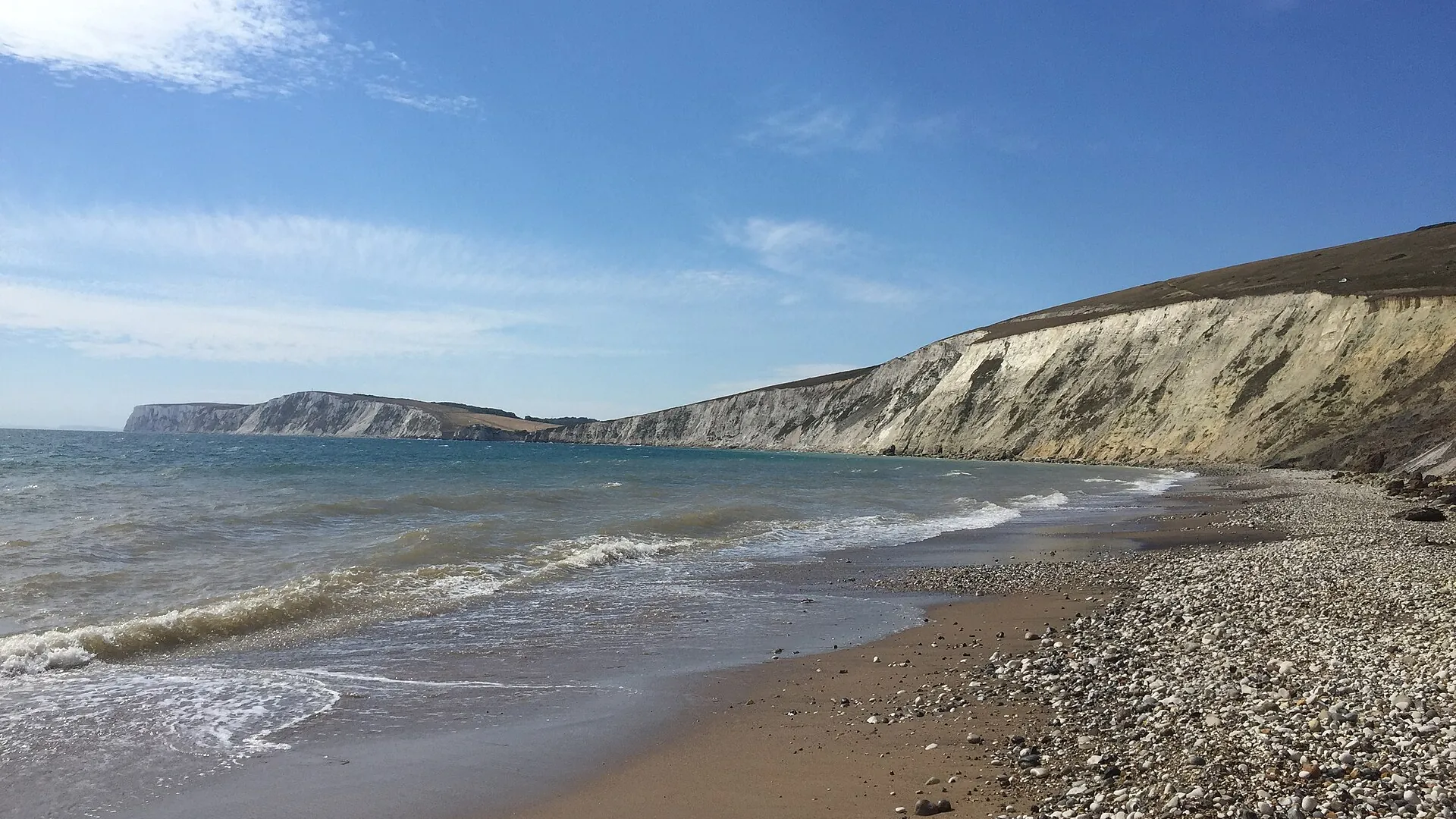
Photo: Compton Beach, August 2015 – Editor5807 / Wikimedia Commons, CC BY-SA 4.0
Isle of Wight surfing offers visiting surfers and local riders a range of coastal spots to explore when conditions align. Whether you're researching surfing on the Isle of Wight for your next trip or looking for an Isle of Wight surf guide to help you choose a beach, this page covers the key breaks, forecasts, lessons and equipment hire. So, can you surf on the Isle of Wight? Yes. The island offers surfing opportunities, with suitability depending on swell, wind, tides and experience.
Yes, with the right swell, the right beach and a realistic view of your own ability.
The Isle of Wight has surfable beaches, with Compton Bay widely recognised as a key place to check when suitable swell reaches the island. Conditions can change quickly, and not every beach works in the same way. Check the forecast and tide information before setting off, choose a spot that matches your experience, and seek local instruction if you're new to surfing. Our beginner's guide to learning to surf covers what your first sessions look like.
Compton Bay and Freshwater Bay, on the island's exposed western side.
West Wight is the starting point for this guide, with Compton Bay as the main surf destination to investigate. The coast is exposed to changing weather patterns, so use the spot notes as a planning guide rather than a guarantee of surf.
Compton Bay is a broad, natural beach on the island's south-west coast, around two miles long, and a recognised favourite for surfers. The National Trust describes a gently sloping shore, and also warns of strong surf and currents depending on the weather, with the sea quite shallow for a long way out. Local guides call it the island's most popular surf spot, working best on a south-westerly swell with an offshore wind from the north-east. Treat that as a starting point, not a promise.
Before choosing a peak, compare the current swell direction, period, wind direction and tide stage. We aren't giving a best tide, because the guides we read contradict each other on it, and a local surfer or school will know better. Access is on foot down wooden steps. The National Trust lists short flights with handrails at Compton Bay car park and at Brook, and a long flight near Compton Chine, and Visit Isle of Wight calls the steps from the Hanover Point car park steep. Plan for carrying boards and kit. Check current parking arrangements, facilities and beach notices before you travel. The National Trust's car parks are managed through the JustPark app, and overnight parking isn't allowed.
Compton is described as a totally natural, do-it-yourself beach, so arrive prepared with your own equipment, water, layers for the weather and a plan for getting back up the steps. The Hanover Point car park has toilets, baby-changing facilities and a Changing Places cubicle, and a seasonal mobile van sells food and drinks. Don't count on hire, refreshments or other services being there when you arrive. Visit Isle of Wight also warns of a rocky outcrop in the shallows, and suggests walking about halfway along the beach between Hanover Point and Compton Chine to avoid it. The National Trust says there are no regular lifeguards operating in Compton Bay, so you're responsible for your own safety. Read more on the National Trust's Compton Bay page.
Freshwater Bay is a contrasting setting, with a rocky shoreline and a reef. Local guides rate it for experienced surfers, describe the waves as hollow and powerful, especially at low tide, and say space is limited and it can get busy quickly on a good day. Check the sea state, tide and local guidance carefully before entering the water. The beach and access differ from Compton Bay, so don't assume advice for one spot applies to the other. Our guide to surf wave types explains why a reef behaves differently from a beach break.
Rocky, reef-like ground needs extra care, particularly where water depth, submerged hazards and tide affect getting in and out. Guides also report a strong current. Local sources disagree on the exact break direction and best tide, so we aren't describing a take-off zone or a wave direction. If you don't know the break, get local guidance first, or choose a more forgiving beach.
Sandown, Shanklin and the Lake area, on the island's eastern side.
Sandown, Shanklin and the Lake and Dunroamin area are useful eastern locations to compare when planning a beach visit. Whether a beach suits a beginner depends on the actual conditions, the tide, the crowds and your experience. A family-friendly seafront doesn't automatically mean the surf is safe for learners.
Sandown has a long sandy beach, reached from the esplanade, with nearby parking, cafés and visitor facilities. Local guides describe gentle, rolling waves that work best on small swells, particularly in summer. Check whether conditions on the day suit surfing, and read the local beach guidance. Sandown Town Council says lifeguards, provided by Ryde Beach Lifeguards, patrol from the first weekend in July to the first weekend in September, 11am to 6pm, 100 metres either side of the Beach Safety Base. Outside those dates and hours, there's no lifeguard cover. Beginners should pick manageable conditions and consider a qualified instructor.
We couldn't find Shanklin described as a surf spot in its own right. It mostly appears as a base for schools and activity providers. If you're staying there, compare the current surf report with nearby Sandown and Lake Beach before choosing a session. Swell exposure and conditions differ from beach to beach, so decide on up-to-date information rather than distance alone.
Dunroamin Beach is at Lake, between Sandown and Shanklin. It's home to Wight Water, a beachfront centre that lists surfing and wing foil tuition, windsurfing, sailing, and kayak and paddleboard hire. Its own site doesn't mention surfboard or wetsuit hire, so ask before you turn up expecting either. Whether the water is suitable for surfing on a given day depends on the swell, so check a current report first.
Surf lessons on the Isle of Wight, compared by what matters.
New to surfing or keen to build confidence? Compare local instruction by location, experience level, group size, equipment included and current availability. Ask the school which beach suits the forecast and whether the session can move if conditions change. A surf school on the Isle of Wight usually has to choose its beach on the day, because the island's best surf and its gentlest learner beaches are on different coasts.
iSurf says it's run by Surfing England qualified coach Chris Mannion, and its site lists group and private one-to-one surf lessons for ages eight and up, a youth programme and summer sessions based at its hut in Sandown. It books online. Guides describe it as a mobile school that moves between beaches, including Compton Bay and Sandown, but its own site mentions Sandown, so ask where your session would run. That also covers beginner surf lessons at Sandown, a Compton Bay surf school session, and a private surf instructor on the Isle of Wight. We haven't confirmed what's included or whether hire is offered, so check before you book.
Wight Water lists surfing tuition among its activities at Dunroamin Beach, Lake. Its site gives a phone number for enquiries but no prices or season dates, so contact the centre to ask what's running and when.
We've deliberately left prices out, because the figures we found were undated. When you ask, find out whether the instructor is accredited, who holds lifeguard and first aid cover, the group size, what's included and the cancellation policy.
Travelling light on the Isle of Wight.
Planning to travel light? Check equipment availability before heading to the beach. Hire arrangements vary by location and season, so confirm the board type, wetsuit sizes, collection point, deposit, hire duration and return time directly with the provider. We haven't verified a provider offering surfboard hire on the Isle of Wight or wetsuit hire on the Isle of Wight that we can recommend, and some operators limit hire to customers who've had a lesson. Visit Isle of Wight tells visitors to Compton Bay to bring their own board, so don't assume Compton Bay surf hire exists on the beach.
The same goes for Sandown surfboard rental. Ask the schools above, and Wight Water, whether they hire boards and wetsuits to non-pupils, and what the deposit and return times are. If you'd rather buy than hire, our surfboards guide explains how volume, length and shape affect stability, the surfboard volume calculator gives you a sensible starting volume, and the wetsuit guide covers thickness and fit.
Check before you travel, then check again at the beach.
Surf conditions can change quickly around the island. Before travelling, check the latest swell, wind and tide information, then compare it with local knowledge of your chosen beach. Forecasts are guidance, not a safety guarantee. For Compton Bay, look at swell direction, swell period, wind direction and the tide at the same time, because the beach only works when they line up. Our guides to how tides work and how waves are formed explain how to read them.
We haven't verified a public, working webcam for Compton Bay, so we aren't embedding one. We also aren't showing tide times or sea temperature figures, because we won't print values we can't source and date-stamp. Use an official tide table for Compton Bay tide times and surf planning, and check the sea temperature for Isle of Wight surfing from a source that shows when it was measured.
Swell, wind and tide matter as much as the month.
The right time to surf depends on swell, wind, tide and your experience as much as the month. Warmer months can be more comfortable for long sessions, and local guides link spring and summer with gentler surf that suits first-timers. Autumn and winter weather may bring different swell opportunities alongside colder water and more demanding conditions. Use current forecasts and local advice rather than relying on a calendar alone.
Choose thermal protection for the water temperature, air temperature, wind chill and how long you'll be out. A wetsuit thickness guide can help with planning, but individual comfort varies. Consider boots and other accessories in colder conditions, and ask a local instructor or a reputable hire provider for advice. Our wetsuit guide is a good place to start.
Know the beach before you paddle out.
Check tide and weather information, understand the local entry and exit, and surf within your ability. Be aware of rip currents, submerged rocks, changing water depth and other beach users. Use a suitable leash and thermal protection, avoid surfing alone where possible, and seek qualified instruction if you're new to the area. Read beach notices and follow local restrictions.
Where lifeguards are on duty, such as Sandown in the summer, the red-and-yellow flags mark the swimming area, so swim there, and keep surfboards out of it. Ask the lifeguards where the surf zone is. No flags means no lifeguard cover. In an emergency, dial 999 or 112 and ask for the Coastguard. Read more in our surf safety guide and the RNLI's surfing safety advice. This page doesn't replace local advice.
The questions people ask most before a surf trip to the island.
It can be, when the surf is small and manageable and the beach suits your experience. Compton Bay is a key place to check, but conditions vary and some rocky or powerful conditions are unsuitable for beginners. Consider a qualified local lesson and always check the forecast and beach guidance.
There's no single best month for every surfer. Conditions depend on swell, wind, tide and weather. Warmer months may be more comfortable, while other seasons can bring different swell opportunities and colder water. Check a current forecast before planning a session.
Choose a wetsuit for the actual sea temperature, wind chill, air temperature and the time you expect to spend in the water. Ask a local instructor or hire provider for current advice, and add boots or other accessories when conditions warrant them.
Compton Bay is a widely recognised starting point for checking surf on the island. Freshwater Bay, for experienced surfers, and selected East Wight beaches may also be worth comparing, depending on the conditions. The best choice on a given day is the spot that matches the forecast, tide, access and your ability.
Don't assume on-beach hire is available. Visit Isle of Wight describes Compton Bay as a do-it-yourself beach where you bring your own boards. Contact a provider in advance to confirm board availability, collection or delivery, wetsuit sizes, prices and booking requirements.
Use the Matosurf calculator before buying or hiring.
Use the calculator arrow_forwardBrowse UK and international surf destinations.
See all destinations arrow_forward