

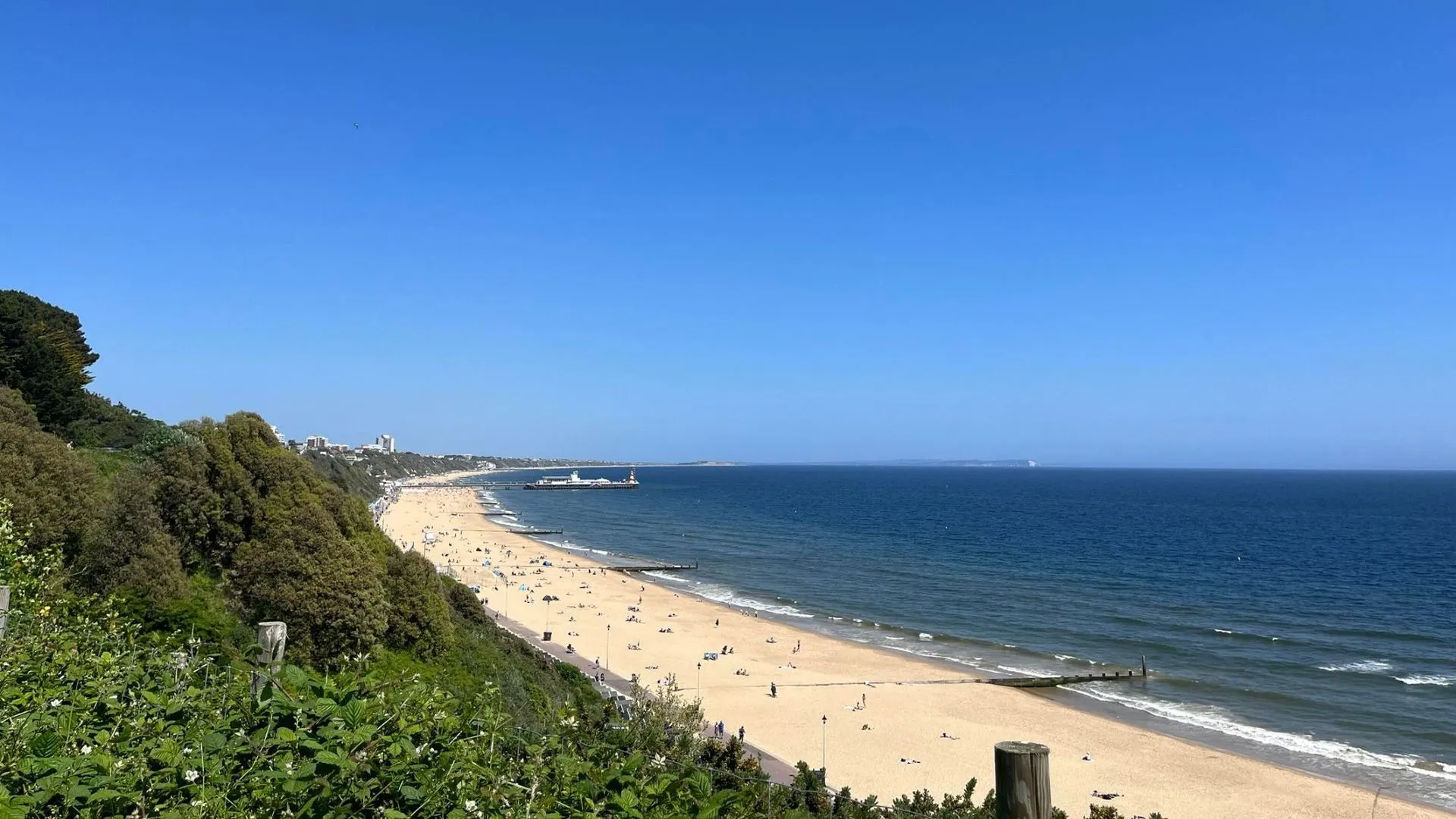
📍 Bournemouth, Dorset, England
Photo: O. Haynes, own work
Yes, but it's a swell-dependent south-coast beach break, not a place where waves turn up every day.
Bournemouth sits on Poole Bay, between Poole and the mouth of the Solent, with no direct exposure to the Atlantic. The surf here is fickle, as the swell has to travel up the English Channel to reach the coast at all. The waves it does get are mostly south-westerly, and it's the winter months that deliver the best of them.
The town has a real surfing history. Surfers have ridden the pier break since at least the 1960s, and it remains the spot most people mean when they say Bournemouth surf. Boscombe, a short way east, has its own pier and its own, more complicated story, covered below.
It can be, with a lesson and the right day. The long, gently shelving sandy beaches are forgiving, and the schools run lessons in small waves. The catch is the other end of the scale. Local surf guides rate the Boscombe Pier break as intermediate and warn that it's no place for beginners when conditions are good, with heavy waves, rips and a big crowd. Learning here means picking a small, tidy day, going with an instructor and keeping to the lifeguarded beach. Our complete beginner's guide to learning to surf covers what to expect from your first sessions.
Four stretches of Poole Bay, from the pier to Hengistbury Head.

The surf-school and hire hub, around the pier and the Undercliff. Lessons and kit are on the beach; the waves are short and need the right swell.
Read the Boscombe guide arrow_forward
The town's best-known break, with peelers on both sides of the pier. It needs a strong south-westerly groundswell and draws a crowd when it works.
Read about the pier break arrow_forward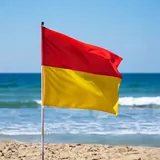
The eastern end of the beach, lifeguarded in summer. Local surf guides describe a sandy A-frame break that can pick up the largest waves on this stretch of coast.
Read the Southbourne guide arrow_forward
The groyne-protected beaches towards the headland. Dredging disrupted the sandbanks that once made this stretch worth surfing, so it isn't a spot to head for.
Read about Hengistbury Head arrow_forwardPeelers either side of Bournemouth Pier when a proper south-westerly swell arrives.
Local surf guides describe waves on both sides of the pier, like a classic Californian pier break. They say the east side is the best wave and the least consistent, with a long left shoulder on big south-westerly sets and a quick, short right. The west side is usually a foot bigger but messier, because it gets less shelter from westerly wind. Both sides draw a crowd, and guides warn of vocal locals when it's good.
A south-westerly groundswell is what it wants, with the cleanest days in winter, ideally under a cold northerly wind. In summer, it's usually flat or messy windswell. If you're new, treat this as a place to watch from the pier first. Our guide to surf wave types explains why a beach break behaves the way it does.
The part of Bournemouth where lessons, boards and wetsuits are all within a few minutes' walk of the beach.
Boscombe is a sloping sandy beach, and BCP Council lists RNLI lifeguards, showers, toilets, a kiosk, restaurants and surfing equipment hire on the seafront. The Undercliff and the pier are the centre of activity. Local surf guides call the break itself a left and right beach break with short waves that only fire occasionally; it's rated as intermediate and becomes ultra-crowded when conditions are good. They also report tension with local surfers, and advises newer surfers to keep their distance from the main peak.
Boscombe is where Europe's first artificial surf reef was built, from sand-filled geotextile bags, and opened in November 2009. However, it failed to deliver. A May 2010 Plymouth University report found it had fully met only four of its eleven design objectives, and the waves were too short and inconsistent. The council closed it for safety reasons on 31 March 2011 after an inspection found its profile had changed, and in April 2014 it rebranded the area as a Coastal Activity Park.
Sources disagree on what remains of the reef itself, and we couldn't find a current official statement, so we advise against planning a session around it. Sandbanks still form on either side of the pier, which is where the waves you'll actually find at Boscombe originate. Check with the lifeguards or the beach office on the day.
BCP Council lists surfing equipment hire on the Boscombe seafront, and local listings place a surf shop on Sea Road, just back from the beach. See the hire section below for how to choose what to rent.
A sandy, lifeguarded beach at the eastern end of the bay.
Local surf guides say Southbourne typically has the largest waves on the central Channel coast, breaking as a clean A-frame over sand, and rate it good for all levels with all tides working. However, treat the 'all levels' rating with caution. It's an exposed beach, and on a big south-westerly swell exposed sand beaches can close out and dump. When it's bigger than you're comfortable with, heading to the Boscombe lesson area or taking a day off is the wiser choice.
We haven't found a surf school based at Southbourne that we could verify, so we aren't recommending one. Ask the Boscombe operators below whether they teach there. BCP Council lists lifeguards at Southbourne from 23 May to 6 September, which matters because between the flags is the only supervised water.
The groyne-protected beaches towards the headland, and why they're no longer the draw they were.
Local surf guides say that dredging towards Hengistbury Head disrupted the sandbanks that had built up against the groynes, and that almost five miles of decent surf territory disappeared over a few years. The headland isn't on BCP Council's list of lifeguarded beaches either. So we aren't presenting it as a surf spot to head for. If you're walking the headland, it's a place to admire the sea, not to find reliable waves.
What's on offer, who it suits and what to check before you book.
The two operators we could identify are both near Boscombe Pier. Surf Steps (listed as Bournemouth Surf School) is described by Visit Bournemouth as on the beach, a five-minute walk west of Boscombe Pier, on Undercliff Drive. The listing describes it as the only Surfing GB Centre of Excellence on the south coast and says its instructors are ISA-accredited professional surf and SUP instructors, noting that it's open all year with booking essential. Sorted Surf Shop is listed at 42 Sea Road, Boscombe, as a shop offering water sports equipment hire. Its old website now redirects to a wetsuit retailer, so confirm by phone what it offers before you rely on it.
Both details come from third-party listings and we couldn't reach the schools' own websites, so check lesson types, minimum ages, group sizes and what's included directly with the operator. That includes children's lessons and private coaching, which we haven't been able to confirm.
One-to-one coaching is worth asking about if you're nervous in the water, short of time or past the first-lesson stage. When you ask, find out whether the instructor is Surfing GB or ISA accredited, holds a lifeguard qualification and has first aid cover.
We don't crown a single winner, but here's what you should weigh up:
We aren't quoting a price here. The only figures we found were on undated third-party listings, and prices change by season. Ask the school for current rates for group, private and children's sessions, and for any group or multi-session discount. As a rule, a group lesson costs less per person than one-to-one coaching, but check what each includes.
Renting before you buy, and what to rent.
BCP Council lists surfing equipment hire on the Boscombe seafront, and a hire shop is listed on Sea Road. We haven't verified a rental desk at Bournemouth Pier itself, so ask at the beach before you walk down with a wetsuit and no board. Beginners are usually best on a big, soft-top foam board. It's stable, forgiving and much kinder if it hits you. Our surfboards guide explains how volume, length and shape affect stability, and the surfboard volume calculator gives you a sensible volume if you're thinking of buying after a few lessons.
The water here's cold for much of the year, so a wetsuit isn't optional outside the warmest weeks. Most hire outlets and schools supply them with a lesson, but confirm that before you book, along with boots, gloves and a hood in winter. We haven't verified current hire rates, so ask the shop. If you would rather buy, see our wetsuit guide.
Winter for the waves, summer for the lessons.
Because the swell has to travel up the Channel, surf guides say winter reigns here, with November to March tending to be best, particularly on crisp, still days with a northerly wind and a big groundswell. Summers, they say, tend to be flat or messy. Those aren't the same as 'best for a first lesson'. Small, gentle summer waves are what most learners want, so the best month for a beginner and the best month for a surfer who wants real waves are different months.
Cefas, the government marine science agency, publishes monthly means for its Bournemouth sea-temperature station (1970 to 2012 record). They run from about 7°C in February, the coldest month, to about 18.5°C in August, the warmest, with March at about 7.6°C and September at about 17°C. Treat them as a guide, since the series ends in 2012. In practice, the cold months call for a thick winter wetsuit with boots, gloves and a hood, and a thinner suit is suitable for the warmer weeks.
How to check before you set off.
We aren't embedding a webcam, because we couldn't confirm a live, reusable feed and won't display one that may be inactive. Instead, check a surf forecast for swell direction, swell period and wind, and check the tide. For this coast you want a south-westerly swell, an offshore northerly wind and enough period for the swell to travel up the Channel. Our guides to how tides work and how waves are formed explain how to read those numbers. If you're driving in, the pier and the Undercliff are good places to look at the sea before you commit.
Flags, rips and who patrols where.
RNLI lifeguards mark the swimming zone with red-and-yellow flags. That's the area for swimmers and bodyboarders, and surfboards, SUPs and kayaks should stay out of it. Black-and-white chequered flags mark the zone for surfboards and other non-powered craft, and swimmers and bodyboarders keep out of it. A red flag means the water's dangerous and you shouldn't enter it. BCP Council adds that inside the red-and-yellow bathing areas you can't use boats, personal watercraft, wind or kite surfers or large, solid body boards. If the lifeguards ask you to move, please do so immediately.
BCP Council lists lifeguards from 10am to 6pm daily at Boscombe East from 28 March to 27 September, and at Boscombe West and Southbourne from 23 May to 6 September. The council's page gives these as yearly dates without naming a season, and they can change, so check the council's lifeguard page before you go. No flags means no lifeguards are on duty, so outside those dates and hours you're responsible for your own safety.
Local surf guides warn about rips at Boscombe and say the failed reef left strong ones behind. If you're caught in one, don't swim against it. Swim across it, parallel to the shore, or float and signal for help. In an emergency, dial 999 and ask for the Coastguard. Surfers Against Sewage's Safer Seas & Rivers Service app is worth a look after heavy rain. Read more in our surf safety guide.
Trains, car parks and what's on the seafront.
BCP Council gives the nearest station to Boscombe beach as Pokesdown, 1.2 miles away, with Bournemouth 1.8 miles away. Bus timetables are on the council's Boscombe beach page.
The council names Boscombe Undercliff car park, next to the beach, and Overstrand car park as the nearest. The seafront has toilets, drinking water, showers, a kiosk, restaurants, a beach office and RNLI lifeguards in season. Charges and opening times aren't listed on the council's beach page, so check them before you travel.
For the flat days.
The council lists climbing boulders and slacklining at Boscombe, and describes the historic pier and the views across Poole Bay. There's plenty more in town, but we haven't researched it for this page. When you want more wave-hunting options, compare Bournemouth with the wider UK surf map, or read our surf guides.
The questions people ask most before a session in Bournemouth.
Yes, but it depends on swell. Bournemouth gets mostly south-westerly swell pushed up the English Channel, and the best waves come in winter. Summers are often flat or messy, so check a forecast before you travel.
It can be on a small day with an instructor. The sandy beaches are forgiving, but the Boscombe Pier break is rated intermediate and gets heavy, crowded and rippy when conditions are good. Beginners should learn in a lesson and keep to lifeguarded water.
It was Europe's first artificial surf reef, built from sand-filled bags and opened in 2009. It fell short of its design aims and the council closed it in March 2011. We advise against planning a session around it.
Listings place Surf Steps on Undercliff Drive, a short walk west of Boscombe Pier, and a surf shop on Sea Road in Boscombe. Confirm lesson types, ages and prices with the operator, because we couldn't verify them at the source.
November to March tends to give the best waves, especially on still, cold days with a northerly wind. Summer is usually smaller, which suits first lessons better than it suits experienced surfers.
Cefas's monthly means for Bournemouth run from about 7°C in February to about 18.5°C in August. Wear a wetsuit for most of the year, a thinner one in the warmer weeks, with boots, gloves and a hood in the colder months.
Not between the red-and-yellow flags, which mark the swimming and bodyboarding zone. Surfboards belong in the black-and-white chequered zone. If there are no flags, there are no lifeguards.
BCP Council lists 10am to 6pm daily: Boscombe East from 28 March to 27 September, and Boscombe West and Southbourne from 23 May to 6 September. Check BCP Council's lifeguard page for the current dates.
Use the Matosurf calculator before buying or hiring.
Use the calculator arrow_forwardBrowse UK and international surf destinations.
See all destinations arrow_forward