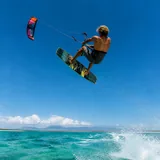

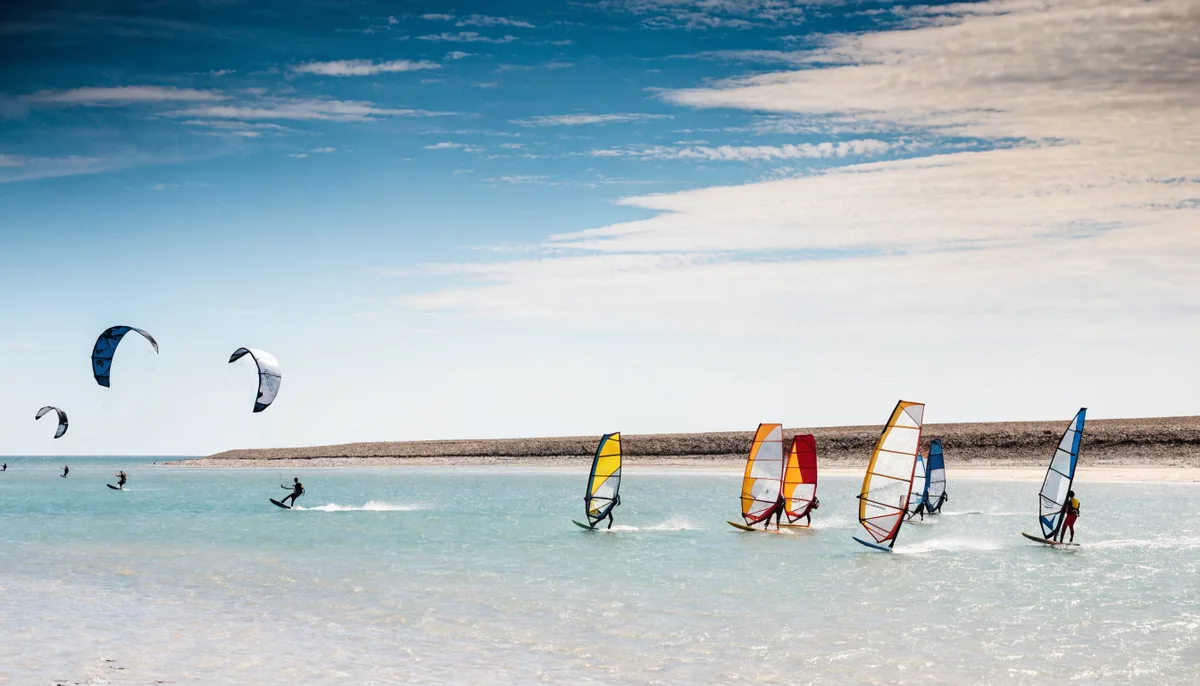
The UK punches well above its weight as a kitesurfing destination. With a South Coast that catches reliable summer sea breezes, an Atlantic-facing west coast battered by regular depressions, and a handful of sheltered lakes and harbours thrown in, Britain offers a genuine spread of UK kitesurf spots for every level. The trick is picking the right spot for your ability, the season and the day's wind.
The best kitesurf spots by region in the UK
British geography splits neatly into three families of kitesurf spot: the South Coast spots (steady summer sea breezes, generally sheltered water), the Atlantic and west coast spots (powerful, depression-driven wind, real swell) and the flat-water spots (harbours and inland lakes, ideal for foiling and freestyle). Each region has its own wind, seasonality and the level of experience it rewards.
South Coast: the steady sea-breeze spots
The South Coast and the Solent are the UK's most reliable region for learning and for consistent summer sessions. Thermal sea breezes fill in most afternoons from spring through to early autumn, and several spots combine shallow, sheltered water with well-established kite schools.
Hayling Island (Hampshire): the birthplace of windsurfing
Hayling Island is one of the best-known watersports spots on the South Coast, and for good reason: reliable sea breezes, a huge stretch of beach and a strong, established kitesurfing community. Its position at the entrance to Chichester Harbour gives it sheltered, shallow zones that are ideal for learning to kitesurf, alongside more open water for confident riders.
Why Hayling Island stands out: the beach is huge, so there's plenty of room to rig up without crowding other riders, and the harbour entrance creates a properly sheltered training area on the right tide. Several BKSA-affiliated schools operate here, and it hosts regular UK competitions. Read our full Hayling Island guide: zones, schools, wind and how to get there.
West Wittering (West Sussex): the managed lagoon spot
West Wittering, at the mouth of Chichester Harbour, is a beautifully managed spot with a dedicated zoning system for kitesurfing, windsurfing and wing foiling. The sheltered lagoon behind the spit offers flat, shallow water that's perfect for beginners, while more experienced riders can head out towards the harbour entrance.
Good to know: the site runs a '2XS' launch and zoning system to keep kitesurfers, swimmers and other water users apart safely, so it's worth checking the rules before you rig up. Read our full West Wittering guide: zones, rules, wind and wetsuits.
Camber Sands (East Sussex): the big, sandy playground
Camber Sands is famous for its vast, dune-backed beach, which at low tide leaves an enormous stretch of firm sand for rigging up and launching. Consistent sea breezes and a friendly, established kite scene make it a popular choice for lessons and for independent riders alike.
Atlantic and west coast: the exposed, high-wind spots
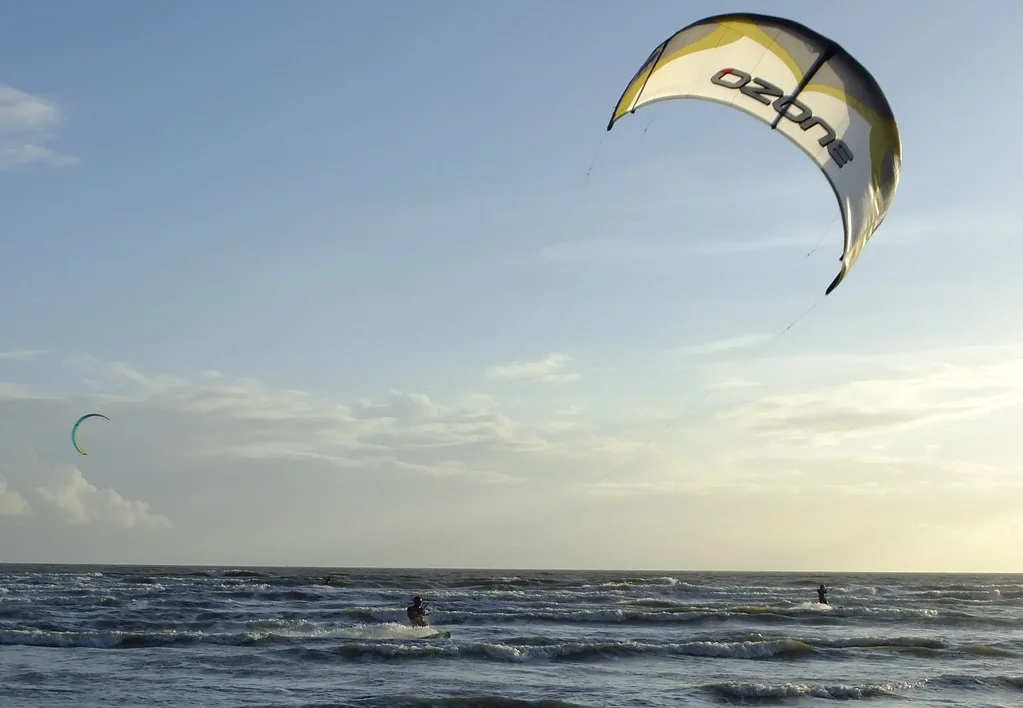
The Atlantic-facing coast of England, Wales and Scotland is exposed to ocean depressions that generate powerful wind, especially in autumn, winter and spring. These Atlantic kitesurf spots are known for sporty conditions, real swell and a wilder atmosphere. This is where freestyle, wave riding and big air come into their own.
Watergate Bay (Cornwall): Cornwall's iconic kite beach
Watergate Bay, just north of Newquay, is arguably the most recognised kitesurf beach in the country. Two miles of open sand with imposing cliffs either side capture Atlantic swell and south-westerly wind, producing everything from mellow onshore cruising to genuine big-air conditions when a storm rolls through.
What makes it special: the beach almost never lacks wind through autumn and winter, and the four kilometres of sand at low tide give plenty of room to launch. Be aware the beach floods right up to the cliffs for a few hours around high tide, so plan around the tide table. The water is cold outside summer, so a thick wetsuit is essential.
Rhosneigr (Anglesey, Wales): the Welsh wave spot
Rhosneigr, on the west coast of Anglesey, is one of the best-regarded watersports spots in Wales. Fully exposed to the Irish Sea, it has hosted British wave championships and offers genuine wave-riding conditions for confident kitesurfers, alongside more sheltered bays for building confidence.
Tiree (Inner Hebrides, Scotland): the wild Atlantic outpost
Tiree, the westernmost of the Inner Hebrides, is famously the sunniest spot in Scotland and one of the windiest islands in Britain. Fully open to the Atlantic, it delivers big, reliable wind and serious swell, but the remoteness, cold water and exposure mean it's really a spot for experienced riders.
Be warned: the wind can be very powerful and the water is cold even in summer. This spot isn't recommended for beginners, but experienced riders make the trip for wild, empty conditions rarely found elsewhere in the UK.
Flat water: the sheltered harbour and lake spots
The UK doesn't have the natural flat-water lakes you find in the south of France, but it does have large sheltered natural harbours and a handful of purpose-built lakes that offer comparable flat-water kitesurfing conditions: no swell, no current to fight, just wind and calm water. These spots are ideal for learning, for freestyle and for foiling.
Poole Harbour / Sandbanks (Dorset): the natural harbour
Poole Harbour is one of the largest natural harbours in the world, and its shallow, sheltered water off Sandbanks makes it one of the most forgiving places in the country to learn. Beginners and improvers can build their skills in the flat water of the harbour, while more experienced riders can head out to the open sea for punchier conditions.
West Kirby Marine Lake (Wirral): the freestyle and foil venue
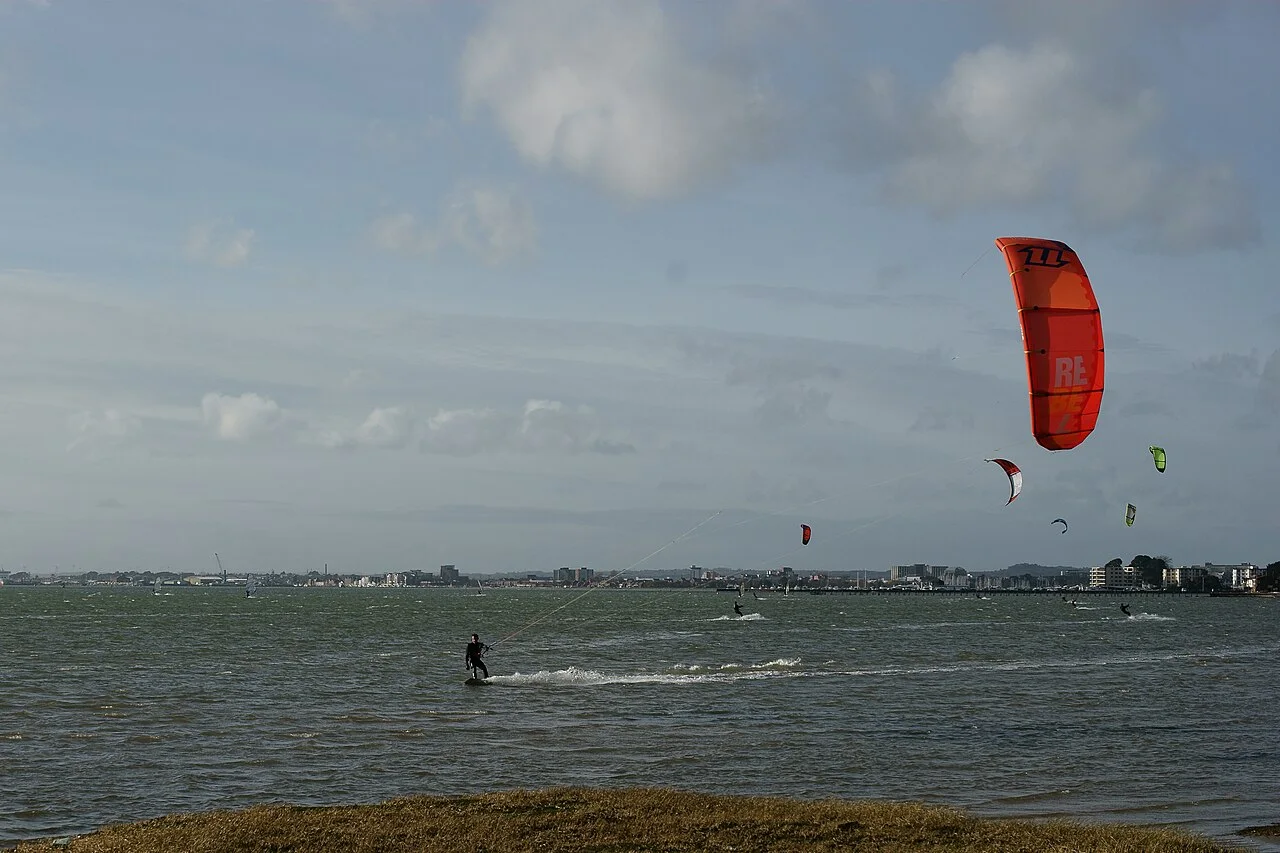
The West Kirby Marine Lake, on the tip of the Wirral peninsula, is a man-made saltwater lake with views across the Dee Estuary to the Welsh hills. It stays only waist-deep for a couple of hours either side of high tide and is entirely enclosed, making it about as safe and controlled a kitesurfing environment as you'll find anywhere in the UK.
The West Kirby advantage: because the lake is so shallow, you can wade back if anything goes wrong, which makes it a favourite for lessons and for practising foil and freestyle moves without the complication of tide, current or swell. Some seasonal restrictions apply, so check locally before you head down.
Summary: UK kitesurf spots by level
Here's a quick reference to help you pick the right spot for your kitesurfing level:
| Spot | Level | Best season | Water type |
|---|---|---|---|
| Hayling Island | All levels | April - October | Flat, sheltered |
| Poole Harbour | All levels | April - October | Flat harbour |
| West Kirby Marine Lake | All levels | April - September | Flat lake |
| West Wittering | Beginner to Interm. | April - October | Flat lagoon |
| Camber Sands | Beginner to Interm. | April - October | Shallow shore break |
| Watergate Bay | Intermediate to Expert | Sept. - May | Swell, shore break |
| Rhosneigr | Intermediate to Advanced | Sept. - May | Waves |
| Tiree | Advanced to Expert | May - September | Open Atlantic swell |
Just starting out? Read our beginner's guide to kitesurfing before you choose a spot. A supervised course is strongly recommended for your first sessions.
How to read wind forecasts for kitesurfing
Picking the right spot only gets you halfway. You also need to know when to go, and reading a wind forecast properly is a skill in its own right.
Wind speed
Kitesurfing needs a minimum of around 12-15 knots (roughly 14-17 mph) to ride comfortably:
- 10-15 knots: light wind, a large kite (12-17m²) is recommended.
- 15-22 knots: ideal wind, medium kite (9-12m²). Good conditions for every level.
- 22-30 knots: strong wind, small kite (5-9m²). For experienced riders.
- 30+ knots: very strong wind, experts only. Dangerous conditions for beginners.
Wind direction
The direction of the wind determines how good, and how safe, your session will be:
- Onshore (blowing from the sea onto the land): pushes you back towards the beach. Easy conditions for learning, though the water can be a bit choppy.
- Offshore (blowing from the land out to sea): dangerous for kitesurfing because it pushes you out to sea. Avoid it unless you're experienced and staying close to shore.
- Sideshore (blowing parallel to the coast): the ideal direction. You can ride up and down the beach and easily get back to your starting point.
- Cross-onshore (mostly onshore with a slight angle): good conditions, close to ideal.
Never ride in an offshore wind on your own. If the wind is pushing you out to sea, you may not be able to get back. Always check the wind direction before you rig up.
Gusts
Gusts are sudden increases in wind speed. An average of 15 knots with gusts to 25 knots can catch you out, because your kite is sized for the average rather than the gust. Keep an eye on the gap between average wind and gusts – the smaller it is, the more consistent and comfortable the session will be.
The best UK forecasting apps
Four apps do most of the work for UK kitesurfers.
- Windy: the go-to for visualising wind in real time and in the forecast, built on the reliable ECMWF model.
- iKitesurf: a kitesurf-specific app with spot forecasts, webcams and wind alerts.
- Windguru: a firm favourite with UK kitesurfers, with detailed wind and sea forecasts spot by spot.
- Met Office: for the official marine forecast, weather warnings and average wind. Useful for anticipating bigger blows.
Always cross-check at least two forecast sources before you set off. Windy plus iKitesurf is a reliable combination for most UK spots.
How to choose the right spot for your level
The spot you choose shapes both how fast you progress and how safe you are while doing it.
For beginners
As a beginner, look for a spot that offers all of the following:
- Flat or gently rippled water: a harbour, lake or sheltered bay. Avoid waves, which make the water start much harder.
- Shallow water: so you can stand up if something goes wrong and recover your kit easily.
- Steady, side-on wind (sideshore): avoid gusty wind, and above all avoid offshore wind.
- A school nearby: proper instruction is essential for your first lessons.
- An open beach: room to rig your kite and launch without obstacles (trees, buildings, other beach users).
Recommended spots: Hayling Island, West Wittering, Poole Harbour, West Kirby Marine Lake.
For intermediates
Comfortable with the water start, riding upwind and your first jumps? You can look at more engaging spots:
- Slightly choppier water: to build your wave and chop-reading skills.
- Stronger wind: 18-25 knots to work on control and your pop.
- Room for freestyle: dedicated zones where traffic isn't an issue.
Recommended spots: Camber Sands, West Kirby Marine Lake, Rhosneigr.
For experts
Experienced riders will be looking for the sportiest conditions available:
- Strong, steady wind: 25-35 knots for big air and committed tricks.
- Waves: for wave riding and sessions in the surf.
- Exposed spots: headlands and points that capture the maximum wind.
Recommended spots: Watergate Bay, Tiree, Rhosneigr in a big swell.
Looking for a kitesurf course to help you progress at the right spot? See our guide to lessons and courses across the UK, for every level.
Right of way and safety rules on the water
On any kitesurf spot, sharing the water safely with other users (windsurfers, swimmers, sailing boats) matters. These are the basics.
- Priority to the windward rider (the one closest to the wind): they hold their line, the other rider gives way.
- Launch and landing zones: never cross the area where other kitesurfers are launching or landing.
- Safe distance: keep at least 50 metres from swimmers and obstacles.
- Beach flags: follow the lifeguards' instructions. A red flag means don't go in.
- Insurance: make sure your liability cover includes kitesurfing. The BKSA (British Kite Sports Association) offers membership with cover built in.
Explore our full guide to UK kitesurf destinations to find your next dream spot.
❓ Frequently asked questions about UK kitesurf spots
What is the best UK kitesurf spot for beginners?
Hayling Island and West Wittering are the best UK spots to start kitesurfing: reliable sea breezes, sheltered flat water and BKSA-affiliated schools on site. Poole Harbour and West Kirby Marine Lake are also excellent beginner-friendly spots.
What is the best UK kitesurf spot for experts?
Watergate Bay in Cornwall is a firm favourite with experienced UK kitesurfers: powerful, regular wind and Atlantic swell for wave riding and big air. Tiree in Scotland and Rhosneigr in Wales also offer demanding conditions for confident riders.
What is the best season for kitesurfing in the UK?
Spring (April to June) and autumn (September to November) offer the most consistent conditions, as Atlantic depressions bring regular wind without the height-of-summer crowds. Summer sea breezes are reliable on the South Coast but can be light; winter brings strong wind but cold water and short days, so a thick wetsuit is essential.
How do you read a wind forecast for kitesurfing?
For kitesurfing, watch the wind speed (minimum 12-15 knots), its direction (onshore, offshore, sideshore), the gust factor and how settled the wind is. Windy, iKitesurf and Windguru are the apps most used by UK kitesurfers, alongside the Met Office marine forecast. Always cross-check at least two sources before you set off.