

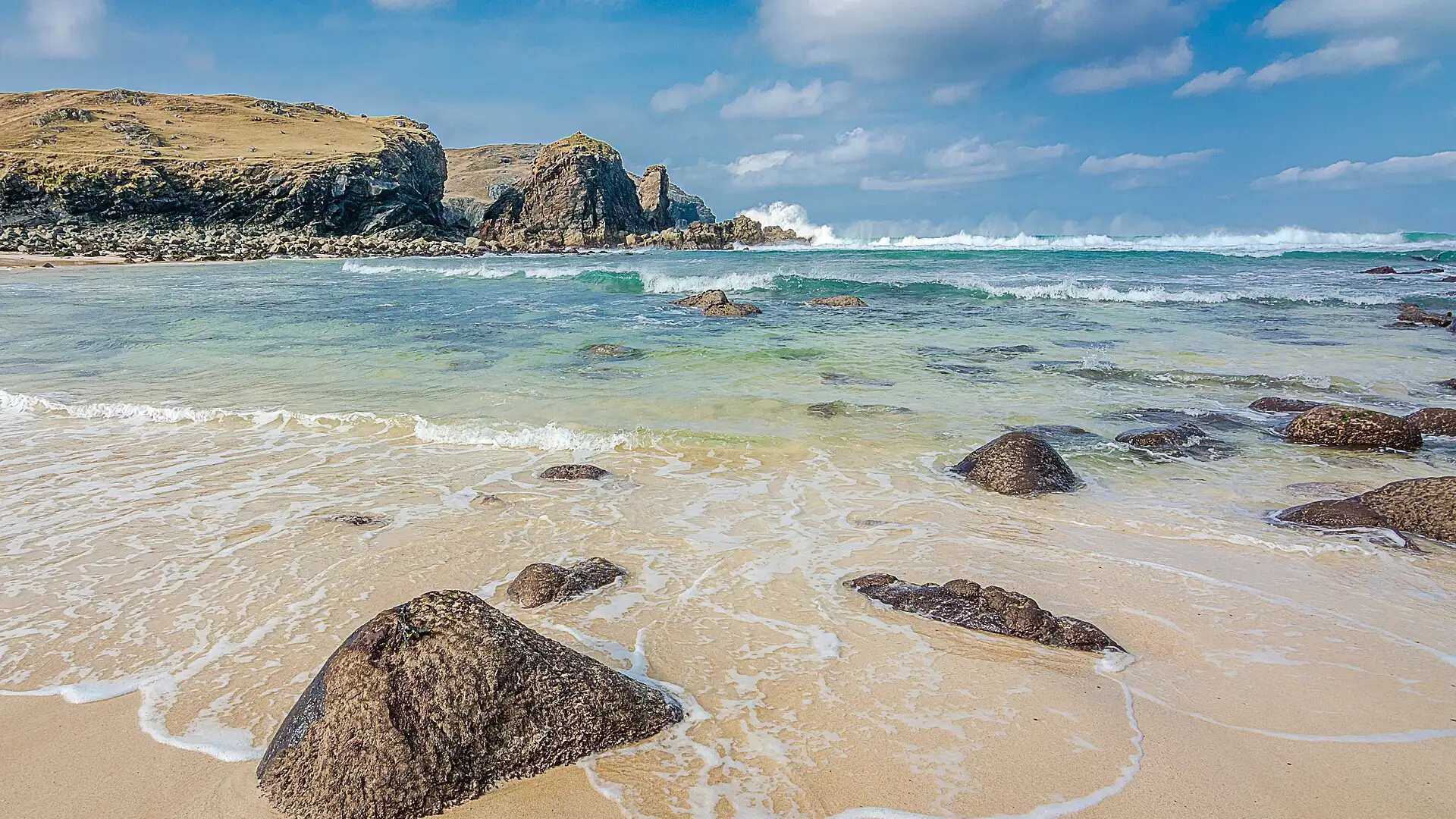
Photo: Dalbeg, Isle of Lewis – Chris Combe / Wikimedia Commons, CC BY 2.0
Scotland faces two seas. The Atlantic side gets the bigger swell, the North Sea side the shorter drive from Edinburgh, and which one works on a given day depends on where the swell and the wind are coming from.
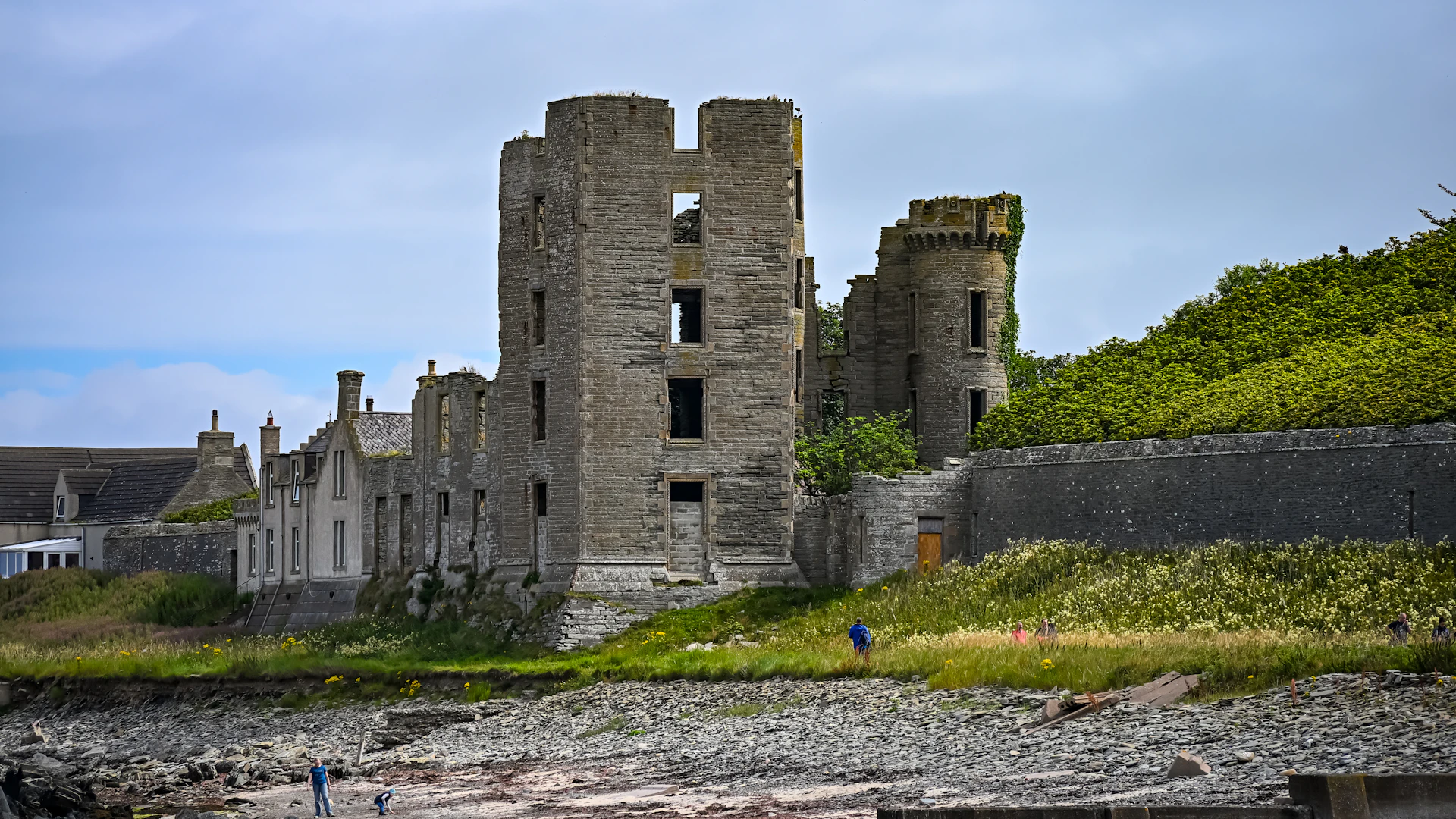
Thurso East, a heavy right-hand reef in Caithness, plus Brims Ness and the beginners' beach at Dunnet. It faces the north and north-west swell.
The north coast arrow_forward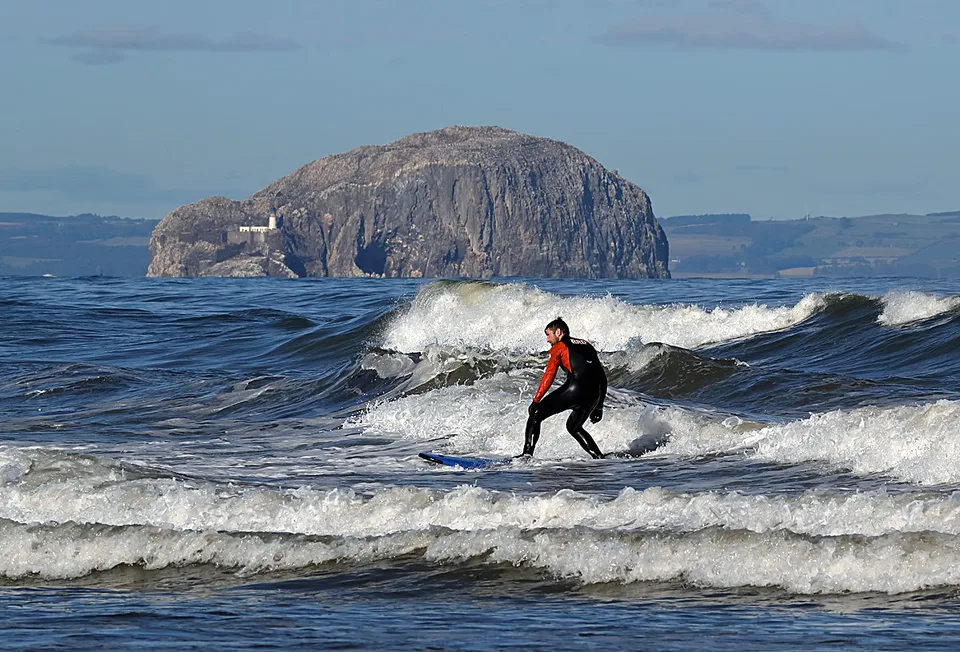
Belhaven Bay, Pease Bay and Coldingham within reach of Edinburgh, then Sandend and Fraserburgh in Aberdeenshire. These beaches work on North Sea swell from the north-east.
The east coast arrow_forward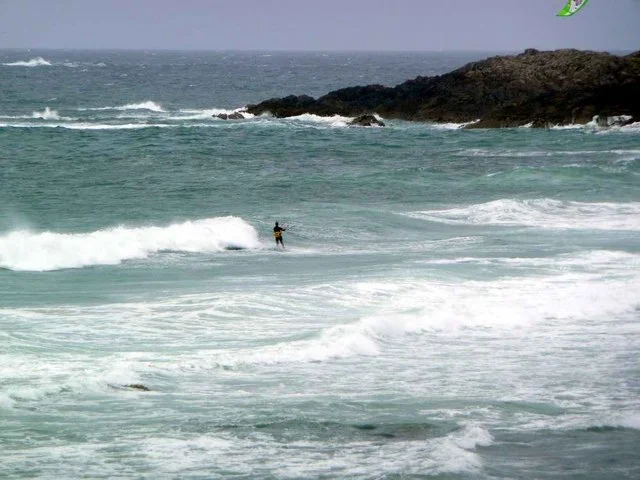
Machrihanish and Westport on Kintyre, Islay, Tiree and the Outer Hebrides take Atlantic swell from the west and are a long way from anywhere.
Kintyre and the islands arrow_forwardWhat to know before you book, including what we couldn't pin down.
| Coast | Swell window | Spots on this page | Nearest gateway |
|---|---|---|---|
| North coast | North to north-west | Thurso East, Brims Ness, Dunnet | Inverness, Wick |
| East coast | North-east (North Sea) | Belhaven Bay, Pease Bay, Coldingham, Sandend, Fraserburgh | Edinburgh, Aberdeen |
| Kintyre and Islay | West (Atlantic) | Machrihanish, Westport, Machir Bay | Glasgow, Campbeltown |
| Tiree and the Outer Hebrides | Open Atlantic | Balevullin, Scarista, Hosta, Sollas, Lewis | Oban, Ullapool, Stornoway |
Scotland's best-known wave, and a beach to learn on 15 minutes away.
The north coast faces straight into north and north-west swell from the Atlantic. Its headline wave is Thurso East, a long, hollow right-hander over a flagstone reef below the ruins of Thurso Castle. It works best with a southerly offshore wind, and it is for experienced reef surfers only. Close by are the reefs at Brims Ness, west of town, and Dunnet Bay to the east, the area's beginner beach and where local lessons take place.
We cover this coast in its own guide, with the breaks, tides, seasons and how to get to Thurso by road, rail or air.
Read the Thurso East guide arrow_forwardNorth Sea beaches, closer to the cities and more dependent on the right forecast.
The North Sea gets smaller waves than the Atlantic side. The Scottish Government's marine assessment puts typical offshore wave heights to the east at 2–3 m in winter and 1–1.5 m in summer, against 5 m and 2 m to the west. The surf-forecast.com guides for Belhaven Bay and Pease Bay both give north-east as the ideal swell direction and a south-west or west-south-west wind as offshore, and both name winter and spring as the best seasons. In practice that means waiting for a swell from the north-east and a wind from the land.
Belhaven Bay sits on the edge of Dunbar in East Lothian, with the Bass Rock out to sea. Surf-forecast.com describes a beach and reef break with lefts and rights, and warns of dangerous rips. Coast to Coast Surf School, formed in 2004, teaches surfing and stand-up paddleboarding on Belhaven beach and the Dunbar coastline and is a member of the Belhaven Surf Centre.
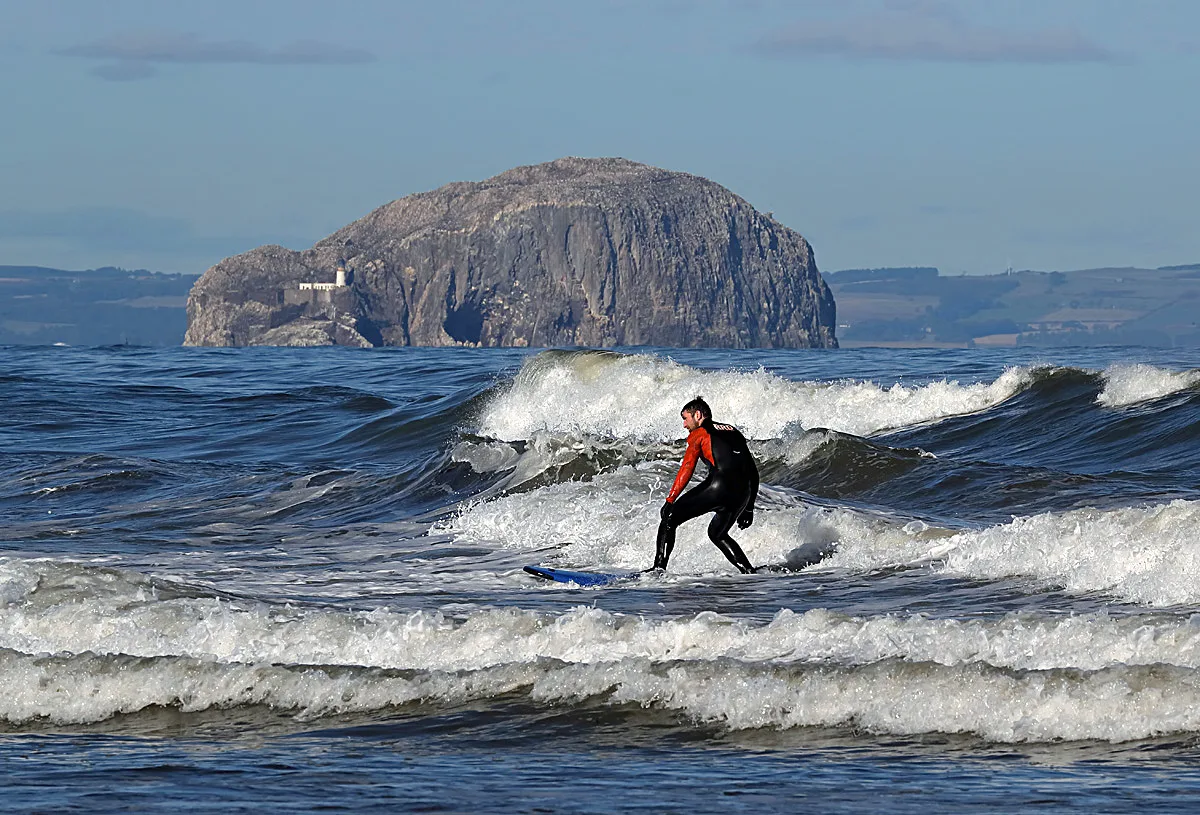
Over the border in the Scottish Borders, about 9 miles south-east of Dunbar near Cockburnspath, Pease Bay is a bay known for its surfing, with a large caravan park at the bottom of it. Surf-forecast.com calls it a fairly exposed beach break with consistent surf, lefts and rights at all stages of the tide, and warns about rocks and crowds. Further south, Coldingham Bay is a sheltered sandy bay, a Blue Flag beach, and the one surf beach in this guide with RNLI lifeguards in summer; the Berwickshire Marine Reserve sends visitors to St Vedas Surf Shop for hire and lessons.
Further north, Visit Aberdeenshire says Sandend, near Portsoy, draws surfers from across the country with powerful waves and fewer crowds. Fraserburgh beach is a long arc of sand backed by dunes, popular with surfers and, by the same account, one of the best places in the region for kite sports.
If the North Sea is flat, there is a man-made option. Lost Shore Surf Resort at Ratho, west of Edinburgh city centre, opened on 11 November 2024 in a former quarry. It runs on Wavegarden technology, and VisitScotland describes it as Europe's largest inland surfing destination.
Long Atlantic beaches on the mainland's west side and the first island out.
On the west side of the Kintyre peninsula, near Campbeltown, Westport beach runs for six miles to Machrihanish, according to Wild About Argyll, and has its own surfcam. Surf-forecast.com describes Machrihanish as an exposed beach, point and rivermouth break that can work at any time of year, best on a west swell with an east wind and around mid tide on the rise. Wild About Argyll suggests beginners stick to the main spots at Westport and Machrihanish.
On Islay, the same guide names Laggan Bay and Machir Bay as probably the best surfing beaches, and says Saligo Bay is only for the most experienced surfers.
An Inner Hebridean island with beaches facing every direction.
Wild About Argyll describes Tiree as well placed to catch North Atlantic swell all year, with white sandy beaches facing every direction, so there is usually a beach that suits the wind. CalMac's island surf guide suggests Balevullin as the place to start, and adds a catch: the prevailing south-westerly wind blows onshore there, so a big swell with an offshore wind is not an everyday event. It names Blackhouse Watersports, a family-run surf company, at Balevullin.
Tiree is also a windsurfing island. The Tiree Wave Classic, first held in 1985, is the British Wavesailing Association's longest-running event; the 2026 edition is set for 10–16 October, a month the organisers chose on more than 40 years of wind and wave statistics. For learners, Wild About Argyll points to an inland lochan, and Wild Diamond on the island lists windsurfing, kitesurfing, wing foiling, stand-up paddleboarding and surfing. Our UK wing foil spots guide also covers the island.
Open Atlantic beaches, very few surfers, and nobody watching from the shore.
CalMac's guide picks out four island beaches. Scarista, on Harris, faces north-west into the open Atlantic with little shelter from nearby islands or headlands; its autumn and winter waves can be very big, and there are rarely more than a handful of surfers out. Hosta, on North Uist, can hold a huge North Atlantic swell and is best surfed on a rising mid to high tide, with a well-known rip at the north end by the rocks. Sollas, also on North Uist, suits beginners and advanced surfers alike; it lies about a mile from the nearest road, and CalMac asks visitors to park in the village and walk down to protect the machair. Tràigh Shar on Vatersay, across the causeway from Barra, takes the full force of the Atlantic.
On Lewis, Surf Lewis is based in Sandwick; its coach is a Surf Lifesaving GB beach lifeguard and a British Surf Association surf coach. On Barra, Barra Surf and Coastal Adventures runs surf sessions alongside sea kayaking and coasteering. We haven't covered individual Lewis breaks in detail.
Autumn and winter for size, summer for learning, and a forecast check every time.
The Scottish Government's marine assessment explains the pattern. Big Atlantic storms are more likely in autumn and winter, and typical offshore wave heights to the west drop from about 5 m in winter to 2 m in summer. That makes autumn and winter the season for the reefs and the exposed island beaches, and summer the gentler time to learn. Our Thurso East guide treats September to November as the prime season on the north coast.
The east coast follows the North Sea, not the Atlantic, so it can be working when the west is flat and the other way round. Before any session, check the swell direction against the beach you have in mind, as well as the wind, the tide and the daylight, which is short in a Scottish winter.
Cold all year, coldest in late winter, warmest in August.
The Scottish Government's Marine Directorate publishes monthly average sea surface temperatures for the waters around Scotland from its Scottish Coastal Observatory. Averaged over 1997–2013, they look like this:
| Sea area | Coldest month (average) | August (average) |
|---|---|---|
| East Scotland Coast | 6.9°C (March) | 14.6°C |
| Moray Firth | 7.3°C (March) | 13.9°C |
| North Scotland Coast | 8.0°C (March) | 13.4°C |
| Clyde | 7.3°C (February–March) | 14.9°C |
| Minches and Malin Sea | 8.2°C (February–March) | 14.5°C |
| Hebrides | 9.1°C (March) | 14.2°C |
These are averages over whole sea areas, so a given day at a given beach can be colder or warmer. The sea also lags the air: in every area, September is warmer than June.
On the bands in our wetsuit guide, water between 6°C and 11°C calls for a 5/4mm with a hood, boots and gloves, which covers winter and spring everywhere in Scotland and most of the year on the north coast. Between 11°C and 15°C a 4/3mm is the usual choice, which fits late summer and early autumn on most coasts. On the Thurso reefs our Thurso East guide recommends a 5/4mm all year.
Fly into a city, then drive, or take the ferry to the islands.
The east coast is the easy one: Belhaven Bay, Pease Bay and Coldingham are all east of Edinburgh, and Aberdeen is the city for Sandend and Fraserburgh. The north coast is a long way north; the Thurso East guide covers the drive, the train from Inverness and the airport at Wick.
Kintyre: Campbeltown Airport has flights from Glasgow. Tiree: CalMac sails from Oban, a crossing of 3 hours 50 minutes, and the British Wavesailing Association lists flights with Loganair from Glasgow and Hebridean Air from Oban. Lewis: the CalMac ferry from Ullapool to Stornoway takes 2 hours 40 minutes, and Stornoway Airport has flights to Glasgow, Edinburgh and Inverness. Island ferries and flights fill up in summer and around events, so book early and check the operators' current timetables.
UK rescue services, very few lifeguards, and Scotland's own access law.
Dial 999 and ask for the Coastguard. At sea, send a Mayday on VHF channel 16 or call 999 and ask for the Coastguard. Scotland is covered by HM Coastguard's maritime rescue coordination centres in Aberdeen, Shetland and Stornoway.
RNLI lifeguards patrol eight Scottish beaches through the summer season, all on the east coast: Coldingham Bay, Silver Sands at Aberdour, Burntisland, Elie, Leven, St Andrews East Sands and West Sands, and Broughty Ferry. The service started at Coldingham in 2013. None of the RNLI's Scottish beaches is on the north coast, in Kintyre or on the islands, so expect to surf most of this page's spots with nobody watching. Where there are lifeguards, the RNLI's flags apply: red-and-yellow flags mark the zone for swimmers and bodyboarders, black-and-white chequered flags mark the zone for surfboards and other non-powered craft, and a red flag means danger, so stay out of the water.
Scotland has its own access law. Under the Land Reform (Scotland) Act 2003, everyone has a statutory right to be on land for recreational purposes and to cross it, and the Act's definition of land includes the foreshore and inland waters. Access rights do not cover motorised vehicles or vessels. The Scottish Outdoor Access Code says how to use those rights responsibly. Its list of active pursuits includes swimming, canoeing, windsurfing, sailing and diving; surfing isn't named, but the list is given as examples, not as a closed set. It also states that public rights on the foreshore continue alongside access rights.
In practice, at the beach that means following any local guidance that protects dunes, machair and nesting birds, parking in a car park if there is one nearby, and never blocking a field gate or a road. Byelaws and other legislation can still restrict access in particular places, so read the signs.
We found no Scottish law written specifically for surfing, kitesurfing or windsurfing. The sport's national governing body is Scottish Surfing (the Scottish Surfing Federation), founded in 1975 and affiliated to the International Surfing Association. Our surf safety guide covers rips, cold water and the general principles.
What surfers ask most before a Scottish trip.
Thurso East on the north coast is the best-known wave, but it's for experienced reef surfers only. Tiree and the Outer Hebrides get open Atlantic swell, Machrihanish and Westport are the long beaches on Kintyre, and Belhaven Bay, Pease Bay and Coldingham are the east-coast beaches nearest Edinburgh.
Autumn and winter bring the biggest Atlantic swells. Summer is smaller and better for learning. The east coast depends on North Sea swell from the north-east, so watch the forecast rather than the calendar.
Official monthly averages run from about 7–9°C at the end of winter to about 13–15°C in August. Wear a 5/4mm with a hood, boots and gloves for most of the year, and a 4/3mm in late summer where the water is above 11°C.
Scotland's statutory access rights extend to beaches and the foreshore, provided you act responsibly under the Scottish Outdoor Access Code. Byelaws or other rules can restrict access in particular places, and local guidance on dunes, machair and nesting birds should be followed.
Dial 999 and ask for the Coastguard. Lifeguards are rare: the RNLI patrols eight beaches in Scotland in summer, all on the east coast.