

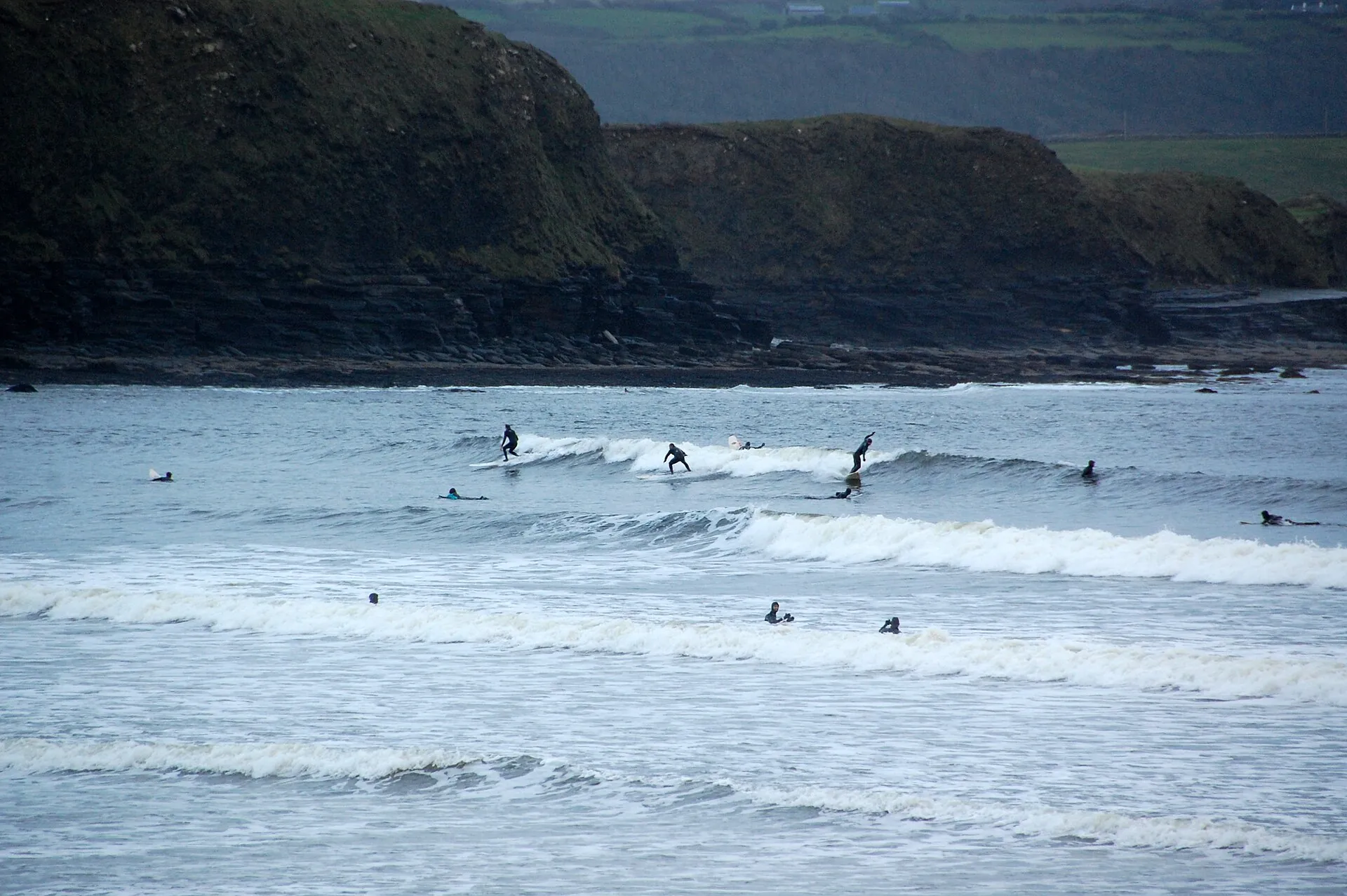
📍 Ireland, Wild Atlantic Way
Photo: Lahinch, February 2012 – Lukemcurley / Wikimedia Commons, CC BY-SA 3.0
Most Irish surfing happens on the Atlantic coasts of the west and north-west: reef breaks and long beaches from Donegal down to Clare, with smaller scenes further south. Kitesurfing and windsurfing have a foothold too, covered further down.
Bundoran's reef at The Peak and the beach at Tullan Strand, Rossnowlagh for gentler waves, the big-wave arena at Mullaghmore, then Strandhill and Easkey along the Sligo coast.
Donegal and Sligo arrow_forward
Lahinch, on a long beach beside the town in County Clare, usually has some swell when other spots are flat. Kerry, Cork and Waterford add Inch, Inchydoney and Tramore.
Lahinch and the south arrow_forward
The sea runs from below 7°C to about 16°C depending on season and coast. In an emergency, dial 112 or 999 and ask for the Coast Guard – Irish rules apply here, not British ones.
Safety and rules arrow_forwardThe essentials before you book, and what we couldn't pin down.
A reef for experienced surfers and two long beaches, a short drive apart.
Bundoran's best-known wave is a reef break. Bundoran Surf Co's local guide describes The Peak as an A-frame with a long, walling left that has barrel sections and a shorter, hollow right. It's best at low tide, works in a south-easterly offshore and can get crowded, and the school's advice is plain: experienced surfers only. In autumn 2026 Bundoran hosted the EuroSurf Junior championships, with heats run at The Peak and on Tullan Strand.
Tullan Strand runs for about two miles with the Dartry Mountains behind it and sandbanks along its length. It picks up swell when other spots are flat. At low tide the peaks nearest the cliffs turn into fast, hollow wedges, while those further down the beach are mellower, and at high tide the far end comes into its own. It's offshore in east and south-east winds. Fáilte Ireland's Discover Ireland guide lists it among the spots for improving surfers, but schools also run beginner lessons here in waist-deep water.
View Tullan Strand on Google Maps open_in_new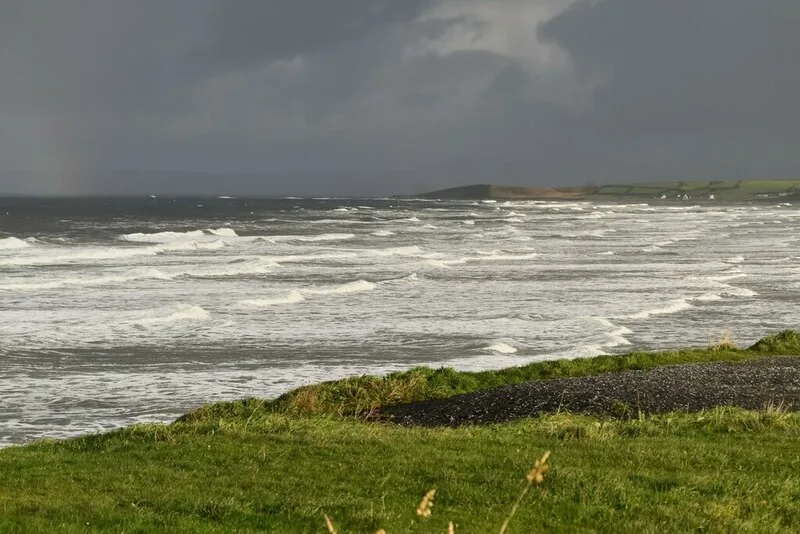
About 15 minutes' drive from Bundoran and five miles from Ballyshannon, Rossnowlagh is a long beach with room for plenty of surfers. Its waves tend to be mellower than Bundoran's, which makes it a good place to learn and a fallback when Tullan is too big. It works best from mid to high tide, also picks up south swell, and is offshore in east and south-east winds. It's home to the annual Intercounties contest.
Big-wave surfing, a beach break with a national surf centre, and reef breaks to the west.
Mullaghmore Head is where Ireland's big-wave surfers go. Discover Ireland describes waves of up to 40 feet, ridden by professionals who are towed in by jet ski, often with rescue cover on hand. For everyone else it's a spectacle to watch from the lookout point, not a session. Mullaghmore beach itself only gets waves on very large swells.
Strandhill, about 7 km from Sligo town with views of Knocknarea, has consistent beach-break waves for every level, and Discover Ireland calls it an ideal spot for beginners. The National Surf Centre on the seafront opened in 2023 and houses Rebelle Surf School, the Sligo Surf Experience and the Atlantic Surf School, alongside a surf shop, changing rooms and storage; Strandhill Surf School sits beside the beach.
There is one thing to know before you go in. Sligo County Council states that Strandhill Beach is dangerous and unsafe for swimming, bathing or paddling because of severe rip currents, and there are no lifeguards on duty; it repeated the warning in July 2026. Surfing goes on, but this is a beach to learn on with a school, not to explore on your own.
View Strandhill on Google Maps open_in_newIn west Sligo, Easkey has two long reef breaks, where the waves break over rock rather than sand, for intermediate and advanced surfers. Discover Ireland notes that the best surf comes with south-westerly winds and that the spot once hosted the Surfing World Championships. Nearby Enniscrone is the gentler option, a beach about 5 km long where beginners stay near the harbour end and more experienced surfers head further along for bigger peaks.
A surf town on a long beach, with lifeguards in summer and a zone for boards.
Lahinch's long beach sits right beside the town, and there's usually some swell here even when other spots are flat. Discover Ireland's advice is to surf from low to mid tide and avoid high tide, when rocks near the shore come into play. Clare County Council describes it as a sandy beach subject to strong waves and strong currents, and lists surfing, kitesurfing and windsurfing among its activities.
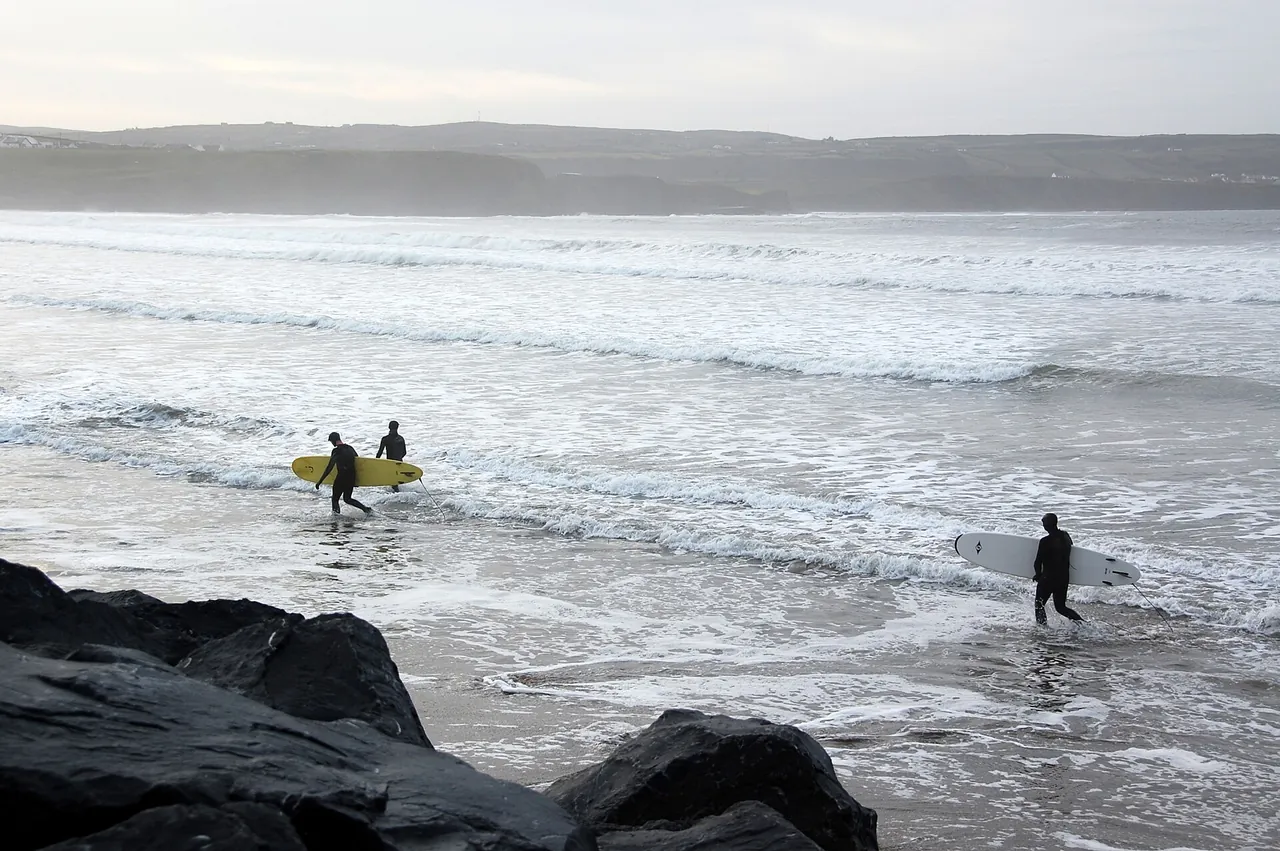
The council's beach bye-laws prohibit surfing, canoeing and kayaking close to swimmers, and the beach has a marked surfboard zone. Its listing gives lifeguard hours of 11am to 7pm, daily through June, July and August plus some weekends in May and September; the dates are set each year, so check the council's page for the current season. Schools on or near the promenade include Lahinch Surf School, Lahinch Surf Experience, Ollie's Lahinch Surf Centre and Ben's Surf Clinic.
View Lahinch Beach on Google Maps open_in_newBeaches in the west and south, most of them good places to start.
In County Mayo, Carrownisky Strand near Louisburgh has a consistent break that usually has surf all year, shared with swimmers, walkers and horses, and further north the Mullet Peninsula around Belmullet has long, uncrowded beaches such as Elly Bay and Belderra Strand.
In Kerry, Inch Beach is a 3 km Blue Flag strand reaching out into Dingle Bay, suited to beginners and intermediates; Kingdom Waves, which describes itself as the longest-running approved surf school in the county, teaches there. Ballybunion, also in Kerry, has two beaches with plenty of room for beginners.
The south coast has a few options too. Inchydoney, near Clonakilty in Cork, sometimes has small waves and a river break suited to beginners with an instructor. Tramore, in Waterford, is a family beach with peaks for intermediate and advanced surfers, and local rips that are worth learning about from the surf school before you paddle out.
Winter for size, summer for learning, autumn for the warmest water.
Experienced surfers chasing the best waves usually point to winter. From November the big Atlantic swells roll in with powerful waves, at the cost of short days and colder air and water. Summer brings long evenings but less wind and flatter seas, which is exactly what a beginner wants. Autumn, when the sea is at its warmest, comes just before the main swell season.
Whenever you go, check the surf forecast and tide times, ask locally about rips, reefs and other hazards, and look at the sea before you commit. The tide matters a lot on this coast: Lahinch is a low-to-mid-tide spot, The Peak works best at low tide and Rossnowlagh from mid to high.
Bring more neoprene than you think you'll need.
According to Met Éireann, the sea off Ireland averages about 10°C off the south-west coast in February and less than 7°C off the north-east, rising in August to around 16°C in the south and 13°C in the north Irish Sea. At Malin Head, County Donegal, the 1961–1990 monthly average ran from 6.7°C in February to 14.6°C in August; 2023 was warmer, at 8.3°C in January and 15.9°C in July and August. The sea lags the land, so September is often warmer than June.
For wetsuits, Surfdock, a watersports shop in Dublin, recommends a 5/4mm or 5/3mm in winter, with boots, gloves and a hood in the coldest months, and a 3/2mm or 4/3mm full suit in summer; if you're buying only one wetsuit for the whole year, make it the winter one. Our wetsuit guide explains the thicknesses.
A smaller scene than the surf; Brandon Bay in Kerry is the name that comes up most.
Brandon Bay and the Maharees, at Castlegregory on the Dingle Peninsula, are the area that comes up most often for windsurfing and kitesurfing. Jamie Knox Watersports, run by a former professional windsurfer and recognised by the Irish Surfing Association and the Irish Sailing Association, has taught surfing, windsurfing and stand-up paddleboarding there for more than 20 years. A travel guide in IKSURFMAG describes it as a frontal location where autumn and spring bring the most promising wind and waves, with nothing guaranteed. In Clare, the county council lists kitesurfing and windsurfing among the activities at Lahinch.
We haven't covered Irish kite spots one by one, and we found no national rule written for kitesurfing; local beach bye-laws and zones apply, so ask at the beach. If you're new to either sport, read our kitesurfing guide and windsurfing guide first.
How to pick a school, and the names that came up in our research.
Irish Surfing is the national governing body for the sport across all 32 counties of Ireland. Schools registered with it commit to its best-practice standards for safe operation, so ask any school whether it is registered and what qualifications its instructors hold. Bundoran Surf Co, for example, says its instructors are qualified to Irish Surfing standards and hold an Irish Water Safety beach safety award or an RLSS beach lifeguard award.
Schools with current websites offering lessons when we checked in October 2026 include Bundoran Surf Co (Tullan Strand and Rossnowlagh), Strandhill Surf School, Lahinch Surf School, Kingdom Waves at Inch and Tramore Surf School. The others named on this page appear in Fáilte Ireland's Discover Ireland surfing guide, but we didn't check each one individually. Schools change hands and seasons, so contact the school directly before you plan a trip around it. Our learn-to-surf guide covers what to expect from a first lesson.
Fly into the west, or take the ferry and drive across.
Ireland West Airport Knock, in County Mayo, is the airport for Sligo and south Donegal, around 45 minutes by road from Strandhill and roughly an hour and a half from Bundoran. Its route list includes London Heathrow, Luton and Stansted, Manchester, Liverpool, Birmingham, Bristol, East Midlands and Edinburgh, though which routes run varies through the year. Shannon is the airport for Clare, about 50 km by road from Lahinch. From Dublin, Bundoran is about three to four hours by car, or by the Bus Éireann Expressway route 30 to Ballyshannon, and Strandhill about two and a half hours. Donegal Airport at Carrickfinn, in the far north-west, has daily flights from Dublin and, on a couple of days a week, from Glasgow.
With a car full of boards, the ferry is the obvious way from Britain. Irish Ferries and Stena Line sail from Holyhead to Dublin; Stena Line also runs Fishguard to Rosslare, and Irish Ferries Pembroke to Rosslare. Belfast and Larne are options too, but they're in Northern Ireland, so you'll cross the border to reach the surf on this page. Check current timetables with the operators before you book.
Ireland's own emergency services, flags and beach bye-laws.
Dial 112 or 999 and ask for the Coast Guard. The Irish Coast Guard, part of the Department of Transport, co-ordinates search and rescue from three marine rescue centres, in Dublin, at Malin Head in Donegal and on Valentia Island in Kerry. It calls on search and rescue helicopters, lifeboats supplied by the RNLI and Community Rescue Boats Ireland, and volunteer Coast Guard units around the coast. The RNLI's lifeboats are part of the system in Ireland, but the authority you're dealing with is the Irish Coast Guard, not HM Coastguard.
Beach lifeguards are a county-council service in the bathing season – Clare County Council publishes Lahinch's hours, for example – and some beaches have none, Strandhill among them. The flag scheme, as Water Safety Ireland's Cork committee sets it out, looks familiar if you surf in Britain: red-over-yellow flags mark the swimming zone, the safest place to swim, and a single large one near the lifeguard station means lifeguards are on duty; black-and-white chequered flags mark water zoned for craft such as surfboards, usually where a surf school operates; a red flag means danger and no swimming; and no flag means no lifeguard on duty. Surf in the chequered zone where there is one, and keep your board out of the swimming zone.
We found no national law written specifically for surfing or kitesurfing in Ireland. Beach rules come from each county council's bye-laws – at Lahinch, for instance, surfing close to swimmers is prohibited. The Department of Transport publishes a Code of Practice for the Safe Operation of Recreational Craft, updated in 2024 with new material on surfing, kitesurfing and foiling safety; it is guidance on best practice rather than a set of rules for surfers. Ireland's pleasure-craft regulations require a lifejacket to be worn on open craft under 7 metres, but we found no source saying whether, or how, they apply to a surfboard or kiteboard, so we don't draw a conclusion either way.
This page covers the Republic of Ireland. Northern Ireland is part of the UK, where HM Coastguard co-ordinates rescue and UK rules apply; we don't cover its surf spots here. Our surf safety guide covers rips, cold water and the rest of the general principles.
What surfers ask most before a trip.
The north-west and west coasts. Bundoran in Donegal has The Peak and Tullan Strand, Sligo has Strandhill and the reefs at Easkey, and in Clare, Lahinch's long beach usually has some swell when other spots are flat. Mullaghmore Head is for big-wave professionals only.
For big swell, winter, from November onwards. For learning, summer, when the sea is usually smaller. Autumn has the warmest water of the year, just before the main swell season.
From under 7°C to about 10°C in February, and 13-16°C in August, depending on the coast. Wear a 5/4mm or 5/3mm with boots, gloves and a hood in winter, and a 3/2mm or 4/3mm in summer.
Yes. Strandhill, Rossnowlagh, Enniscrone, Inch and Carrownisky are all recommended for beginners, and Bundoran and Lahinch have schools running beginner lessons. Take a lesson rather than going it alone: at Strandhill, the council warns that rip currents make the beach unsafe for swimming.
Dial 112 or 999 and ask for the Coast Guard. In the Republic of Ireland that puts you through to the Irish Coast Guard, which co-ordinates helicopters, RNLI and community lifeboats and volunteer coastal units.