

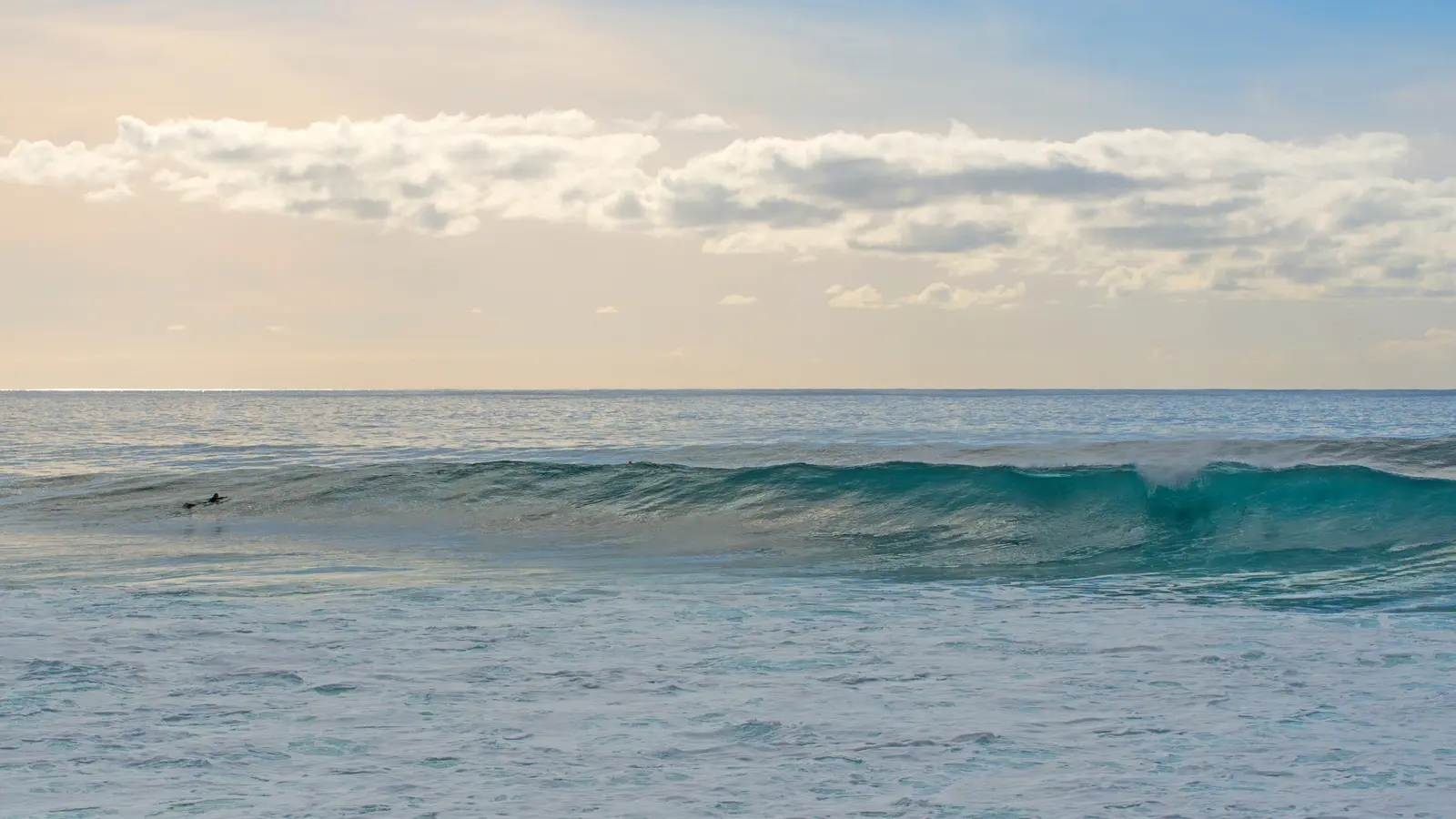
📍 Madeira, Portugal
Photo: Bengt Nyman / Wikimedia Commons, CC BY 2.0
A volcanic island with powerful Atlantic waves and very little sand.
A destination for confident surfers, with a handful of spots for learners.
The Surf Atlas guide puts it plainly: Madeira is steep, volcanic and rugged, the coast drops quickly into deep water, and swells arrive with real power. Add shallow rock shelves, currents and few places to get in and out, and the island suits confident intermediates and experienced surfers far more than first-timers. Its own author says that, for a dedicated surf trip, they would probably choose mainland Portugal instead.
There is a gentler side. A few sheltered spots on the north and east coasts work for lessons when the swell is small, and the Funchal harbour master licenses surf schools to teach at five of them (see the rules section below). If you're a beginner, book lessons at one of those beaches rather than paddling out on your own, and leave the south-west reefs to people who know them.
The island's most famous waves, for experienced surfers.
The Madeira Surfing Association published a pocket guide to the island's 11 main peaks, reproduced by Surfertoday. It places the best-known breaks on the south-west and west coasts, working on north, north-west and west groundswells with north-easterly winds, and describes surf in the 6 to 15ft range when those swells arrive. It rates Jardim do Mar, Ponta Pequena and Paul do Mar intermediate to advanced, and nearby Fajã da Ovelha advanced only. Ponta do Pargo, at the western tip, can hold much bigger surf; the Surf Atlas says to avoid it unless you're a pro with a big-wave board.
Jardim do Mar is a right-hander over a shallow volcanic reef, and its story is a warning. In the 1990s it was famous as a big-wave point break, hosting events up to around 2000–2001. Then a seawall promenade was built along the point. According to Save the Waves, which campaigned against it, local surfers say the wave used to be surfable for four or five hours around low tide on smaller days and now works for about an hour before it breaks onto the concrete blocks. The wall buried about 30 feet of natural shoreline, so there is far less room to get caught inside. The Surf Atlas and Surfertoday tell the same story: a short window around low tide, a shorter ride and a far more dangerous wave. Watch it from the village unless you're an expert.
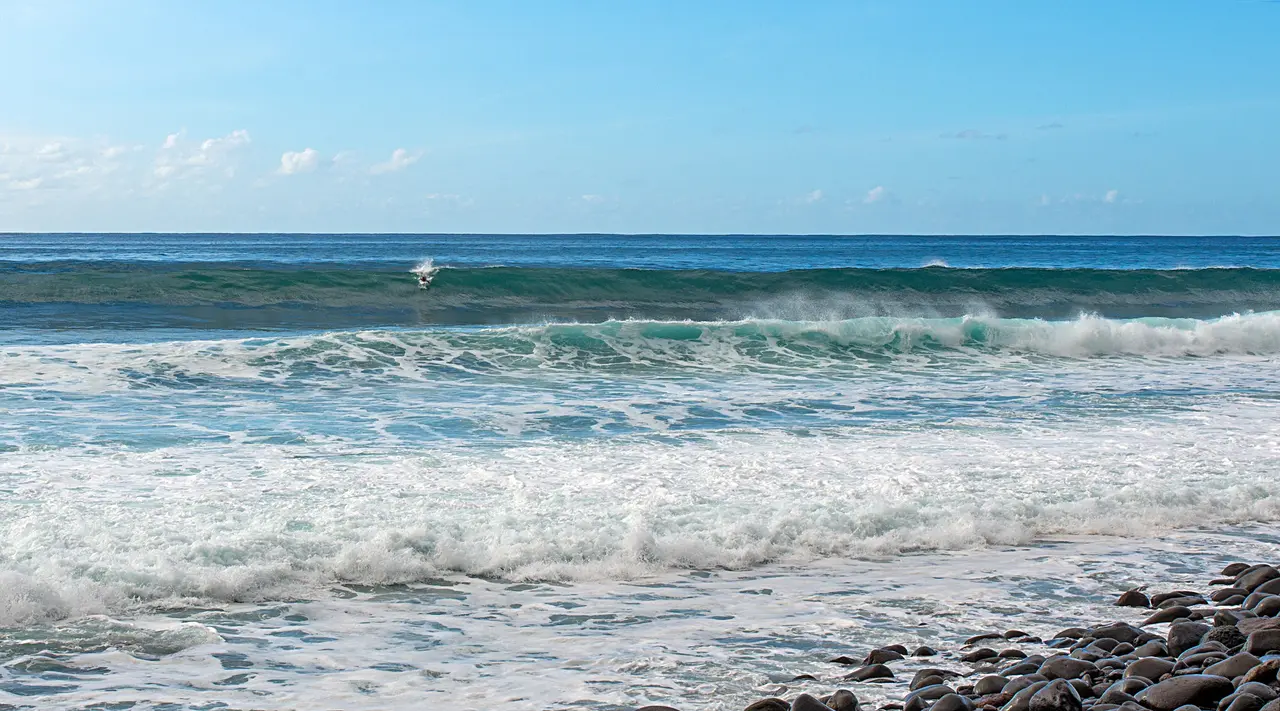
Ponta Pequena, between Jardim do Mar and Paul do Mar, is another right-hand point. Save the Waves quotes local surfers who moved there after the seawall changed Jardim. It isn't easy to reach: the Surf Atlas says people either walk a rough cliff path over sharp rocks or take a boat from the harbour.
Paul do Mar is a right-hand reef break beside the coast road, a short drive through the tunnel from Jardim do Mar. The sources don't quite agree on its character. The Surf Atlas calls it generally smaller and less tidy than Jardim, with a better shoulder once you're up; the Association's guide gives it the same intermediate-to-advanced rating as Jardim and lists it as a high-tide spot, where Jardim and Ponta Pequena are low-tide spots. Either way, it breaks over rock, and getting in and out over boulders is part of the challenge.
See Paul do Mar on Google Maps open_in_newSmaller, more sheltered spots, and the beaches where schools are licensed to teach.
Porto da Cruz, on the north-east coast, is one of the island's surf hubs. The Surf Atlas describes a reef break near the promenade with punchy rights and the occasional left, working best on north and north-east swells, and calls it one of the few beginner-to-intermediate spots on Madeira; on bigger swells it gets faster and more demanding. Surf-forecast lists a north swell with a south-westerly wind as its best combination. Two Porto da Cruz beaches, Alagoa and Maiata, are among the five where the harbour master licenses surf schools to teach.
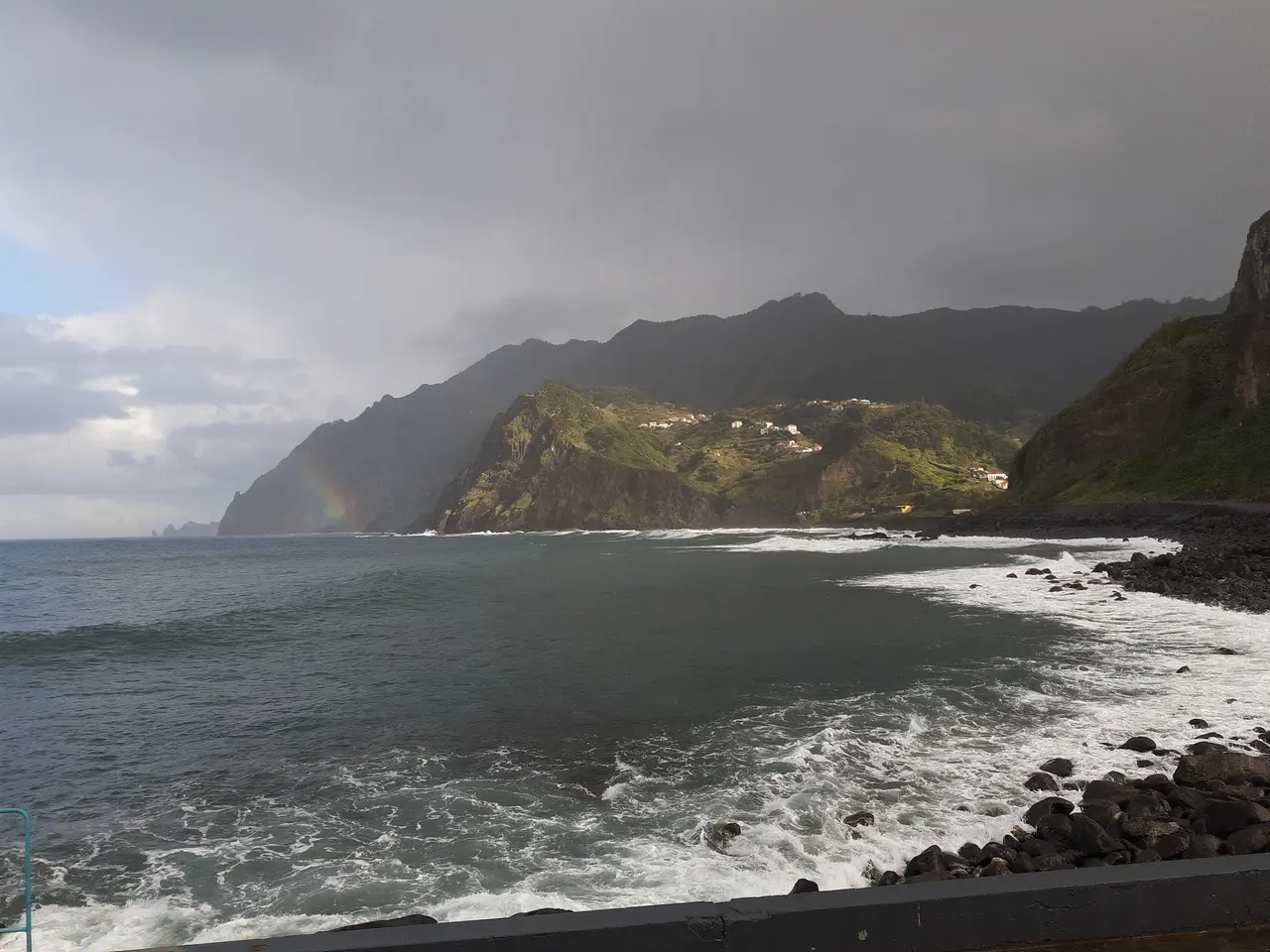
Machico, in a bay on the east coast, is the Surf Atlas's pick for learners: one of the few spots with a sandy bottom, with soft peaks on small north or north-east swells, though the waves are often very small. São Roque, in the Machico municipality, is another licensed teaching beach. On the north coast, the Surf Atlas describes Seixal as a small harbour village partly protected by its bay and breakwater, usually small and sometimes flat; Seixal is also on the harbour master's list. The fifth teaching beach is Baía dos Juncos at São Vicente.
For intermediates, the Association's guide lists Fajã da Areia, on the north coast, as the one spot it rates for every level, from beginner to advanced; the Surf Atlas describes it as a cobble-and-reef break that is more forgiving than the lava ledges elsewhere, but still not easy. The north-west coast near Porto Moniz has more reef and point breaks (Achadas da Cruz, Porta do Tristão, Ribeira da Janela), which the same guide rates from intermediate to advanced.
Porto Santo, the archipelago's second inhabited island, is a different landscape, with sandy beaches. The Surf Atlas mentions protected waves over sand at Cabeço beach, but that is the only surf source we found for it, so treat it as a holiday add-on rather than a surf destination. It is reached by ferry from Funchal (Porto Santo Line) or by air; check the crossing with the operator, as sailings can be cancelled in rough weather.
North-west groundswells from autumn to spring, smaller waves in summer.
The Surf Atlas puts the surf season from September to March, with December and January getting the strongest north-west swells for the south-west points. Surf-forecast's statistics agree on winter: its cleanest month is January at Jardim do Mar (clean surf about 43 per cent of the time) and February at Paul do Mar (about 42 per cent). Summer swells are smaller, which suits learners better.
| Spot | Type | Best swell / wind | Tide | Level |
|---|---|---|---|---|
| Jardim do Mar | Right-hand point over reef | N/NW/W, NE wind | Low (short window since the seawall) | Experts |
| Ponta Pequena | Right-hand point | N/NW/W, NE wind | Low | Intermediate/advanced |
| Paul do Mar | Right-hand reef | N/NW/W, NE wind | High | Intermediate/advanced |
| Porto da Cruz | Reef near the promenade | N/NE swell, SW wind | Not documented | Beginner to intermediate on small days |
| Fajã da Areia | Cobble and reef | N/NW/W/NE | All tides | All levels |
Swell, wind, tide and level come from the Madeira Surfing Association's guide as reproduced by Surfertoday, except Porto da Cruz (Surf Atlas and Surf-forecast) and Jardim do Mar's level, which reflects every source since the seawall.
The water stays mild all year: about 17.8°C in March, the coldest month, and about 23.7°C in September, the warmest, according to seatemperature.org's satellite-based averages for Funchal (not an official series). The Surf Atlas suggests no more than a 3/2mm in winter and says boots help on the rocky entries.
The harbour master publishes the list of schools allocated teaching slots.
The Capitania do Porto do Funchal allocates teaching slots on its five surf corridors to licensed operators, by seniority, and publishes the schedule. The version in force for 1 May to 31 October 2026 lists 14 operators: Aroundfreedom, Calhau Surf School, Madeira Surf Camp, Salty, Madeira Surfing Life, Ohana Madeira Surf School, Surf Club Madeira, Madeira Surf Center, Madeira New Wave, Madeira Surfing, Splash, Triple Tide Seixal Surf School, Maktub Surf School and Madeira Wave Surf School.
Under the same notice, teaching is done by qualified sports coaches, with up to six students per coach in the water, a first-aid kit on the beach and coloured lycras that identify the school. That list is the one official signal we found that a school is licensed to teach this season; prices aren't quoted here, so check them with the school.
Local rules, read at source, from Portugal's maritime authority.
In Portugal, the coast is policed by the Autoridade Marítima Nacional through local harbour masters. Madeira, the Desertas and the Selvagens fall under the Capitania do Porto do Funchal. Its Edital n.º 11/2024, in force since 1 November 2024, sets the rules for surfing, bodyboarding, bodysurfing, longboarding and stand-up paddleboarding for everyone, not just schools.
| Rule | What Edital n.º 11/2024 says |
|---|---|
| When | Only in good visibility, from sunrise to half an hour before sunset, in sea and weather conditions that allow it to be done safely |
| Orange warnings | No surfing when IPMA (Portugal's weather service) issues an orange warning for rough seas; recognised professionals and registered high-performance athletes are exempt |
| Insurance | Compulsory for schools, recommended for individual surfers (own damage and third-party) |
| Stand-up paddleboarding | Carry a means of communication (for example a phone in a waterproof pouch) and wear a lifejacket of at least 100 N (EN ISO 12402-4 / EN 395 or equivalent) |
| Teaching corridors | At Alagoa, Maiata, São Roque, Seixal and Baía dos Juncos: 40 m wide from 1 May to 31 October and 60 m wide from 1 November to 30 April, marked by pairs of flags bearing the school's name; at most 20 boards per corridor in summer and 30 in winter |
| Bathers | The corridors don't restrict other beach users, including swimmers |
| Penalties | Breaking these rules is an administrative offence under Decree-Law 45/2002 |
The notice also says that surfing is otherwise governed by the rules of the Portuguese Surfing Federation. It doesn't set a distance from shore, and this research found no national distance rule for surfing: the French 300 m limit doesn't apply here, and neither do RNLI flag zones. Porto Santo isn't in the Funchal harbour master's listed area, and we didn't confirm which notices apply there. For questions, the Capitania do Porto do Funchal is on +351 291 213 110 or capitania.funchal@amn.pt.
Lifeguards and bathing season. Madeira's regional government sets the bathing waters, their seasons and the lifeguarded beaches each year. For 2026 (Portaria n.º 206/2026), Alagoa and Maiata at Porto da Cruz have a bathing season from 8 June to 27 September but weren't listed as lifeguarded when it was published; São Roque in Machico is lifeguarded from 26 June to 27 September and Porto do Seixal from 1 June to 30 September. Jardim do Mar and Paul do Mar don't appear in the list at all, so don't expect lifeguards there.
Direct flights from the UK to Funchal, then a hire car.
Flights land at Cristiano Ronaldo International Airport (Madeira Airport, FNC), at Santa Cruz, 13 km east-north-east of Funchal. Several airlines fly there directly from the UK, including British Airways, easyJet, Jet2, Ryanair and TUI, some only seasonally; routes change, so check what flies from your airport and what each airline charges for a board bag. The airport operates under mandatory wind limits that frequently constrain flights, so leave some slack in your plans.
A hire car is close to essential: the Surf Atlas puts the south-west breaks about an hour's drive from where you land, and says it is common to drive 20 to 40 minutes to find a spot that's working as the swell changes. The spots for lessons on the north and east coasts are closer to the airport.
Most Madeira waves break over rock, and the famous spots have no lifeguard.
The main hazards are the ones every source repeats: shallow reef and boulders, heavy waves on the exposed coasts, few safe places to get in and out, and at Jardim do Mar a seawall that the waves break onto. Watch a spot before you paddle out, check where the locals get in, wear boots on the rocks and don't surf a reef break alone. Check IPMA's sea warnings: under the harbour master's notice, an orange warning for rough seas means no surfing.
On lifeguarded beaches, Portugal uses its own flags, and they don't mean what they do in the UK. In the standard legend posted on Portuguese beaches: green, bathing and swimming allowed; yellow, caution, no swimming; red, danger, don't enter the water; chequered, the beach is temporarily without a lifeguard; striped, the limits of the safest bathing area. In the UK, a black-and-white chequered flag marks a zone for surfboards; in Portugal it only means no lifeguard is on duty. The UK Foreign Office's advice for Portugal sums up the other two: a red flag means you must not enter the water, and yellow means it's only safe to paddle at the water's edge.
In an emergency, on land or at sea, call 112, Portugal's emergency number. VHF channel 16 remains the international distress channel at sea.
What surfers ask most before a trip to Madeira.
Only in a few places. Most of Madeira's best-known waves are reef and point breaks for experienced surfers. Beginners should book lessons at one of the five licensed teaching beaches (Alagoa and Maiata at Porto da Cruz, São Roque at Machico, Seixal and Baía dos Juncos at São Vicente) and go on small-swell days.
From autumn to spring, when north-west Atlantic groundswells arrive; the Surf Atlas puts the season from September to March, with December and January as the peak. Summer is smaller and better suited to lessons.
Yes, but it's a different wave since the seawall was built along the point in the early 2000s. Local surfers quoted by Save the Waves say it now works for about an hour around low tide before the waves break onto the concrete blocks, and every source we read calls it far more dangerous. It's for experts.
The water is about 18°C at its coldest in March and about 24°C in September, according to satellite averages for Funchal. The Surf Atlas suggests a 3/2mm at most in winter; boots help on the rocky entries.
Yes. The Funchal harbour master's Edital n.º 11/2024 limits surfing to good visibility between sunrise and half an hour before sunset, bans it during IPMA orange warnings for rough seas (with exemptions for professionals), requires stand-up paddleboarders to wear a lifejacket of at least 100 N and carry a phone or other means of communication, and sets teaching corridors for schools.
That the beach is temporarily without a lifeguard. It is not a surf zone, as it is in the UK. In an emergency, call 112.