

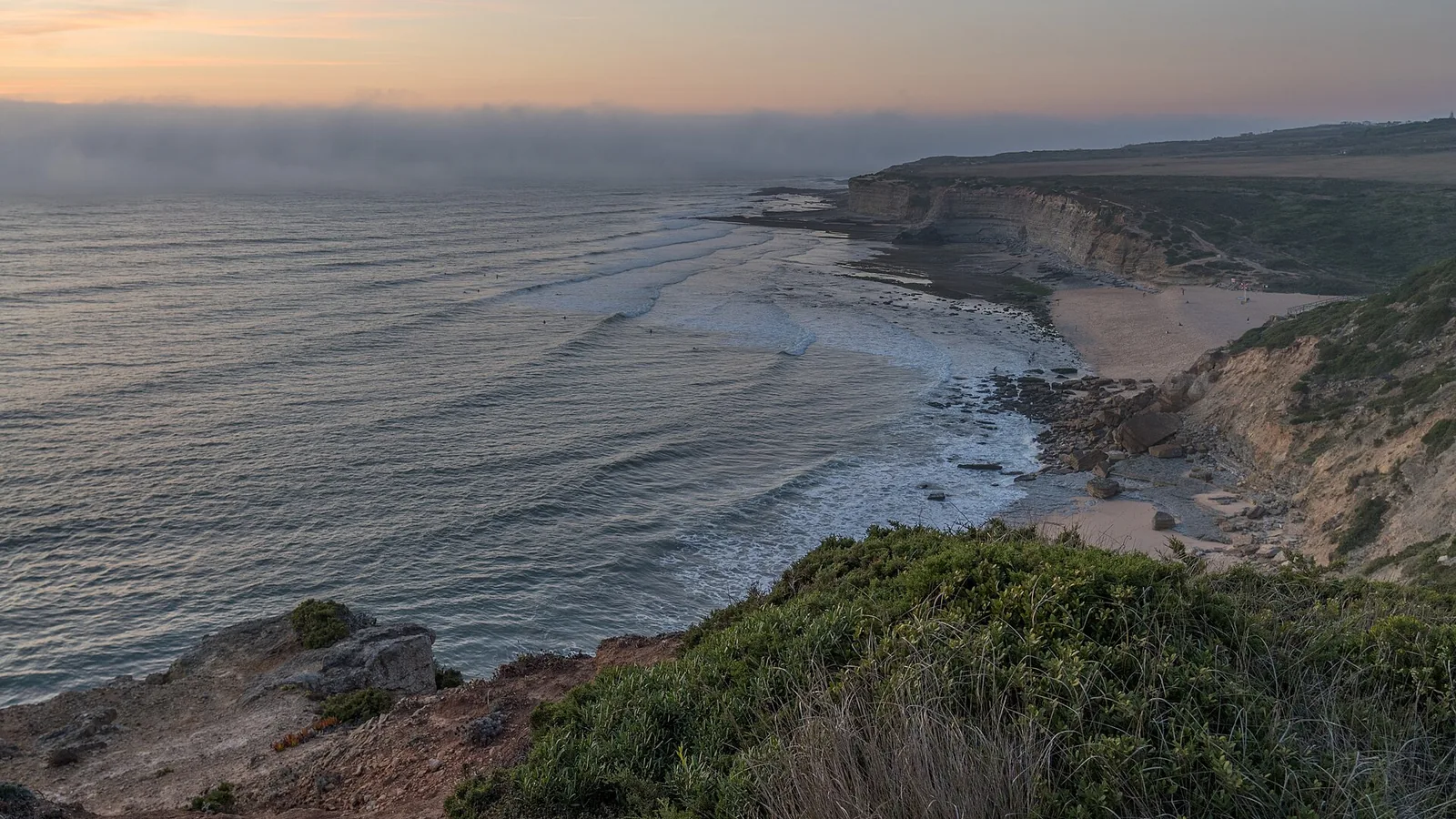
📍 Ericeira, Mafra, Portugal
Photo: Alexkom000 / Wikimedia Commons, CC BY 4.0
Reefs to the north, sandy learning beaches to the south, and a fishing town in between.
Seven named waves on a short stretch of cliffs and coves.
The Save The Waves Coalition approved Ericeira as a World Surfing Reserve in February 2011 and dedicated it on 14 October 2011, after Malibu, making it the second reserve worldwide and the first in Europe. Save The Waves describes about 5 km of coast, rocky cliffs broken up by small bays and beaches, with waves ranging from beach breaks to powerful reefs. Surfing arrived here in the mid-1970s, and Ericeira has since become the focal point of Portuguese surfing, according to the same organisation.
The reserve takes in seven named waves: Pedra Branca, Reef, Ribeira d'Ilhas, Cave, Crazy Left, Coxos and São Lourenço, running north from Praia da Empa to Praia de São Lourenço. Sources disagree on how long that stretch is (4 km in some guides, about 5 km for Save The Waves), so don't read much into the figure. A local stewardship council manages the reserve.
From Ribeira d'Ilhas, the intermediate wave, to breaks best left to experts.
Ribeira d'Ilhas is the reserve's best-known wave and its contest venue: a long right-hander over a reef of sand and rock. Spot guides describe it as a wave that works most of the year in a west-north-west swell, with rocks in the line-up and crowds when it's on. Travel-Surf calls it the wave intermediates progress on and says it's out of beginner territory, with an inside section that gets shallow at low tide; Progress Surf School, based in Ribamar, is more generous and says there's a wave for every level. It hosts the EDP Ericeira Pro, a WSL Challenger Series event, scheduled for 6 to 12 October 2026 according to the organiser's filing with the Portuguese maritime administration (DGRM).
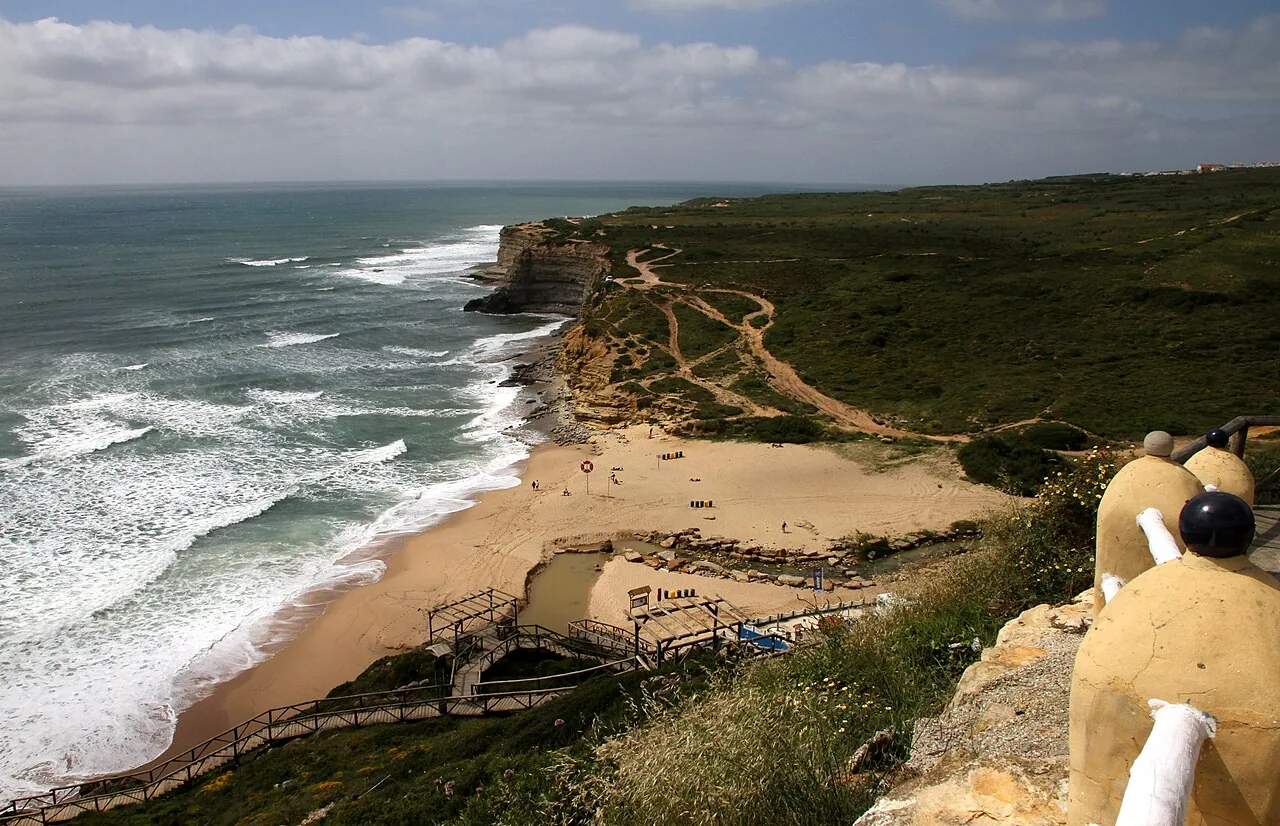
Coxos, further north, is the heavy one: a hollow right-hander over a shallow reef shelf that guides consistently say is for experienced or expert surfers only. It's often crowded, there are rips, and the reef is covered in sea urchins, so boots are worth having. Crazy Left, next to it, is a left-hander over reef; Progress Surf School rates it for experienced surfers, and The Surf Atlas warns that it's always rippy.
Cave is the heaviest wave in Ericeira, according to the same school, which calls it a wave for professionals; it works on a north-west groundswell and tends to be flat in summer. Off Praia da Empa, Pedra Branca is a fast left that barrels over a shallow reef (experienced surfers only), and Reef is a short, hollow right that The Surf Atlas says is not for beginners at all. Both have urchins and rocks. São Lourenço, at the northern end of the reserve, is a right-hand reef break that The Surf Atlas says lower intermediates can ride on the inside, best at lower tides.
| Break | Wave | Level, according to the guides cited |
|---|---|---|
| Ribeira d'Ilhas | Long right over sand and rock reef | Intermediate and up (one school says every level) |
| Coxos | Hollow right over a shallow reef, urchins | Experienced or expert only |
| Crazy Left | Left over reef, rippy | Experienced |
| Cave | Heavy reef wave, needs a big swell | Experts and professionals |
| Pedra Branca | Fast, barrelling left over a shallow reef | Experienced only |
| Reef | Short, hollow right | Not for beginners |
| São Lourenço | Right over reef | Lower intermediates and up, on the inside |
These are reef waves with shallow rock and urchins, and several have a strong local crowd. If you're not sure a wave is within your level, watch it from the cliff for a set or two, or go with a school that runs guided sessions.
Sandy beach breaks south of the reserve, and the town beaches.
Foz do Lizandro, where the Lizandro river reaches the sea south of town, is a beach break with sandbars and several peaks. The Surf Atlas calls it the best beginner spot in Ericeira, with small A-frames in spring and summer, and other guides note that it's where most of the town's surf schools teach.
Praia do Sul (also called Praia da Baleia), in town, is an open bay of sand and rock that works from about 2 to 8 ft and suits mixed levels, though it's a little punchier than Foz do Lizandro. Praia dos Pescadores, the fishermen's beach in the centre, is the most sheltered and is good for learners, but it needs a big swell to break. South of Foz do Lizandro, São Julião is a beach break that picks up plenty of swell and closes out heavily when it's big.
The Surf Atlas suggests summer for beginners, when the swell is smaller. If you're starting from scratch, book lessons rather than paddling out alone: the reefs are close by and the beaches have rips.
Autumn to spring for the reefs, summer for learning, a wetsuit all year.
Ericeira works all year, but the seasons suit different surfers. Save The Waves puts the best surf from autumn to spring (October to May), and The Surf Atlas calls autumn the prime season and winter the time for advanced surfers. Summer brings smaller swell, which is why the beginner beaches are at their best then.
| Months | Sea temperature, monthly average | Wetsuit suggested by The Surf Atlas |
|---|---|---|
| January to March | about 14-16°C | 4/3mm with boots, hood and gloves |
| April to June | about 15-18.5°C | 3/2mm, with boots early in spring |
| July to September | about 17-20°C | 2mm in summer; 3/2mm as autumn starts |
| October to December | about 15.5-20°C | 3/2mm, moving to 4/3mm by the end of autumn |
The water temperatures are satellite-based averages from two sites, seatemperature.info and seatemperature.org, which differ by one to two degrees month to month; they aren't an official series. On the reefs, boots also protect your feet from urchins.
Plenty of choice, and the harbour master sets the rules they work under.
Save The Waves notes that Ericeira is home to numerous surf schools, and surf camps are part of the offer too. Two examples with their own current websites: Progress Surf School, based in Ribamar, which publishes its own guide to the reserve's waves, and Rapture Surfcamps, which advertises an ocean-front Ericeira camp with lessons for all levels at extra cost. Naming them isn't an endorsement, and prices aren't quoted here.
Whoever you book with, the Capitania do Porto de Cascais sets what a licensed surf operator has to provide in its area, which includes Ericeira. Under its 2024 edital, teaching must be certified by the relevant sports federation and given by qualified coaches; the operator must keep an emergency plan and a first-aid kit at the teaching spot; each coach can have up to six students in the water; and during lessons students and coaches wear lycras with the operator's name, in different colours. Operators must also carry insurance covering their own and third-party damage. It's fair to ask a school about any of these before you pay.
A local edital, read at source, and a national flag system.
In Portugal, the local maritime authority is the harbour master (Capitão do Porto) under the Autoridade Marítima Nacional. Ericeira falls under the Capitania do Porto de Cascais, whose area runs from the mouth of the Sisandro river to the Torre de São Julião da Barra and includes the Delegação Marítima da Ericeira (Largo do Ribas, Ericeira). Its rules for the whole area are in Edital n.º 950/2024, published in the Diário da República on 11 July 2024. Article 40 covers the surfing disciplines: surfing, bodyboarding, bodysurfing, longboarding, skimboarding and stand-up paddleboarding.
| Rule (Edital 950/2024, art. 40) | What it says |
|---|---|
| When | Only in good visibility, from sunrise until one hour before sunset, and in sea and weather conditions that allow it to be done safely |
| Weather warnings | Banned when the IPMA (Portugal's weather institute) issues a yellow or higher warning for sea state |
| Distance from shore | Beyond 750 m only with a motorboat in support (up to four surfers per boat, within 500 m) |
| Beyond 300 m | A lifejacket and a leash; an orange flag, a whistle and a waterproof light or a phone are recommended |
| Inflatable boards | A lifejacket is compulsory |
| Bathing season | On bathing beaches, surfing is allowed between 150 and 300 m from the shore and in corridors set up for it, without clashing with bathers; skimboarding is banned in bathing areas |
| Insurance | Compulsory for schools, clubs and associations; recommended for individual surfers |
The edital also recommends telling someone on land where you're surfing and when you expect to be back. Professionals, high-performance athletes and federation-licensed club surfers with an accredited coach are exempt from the time, weather and distance limits. On top of it, the national beach edital bans surfing, kitesurfing and windsurfing in areas reserved for bathers, so follow the lifeguards' zoning on a lifeguarded beach.
Beach flags follow the national system, as set out in the Autoridade Marítima's beach edital: green, bathing and swimming allowed; yellow, caution, no swimming; red, danger, no entering the water; chequered, the beach is temporarily without lifeguards; and a striped flag marks out the safest bathing zone. They're a sea-state and lifeguard system, not the UK's red-and-yellow and black-and-white zones.
Cliff closures: the cliffs here are unstable, and the Capitania closes parts of beaches when they move. In 2026 it published access bans for parts of Praia de São Lourenço (January), Praia de São Sebastião (March) and Praia de Ribeira d'Ilhas (May), after inspections by the Portuguese Environment Agency and Mafra civil protection, and lifted a ban on Praia do Sul after stabilisation works. The closed areas are signposted; don't cross the barriers, and check the Capitania's notices before you go. These are Portuguese rules: France's Division 240 doesn't apply here, and neither do RNLI flag zones.
The rules exist; a documented spot doesn't.
This research found no documented kitesurf or windsurf spot, school or launch zone at Ericeira: it's a surf town. The Cascais edital does cover both sports in its area. They're allowed up to force 7 (33 knots), in good visibility, from sunrise until one hour before sunset, and are banned under a yellow or higher sea-state warning. Beyond 750 m from the coast you need a support boat, and on bathing beaches during the bathing season you can't ride within 300 m of the water's edge. Foiling also requires a helmet, a line knife and a buoyancy aid of at least 50 N.
Fly to Lisbon, then drive or take the bus from Campo Grande.
Lisbon airport is the gateway. Ericeira is about 45 km by road from central Lisbon, using the A8 and A21 motorways. A hire car makes it easier to move between breaks, since the reefs north of town and the beaches south of it are spread out.
Without a car, Carris Metropolitana runs buses between Lisboa (Campo Grande), next to the Campo Grande metro station, and Ericeira (Terminal): line 2740 via the A8, and lines 2801 and 2803 via the A21 and A8, among others. Check the timetable and the operator's rules on board bags before you travel.
Most of the reserve breaks over shallow rock.
The main hazards are the ones the spot guides keep repeating: shallow reef and rocks, sea urchins, rips and crowds at the better-known waves. Match the wave to your level, wear boots on the reefs, and keep away from the foot of the cliffs and from any closed beach area. Remember that surfing is banned under an IPMA yellow or higher sea-state warning.
In an emergency, call 112, Portugal's single emergency number. Locally, the Estação Salva-Vidas da Ericeira (the Ericeira lifeboat station) is on 261 865 300, the Delegação Marítima da Ericeira on 261 862 526 during office hours, and the Cascais Polícia Marítima command, staffed around the clock, on 214 864 500 (from abroad, add +351). VHF channel 16 remains the international distress channel at sea.
More surf up and down the coast.
Further north, Peniche and Baleal have Supertubos and a long run of beginner-friendly peaks. For Nazaré, Sagres and an overview of the country, see our guide to surfing in Portugal.
What surfers ask most before a trip to Ericeira.
Yes, at the right beaches. Foz do Lizandro, a sandy beach break south of town, is where most guides send beginners, and Praia do Sul and Praia dos Pescadores can also work. Most of the famous waves, including Coxos, Cave and Pedra Branca, are reef breaks for experienced surfers. Summer, with smaller swell, is the easiest time to learn.
For the reef breaks, autumn to spring: Save The Waves puts the best surf from October to May. Summer is smaller and suits beginners.
A stretch of coast north of Ericeira, from Praia da Empa to São Lourenço, designated by the Save The Waves Coalition in October 2011, the second World Surfing Reserve in the world and the first in Europe. It includes seven named waves, among them Ribeira d'Ilhas and Coxos.
The guides say no: Coxos is a hollow right over a shallow, urchin-covered reef, for experienced or expert surfers only. Ribeira d'Ilhas, just to the south, is the reef break with sections for intermediates.
The sea is about 14-16°C from January to March and about 17-20°C in late summer, according to satellite averages. The Surf Atlas suggests a 4/3mm with boots, hood and gloves in winter, a 3/2mm in spring and early autumn, and a 2mm in summer.
Yes. The Capitania do Porto de Cascais's Edital 950/2024 allows surfing only from sunrise until one hour before sunset, bans it under an IPMA yellow or higher sea-state warning, requires a lifejacket and leash beyond 300 m and a support boat beyond 750 m, and makes a lifejacket compulsory on inflatable boards.
By car, it's about 45 km from central Lisbon on the A8 and A21. By public transport, Carris Metropolitana buses run from Campo Grande in Lisbon to the Ericeira bus terminal.
112, Portugal's single emergency number. The Ericeira lifeboat station is on 261 865 300, and VHF channel 16 is the distress channel at sea.