

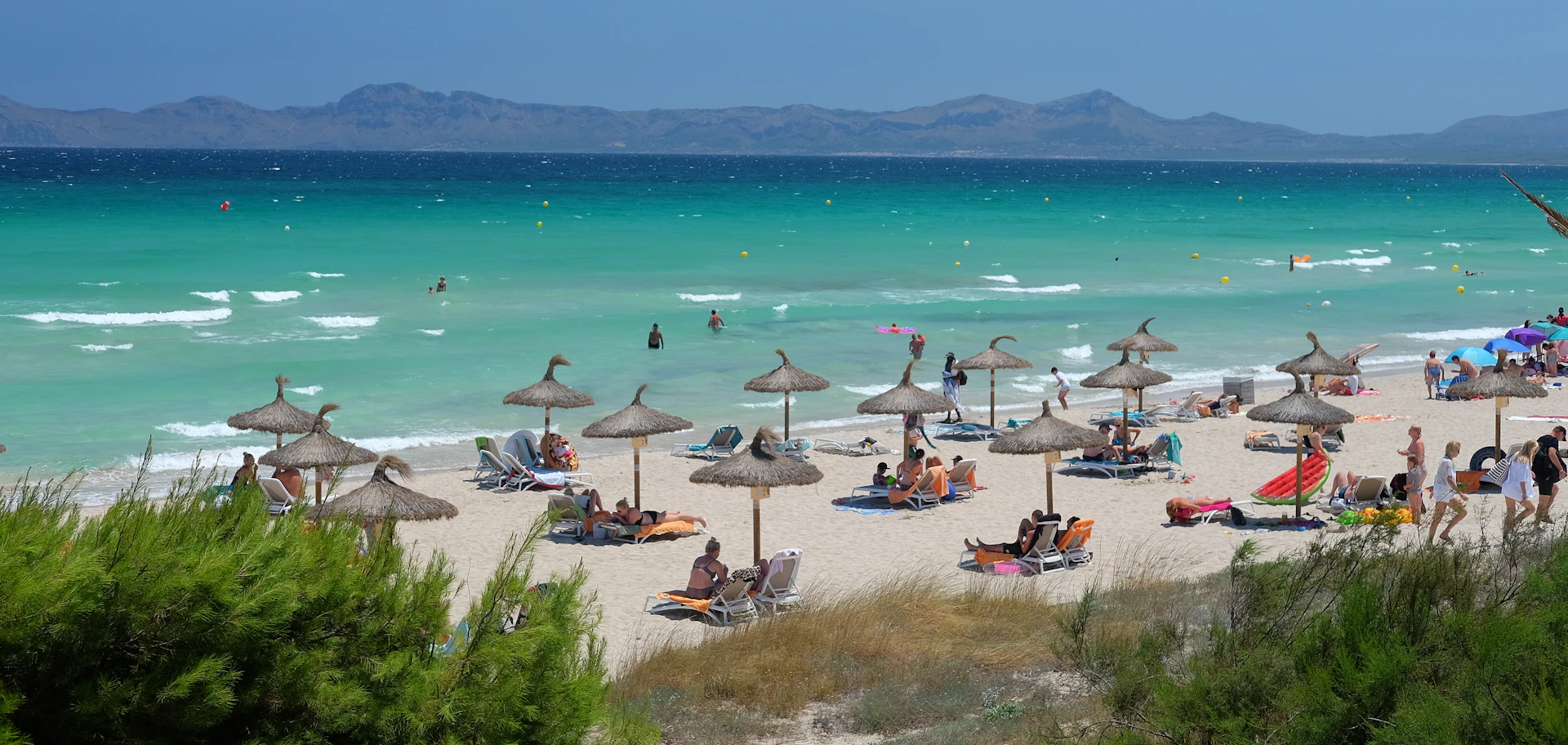
📍 Mallorca, Balearic Islands
The largest of the Balearic Islands packs in three spots with distinct personalities: the sheltered bay of Pollença and Alcúdia in the north, Es Trenc and Sa Ràpita in the south, and Palma Bay right by the capital.
The tramuntana is the winter storm wind that arrives forcefully from the north-west; the embat is the afternoon thermal breeze, from the south-south-west, that carries the season from May to October across all three areas.
See destinations arrow_forward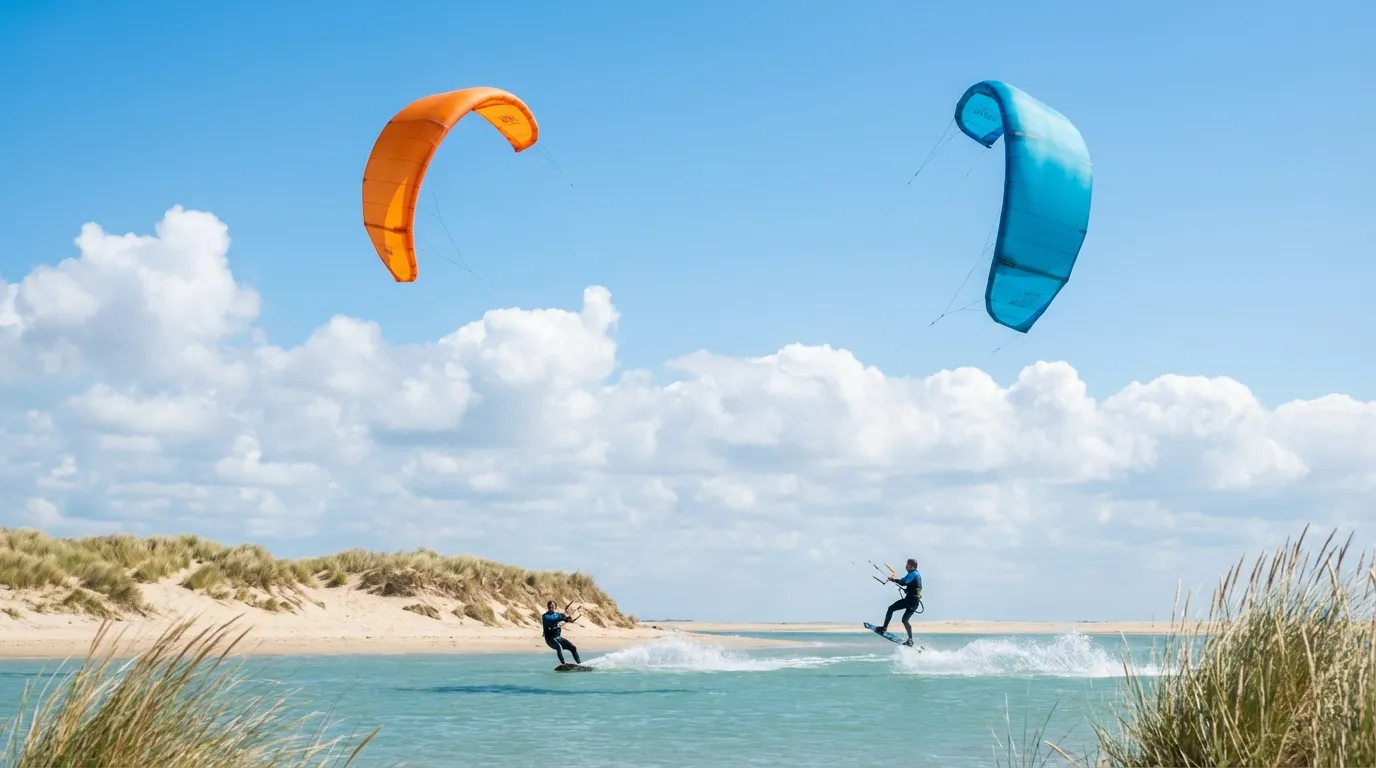
Pollença and Alcúdia split between windsurfing, kite in the authorised zone and wing foiling in sheltered water; Es Trenc and Sa Ràpita are open-coast kitesurfing; Palma Bay is the territory of wing foiling and urban SUP.
Kitesurfing guides arrow_forward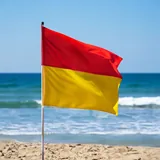
S'Albufereta and Es Trenc-Salobrar de Campos are protected natural areas: respect the buoyed channels and bathing zones, which Spanish regulations presume to extend 200 metres on beaches and 50 metres along the rest of the coast where there's no buoyage. In an emergency, call 112 or Salvamento Marítimo (900 202 202, VHF channel 16).
Water safety arrow_forwardWind, water, wetsuits and regulations: the essentials for all three areas.
Two sister bays separated by the Formentor headland, with a buoyed kite zone alongside the s'Albufereta nature reserve.
The Badia de Pollença is flanked by the Serra de Tramuntana to the west and the Formentor peninsula to the east, making it one of the most sheltered areas of northern Mallorca. The embat, the south-south-westerly thermal breeze, blows in fairly reliably during spring and summer, almost always from midday and building through the afternoon, at 8 to 15 knots. When the tramuntana blows in its storm form, on the other hand, the bay can feel much stronger gusts funnelling in from the north-west, most commonly in autumn and winter.
View on Google Maps open_in_new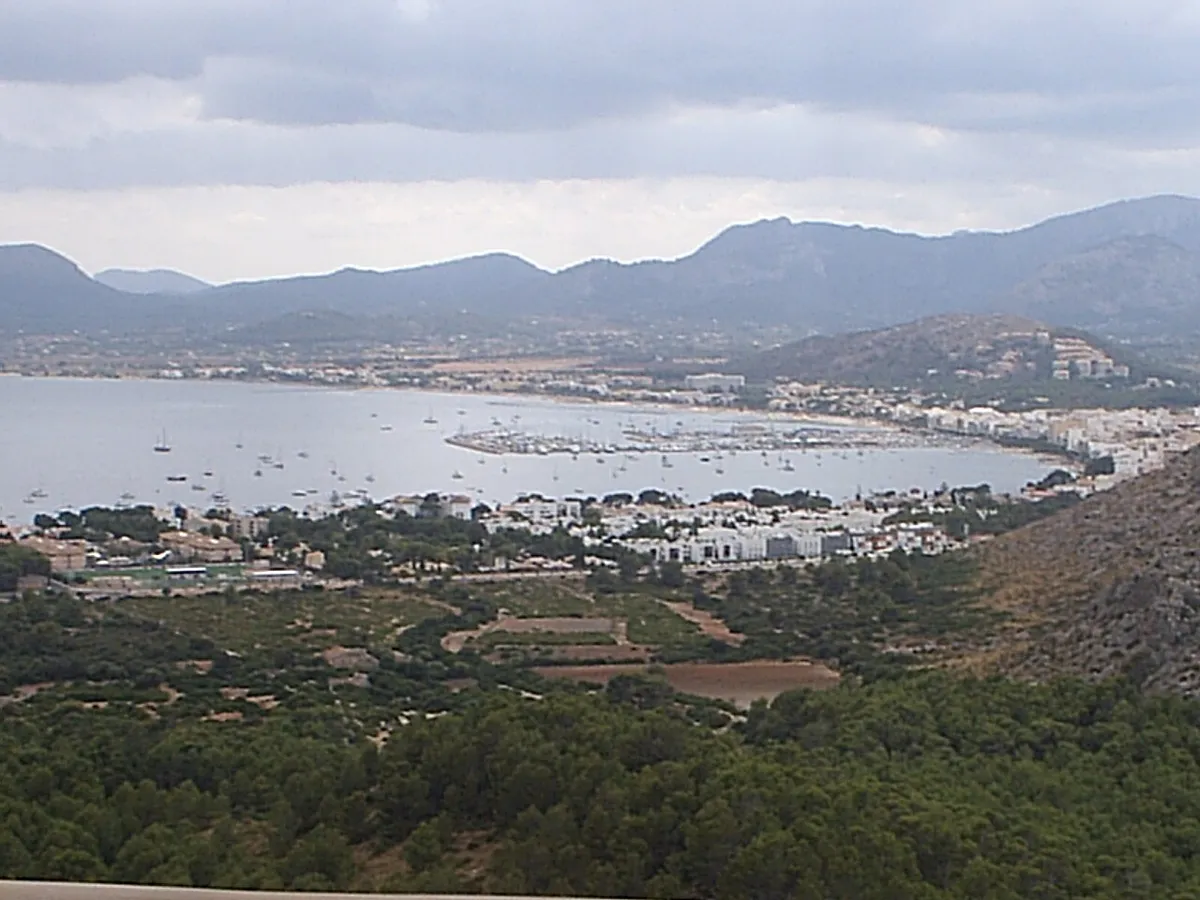
On the Alcúdia side, Sa Marina beach is home to most of the bay's kitesurf and wing foiling schools. It's a wide stretch, easy to reach from the road, with enough space for beginner lessons, and it's the usual launch point for the authorised kite corridor by s'Albufereta. The water is shallow close to shore, which makes the waterstart easier for beginners, and becomes more navigable further out from the beach.
View on Google Maps open_in_newKitesurfing in the bay isn't practised just anywhere along the shore: the authorised zone for lessons and riding is the corridor alongside the s'Albufereta Nature Reserve, with buoyed entry and exit channels managed by IBANAT, the Balearic Institute of Nature. Flying a kite near bathers outside that corridor isn't permitted, and between 1 March and 31 August an additional restriction applies because of the bird-nesting season in the reserve, which can further limit the available space depending on the stretch. It's always worth confirming the current limits with a local school before rigging up on your own.
White-sand beaches and turquoise water, with a nature park in the middle that decides where and when you can ride.
Es Trenc is, for many, Mallorca's most photographed beach: white sand, low dunes and remarkably clear turquoise water. Since 2017 it's been part of the Es Trenc-Salobrar de Campos Maritime-Terrestrial Nature Park, which covers close to 1,441 hectares of land and 2,327 hectares of sea, around 3,768 hectares in total, and protects Posidonia seagrass meadows, dune systems and the Salobrar wetland. In practice, that leaves kitesurfing very restricted near the shore during the peak bathing season: flying a kite near bathers can bring significant fines, so most riders save Es Trenc for spring and autumn, when there are far fewer people in the water.
View on Google Maps open_in_new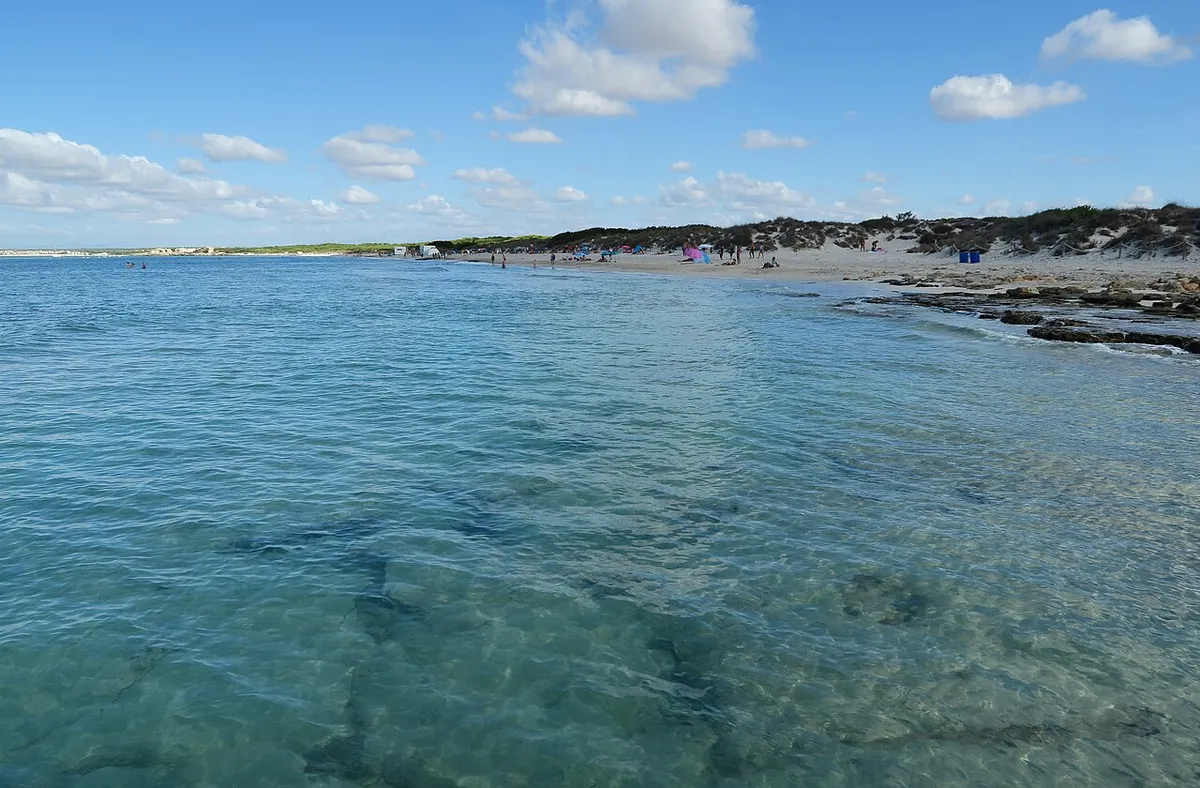
A few minutes from Es Trenc, next to Sa Ràpita marina, a beach of more than a kilometre of fine sand stretches out with shallow water close to shore, outside the nature park's boundaries. It gets the same south-westerly embat as the rest of the south coast, with the best window between May and October, and it's the usual go-to for beginner or intermediate-level kitesurfing without Es Trenc's restrictions. Outside peak season, with fewer bathers, it also gains in space and quiet.
View on Google Maps open_in_newA common pattern among travellers heading to the south of the island is to keep Es Trenc for swimming, snorkelling or just enjoying the scenery, and to move to Sa Ràpita to ride. The two beaches are less than ten minutes apart by car, which makes it easy to adapt the day's plan to the wind and to how busy each one is.
Can Pastilla and Playa de Palma get the embat almost daily in summer, a short walk from central Palma.
The sheer size of Palma Bay and the thermal contrast with the city produce one of Mallorca's steadiest embats: from April to October, the breeze usually blows in between midday and 5pm, at 8 to 15 knots from the south-south-west. That's exactly the wind range beginner wing foiling needs, which makes this bay one of the island's most recommended areas to learn, with sheltered water and a gently sloping sandy entry along most of its length.
View on Google Maps open_in_newCan Pastilla, at the western end of Playa de Palma, is home to shops and schools dedicated to wing foiling, windsurfing and SUP, some with more than twenty years in business. Being an urban area with good public transport from central Palma and the airport, it's a very convenient option for anyone travelling without a car or wanting to combine lessons with sightseeing in the city. The trade-off is a bit more boat traffic near the port, so it's worth sticking to the launch channels marked out by the schools.
View on Google Maps open_in_new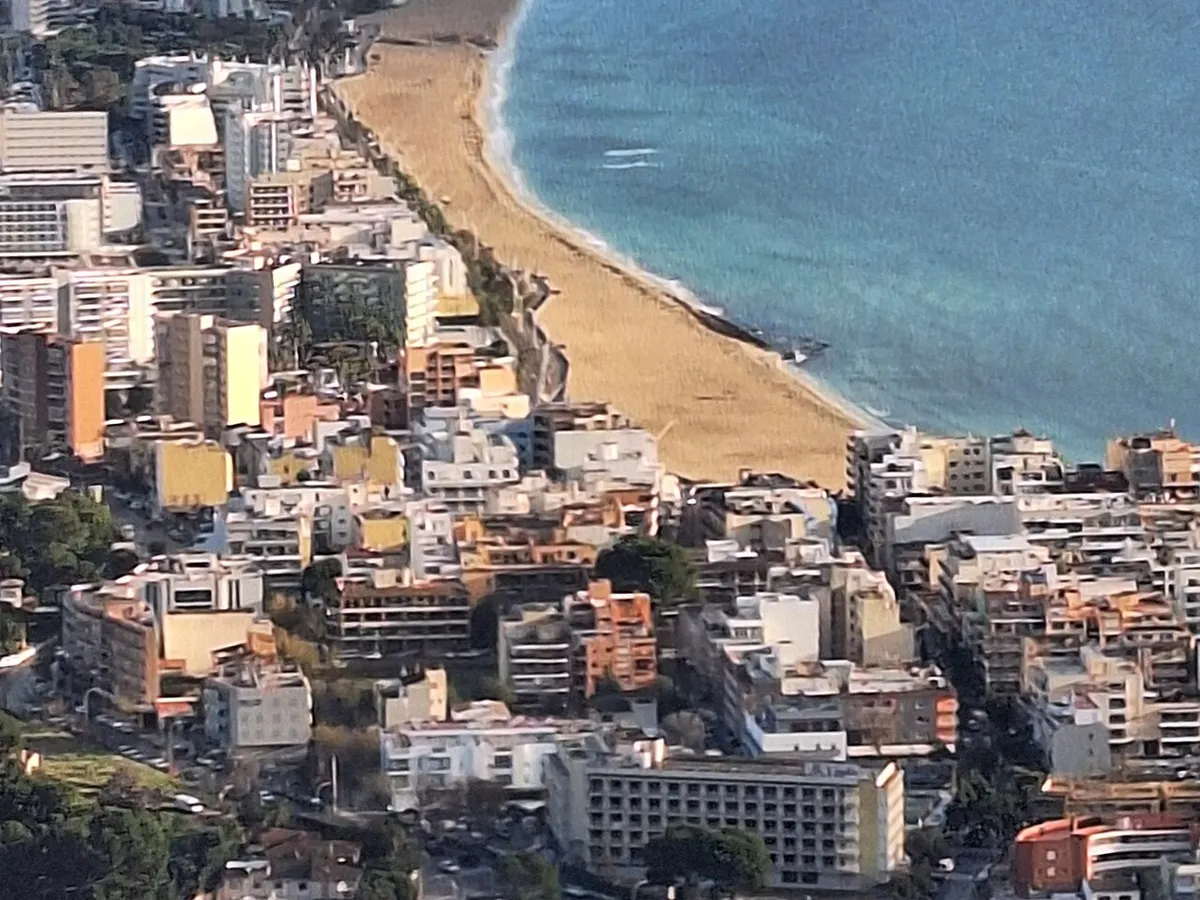
Many travellers use Palma Bay as a base to learn before heading to Pollença and Alcúdia for kitesurfing in the authorised zone, or to Sa Ràpita for stronger wind. Mallorca's road network means none of the three spots is more than an hour from the capital, so it's entirely possible to split a week-long trip across all three areas.
If your trip isn't just about Mallorca, the rest of the archipelago offers some very different profiles.
At Ibiza and Formentera, the more advanced kitesurfing and wing foiling concentrates at Es Cavallet and Ses Salines, inside another nature park with its own regulations, while Ses Illetes, in Formentera, is the Balearic benchmark for paddleboarding in almost always calm turquoise water. It's a profile closer to Es Trenc and Sa Ràpita than to the Badia de Pollença, with a bathing-season kite restriction very similar to the one that applies in southern Mallorca.
Fornells takes the sheltered-bay concept a step further than Pollença: it's practically a flat-water lake with a narrow entrance, where the tramontana blows in channelled along the bay's own axis for most of the year. It's the classic spot of Balearic windsurfing and a good addition if your trip covers more than one island, with a wind profile that's more constant and less dependent on the thermal embat than Mallorca's.
S'Albufereta, at Pollença, and Es Trenc-Salobrar de Campos, in the south, are the two areas of Mallorca where environmental regulations most directly shape how you ride.
The s'Albufereta Nature Reserve protects a coastal wetland of major importance for migratory birds, at the end of the Badia de Pollença towards Alcúdia. It's also the zone designated by IBANAT as the authorised kite corridor in the bay, with buoyed entry and exit channels that must be respected at all times. Between 1 March and 31 August, the bird-nesting season adds further restrictions in some stretches, so it's worth confirming the current signage with a local school before heading out alone.
Declared in 2017, this maritime-terrestrial nature park protects close to 1,441 hectares of land and 2,327 hectares of sea, with Posidonia seagrass meadows, primary dunes and the Salobrar de Campos wetland as its core values. Inside the park, anchoring must be done on sandy seabed and never over Posidonia, and any commercial nautical activity, including watersports lessons, requires prior authorisation from the park's management. That's the underlying reason kitesurfing near the shore is so restricted at Es Trenc during the bathing season.
Beyond the regulations, Posidonia and the dune systems are the reason these beaches keep the water quality and scenery that made them famous. Anchoring only on sand, never landing or launching on the dunes, and respecting the buoyed channels is, in practice, the most direct way to keep Es Trenc and s'Albufereta that way.
Always choose an official school registered with the Govern Balear, with qualified instructors and well-maintained kit.
In Puerto de Pollença, a leading school for the north of the island has offered kitesurfing, windsurfing, SUP, wing foiling and kayaking since 2014, registered under number 2/15 in the nautical schools register of the Govern Balear's Directorate-General for Ports and Airports, and VDWS-certified. At Sa Marina, Alcúdia, another school has been the bay's go-to centre for kite and wing foiling since 2012, with private lessons and small-group classes.
On the south coast, several schools operate mainly out of Sa Ràpita, outside the nature park's boundaries, running beginner and intermediate kitesurf courses along with guided trips to Es Trenc when regulations and the season allow it.
In Can Pastilla, a centre with more than twenty years on the beach combines a shop and school for SUP, wing foiling, windsurfing and surfing, with beginner courses and equipment hire. It's also common to find dedicated wing foiling schools offering short one-day courses for anyone with only a free afternoon in the city.
Palma airport connects to the whole island in under an hour by car.
Palma de Mallorca Airport (PMI) receives direct flights from numerous Spanish and European cities, with a very wide choice in peak season. It's less than 15 minutes from Palma Bay, around 50 minutes from Badia de Pollença and Alcúdia, and around 40 minutes from Es Trenc and Sa Ràpita.
Several ferry operators connect Palma with Barcelona, Valencia and Dénia, with overnight or daytime crossings depending on the route and time of year. This is the usual option for anyone travelling with their own vehicle or with a lot of kit, such as large-volume windsurfing or wing foiling boards.
Hiring a car is by far the most practical way to move between the three areas: the motorway network links Palma to Alcúdia and to Campos in under an hour. Within Palma Bay, on the other hand, public transport and cycling are reasonable alternatives if you're staying only in that area.
The embat drives peak season; the winter tramuntana is for experienced local riders.
From June to September, the embat blows in fairly reliably every afternoon and the water sits around 25-27°C. It's the best window for beginner lessons in Palma Bay or the Badia de Pollença, but also the busiest with bathers, which limits kitesurfing near the shore at Es Trenc and in part of the northern bay.
April-May and September-October combine a still-reliable embat with far fewer bathers, which opens up more space for kitesurfing at Sa Ràpita and in the s'Albufereta corridor. With water at 18-21°C, a 3/2mm wetsuit is a sensible choice.
Most schools scale back sharply between November and March. The dominant wind becomes the tramuntana, with storms that can bring strong gusts for several days in a row, mostly on the north coast: it's a season almost exclusively for local riders with their own kit, a 4/3mm wetsuit and good knowledge of the spot.
What riders ask most before coming to the island.
No. The zone authorised for kitesurf lessons and riding in the bay is the corridor alongside the s'Albufereta Nature Reserve, on the Alcúdia side, with buoyed entry and exit channels managed by IBANAT. Flying a kite outside that corridor, particularly near bathers, is not permitted, and between 1 March and 31 August an additional restriction applies because of the bird-nesting season in the reserve.
In practice, not close to shore. Es Trenc is part of the Es Trenc-Salobrar de Campos Maritime-Terrestrial Nature Park, declared in 2017, which covers more than 3,700 hectares of land and sea combined. Flying a kite near bathers in peak season can bring significant fines, so riders looking to kite in the area tend to head to Sa Ràpita instead, or wait for the low season, when there are far fewer bathers in the water.
Palma Bay, in stretches such as Can Pastilla or Playa de Palma, is the benchmark: sheltered water, a gently sloping sandy entry, and the embat, the local thermal breeze, which usually blows steadily between midday and 5pm from April to October, at 8 to 15 knots. It's a very accessible area from central Palma and the airport, with specialist schools right on the beach.
The tramuntana is a synoptic north-westerly wind, associated with storms that can bring strong gusts for several days in a row, mostly in autumn and winter, and it hits the north coast hardest. The embat, by contrast, is the local thermal breeze: it builds daily from the contrast between warm land and cooler sea, blows from the south-south-west on spring and summer afternoons, and is far gentler and more predictable — the backbone of beginner windsurfing, kitesurfing and wing foiling on the island.
Each Balearic island has its own profile. Mallorca is the largest and most varied: a sheltered bay in the north, open coastline in the south, and a large urban bay at Palma. Ibiza and Formentera stand out for kitesurfing and wing foiling in the Ses Salines nature park and the turquoise water at Ses Illetes. Fornells, in Menorca, is the classic near-enclosed bay of Balearic windsurfing, with the tramontana channelled along the bay's own axis. They're complementary destinations rather than rivals within the same archipelago. Discover more spots in our destinations hub.


