

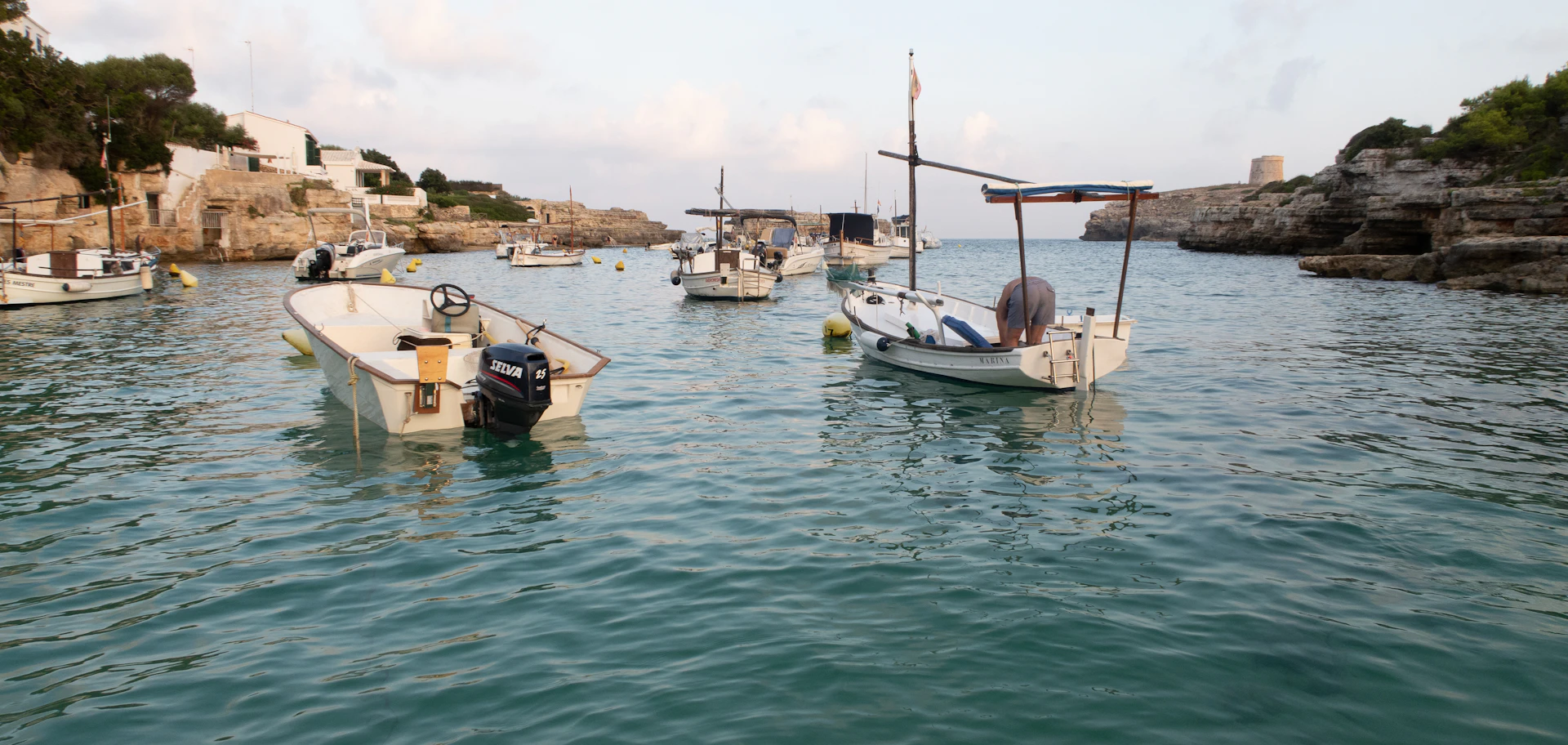
📍 Fornells, Menorca, Balearic Islands
A long bay almost closed off from the open sea, with a tramontana wind channelled along its own axis: the reason Fornells is a classic name in Spanish windsurfing.
The bay acts as a natural funnel: when the tramontana blows from the north/northwest, the wind lines up with the axis of the bay and comes in with great consistency, even when it's gusty out at sea.
See destinations arrow_forward
The mouth of the bay is narrow, so it cuts off swell from the open sea and leaves the inside practically flat. It's one of the Balearic areas with the longest tradition of windsurfing and light-sailing schools.
Windsurf guide arrow_forward
There is boat traffic and mooring areas inside the bay: respect the marked zones, enter and exit through the buoyed channels and sail with an official school. Where there's no buoying, Spanish regulation presumes a bathing zone of 200 metres on beaches and 50 metres along the rest of the coast. Check the forecast before heading towards the mouth of the bay and, in an emergency, call 112 or contact Salvamento Marítimo (900 202 202, VHF channel 16).
Watersports safety arrow_forwardTramontana, water and wetsuit thickness: the essentials before packing your bag.
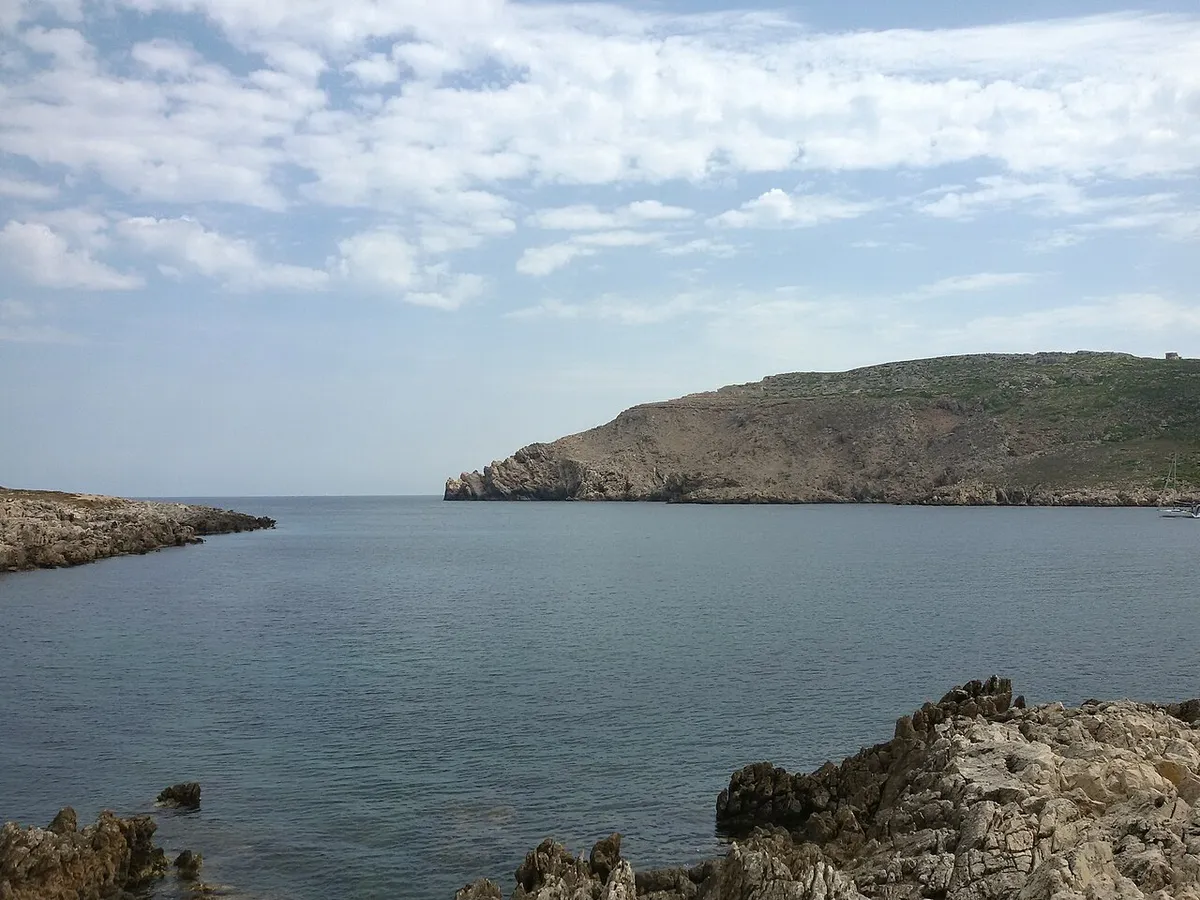
The same bay, two very different faces depending on whether you're near the shore or the open mouth to the sea.
The bay of Fornells is long and narrow, with its mouth almost closed off from the open sea. That shape cuts off swell from outside and leaves the inside with flat water for practically the whole year, sheltered even when the tramontana is blowing hard. It's the area where the schools are concentrated and where most beginner lessons take place.
View on Google Maps open_in_new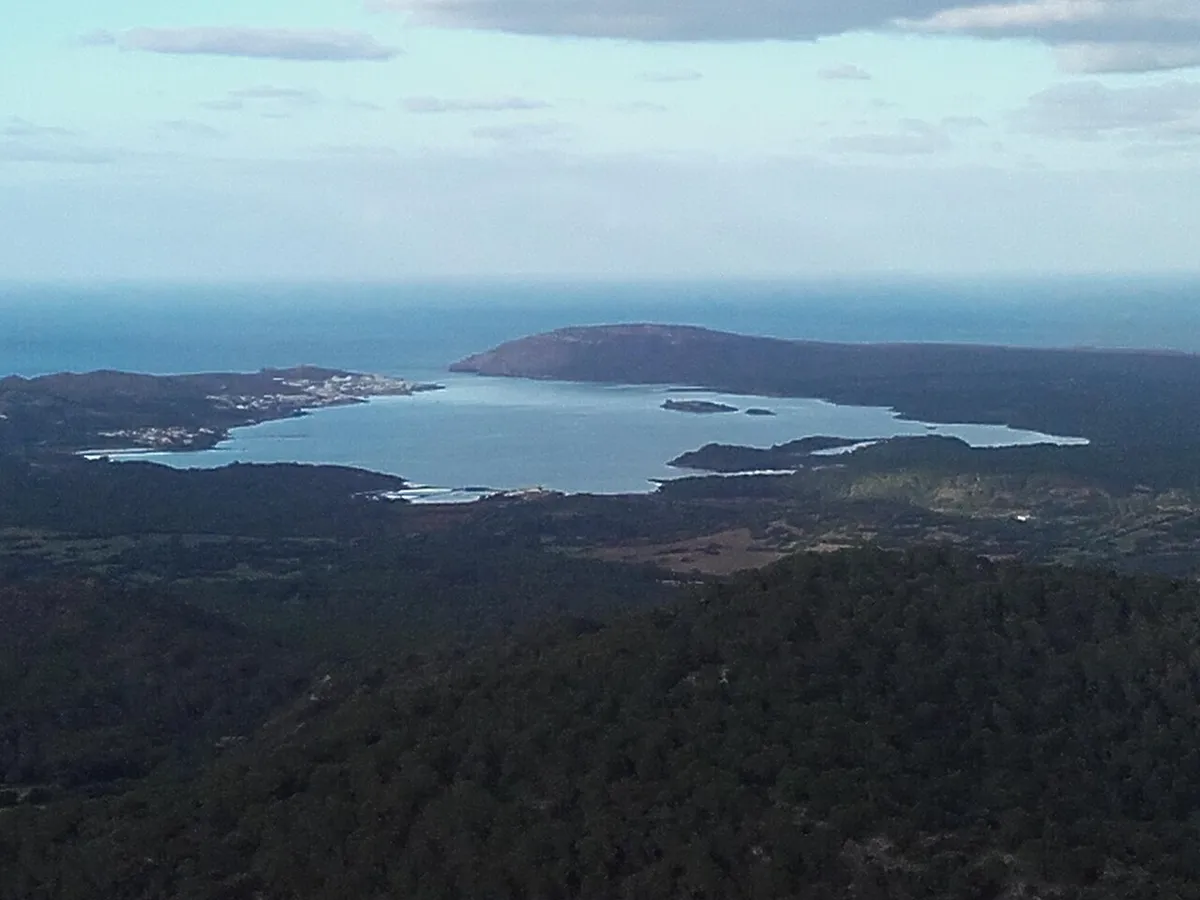
As you approach the exit of the bay, the water gets choppier because some swell from the open sea reaches in, and the wind can be a bit gustier near the headland with the old defence tower. It's the preferred zone for higher-level riders looking for a bit of movement without leaving the shelter of the bay entirely.
A few minutes from Fornells, Cala Tirant is Menorca's best-known reddish-sand beach for kitesurfing, with more open space than the bay. Sitting on the north coast, it shares the same tramontana wind regime. In peak season there are space restrictions and marked launch and landing zones: check with a local school or the island's kitesurf club before heading over.
View on Google Maps open_in_new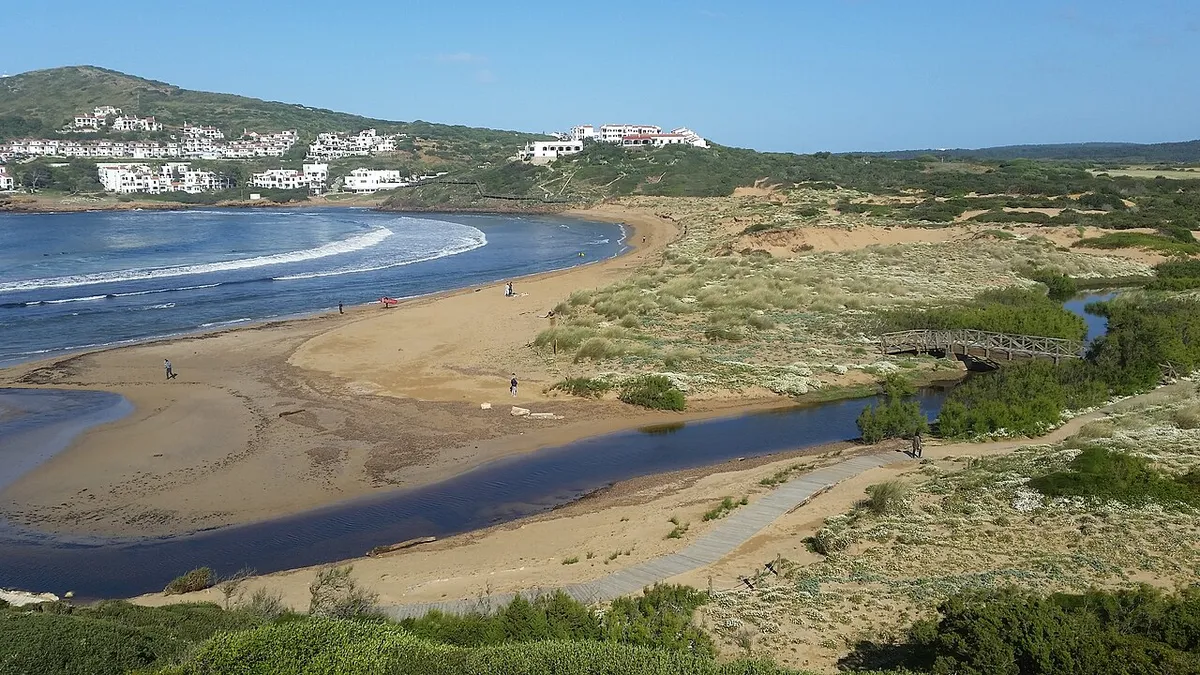
Always choose an official school, with qualified instructors and gear in good condition.
Fornells has been training windsurfers and dinghy sailors since the 1980s. Wind Fornells, running since 1986, offers courses and rental for windsurfing, light sailing, wing foiling, paddle surfing and kayaking, with gear refreshed every season. The Club Nàutic Fornells, with its marina right on the bay, runs sailing and windsurfing courses for adults and a summer school focused on light sailing for children aged 8 to 13 that has been running for decades.
The combination of flat water, shallow depth near the shore and a steady wind thanks to the bay's channel effect makes Fornells one of the best places in Spain to make your first tacks. It's easy to recover your gear and practise waterstarts without the stress of a deep-water or swell-exposed spot.
Fornells is Menorca's reference spot, but Mallorca and Formentera add very different options to round out a trip across the archipelago.
In the bay of Alcúdia, Platja de Muro gets a very reliable thermal breeze in summer, with schools that have been working there since the late 1990s; it's a classic beginner spot for kitesurfing and windsurfing. A little further north, Badia de Pollença funnels the wind between the Formentor and Victòria mountain ranges, with some of the most consistent kitesurfing conditions of the year on the island. Further south, Sa Ràpita offers more intense westerly wind, geared towards intermediate and advanced riders.
Ses Illetes, sheltered by a string of islets facing La Savina, is one of the best beaches in Spain for paddle surfing: turquoise water with practically no swell for most of the summer. Outside the bathing season, in spring and autumn, the area also has good kitesurfing conditions; in the height of summer, kiting is restricted on the beaches used by bathers.
The whole island, including its waters, has been a UNESCO Biosphere Reserve since 1993.
Fornells is still a small fishing village, with a modest marina, restaurants serving lobster caldereta and quiet streets. It has lived off nautical tourism for decades without growing too much, so it keeps a much more local feel than other wind destinations in the Mediterranean.
The whole of Menorca has been a UNESCO Biosphere Reserve since 1993; in 2019 the designation was extended to the waters surrounding the island out to 12 nautical miles. The Albufera d'es Grau Natural Park, on the east side of the island, is one of its most highly protected core zones. The bay of Fornells doesn't sit within that core zone, but when sailing along the north coast it's worth avoiding anchoring on posidonia seagrass beds, respecting marked bathing zones and following local guidance, especially in the less-visited coves.
Calm days are good for exploring the unspoilt coves of northern Menorca, the Camí de Cavalls coastal path that circles the whole island on foot, or the historic old towns of Ciutadella and Maó. Menorca is much quieter and less crowded than Mallorca or Ibiza, so it also works well as a break away from the water.
You'll need to reach Menorca by plane or ferry first, then travel by car to the north coast.
Menorca Airport (Maó-Mahón, MAH) is the island's gateway, with direct flights from several Spanish and European cities, especially in peak season. From the airport to Fornells it's around 30km, roughly a 30-minute drive along the road that runs through Es Mercadal.
If you'd rather bring your own gear or car, there are ferries to Menorca from Barcelona (around 7-9 hours on a conventional ferry, or around 3-4 hours on some fast services depending on the route) and from Valencia, with Maó and Ciutadella as the usual arrival ports. It's worth booking ahead in peak season, especially if you're travelling with boards and sails.
Menorca is a small, flat island, so getting around by rental car between Fornells, Cala Tirant, Maó or Ciutadella is quick and simple. The Me-1 road connects the island's two main towns, with signposted turnoffs to Fornells from Es Mercadal.
The bay works well in summer for learning, and the tramontana keeps delivering sessions out of season for those who live on the island.
From June to September, Fornells' schools are running at full capacity, with water between 22 and 27°C and good gear availability. It's the best window to learn or take an intensive course, although the tramontana doesn't blow every day in the height of summer.
April, May, September and October usually bring more frequent tramontana episodes, with the bay much quieter. Pack a 3/2mm wetsuit and confirm before travelling which schools are still operating outside peak season.
The tramontana also blows hard in winter, but most schools close or scale right back outside the season, and getting to the island is more limited due to flight and ferry availability. It's a period reserved almost exclusively for windsurfers who live in Menorca.
What riders ask most before coming to the bay of Fornells.
Because it has been sailed for decades: the bay is long, narrow and almost closed at its mouth, which creates sheltered, flat water inside. The tramontana wind blows in channelled along the axis of the bay, so wind is reliable for much of the year, and schools such as Wind Fornells and the Club Nàutic Fornells have operated in the area since the 1980s.
Yes, that's one of the reasons the spot is so well known: the inside of the bay has flat, shallow water, sheltered by the surrounding land, ideal for learning windsurfing, wing foiling or light sailing. Towards the mouth of the bay and the coves to the northwest, the water gets choppier and access is more demanding, so that area is left to more experienced riders.
Inside the bay the water is flat because the narrow entrance cuts off swell from the open sea. As you get closer to the mouth and head out towards the coves on Menorca's north coast, the water gets choppier and the wind can be gustier due to the effect of the nearby headlands, so it's worth having some experience before venturing outside the shelter of the bay.
The bay of Fornells is mainly windsurfing, light-sailing and wing foiling territory; the space within the sailing club and boat traffic limit kitesurfing there. Local kitesurfers usually head to Cala Tirant, very close to Fornells on the north coast, though in peak season there are space restrictions and marked launch zones that should be respected.
In Mallorca, Platja de Muro has a very steady thermal breeze in summer, ideal for learning, and Badia de Pollença funnels wind between two mountain ranges; Sa Ràpita, further south, is a more intense option for intermediate and advanced riders. In Formentera, Ses Illetes is a paddle surfing benchmark in very calm turquoise water, with a strong kite season in spring and autumn. The rest of the spots are in the destinations guide.

.jpg)
