

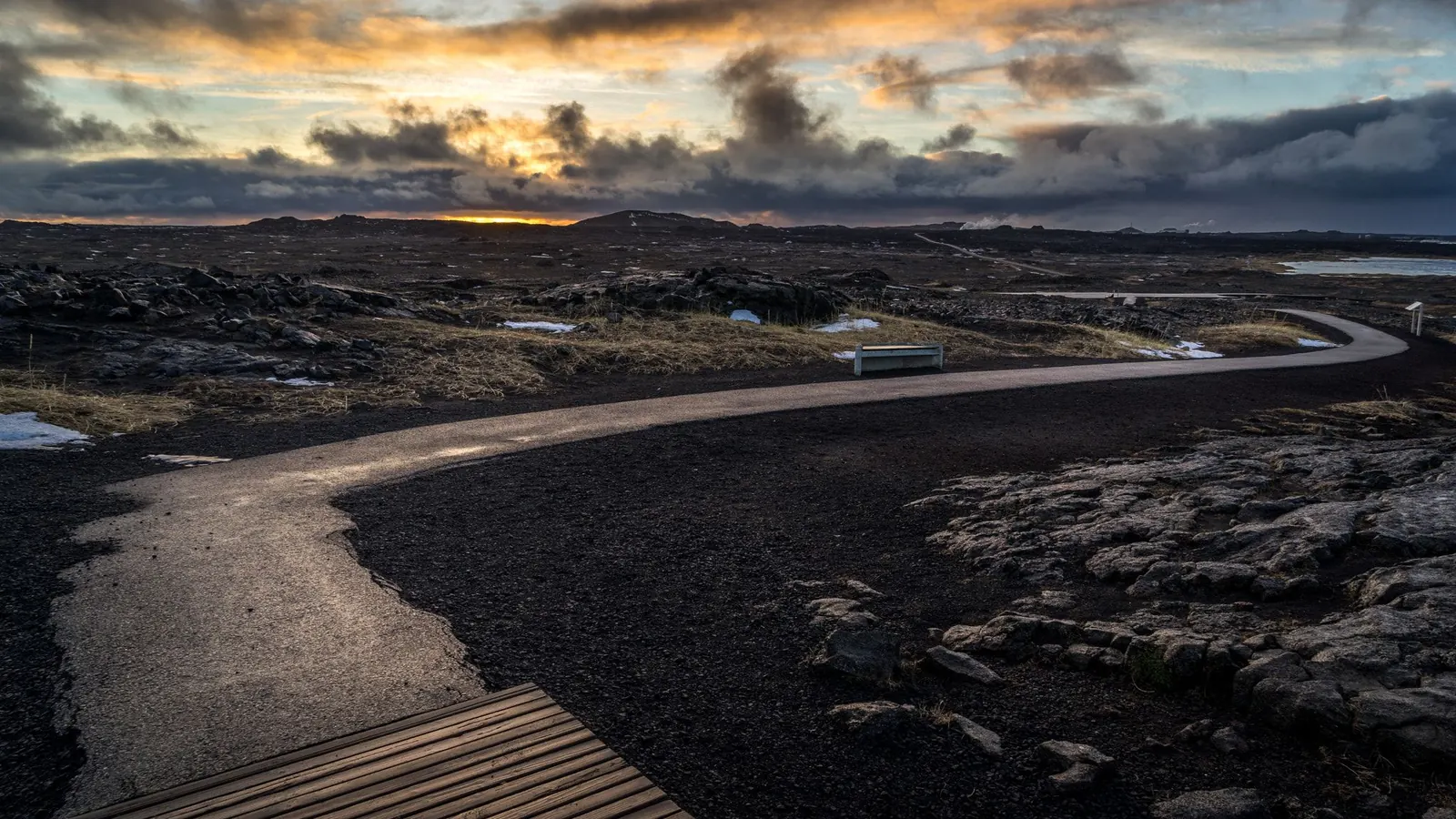
📍 Iceland, North Atlantic
Photo: near Sandvík, Reykjanes, December 2015 – Giuseppe Milo / Wikimedia Commons, CC BY 3.0
Most Icelandic surfing happens within an hour or so of Keflavík airport, on volcanic reefs, points and a few black-sand beaches. It is cold, remote and changeable, and it rewards surfers who already know what they're doing.
The peninsula south-west of Reykjavík, where the airport is, and the harbour town of Þorlákshöfn on the south coast are where Icelandic surfers ride most often.
Where to surf arrow_forward
Winter brings the biggest swells and about four hours of daylight; summer brings light almost round the clock and smaller, less reliable surf. The sea runs from around 3°C to 14°C.
When to go arrow_forward
One emergency number, 112. The Icelandic Coast Guard co-ordinates rescue at sea, and the volunteers of ICE-SAR run SafeTravel, the official travel-safety service.
Safety and rules arrow_forwardThe essentials before you book, and what we couldn't pin down.
Honest about the level before anything else.
Guide to Iceland's surfing guide quotes two Icelandic surfing veterans, Ólafur Pálsson and Atli Guðbrandsson, and they are blunt about it. 'We do have some beginner beach breaks that are good and without rocks,' says Ólafur, 'but all really good surf locations in Iceland are reef- or point breaks, often breaking very close to rocks or cliffs.' Many of the reefs are shallow, especially at low tide, and Atli's number one rule is never to surf alone – above all at a break you don't know.
Arctic Surfers, the Reykjavík operator, designs its guided tours for intermediate to expert surfers and says plainly that they are not a beginners' course. It does take complete beginners, but only on private tours or with private groups, and its weekend surf school is designed mainly for people living in Iceland, though travellers can sign up too. If you've never surfed, learn somewhere warmer and less remote first – our learn-to-surf guide covers the basics – and come to Iceland once you can read a lineup and handle cold water.
The other thing to know is that the forecast does most of the work. 'Most traveling surfers who come here to seek solitude and perfect waves usually find solitude and crap waves,' Ólafur told Guide to Iceland: the good windows are short, and the trick is being free to move when wind, swell and tide line up. Build slack into your trip rather than planning around a fixed day at a fixed spot.
Lava coast, sharp reefs and a black-sand beach, minutes from the airport.
Reykjanes is the volcanic peninsula south-west of Reykjavík, and it's where Icelandic surfers ride most often. Ancient lava flows make up most of its coastline, so the majority of the waves break over very sharp volcanic reef, with a few more forgiving exceptions. Guide to Iceland names three places on and around the peninsula:
The peninsula is also an active volcanic area, with eruptions in 2021, 2022 and 2023 at Fagradalsfjall and later ones near Grindavík, on its south coast. SafeTravel's update of September 2025 said no eruption was active in the Grindavík area, that Grindavík was open but still hazardous because of volcanic unrest, with crevasses to expect and evacuation sirens if the threat level rises, and that subsidence and sinkholes had been seen near the Bridge Between Continents. Check SafeTravel's Reykjanes page before you drive out, stay on marked paths, and never walk on the lava.
View Sandvík on Google Maps open_in_newA harbour town on the south coast, and a break that surfers have had to defend.
Þorlákshöfn, usually written Thorlakshofn in English, is the main town of the Ölfus municipality, about 50 km from Reykjavík according to the municipality. Guide to Iceland calls Thorli beach one of the most surfed spots in Iceland, with consistent swell. Surf-forecast.com describes an exposed, consistent break that works all year, best when a south swell meets a westerly offshore wind, and warns of rocks. Ask local surfers about the day's conditions before you paddle out.
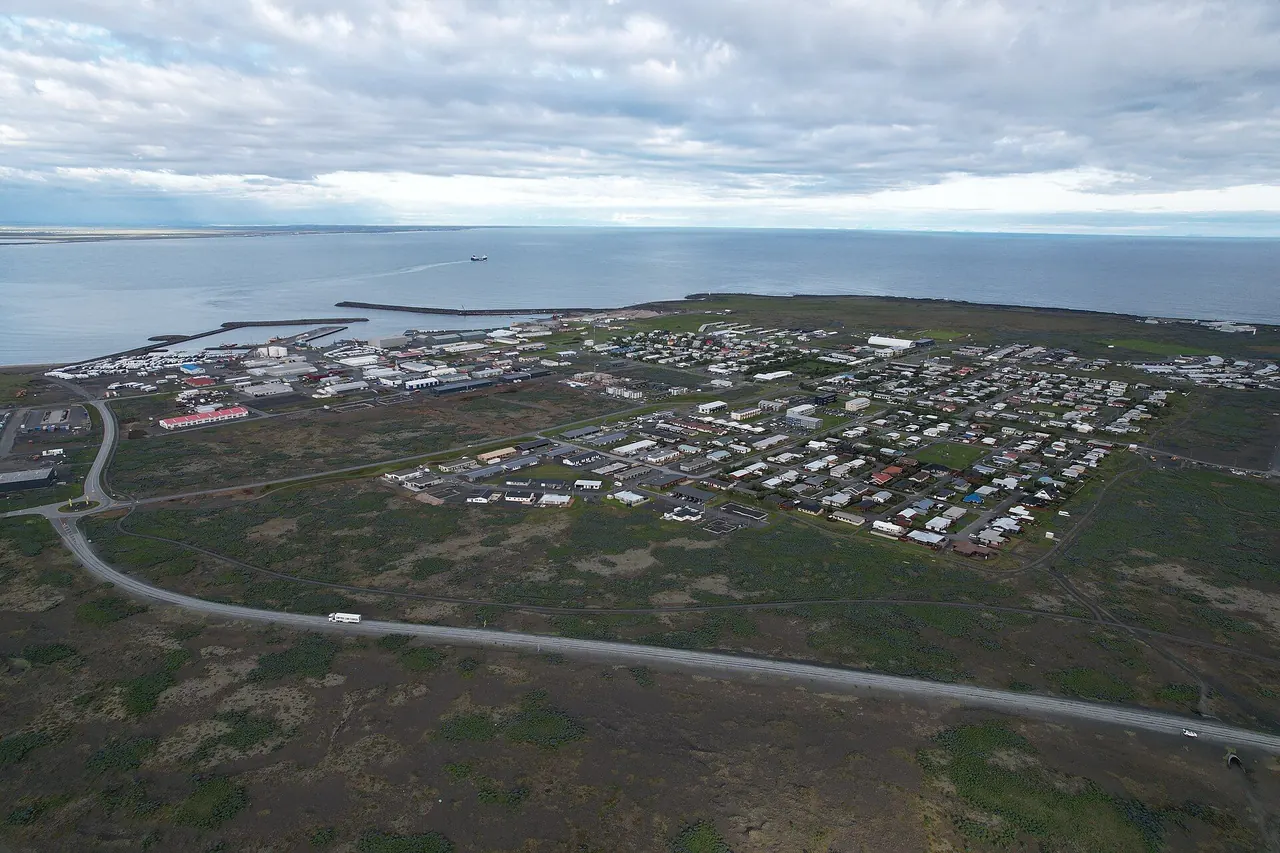
The coast here is changing. The headland south of the town, Hafnarnes, is on Iceland's register of natural sites, and in September 2023 the Environment Agency of Iceland told the municipality that development there was already starting to affect the area's recreational value – an area, it noted, popular for surfing among other things. A further land reclamation next to the harbour has since been contested by Icelandic surfers. We couldn't confirm how that dispute has been resolved, so don't be surprised to find construction near the break.
View Þorlákshöfn on Google Maps open_in_newFurther out, the coast is bigger than the published information about it.
Arctic Surfers' three-day South and West tour visits the Reykjanes peninsula, the south coast and the Snæfellsnes peninsula on the west coast, and is planned around the swell rather than a fixed route. The operator also says that many Icelandic waves have never been surfed and that new areas are still being found, with everything from mellow 3-4ft waves to heavy reef slabs around the island. We found no source we'd stand behind naming individual breaks on Snæfellsnes, in the Westfjords or in the north, so this page doesn't list any; that is the kind of local knowledge a guide is for.
One south-coast beach is worth naming for the opposite reason. Reynisfjara, the black beach near Vík, is famous for sneaker waves: SafeTravel describes waves that surge far higher and further up the beach than the ones before them, with no warning, and says lives have been lost there. A warning-light system sets how close you may go, from staying alert at yellow to keeping at least 25 m from the sea at orange, and at red the beach is closed except for the viewing area. It is a place to look at, not to paddle out from.
Every season works; each one trades swell against light and warmth.
Arctic Surfers surfs all year and describes the seasons like this: spring (March to May) has lots of consistent swell and lengthening days; summer (June to August) is warmer, with light round the clock, but the surf is less consistent; autumn (September to November) has plenty of swell and settled weather before winter sets in; and winter (December to February) brings big swells and the northern lights, in very short days. Guide to Iceland points to October to March as the time of the most powerful waves, driven by storms all around the island.
| Season | Swell | Water | Daylight in Reykjavík |
|---|---|---|---|
| December–February | Big swells, heaviest storms | About 3-5°C | About 4 hours at the December solstice |
| March–May | Consistent swell | About 6-9°C | About 12 hours at the March equinox, rising fast |
| June–August | Smaller and less consistent | About 6-9°C early, warming late | About 21 hours at the June solstice |
| September–November | Plenty of swell | About 10-14°C, the warmest of the year | About 12 hours at the September equinox, falling fast |
The swell and water columns are Arctic Surfers' own description; the day lengths are standard sunrise-to-sunset figures for Reykjavík. A satellite-based average for Reykjavík (seatemperature.info, not an official series) gives the same shape, from about 3°C in February to about 12°C in August. On land, the Icelandic Met Office's 1991–2020 averages for Reykjavík work out at just under 1°C in January and just under 12°C in July. For a balance of swell, daylight and water temperature, September and October are the obvious months to look at.
Whenever you go, check the forecast daily rather than once. Guide to Iceland points to the Icelandic Met Office (vedur.is) for wind and weather and to Surf-forecast.com for swell, and the Icelandic Road and Coastal Administration publishes sea-condition forecasts under the name Sjólag. Tide matters on the shallow reefs: a good swell at the wrong tide can make a spot dangerous, so check tide times for the specific break.
Thick neoprene, from head to toe, for most of the year.
Guide to Iceland's first tip is a 5-6mm wetsuit minimum, with boots, gloves and a hood, for any session, and it names underestimating the cold as the most common mistake visiting surfers make. Arctic Surfers, which rents suits, says it uses wetsuits from 4/3mm to 6/5/4mm depending on the season, with 5-7mm boots and 2-5mm gloves, and replaces its wetsuits after two seasons. Put together, that points to a hooded 6/5mm suit with thick boots and gloves through winter and spring, and a 4/3mm only at the warmest end of the year.
Plan how you'll get changed, too: Icelandic surf spots are exposed, so pack a changing robe and warm layers. Our wetsuit guide explains thicknesses and seams, and our board bag guide covers flying with boards.
One operator with a current website, and why a guide makes sense here.
Arctic Surfers, based in Reykjavík, runs private surf tours, a multi-day adventure tour and a three-day South and West tour, plus surfboard and wetsuit rental for independent surfers, according to its website (October 2026). Its multi-day tours are booked through its partner Asgard Beyond, a licensed travel agency, and include gear, transport and accommodation; the five-day tour starts and ends in Reykjavík. All its trips are weather-dependent and can be changed or cancelled for safety. The same site says its summer trips, from June to August, are very rarely affected by harsh weather, unlike winter ones.
We found no other surf school or guiding company with a current website when we checked in October 2026; older press articles mention lesson providers that we couldn't confirm are still running, so we don't name them. With a coastline this big and spots this dependent on conditions, a local guide is worth more here than in most places. Contact any operator directly to confirm dates, level requirements and what's included before you plan a trip around it.
Fly into Keflavík, hire a car and keep an eye on the roads.
Keflavík International Airport, the main international gateway, sits on the Reykjanes peninsula about 50 km south-west of Reykjavík – so most of the Reykjanes surf is nearer the airport than the capital. Icelandair, British Airways, easyJet and Jet2 are among the airlines listing UK routes, from London, Manchester, Edinburgh and Glasgow and, mostly seasonally, from several regional airports; check current schedules and your airline's board-bag rules before booking. Iceland is in the Schengen area: the FCDO says British citizens can stay up to 90 days in any 180 without a visa, and the EU's new Entry/Exit System may ask you to register fingerprints and a photo on arrival.
A car is the practical way to follow the swell. The FCDO says a UK photocard licence is valid for up to 30 days, that speed limits are lower and distances far greater than in the UK, and that winter tyres are needed when conditions call for them. Before each drive, check road conditions and closures with the Icelandic Road and Coastal Administration on umferdin.is or its 1777 line (06:30 to 22:00 daily). Off-road driving is prohibited in Iceland under the Nature Conservation Act (no. 60/2013, art. 31), so park on roads and marked areas and walk to the water, including on black-sand beaches.
Iceland's own emergency number, rescue services and travel-safety system.
112 is Iceland's national emergency number, answered around the clock by Neyðarlínan, and the FCDO lists it for ambulance, fire and police. Iceland is phasing out its 2G and 3G networks, so check your phone works there before you travel; if a 112 call won't connect, keeps dropping or has poor sound, SafeTravel and 112.is give a backup number, +354 599 0112, and 112.is also offers a web chat. The 112 Iceland app is designed to speed up information in an emergency, including for people who would find it hard to call or to describe the situation.
At sea, the Icelandic Coast Guard (Landhelgisgæslan) co-ordinates all search and rescue in Iceland's search and rescue region through its Joint Rescue Coordination Centre, JRCC Iceland, which keeps a 24-hour watch and can call on helicopters, patrol vessels, nearby ships, rescue teams, fire services and police. Alongside it works ICE-SAR (Slysavarnafélagið Landsbjörg), the Icelandic Association for Search and Rescue, a non-profit whose more than 4,500 volunteers specialise in search and rescue and are available day and night. Don't count on a lifeguard: none of the sources we read mentions a lifeguard service at any Icelandic surf spot, which is one more reason never to surf alone.
SafeTravel (safetravel.is), run by ICE-SAR, is the official source for safe travel in Iceland. It publishes current alerts – landslides, eruptions, closed beaches – and lets you leave a travel plan with someone who can raise the alarm, which the FCDO also recommends. Its app can send your GPS position to 112. The FCDO notes that going too close to the ocean is one of the common causes of accidents in Iceland.
We found no Icelandic law or regulation written specifically for surfing, and nothing requiring surfers to carry particular equipment. Iceland's rules on safety equipment for recreational craft are set by craft size and certificate, and we found no source saying whether they reach a surfboard, so we don't draw a conclusion either way. What does apply to every visitor: closures and warning lights at beaches such as Reynisfjara, restrictions in the Reykjanes eruption area, and the ban on off-road driving. For the general principles – rips, cold water, surfing with others – see our surf safety guide.
What surfers ask most before a trip.
Yes, all year round. Most Icelandic surfing happens on the Reykjanes peninsula and at Þorlákshöfn, within about an hour of Keflavík airport, on reef and point breaks plus a few black-sand beaches. It's cold, remote and best suited to intermediate and expert surfers.
October to March brings the most powerful swell, with very short days in midwinter. Spring and autumn combine consistent swell with more daylight, and the water is warmest in late summer and autumn, so September and October are a good compromise. Summer has light round the clock but less consistent surf.
Around 3-5°C in winter, 6-9°C in spring and early summer and 10-14°C in late summer and autumn, according to Arctic Surfers. Bring a 5-6mm wetsuit with boots, gloves and a hood for most of the year; a 4/3mm is only enough at the warmest end of summer.
Only with a guide. There are a few beginner-friendly beach breaks, such as Sandvík on a small day, but the best spots are reefs and points near rocks, and the guided tours we found are designed for intermediate to expert surfers. Arctic Surfers arranges lessons for complete beginners only on private tours or with private groups.
Arctic Surfers in Reykjavík runs guided surf tours, private trips, a weekend surf school designed mainly for residents, and board and wetsuit rental. It was the only operator we found with a current website in October 2026.
Dial 112. If the call won't connect, use the backup line +354 599 0112. The Icelandic Coast Guard co-ordinates search and rescue at sea, working with ICE-SAR's volunteer rescue teams.