
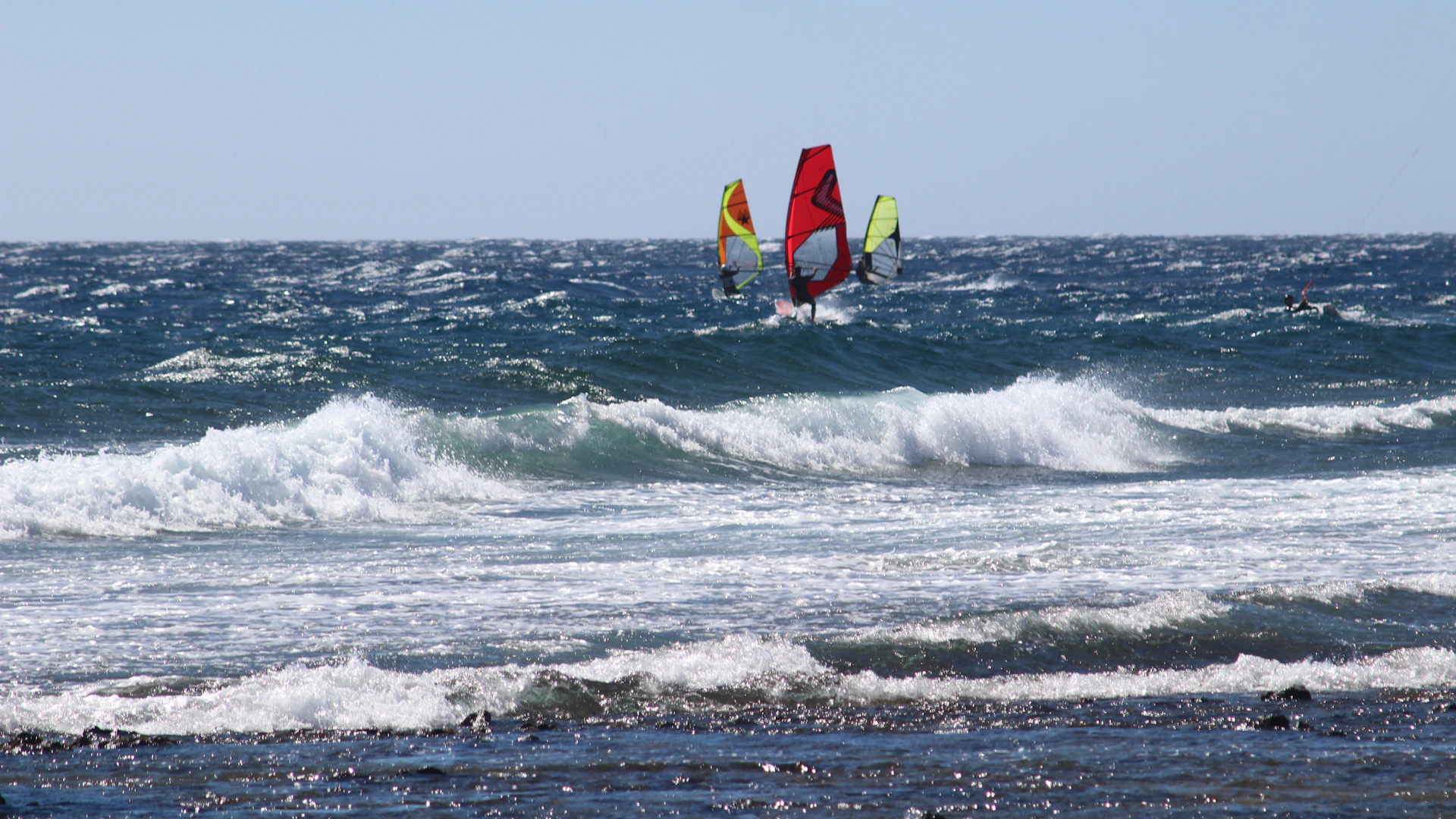
While the UK is fumbling for a 5mm hood-and-gloves combo somewhere between squalls, the Canary Islands are getting on with business as usual: steady wind, mild water and a season that barely pauses. This Spanish volcanic archipelago, sitting in the Atlantic off the coast of Morocco, packs a rare combination — reliably strong trade winds, water that never gets properly cold, and enough variety across four main islands to cover surf, windsurf and kitesurf in one trip.
Why the Canary Islands work for wind and wave sports
The archipelago's position does most of the heavy lifting. Exposed to Atlantic swells in winter, it picks up the energy that's crossed the ocean. Swept by the trade winds — the alisios, steady north-easterlies with unusual consistency — it turns into serious wind territory in summer. And the volcanic relief accelerates the airflow locally, creating properly windy corners wherever the terrain funnels it. All of that comes with water that stays mild year-round, which is why the region has picked up the nickname 'Europe's Hawaii'.
Which Canary Island for surf, windsurfing or kitesurfing
| Island | Flagship spot | Best for |
|---|---|---|
| Tenerife | El Médano | Windsurfing, kitesurfing, consistent wind |
| Fuerteventura | Sotavento (south), Corralejo (north) | All-round trip, mixed levels and disciplines |
| Lanzarote | Famara | Surfing, beginner to advanced |
| Gran Canaria | Pozo Izquierdo, El Frontón | Strong-wind windsurfing and bodyboarding, advanced riders only |
Tenerife — El Médano
El Médano is the island's reference windsurf and kitesurf spot, set against the dramatic backdrop of the Montaña Roja volcanic cone. The wind here is particularly strong and consistent, which is really the whole story: this is a wind spot first and a wave spot a distant second, and it's a dependable choice for anyone after repeated, reliable sessions rather than a specific swell. Read the full El Médano guide.
Fuerteventura — the all-rounder
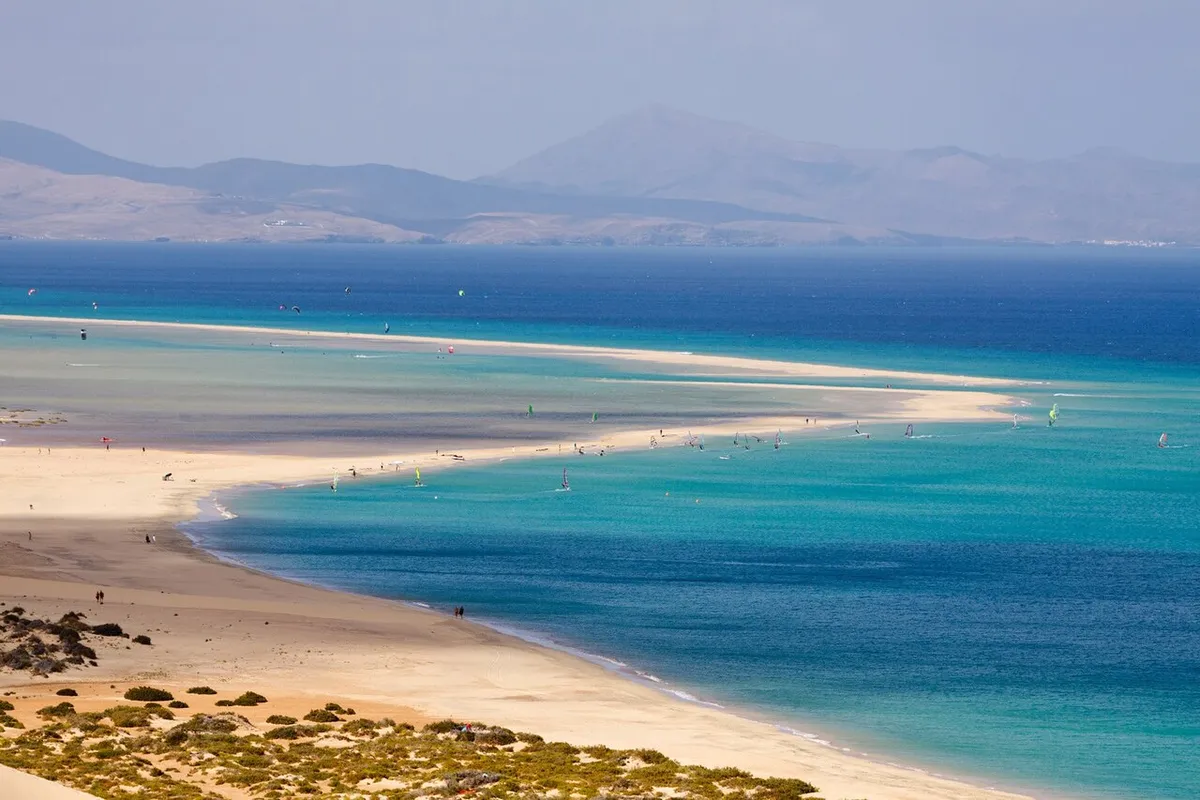
This is arguably the most complete island for a mixed-level or mixed-discipline trip. In the south, the vast flat lagoon at Sotavento has hosted windsurf world cup events, and it's an outstanding spot to progress without fighting chop, and one of the best learning and freestyle environments in Europe. In the north, Corralejo and El Cotillo open up a string of surf and kite spots with a different character altogether, anchored by Flag Beach's dune-backed kite zone. Having flat water and waves within reach of each other on the same island makes Fuerteventura a comfortable choice when your group spans different levels or disciplines. Read the full Sotavento guide or the full Corralejo guide.

Lanzarote — Famara
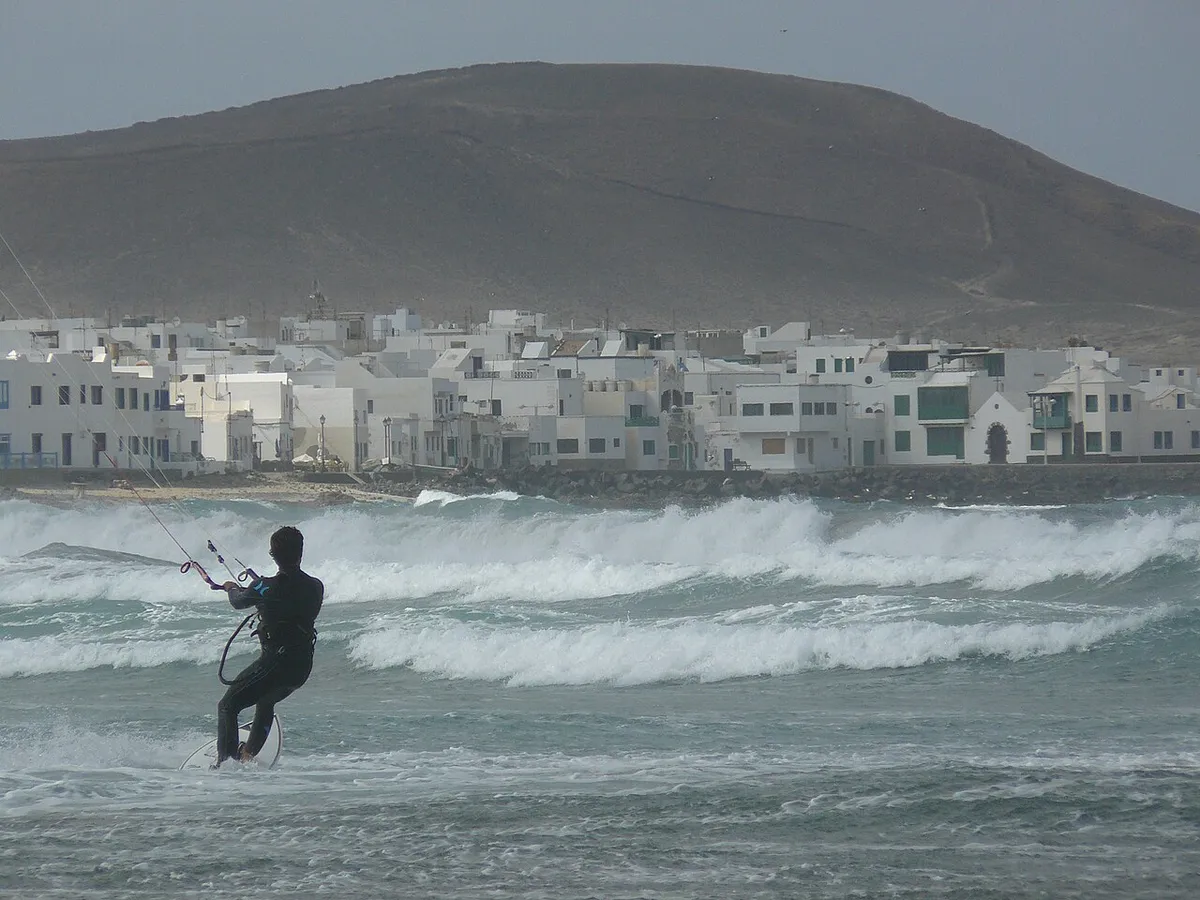
A long sandy beach beneath a spectacular cliff face, Famara is the island's signature surf beach, with conditions ranging from beginner-friendly whitewater to considerably more serious sections depending on swell size. Lanzarote also has some well-regarded reef breaks elsewhere on the island, but those are strictly for experienced surfers — not somewhere to be finding your feet. Read the full Famara guide.

Gran Canaria — Pozo Izquierdo and El Frontón
Pozo is a strong-wind windsurfing institution that has also featured on the world tour. The wind here is powerful and the sea properly choppy, so this one is for confirmed, advanced riders rather than a place to learn — it's not a beginner-friendly proposition in any sense. On the island's north coast near Gáldar, El Frontón is a different kind of serious: a world-class bodyboard wave over volcanic reef, strictly for experts — not a spot to learn either surfing or bodyboarding. Read the full Pozo Izquierdo guide or the full El Frontón guide.
When to go surfing or kitesurfing in the Canary Islands
The two seasons here are chasing different things. Winter is surf season, when Atlantic north-west swells cross the ocean and wake up the exposed breaks. Summer is wind season, when the trade winds are at their most established and deliver day after day of rideable conditions. Spring and autumn offer a reasonable middle ground — a bit of both, with noticeably fewer crowds than the peak months.
Safety and practical considerations: the volcanic reef factor
This is the one to take seriously. Many Canarian breaks are over shallow volcanic reef rather than sand — sharp, unforgiving and quite different from the sandy beach breaks most UK surfers are used to. Reef boots are often a sensible addition to your kit, and a spot that looks unthreatening from the beach can turn out to be more committing than it appears once you're in the water. Less experienced riders are better off sticking to sandy beaches and recognised school zones — around Corralejo on Fuerteventura or the more sheltered sections of Famara on Lanzarote, for example — rather than heading straight for an unfamiliar reef break.
Because the Canary Islands are Spanish territory, UK safety services and RNLI/Coastguard jurisdiction don't apply here. The number to know is 112, the general emergency number across Spain, which connects to police, ambulance and fire services. At sea, Salvamento Marítimo — Spain's maritime rescue service — coordinates search and rescue and can also be reached via 112 or monitored on VHF channel 16. Save both to your phone before you get in the water.
What to pack
Don't leave the wetsuit at home — this isn't the Caribbean. Water stays fairly mild by European standards, but the Atlantic here is a long way from tropically warm, so a shortie or 3/2mm wetsuit covers most of the year comfortably, with a thicker option worth considering for winter sessions or longer days in the water. For wind sports, pack smaller kite and sail sizes than you'd typically use at a UK spot: the trade winds are strong and consistent, and the classic mistake is turning up with a quiver set up for lighter home conditions.
Canary Islands surf, windsurf and kitesurf FAQ
Which Canary Island is best for surf, windsurfing or kitesurfing?
Fuerteventura is the most all-round choice, with flat-water Sotavento in the south and surf/kite spots around Corralejo in the north. Tenerife's El Médano is the pick for consistent wind, Lanzarote's Famara is the island's signature surf beach, and Gran Canaria's Pozo Izquierdo is a strong-wind windsurfing institution for confirmed riders. Which one suits you mostly comes down to your main discipline and level.
Do I need a wetsuit in the Canary Islands?
Yes, most of the year. Water temperature is mild by European standards but nowhere near Caribbean-warm, so a shortie or 3/2mm wetsuit covers most sessions, with a thicker option worth considering in winter. This is the Atlantic, not the tropics.
What's the best time of year to visit the Canary Islands for surf or wind?
Winter is the surf season, when Atlantic north-west swells arrive in force. Summer is the wind season, when the trade winds are most established for windsurfing and kitesurfing. Spring and autumn offer a reasonable compromise between the two, with fewer crowds.
Are the Canary Islands suitable for beginners?
Yes, provided you choose the right spot. Many breaks are over shallow volcanic reef, sharp and unforgiving, and are strictly for experienced riders. Sandy beaches and school zones — around Corralejo and parts of Famara, for example — are much more forgiving for less experienced surfers, windsurfers and kitesurfers.
What are the trade winds and why do they matter here?
The trade winds, known locally as the alisios, are steady prevailing winds from the north-east. They're the reason the Canary Islands have such a strong windsurf and kite reputation, blowing with unusual consistency, especially in summer, and are often accelerated locally by the archipelago's volcanic terrain, funnelling and strengthening around headlands and channels.